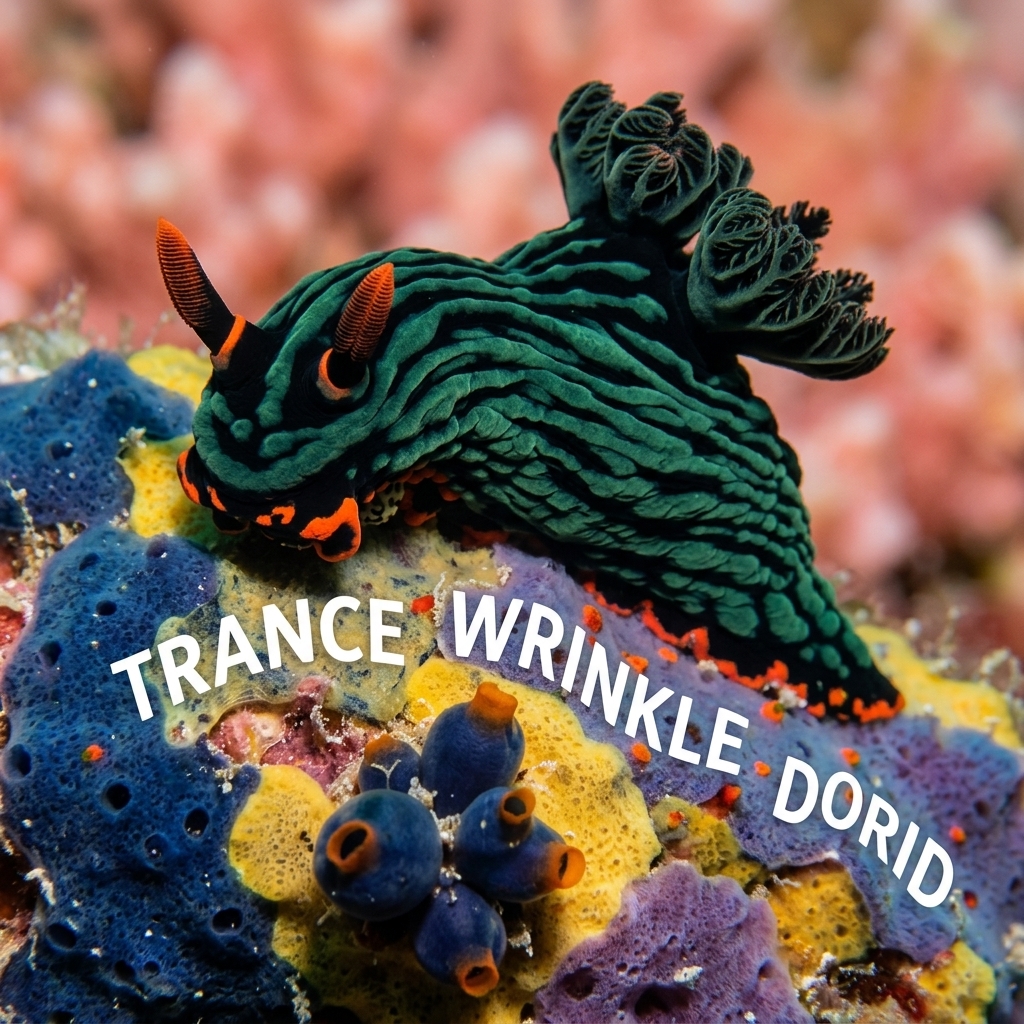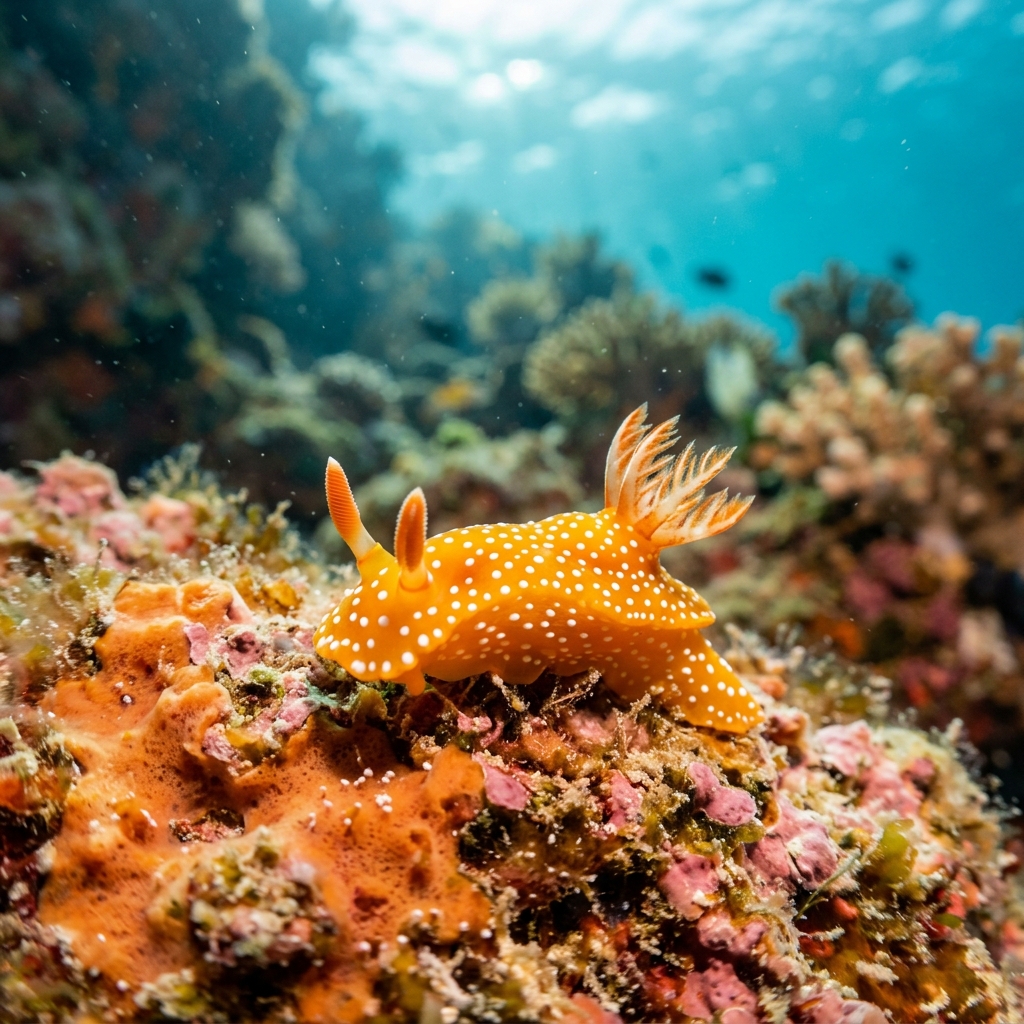
Doriopsilla albopunctata
Spot the White-spotted Sea Goddess along the US Pacific Coast in spring and summer, in cool 14-19 °C waters. Rare, tiny, and worth the search.
At roughly 2 cm, this nudibranch is barely the size of a fingernail, so finding one takes a slow, methodical eye. The body is typically dark brown to yellowish-brown, covered in small white spots that give the species its name. It lacks the gill plumes of many nudibranchs, instead bearing a rosette of simple, feathery gills on the rear of its back, a key field mark that places it in the dorid family. Look for it pressed flat against rocky substrate in cool water.
When encountered, it is typically creeping slowly across hard benthic (seafloor) substrate, foraging for sponges or other small invertebrates. It shows little awareness of divers and will not flee, but its tiny size means it is easily overlooked or disturbed by careless fin kicks. Move slowly, stay horizontal, and give yourself time to let your eyes adjust to the scale.
As a member of the family Dendrodorididae, it feeds by sucking out the contents of sponges rather than biting, a feeding strategy rare among nudibranchs and one reason it is so difficult to observe actively eating.
In the Northern Hemisphere, sightings concentrate from April through August, aligning with the cooler upwelling season when water temperatures sit in the 14 to 19 °C range that this species favours.
Reef neighbours a diver could mistake it for. Use the identification notes above to tell them apart.
Sightings are concentrated along the Pacific Coast of the United States, which accounts for the vast majority of logged encounters. A smaller cluster of records comes from the Pacific Coast of Mexico. The Central and Mountain West of the United States and northern Pacific Mexico contribute occasional sightings, but the California and broader US Pacific Coast is by far the strongest area to search.
Mapping where White-spotted Sea Goddess is logged…
Most sightings come from the Pacific Coast of the United States, making that region the best bet. A smaller number of records exist along the Pacific Coast and northern Pacific of Mexico. It is a benthic species tied to rocky reef habitat in cool temperate waters.
Spring and summer, roughly April through August, is when sightings peak on the US Pacific Coast. This window corresponds to cooler upwelling conditions, with water temperatures typically between 14 and 19 °C.
Look for a small, dark-bodied nudibranch, around 2 cm long, covered in pale white spots and sitting flat on rocky substrate. Unlike plumed nudibranchs, it has a neat rosette of gills near its tail end. Its small size means it is often missed unless you are actively searching at very close range.
Adults typically reach around 2 cm in length, making them small even by nudibranch standards. At that size they are easy to overlook against textured rock, so slow, close-focus searching is essential.
It is considered rare at the majority of sites where it has been recorded, with only a minority of sites rating it as common. Patience, good eyesight, and slow bottom time on rocky reef in cool water give you the best chance.
Site and sighting data is aggregated from diver logs, iNaturalist and GBIF. For taxonomy and conservation status:
Light-spotted Aegires
3,168 sites