Atractoscion nobilis
Long, silver-grey and often over a metre, white seabass turn up year-round in the kelp forests of California at 9-23C.
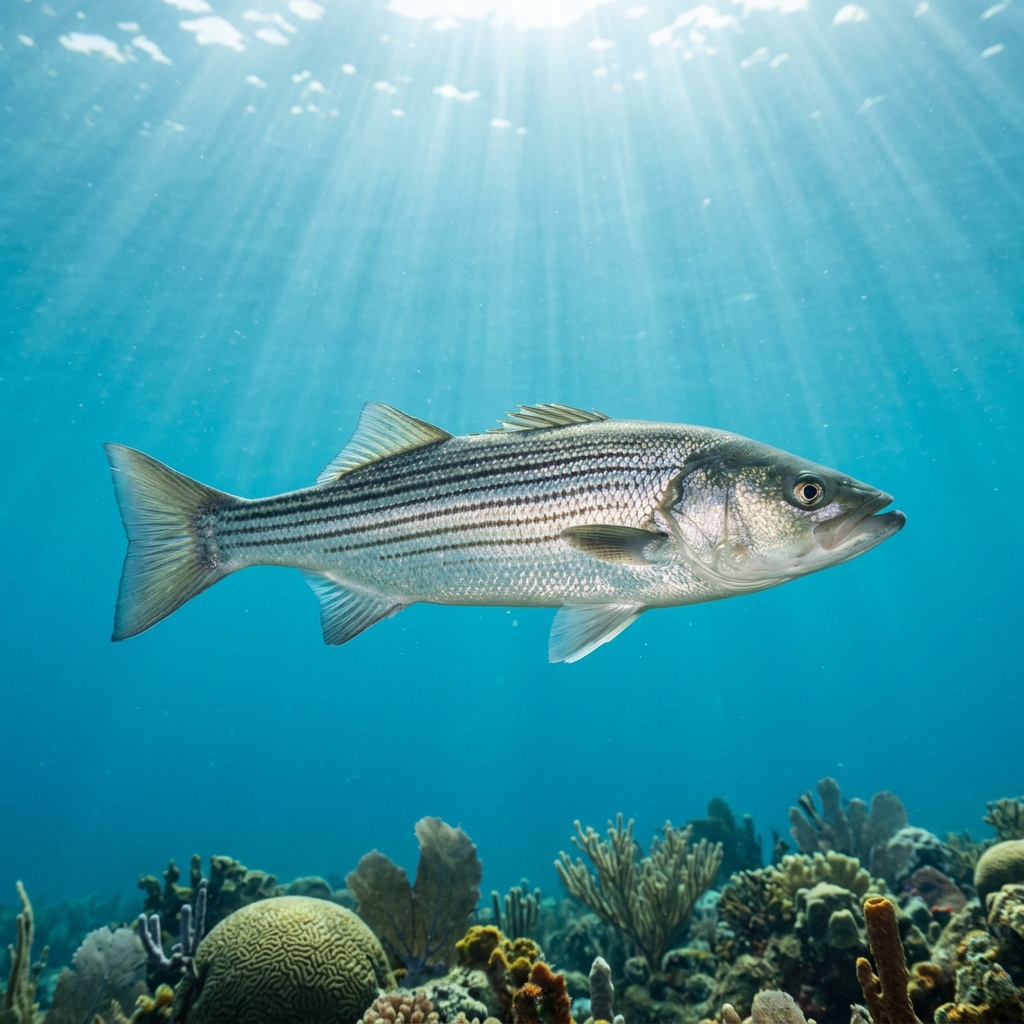
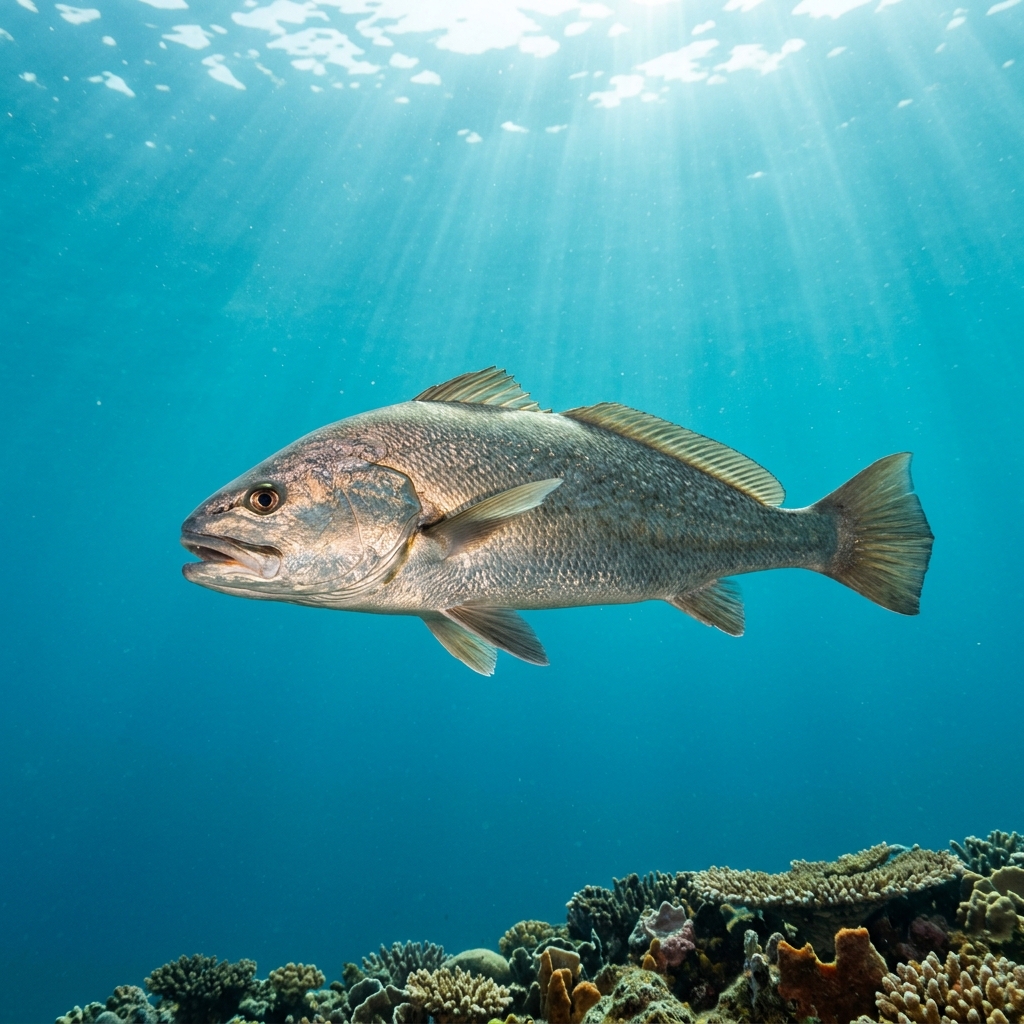
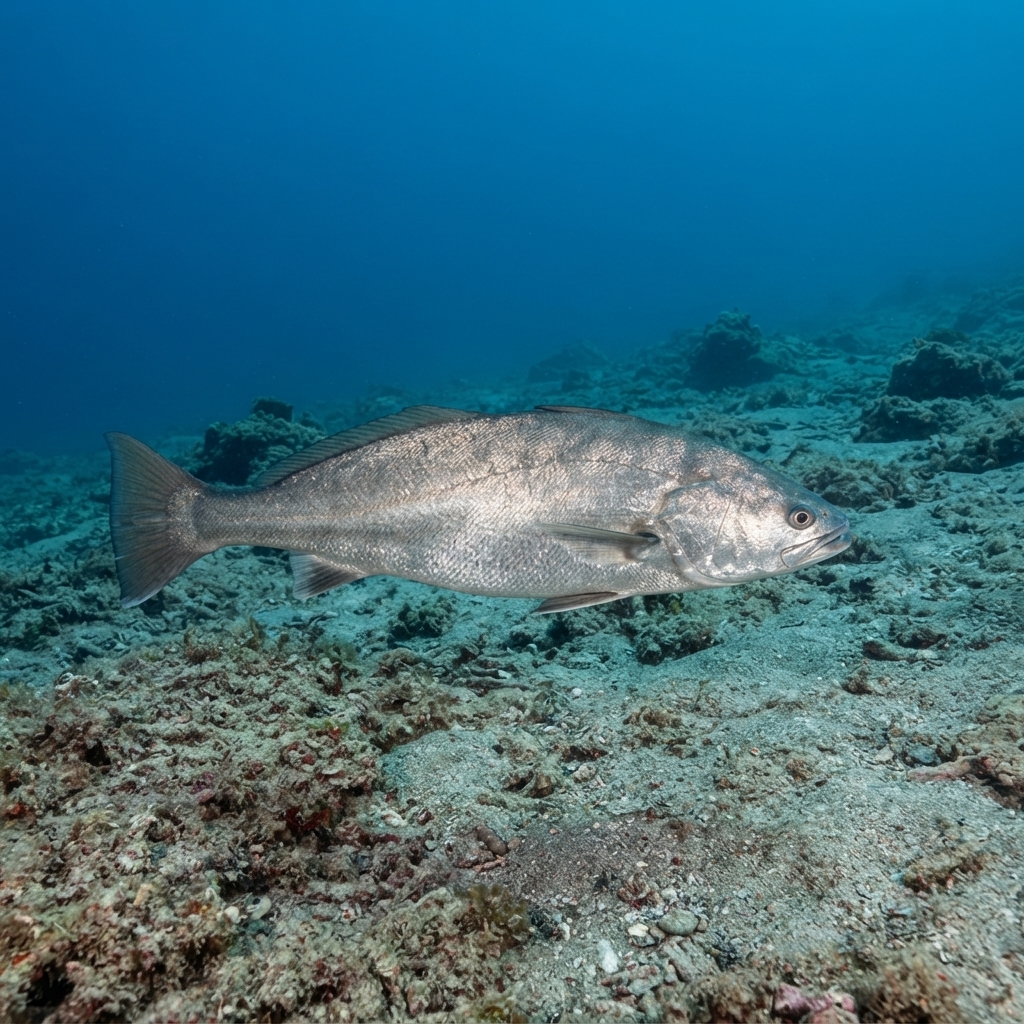
A long, torpedo-shaped body running silvery-grey to bronze on the back with a pale, almost white belly is the giveaway, and adults commonly stretch past a metre, dwarfing most other reef fish nearby. Look for a slightly humped forehead profile and a faint dark lateral line running the length of the body. Younger fish often show dark vertical bars along the flanks that fade as they mature.
Divers typically find white seabass hovering low over rocky reef and kelp bed structure, sometimes alone and sometimes in loose groups, moving with an unhurried, deliberate glide. They tend to keep a comfortable distance from divers rather than fleeing outright, making a slow, steady approach the best way to get a closer look. Many sightings happen near structure where the fish seem to be working the bottom for prey rather than schooling in open water.
Despite the name, white seabass are actually members of the croaker family and can produce a drumming sound using muscles against their swim bladder, a trait shared with their relatives.
Sightings show no clear seasonal pattern, and with a wide observed temperature range of 9 to 23C, white seabass seem to hold territory on California reefs across the year. Plan around good kelp forest conditions rather than a specific month.
Every logged sighting in the data comes from California, United States, making it the reliable place to find white seabass on a dive. Within California, look to the kelp forest sites where divers report them as a common find rather than a rare bonus.
Mapping where White Seabass is logged…
California is the place for this species, with divers logging them consistently on kelp forest and rocky reef sites along the coast. Sightings there are described as common rather than occasional.
There is no strong seasonal pattern in the sighting data, and the species tolerates a wide temperature range from about 9 to 23C, so it is worth looking for year-round on California dives.
Look for a large, elongated silvery-grey fish with a pale belly and a subtle dark lateral line, often well over a metre long. Younger individuals may show faint dark bars on the sides that disappear with age.
They typically reach around 116 cm, making them one of the larger fish a diver is likely to encounter on a California temperate reef.
No, they pose no threat to divers and generally keep a calm, unhurried distance when approached.
They belong to the croaker family and can make a drumming sound with muscles vibrating against the swim bladder, a communication trick shared by their croaker relatives.
Site and sighting data is aggregated from diver logs, iNaturalist and GBIF. For taxonomy and conservation status:
Meagre
1,159 sites