Naso annulatus
Grey-blue and torpedo-shaped, this unicornfish turns up on Nusa Tenggara reefs in 23.5-28.3C water, year-round and always uncommon.
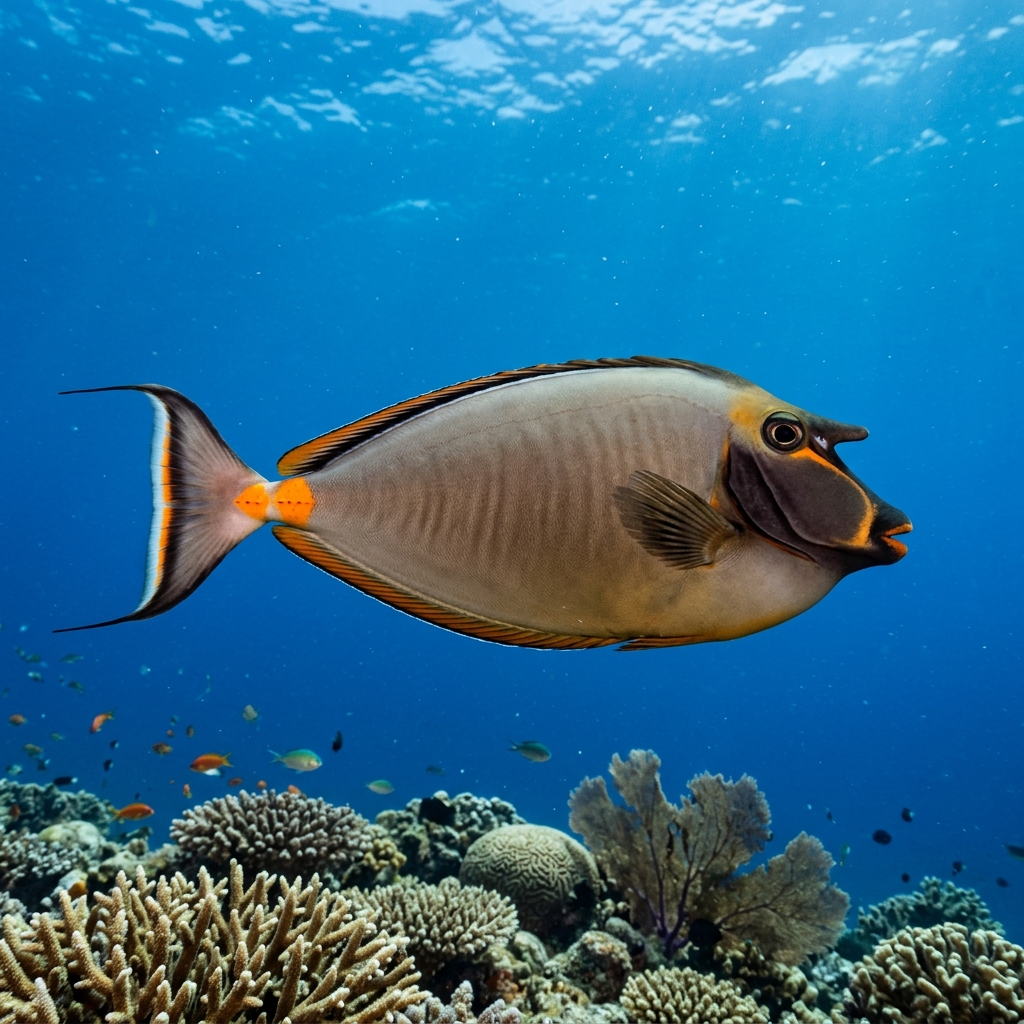
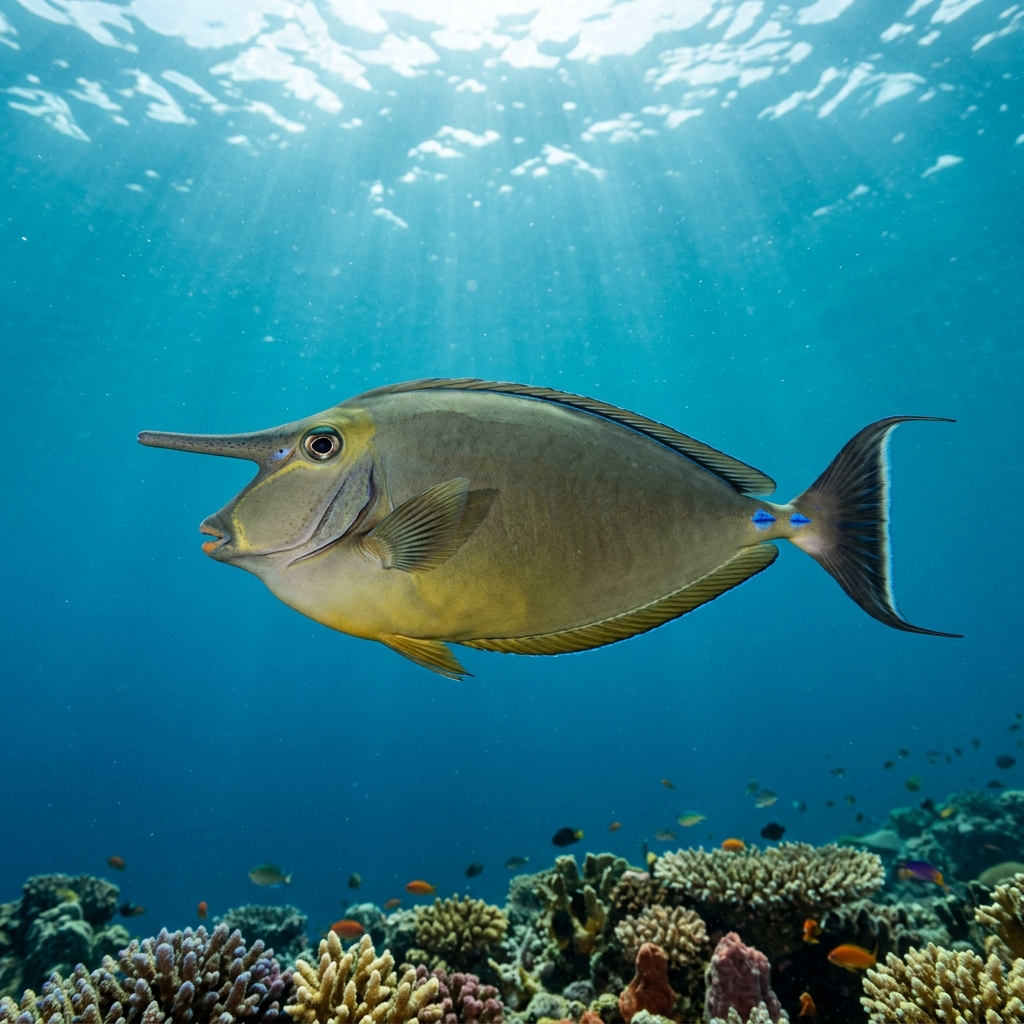
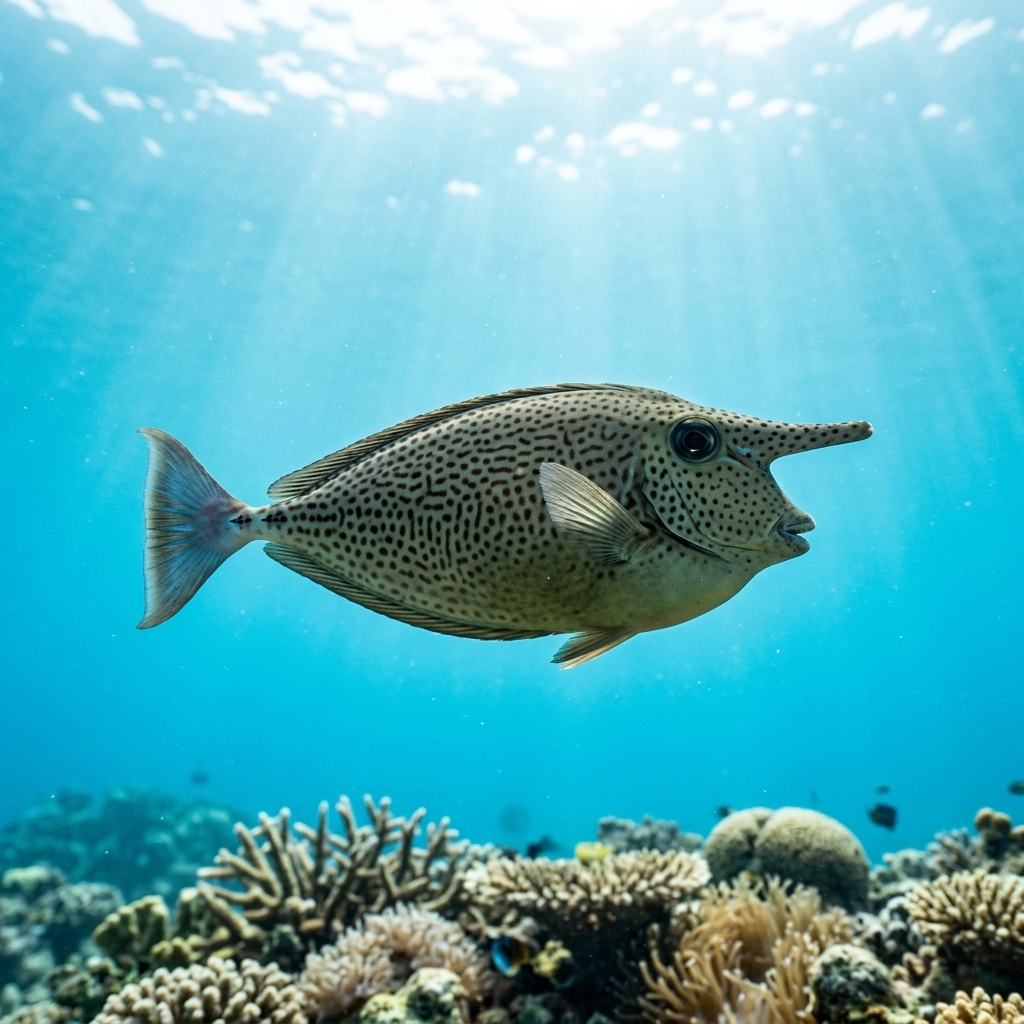
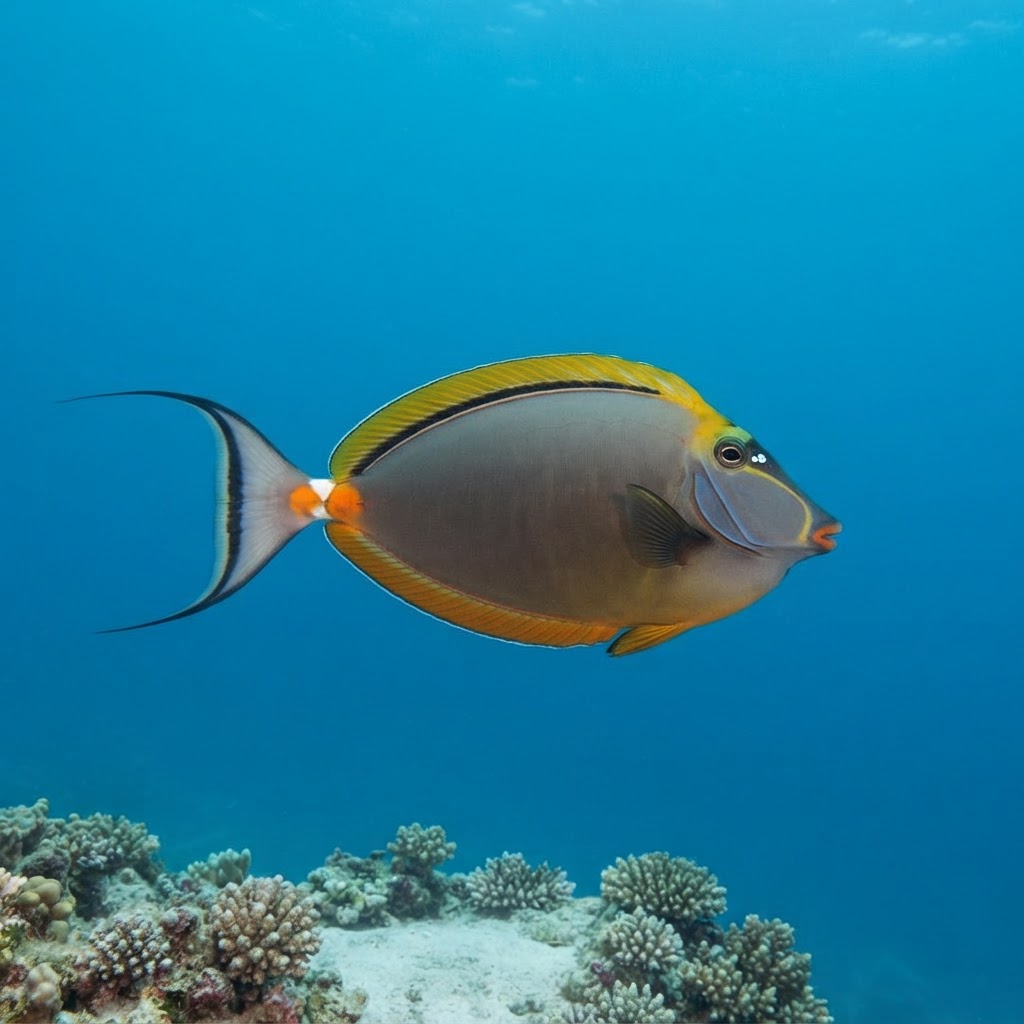
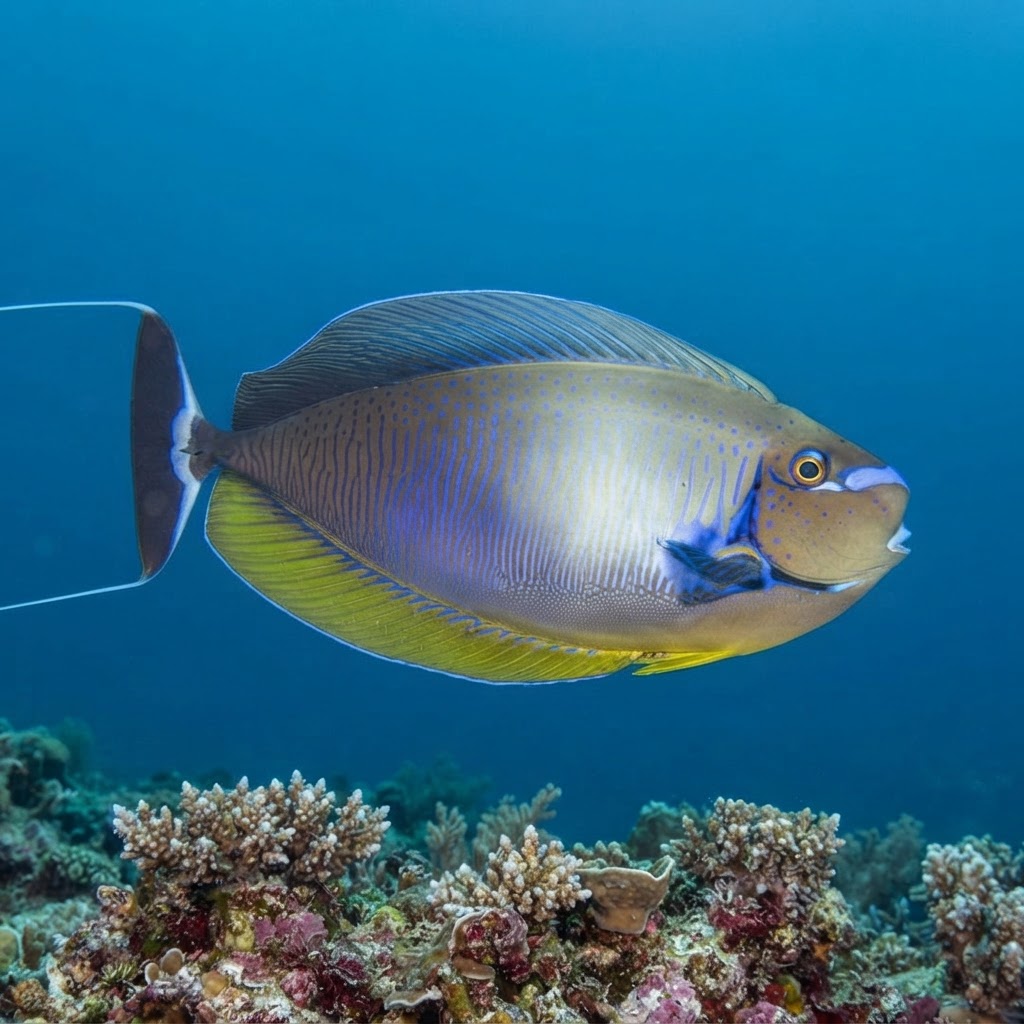
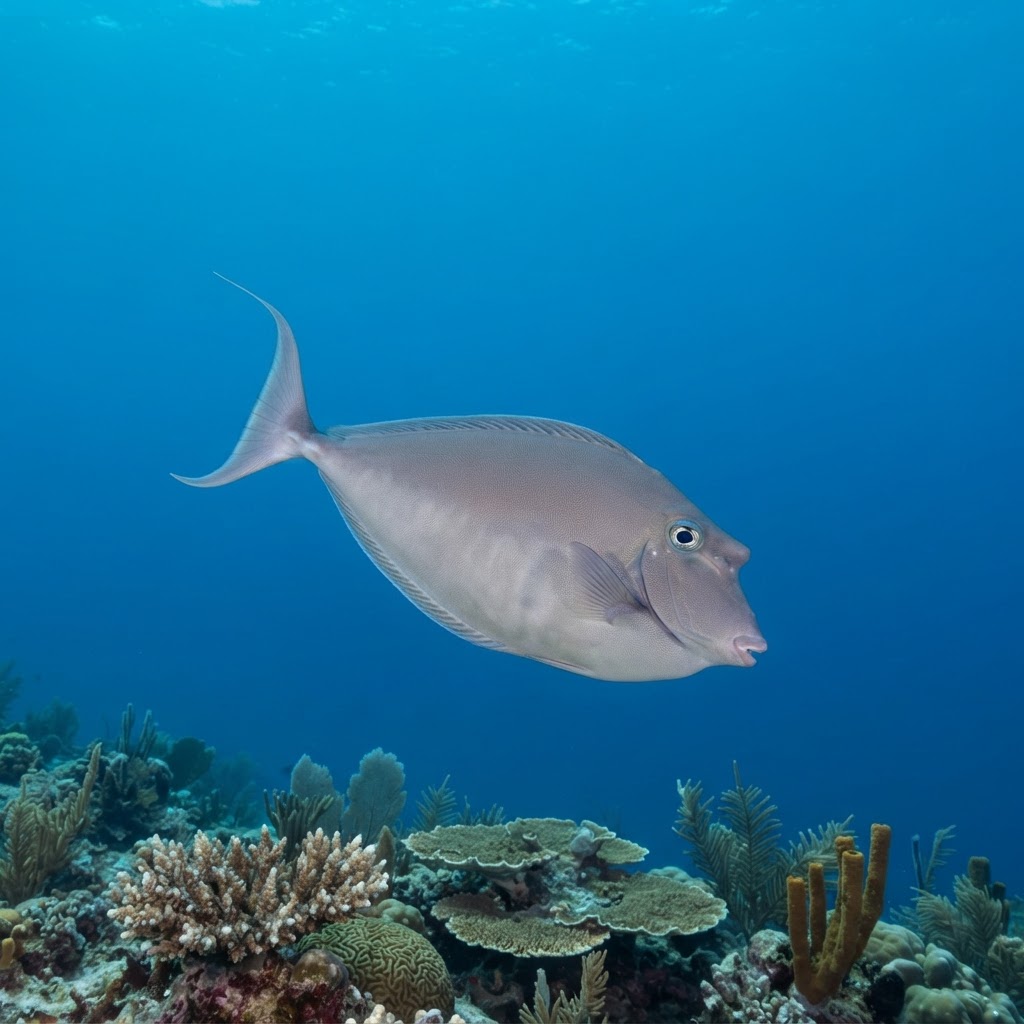
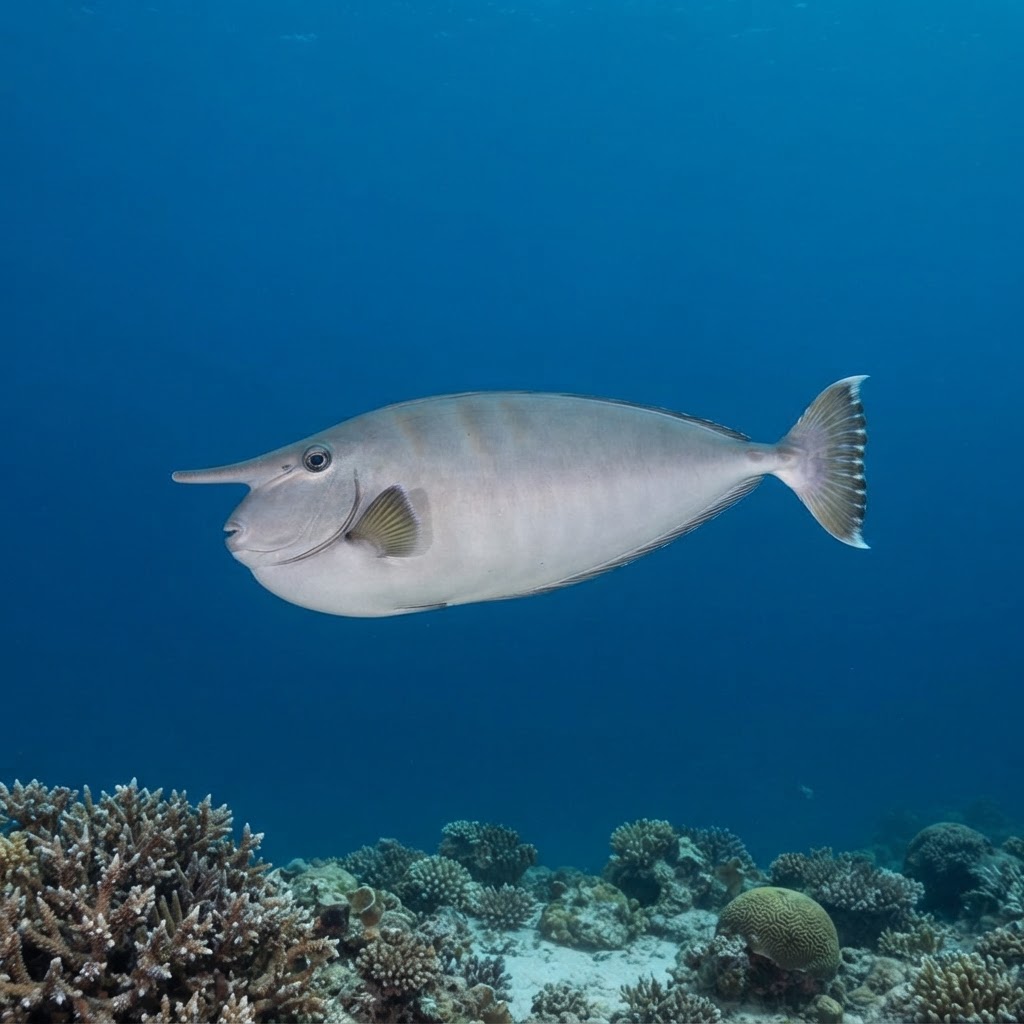
A big, torpedo-shaped surgeonfish, reaching about 70 cm, with a grey to blue-grey body that lacks the bony horn projection seen in some unicornfish relatives. The giveaway is the tail: a dark caudal fin trimmed with a crisp white or pale margin along its edge, which is where the common name comes from. It swims with a steady, mid-water glide rather than hugging the reef, and often shows faint pale lines running along the flanks in good light.
Look for it out over the reef edge or in the blue rather than tucked into crevices, often cruising alone or in loose small groups while grazing on algae. It tends to keep a respectful distance from divers and will drift off into open water if approached directly, so a slow, level approach gives the best chance of a longer look. Most sightings happen along drop-offs and slopes where current brings a steady supply of drifting algae past the reef.
Like other unicornfish, it lacks the fixed sharp horn of some Naso relatives, so at this size and shape divers are really keying on the tail margin and overall grey-blue tone rather than a horn to confirm the ID.
Diver logs do not show a clear season, and the species sits comfortably in the 23.5 to 28.3C range typical of these tropical reefs, so it is realistically a year-round possibility rather than a seasonal target.
Reef neighbours a diver could mistake it for. Use the identification notes above to tell them apart.
Most records come from Indonesia, with Nusa Tenggara standing out as the strongest area for sightings, and a further outpost logged at Île des Pins in New Caledonia. Across all known sites it is logged as uncommon rather than a guaranteed encounter, so treat any sighting as a bonus rather than the main event of the dive.
Mapping where White Margin Unicornfish is logged…
The strongest area on record is Nusa Tenggara in Indonesia, with additional sightings logged at Île des Pins in New Caledonia. Even in these spots it is an uncommon find rather than a reliable one.
There is no clear seasonal pattern in diver sightings, and it favours the 23.5 to 28.3C range typical of tropical reefs year-round, so any month is fair game.
Check for a large, torpedo-shaped grey-blue surgeonfish around 70 cm with no obvious horn, and a dark tail fin edged in a pale or white margin. It usually swims in open water off the reef rather than staying tight to the bottom.
They grow to roughly 70 cm in length, making them one of the larger surgeonfish divers are likely to encounter on a reef.
No, they are not considered dangerous to divers. They keep their distance and are not aggressive, and encounters are limited to observation from a few metres away.
Site and sighting data is aggregated from diver logs, iNaturalist and GBIF. For taxonomy and conservation status:
Orangespine Unicornfish
961 sites