Iniistius aneitensis
Uncommon but reliable in the Philippines' Visayas, this sand-diving wrasse turns up on reefs warm enough for year-round sightings.
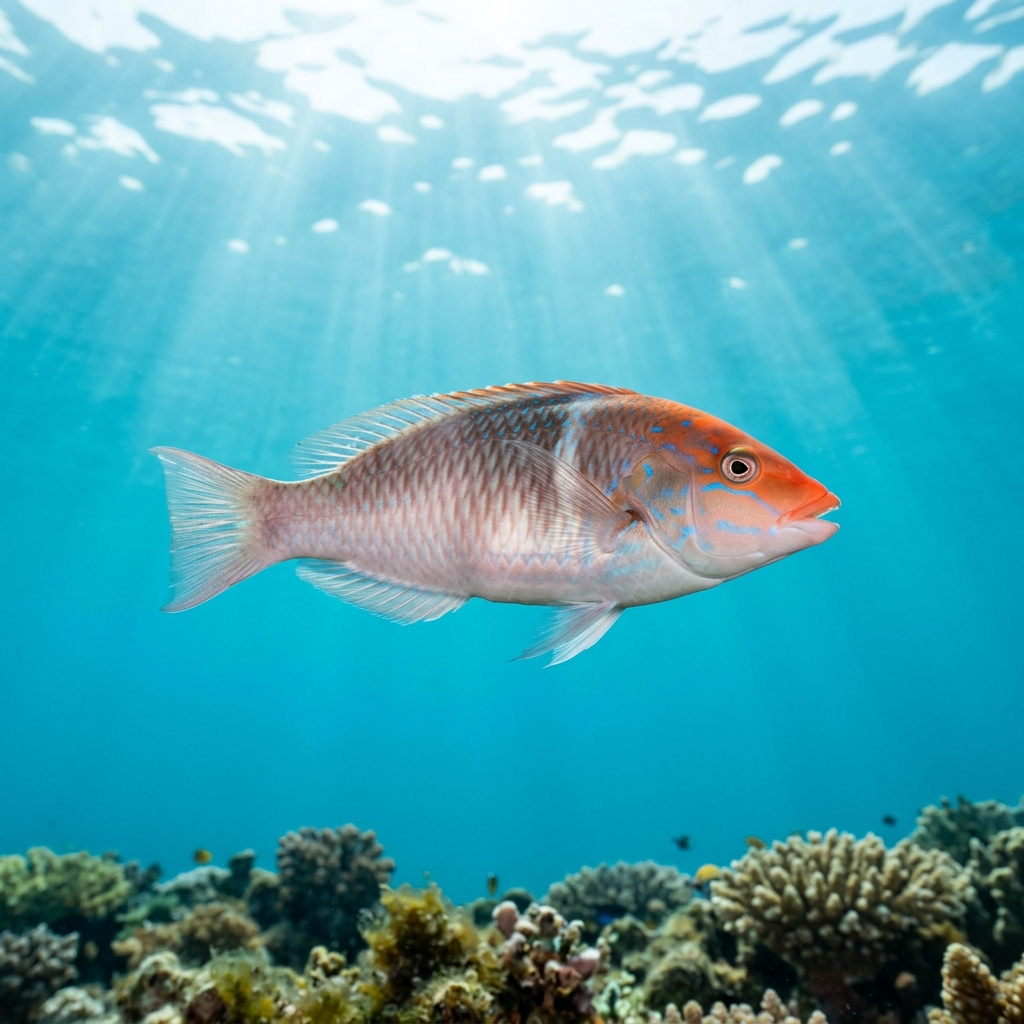
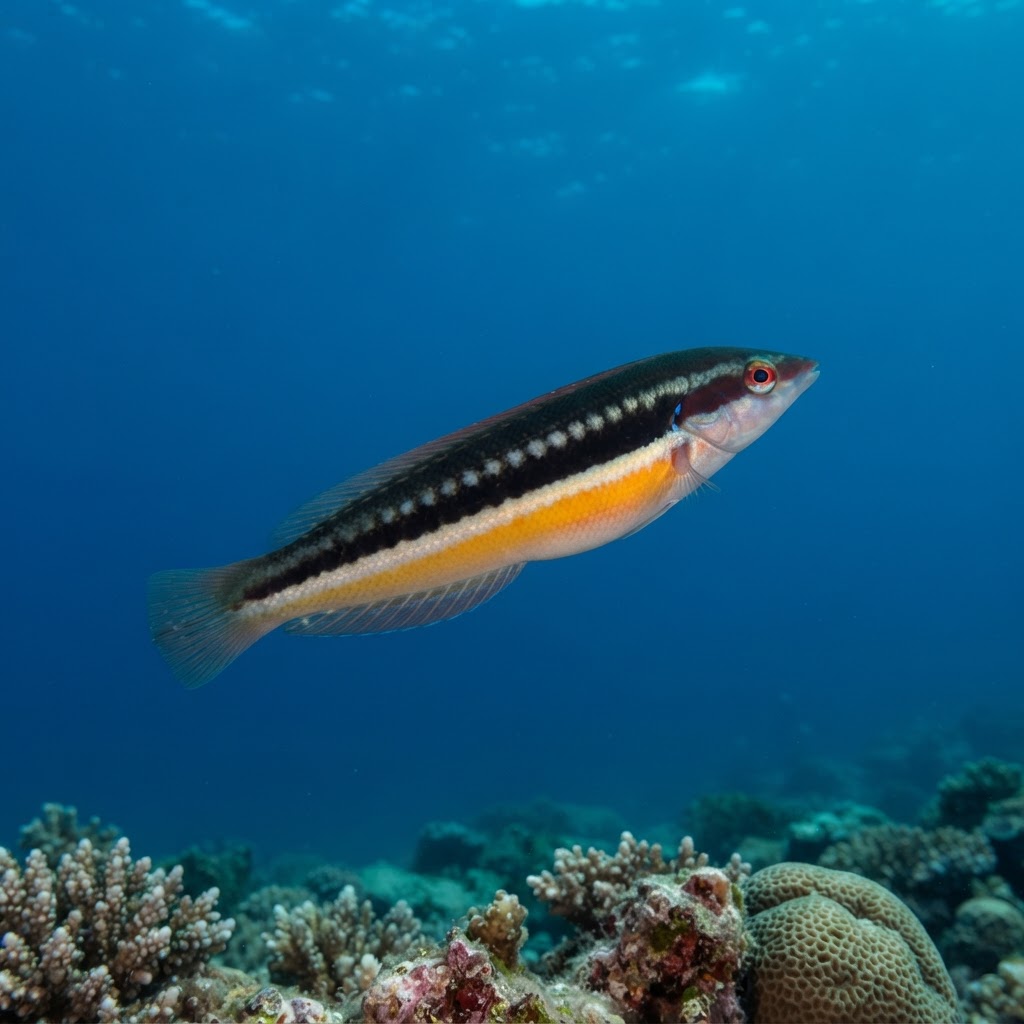
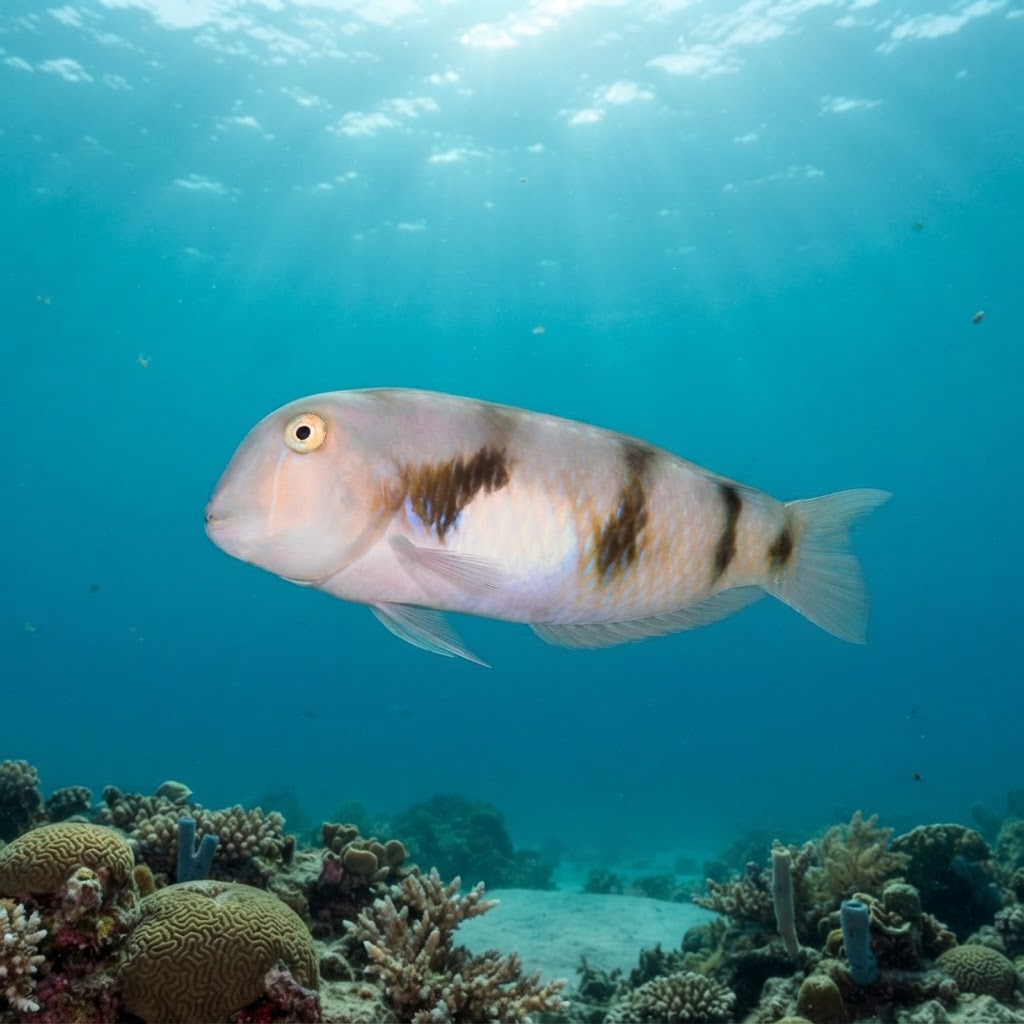
Elongated, laterally compressed body around 17 cm long, built more like a blade than a typical reef fish. Look for the pale white blotch on the upper back that gives the species its name, set against a silvery-tan body. The sloped, almost beaked head shape is a quick tell if it darts for the sand, since razorfish (genus Iniistius) dive headfirst into loose substrate when startled.
Spends most of its time low over sand and rubble patches at the edges of reef, sifting through the substrate for food rather than schooling in open water. It is a wary fish that tends to keep its distance, and when it feels pressured it will vanish headfirst into the sand in an instant, a classic razorfish escape move. Divers typically log it as an uncommon find rather than a guaranteed sighting, so slow, careful scanning of sandy flats pays off.
Like other razorfish, it can bury itself completely in loose sand within a second when threatened, using its blade-shaped body to slip below the surface rather than swim away.
No clear seasonal pattern shows up in the sightings, and with water temperatures logged between 24.6 and 29.1 C, it sits comfortably on tropical reefs year-round. Plan around site access rather than season.
Most reliably logged across the Visayas and Luzon regions of the Philippines, which together account for the bulk of recorded sightings. A smaller number of divers also report it in Hawaii, United States, so it turns up on both sides of the Pacific if you know where to look on sandy reef edges.
Mapping where White-blotch Razor Wrasse is logged…
The strongest sightings come from the Visayas and Luzon regions of the Philippines, with additional records from Hawaii, United States. It favours sandy reef edges over hard coral structure.
There is no detected seasonal pattern, and it is found in water from about 24.6 to 29.1 C, so sightings are possible year-round on tropical reefs.
Look for a slim, blade-like body about 17 cm long with a sloped head and a pale white blotch on the upper back. It hovers low over sand rather than swimming among coral.
It typically reaches around 17 cm in length, a small, slender wrasse rather than a bulky reef fish.
When startled, it dives headfirst straight into sand and disappears completely within a second, a defence trick shared by other razorfish species.
Site and sighting data is aggregated from diver logs, iNaturalist and GBIF. For taxonomy and conservation status:
Bird Wrasse
3,632 sites