Antipathidae spp.
Whip coral grows across reefs from Florida to the Maldives to the Philippines. Here's how to spot and identify these long, whip-like colonies underwater.
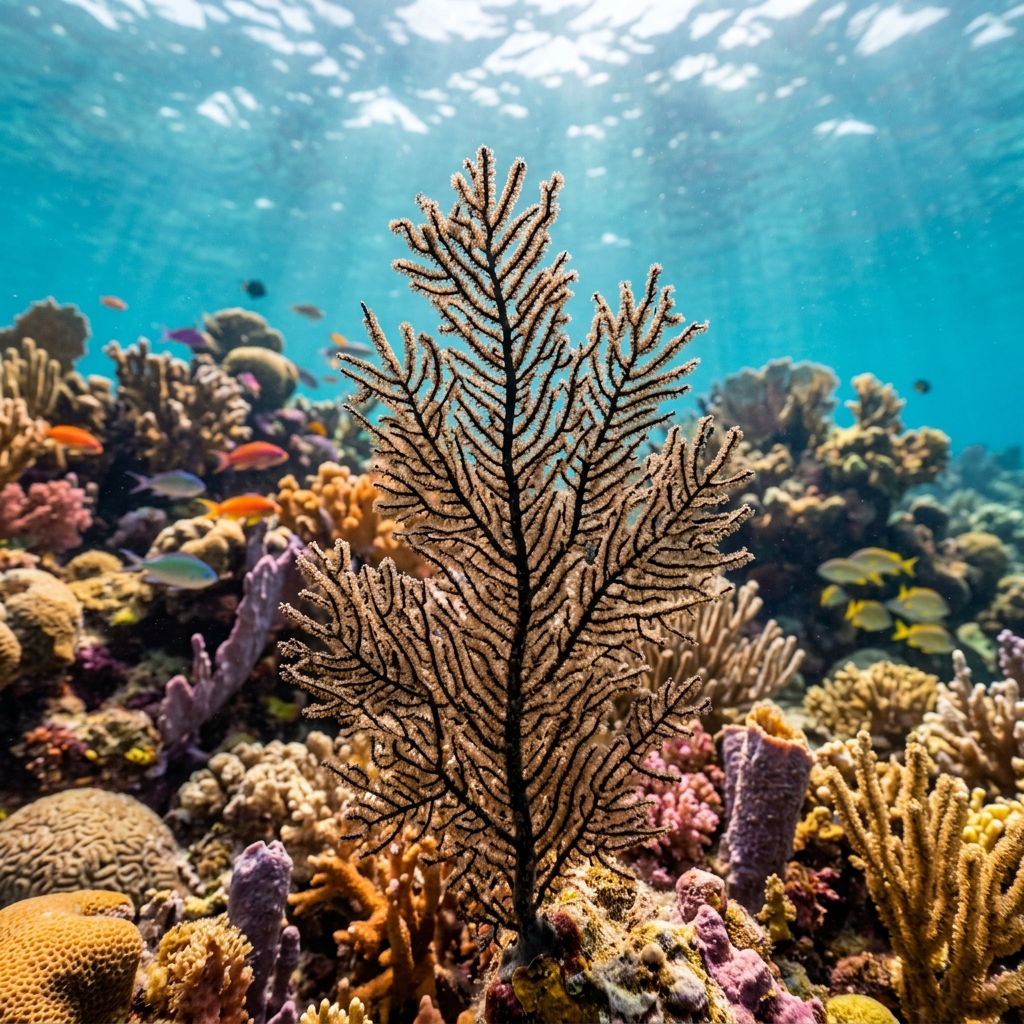
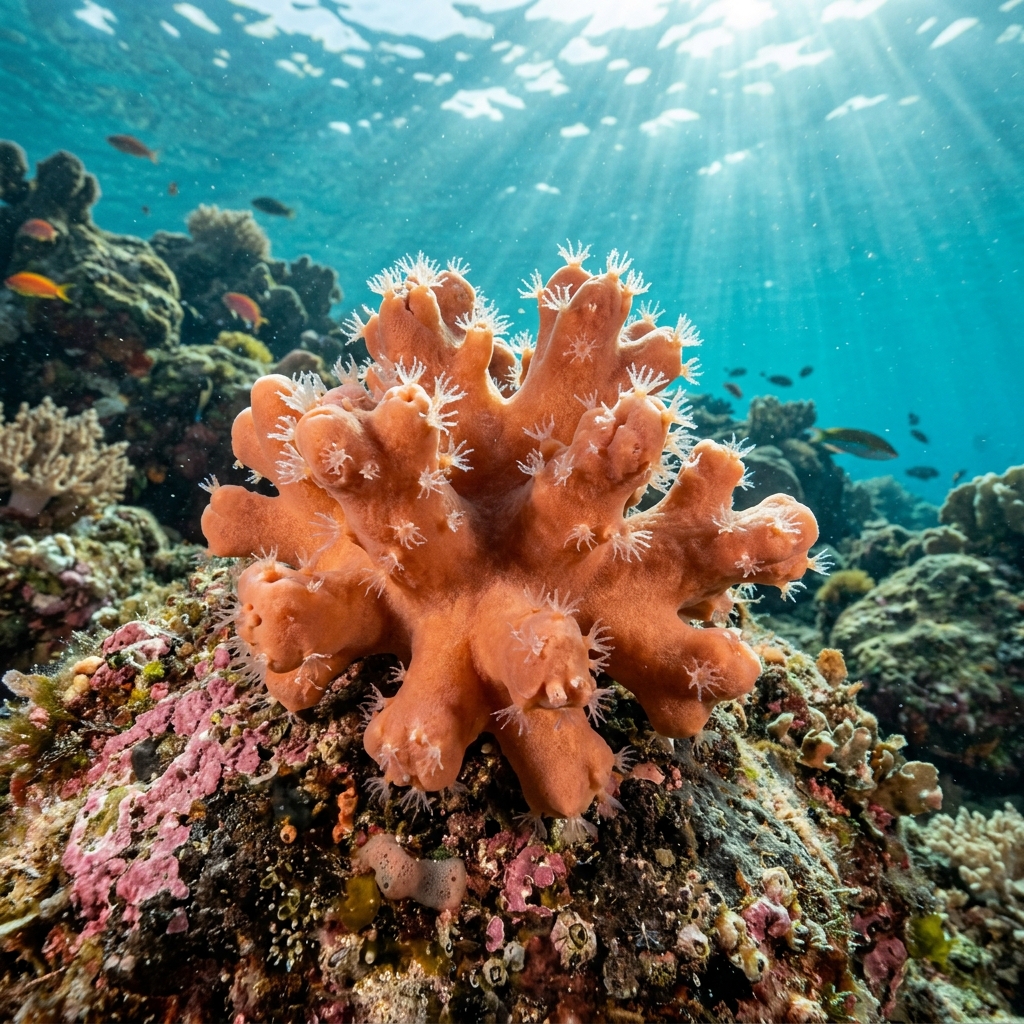
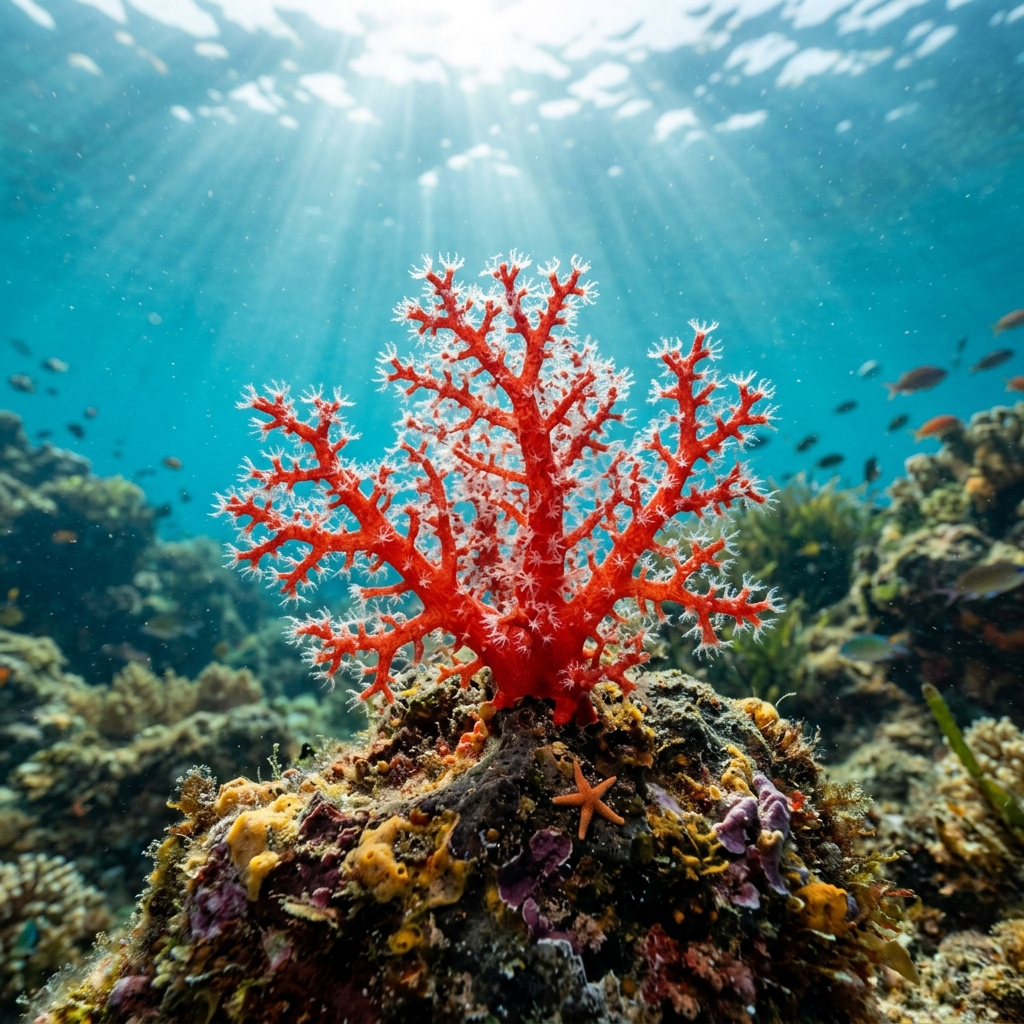
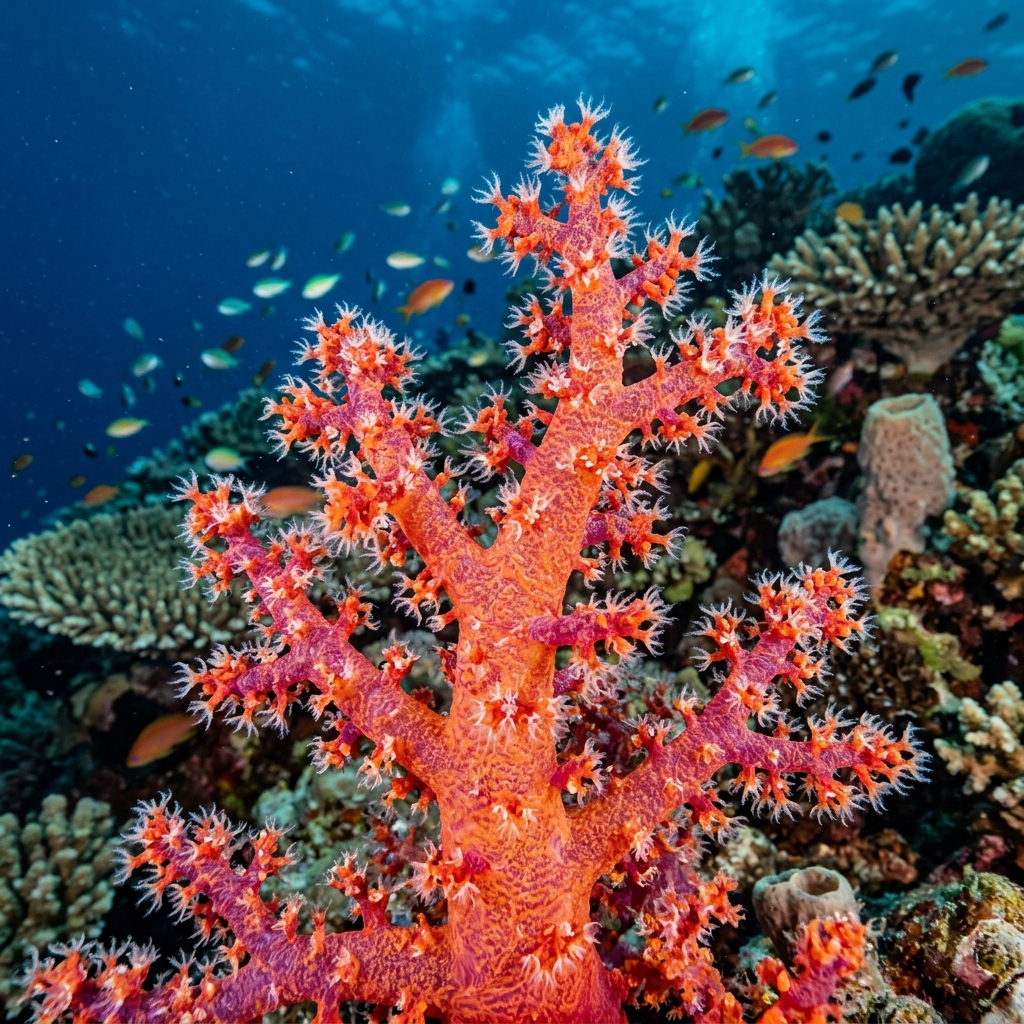
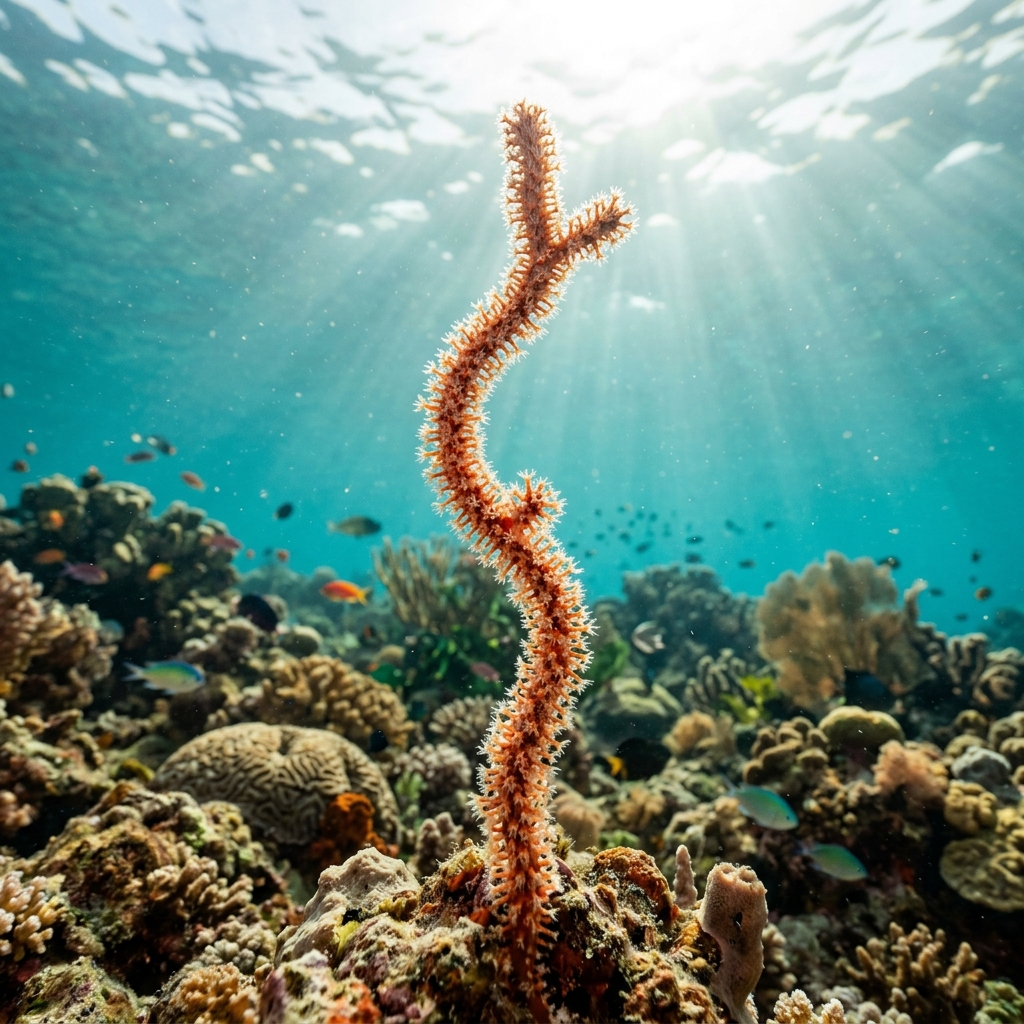
Long, slender, unbranched or sparsely branched stems growing from a single holdfast give whip corals their name. Colouration ranges from dark brown or black through red, orange, and yellow depending on species. Up close, tiny polyps line the stem in a feathery fringe, visible when feeding. The stem itself is stiff and wiry, which distinguishes it from the floppy flexibility of true soft corals.
Whip corals are sessile (fixed to the substrate) filter feeders, extending their polyps into the current to capture passing plankton. You will typically find them anchored to walls, slopes, or overhangs where current runs reliably, often starting at mid-reef depths and extending into deeper water. They do not react to divers, but their slender stems are fragile and easily snapped by fins or contact.
Many whip coral stems host specialist commensal animals, including tiny shrimp and pygmy seahorses that spend their entire lives on a single colony, matching its colour so closely they are easy to overlook.
No strong seasonal pattern emerges from the data, and whip corals appear to be present year-round wherever they grow. Their tolerance for water temperatures from around 12°C to nearly 29°C means they thrive on both tropical and temperate reefs across all seasons.
Reef neighbours a diver could mistake it for. Use the identification notes above to tell them apart.
Whip corals are logged across a wide range of countries, with particularly strong representation in the United States (especially Florida and the Southeast), Australia (Queensland and Western Australia), the Maldives, and the Philippines. Mediterranean divers encounter them regularly along the coasts of Italy, Greece, and France, including Brittany and Normandy.
Mapping where Whip Coral is logged…
Whip corals turn up across a wide spread of dive destinations worldwide. They are most commonly logged in the United States (particularly Florida), Australia, the Maldives, the Philippines, and throughout the Mediterranean in countries like Italy and Greece. Temperate sites in France and Ireland also record them regularly.
There is no single best season. Whip corals are present year-round across their range, from cold-water Mediterranean and Atlantic reefs to warm Indo-Pacific tropics. Plan your dive for when visibility and current suit you rather than chasing a particular season.
Look for long, stiff, wiry stems growing from the reef in a single direction or with sparse branching. Tiny polyps fringe the stem like a comb when feeding. Colour varies by species from black and dark brown to red, orange, or yellow. The rigid, whip-like form is the key ID feature.
Yes, and this is one of the best reasons to look closely. Pygmy seahorses, commensal shrimp, and small gobies often live their entire lives on a single whip coral colony, camouflaged to match the host's colour. Scan slowly along the stem rather than glancing past it.
Site and sighting data is aggregated from diver logs, iNaturalist and GBIF. For taxonomy and conservation status:
Dead Man's Fingers
2,774 sites