Coralliidae spp.
Red coral turns up across the Mediterranean, Japan, and beyond in water as cool as 11°C. Find out where divers spot it and how to recognise it.
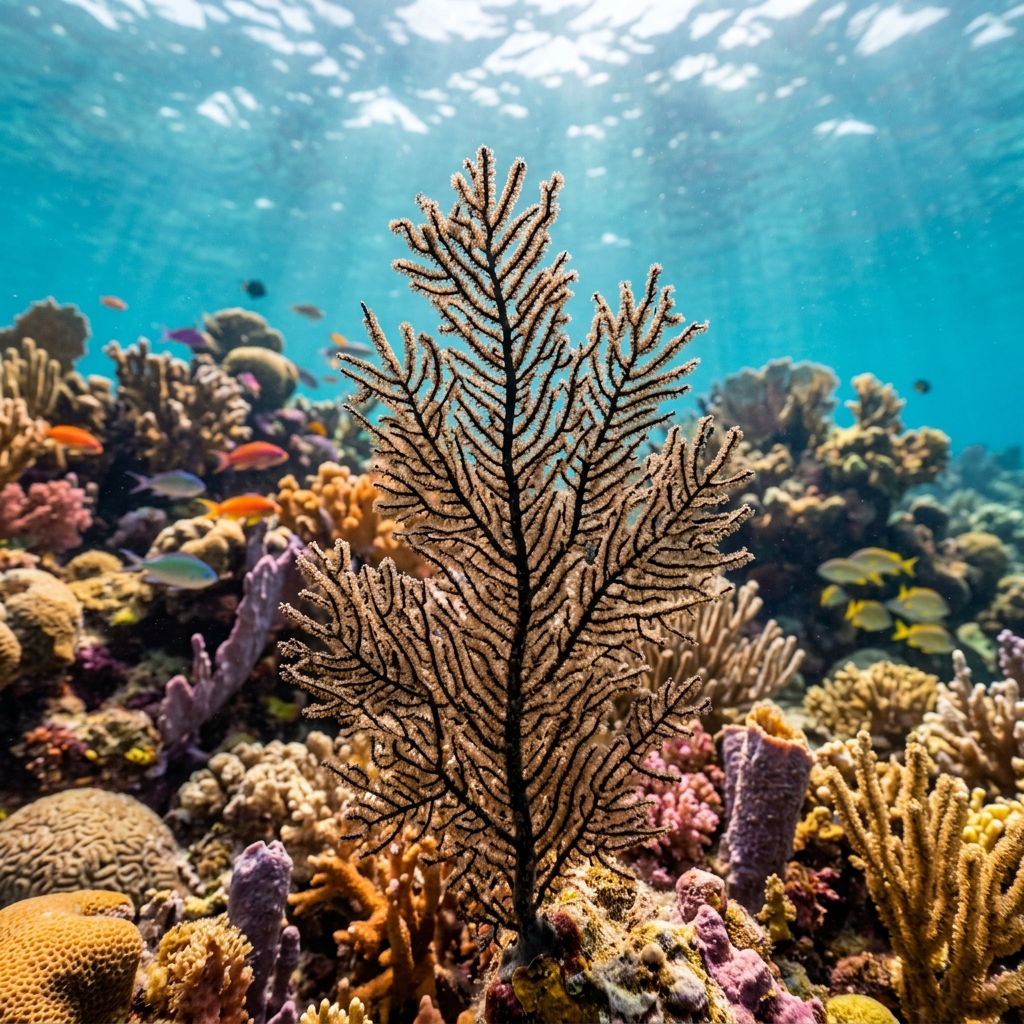
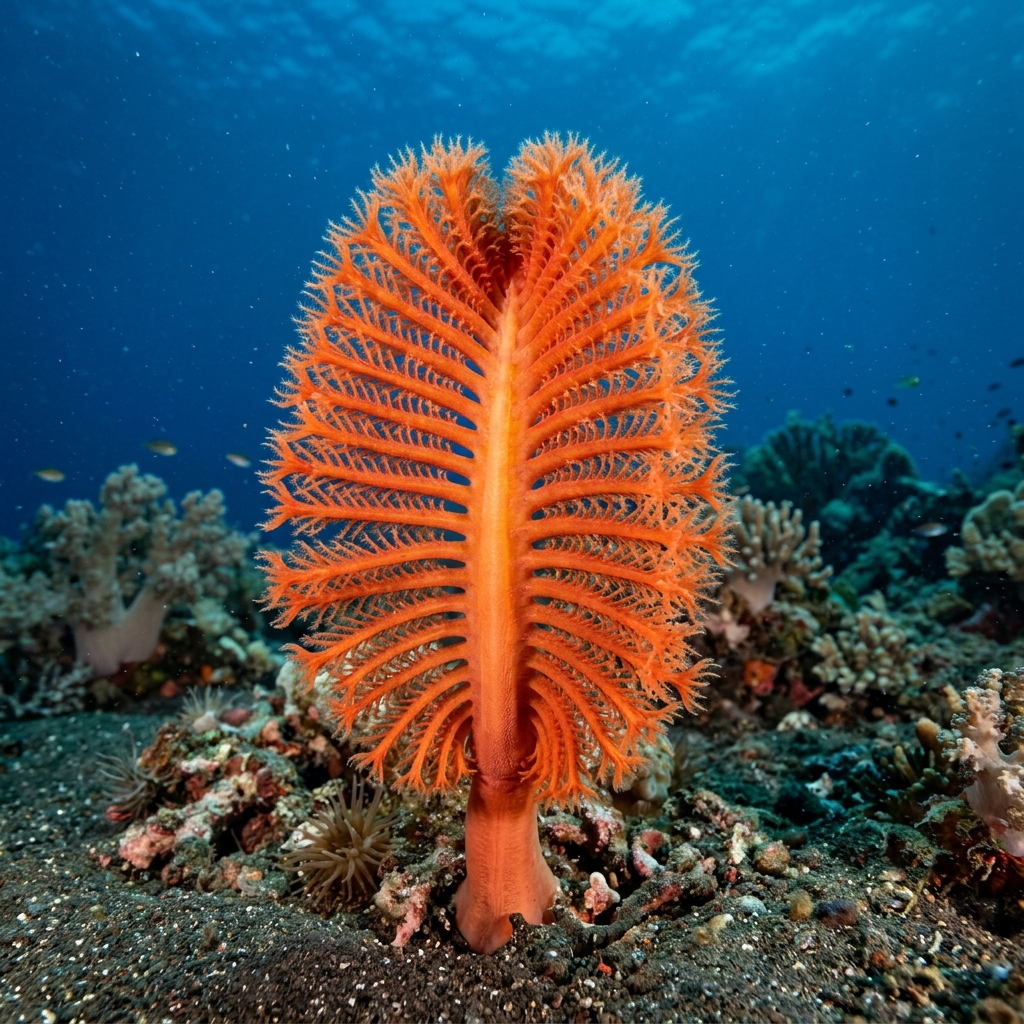
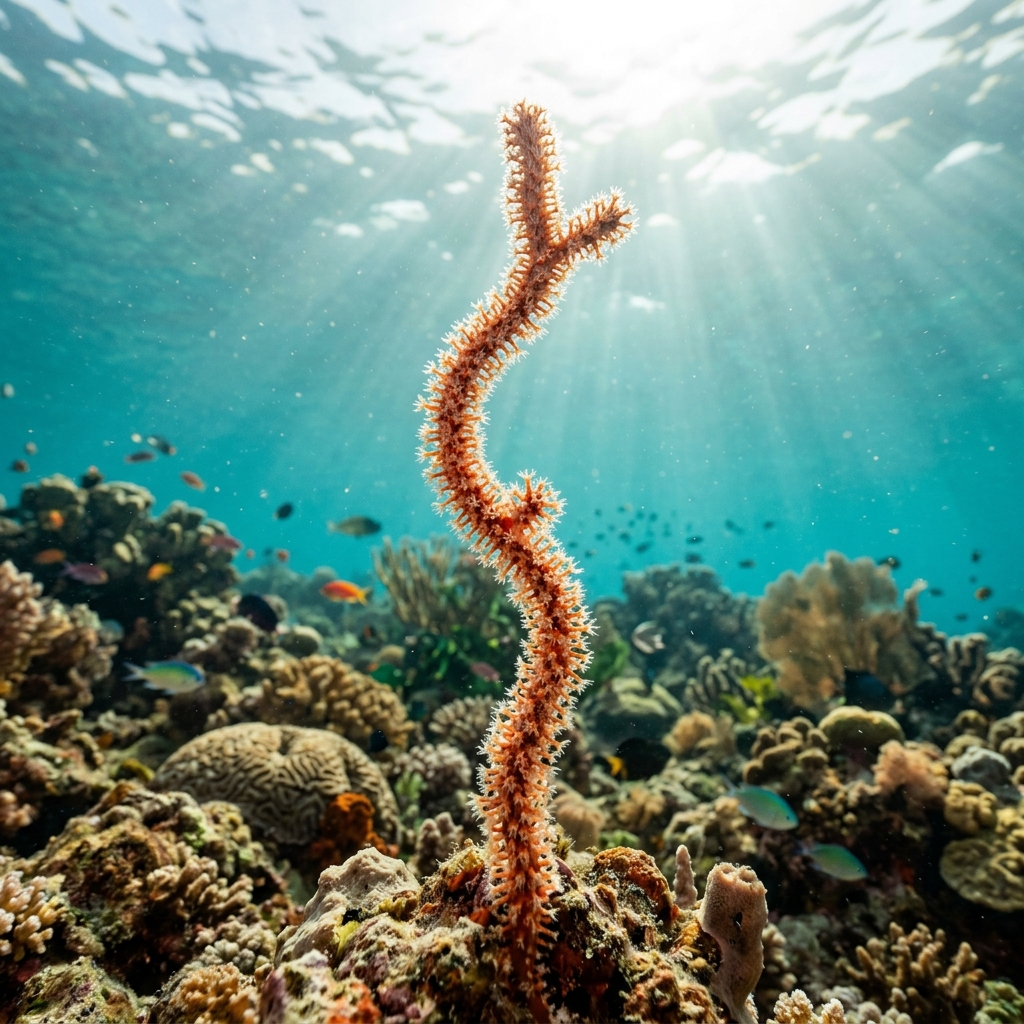
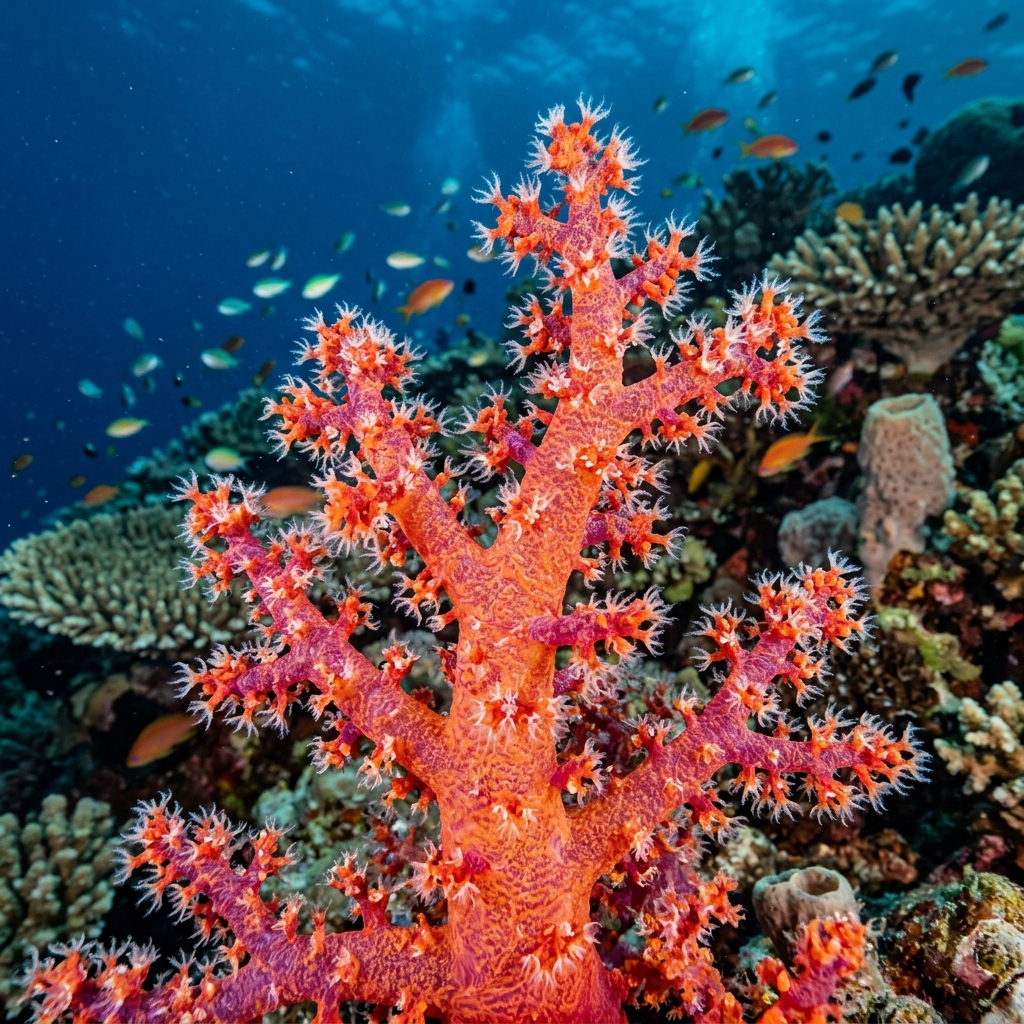
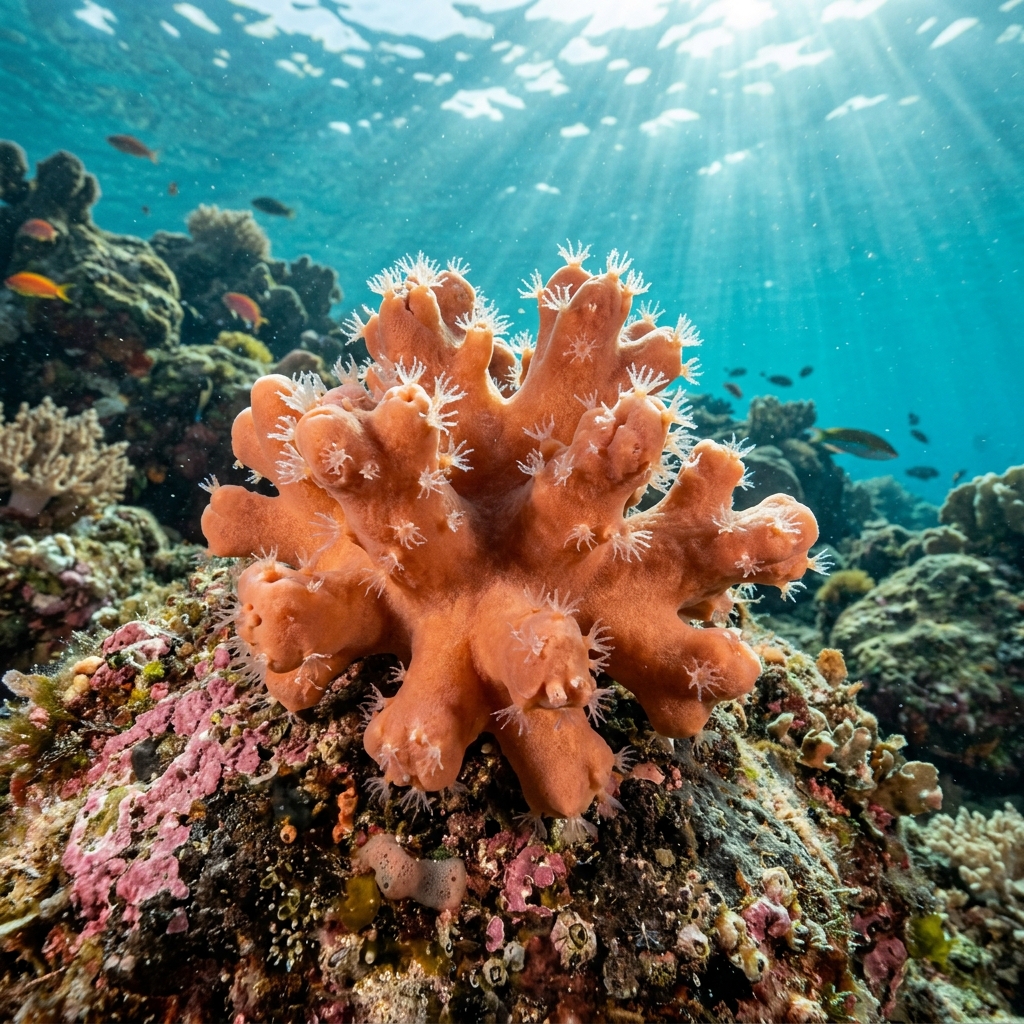
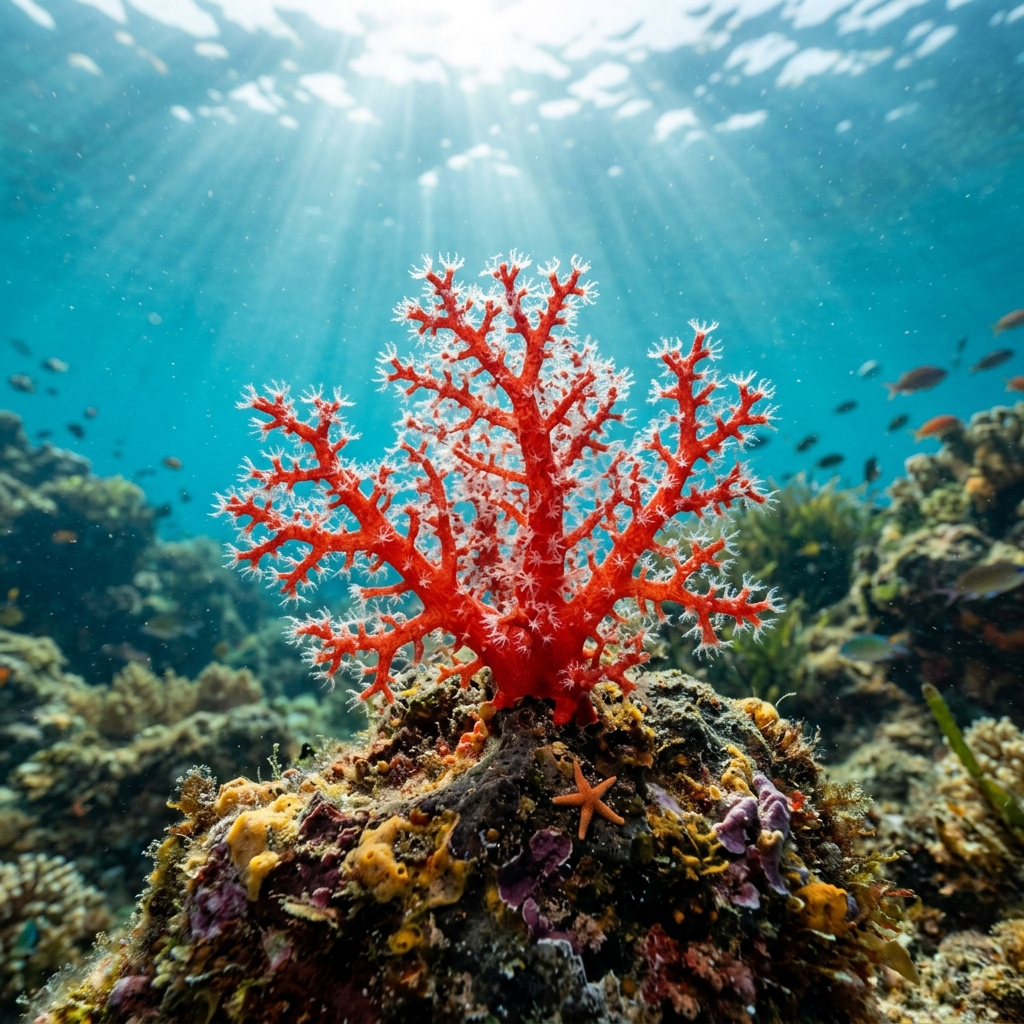
Branching colonies of deep scarlet to blood-red rigid skeleton are the main clue, with tiny white or pale polyps extending from the branches when the animal is feeding. The overall form looks like a stiff, leafless shrub anchored to hard substrate, usually on shaded walls or overhangs. Up close, the texture shifts from the smooth red skeleton to a softer, fleshy rind dotted with polyp pores. Colour can fade toward pale pink or orange at depth or in older colonies.
Red coral colonies are fixed to the reef, typically favouring shaded walls, overhangs, and cave entrances where light is low and current delivers plankton. When conditions are calm, the small polyps extend visibly, giving the colony a fuzzy or feathery fringe; any disturbance in the water causes them to retract almost instantly. Because they grow very slowly and sit out in the open on rock faces, they are easy to approach but equally easy to damage with a careless fin kick.
Coralliidae corals grow extraordinarily slowly, often just a few millimetres per year, meaning a colony the size of your hand may be decades old. This makes them highly vulnerable to physical contact and very slow to recover from any damage.
There is not enough seasonal sighting data to point to a peak period, so red coral should be treated as a year-round target. The family tolerates a wide temperature band, from around 11°C in cool-temperate Atlantic and Mediterranean water to nearly 27°C in warmer sites, meaning it fits comfortably into dive plans throughout the calendar.
Reef neighbours a diver could mistake it for. Use the identification notes above to tell them apart.
Red coral is most commonly logged in the Mediterranean, with Italy, Greece, France, Spain, and Turkey all contributing strong site numbers, particularly around Sicilia, Attica, and the French Atlantic coast of Brittany. Outside Europe, Japan's Izu Peninsula and Hachijojima region and the waters around the United States, including Florida and the Southeast, account for a large share of range-model sites. Australia and Ireland also appear regularly in the data.
Mapping where Red Coral is logged…
The strongest diving opportunities are in the Mediterranean, particularly around Italy, Greece, France, Spain, and Turkey. Shaded walls and overhangs in areas like Sicilia, Attica, and Brittany are reliable spots. Japan's Izu Peninsula, the southeastern United States, and parts of Australia and Ireland also appear in the site data.
No clear seasonal peak has emerged from diver sighting data, so red coral can be targeted year-round. It tolerates water temperatures from roughly 11°C to 27°C, meaning it is accessible in both cool-temperate Mediterranean winter dives and warmer tropical conditions.
Look for a stiff, branching colony in deep scarlet or blood-red on shaded reef walls or cave ceilings. Tiny white polyps fringe the branches when feeding. The rigid skeleton distinguishes it from soft corals, which flex freely in the current.
Individual colonies are typically compact shrubs, often no more than 20 to 30 centimetres tall, though larger specimens can exceed 50 centimetres. Because this family grows just millimetres per year, any large colony represents a very old organism.
Red coral lays down a hard calcium carbonate and protein skeleton at a rate of only a few millimetres annually. This slow calcification is linked to the cold, low-light conditions it favours. It means colonies you see diving are likely decades old, and any breakage from contact or anchor damage is essentially permanent on a human timescale.
Site and sighting data is aggregated from diver logs, iNaturalist and GBIF. For taxonomy and conservation status:
Dead Man's Fingers
2,774 sites