Eckloniaichthys scylliorhiniceps
A 3cm clingfish that hides in Cape kelp forests. Rare, tiny and easy to swim past in Western Cape's cool 13-19C water.
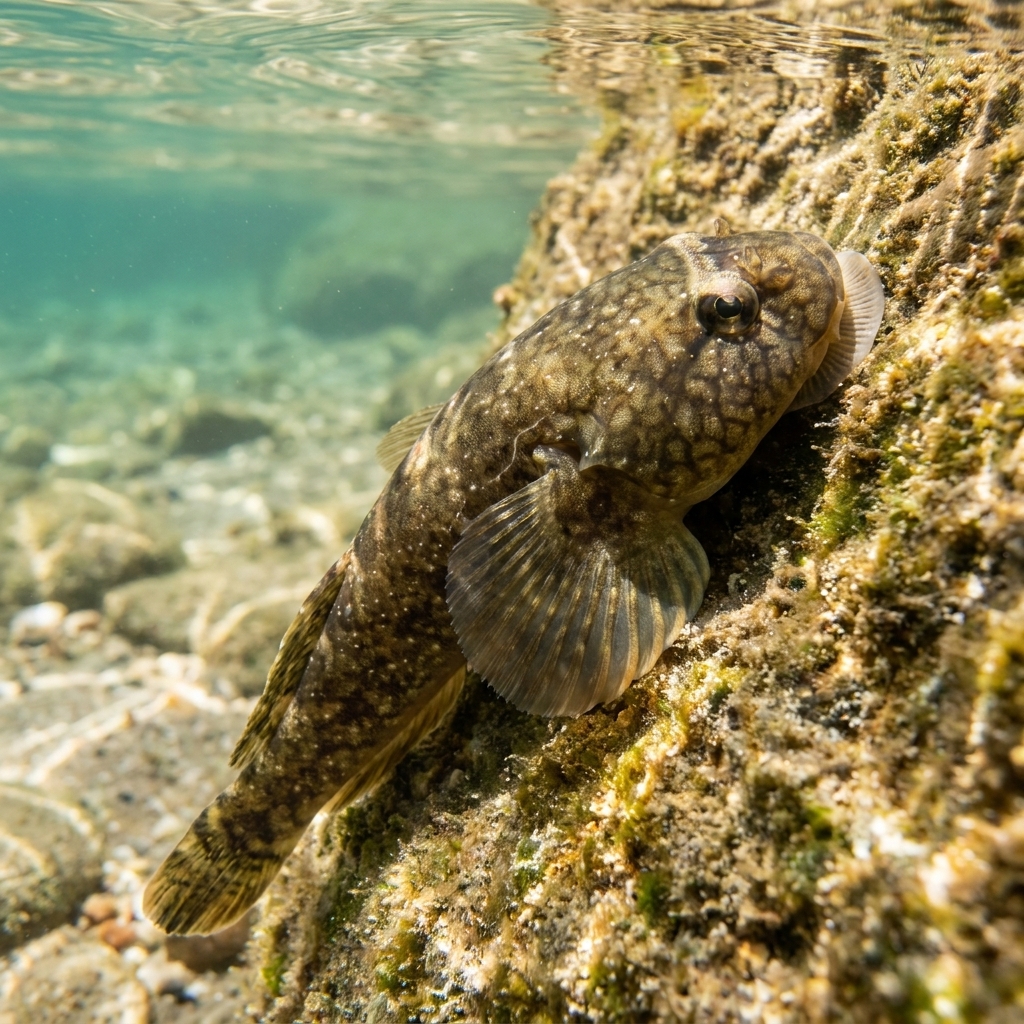
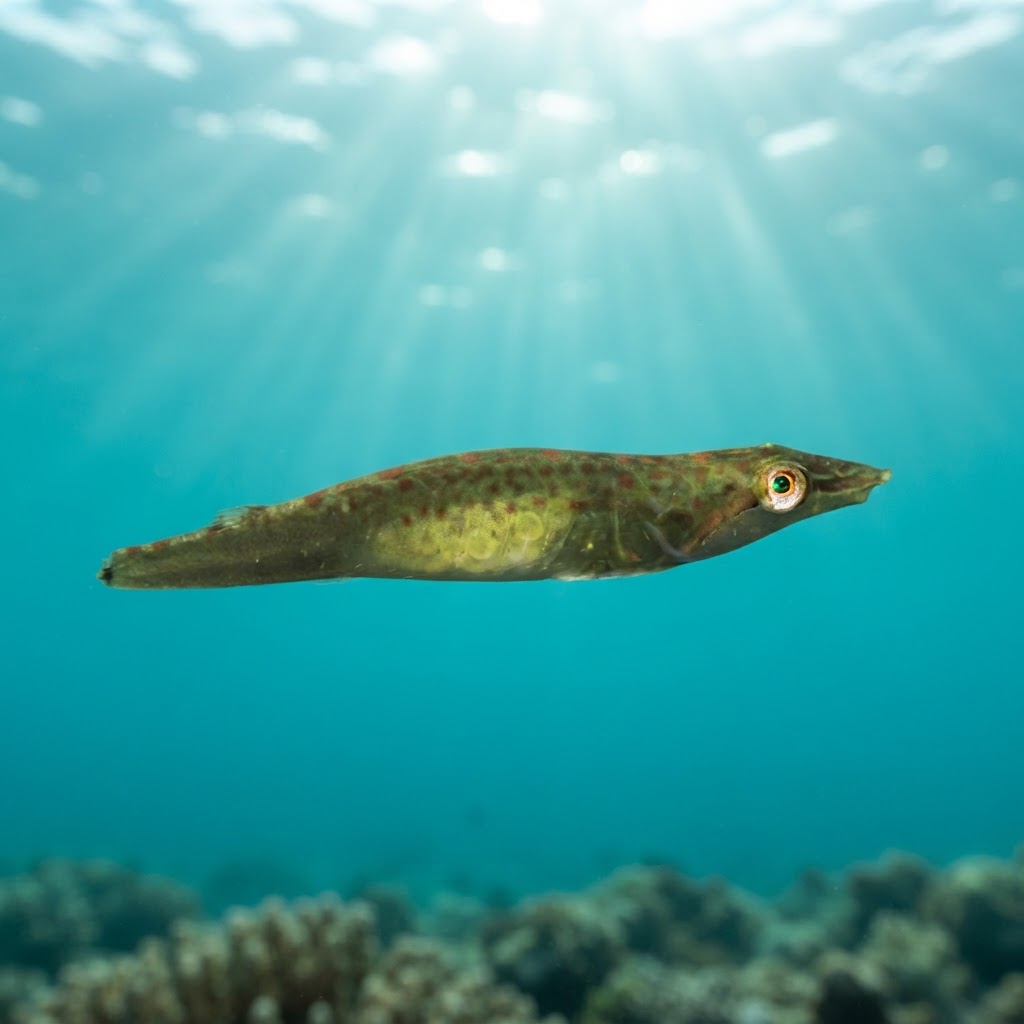
A tiny clingfish reaching only about 3 centimetres, so you are hunting for something the size of a fingernail against a kelp blade. Look for a slender, tapering body in mottled brown or olive tones that mimics the kelp it clings to, with a flattened head and a modified sucking disc on its underside that holds it fast to the fronds. There is no bold pattern here; the whole trick is camouflage, so divers spot it by scanning kelp stipes and blades slowly rather than looking for colour.
Divers find it clamped motionless to kelp blades and stipes, using its sucking disc to hold position against surge rather than swimming freely in open water. It relies on staying still and blending into the kelp rather than fleeing, so a slow, close look along the fronds is more productive than chasing movement. Most sightings happen while divers are working through kelp forest rather than cruising reef or open sand.
Its sucking disc, formed from modified pelvic fins, is the same adaptation that lets clingfish relatives grip rock in surge zones, but here it is used to stay anchored to swaying kelp instead of stone.
There is not enough seasonal data to point to a particular month, and the temperature range logged, 13.4 to 19.4C, spans most of the year in the Western Cape, so treat this as a year-round possibility rather than a seasonal target.
Every logged sighting so far comes from South Africa, specifically the kelp forests of the Western Cape. If you are diving cool Cape water and want a shot at this one, the kelp beds around the Western Cape are the only known place to look.
Mapping where Weedsucker is logged…
All confirmed sightings are from kelp forest dive sites in the Western Cape, South Africa. It has not been logged anywhere else, so this is currently a Cape-specific find.
There is no clear seasonal pattern in the sighting data, and it has been recorded across a wide temperature range, so it appears to be present year-round in Western Cape kelp beds rather than tied to a particular season.
Look for a slender, mottled brown fish only about 3 centimetres long, clinging motionless to kelp blades using a sucking disc on its belly. Its camouflage colouring and stillness make it easy to miss, so scan kelp fronds slowly rather than looking for movement.
It is a tiny fish, typically reaching only around 3 centimetres in length, making it one of the smaller clingfish species divers might encounter in Cape kelp forests.
It uses a sucking disc formed from modified pelvic fins to grip kelp blades and stipes, holding position against surge instead of swimming, a trait shared with other clingfish that normally use it to grip rock rather than swaying kelp.
No. It poses no risk to divers; the only challenge is spotting something this small and well camouflaged among kelp fronds.
Site and sighting data is aggregated from diver logs, iNaturalist and GBIF. For taxonomy and conservation status:
Soldierfish
3,612 sites