Pleurobranchus areolatus
Uncommon but reliable in Colombia and Guadeloupe reefs, this warty orange-brown sea slug turns up year-round in 25-30C water.
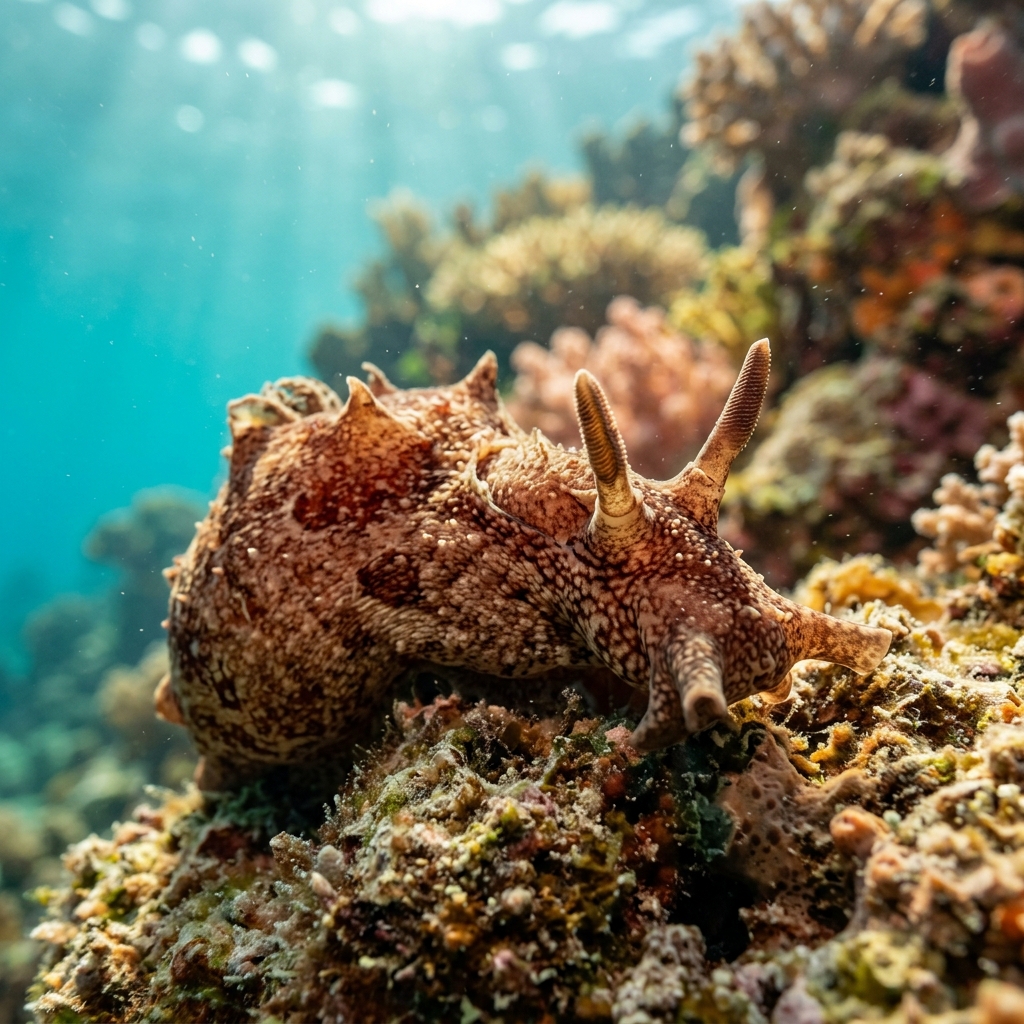
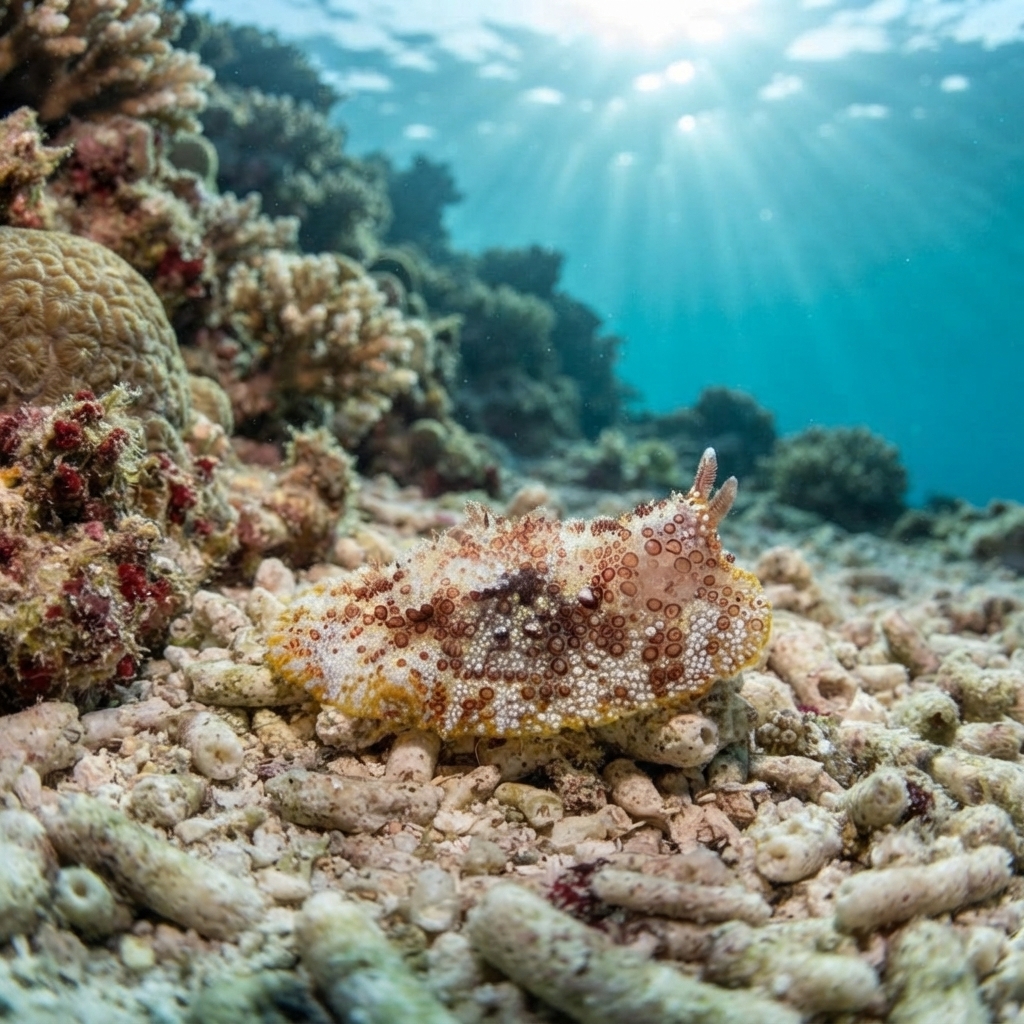
Bulky, oval-bodied slug growing to around 10cm, with a mottled orange, brown and cream skin covered in soft wart-like bumps (tubercles) that give it its name. It has no showy gills or horns projecting from its back like many nudibranchs, instead looking almost like a lump of sponge or debris until you spot the raised mantle edge. Its texture, not its colour pattern, is the giveaway underwater.
Divers usually find it slow-moving or motionless on rubble, sand patches or low reef structure, grazing rather than swimming. It shows no reaction to divers beyond its usual crawl, making it an easy subject for close macro photography once spotted. Because it blends into rubble and algae, most sightings come from divers actively scanning the bottom rather than cruising past.
Like other pleurobranchs, it lacks a shell and relies on camouflage and its warty, debris-like texture rather than bright colour to avoid predators, a very different defence strategy from the flashy toxic nudibranchs it sometimes gets lumped in with.
No clear seasonal pattern in the data, and its 24.9-30.9C comfort range spans typical Caribbean water temperatures all year, so sightings are best treated as a year-round possibility rather than tied to a particular month.
Reef neighbours a diver could mistake it for. Use the identification notes above to tell them apart.
Most reliably logged along Colombia's Caribbean Coast and across Guadeloupe, particularly Grande-Terre, Basse-Terre and the Îles des Saintes. Also turns up on Mexico's Yucatán Peninsula and, less often, around Grand Cayman, Martinique and Florida.
Mapping where Warty Sea Slug is logged…
It is most often logged along Colombia's Caribbean Coast and throughout Guadeloupe, especially Grande-Terre and Basse-Terre. Mexico's Yucatán Peninsula and Grand Cayman also produce regular sightings.
There is no strong seasonal signal in sighting data, and it tolerates a wide 24.9-30.9C range, so it is realistic to look for it on any dive year-round in the Caribbean.
Look for a chunky, oval slug around 10cm long with mottled orange-brown skin covered in soft tubercles. It lacks the bright gill plumes of many nudibranchs, so its rough, wart-covered texture is the key clue.
They typically reach about 10cm in length, making them a medium-sized, easy-to-photograph subject once spotted on rubble or sand.
No, they pose no threat to divers and can be observed and photographed up close without any risk.
Rather than relying on bright warning colours, it depends on a dull, warty, debris-like texture to stay hidden on the reef, a camouflage strategy that sets it apart from flashier nudibranch relatives.
Site and sighting data is aggregated from diver logs, iNaturalist and GBIF. For taxonomy and conservation status:
Light-spotted Aegires
3,168 sites