Doris verrucosa
Warty Dorid turns up year-round in Zeeland's cool Dutch waters and Brittany's rocky shores, usually as an uncommon but steady find for patient divers.
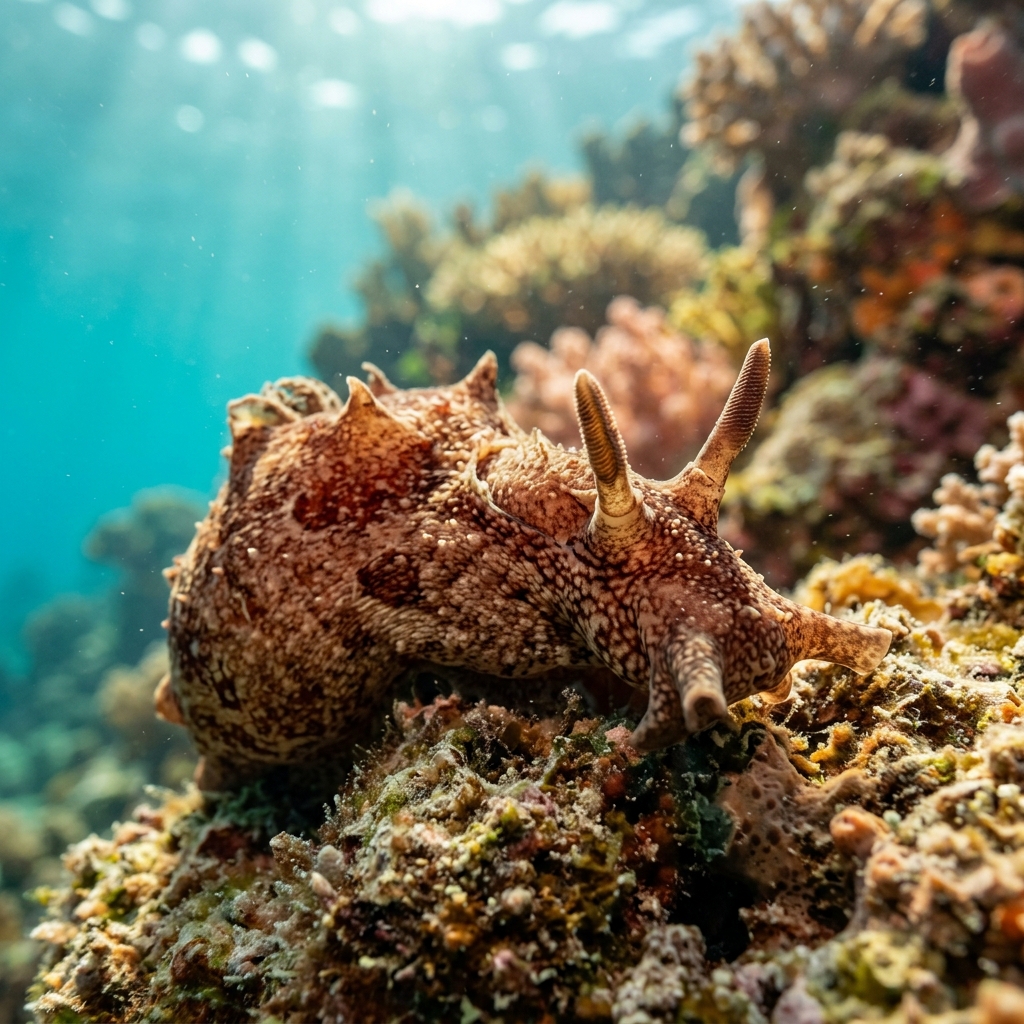
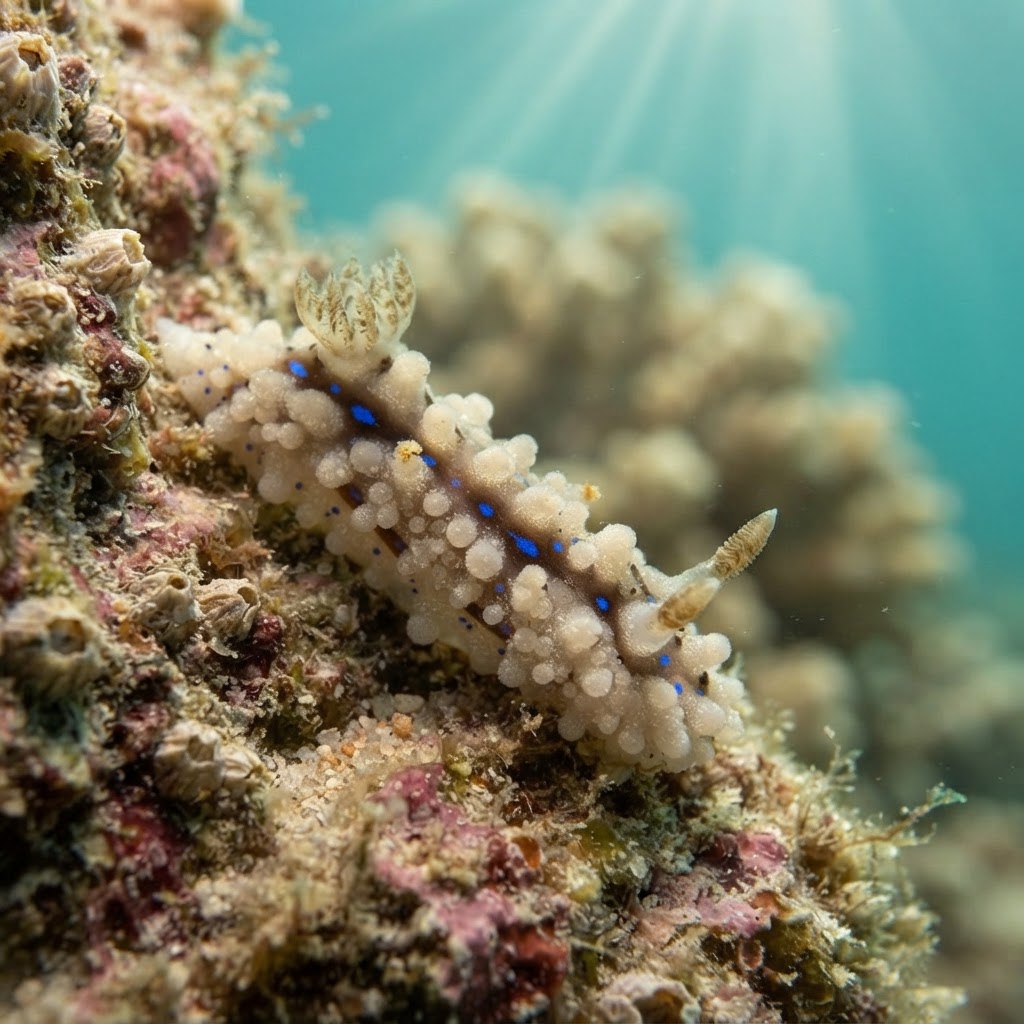
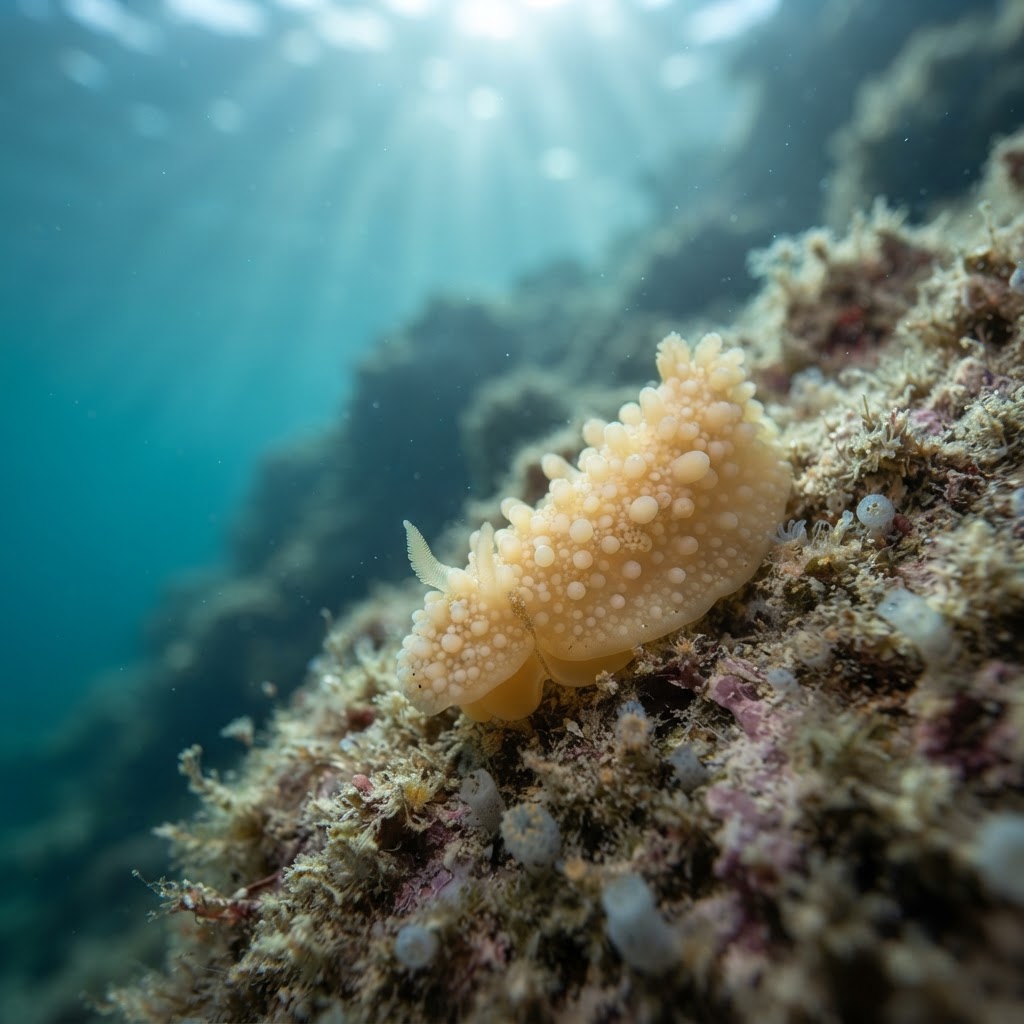
Small at around 4 cm, with a warty, tubercle-covered body that gives it a rough, textured look rather than a smooth one. Colouring runs from whitish to yellowish-brown or grey, usually mottled or blotched rather than uniform, which helps it blend into the rock and sediment it sits on. Look for the two rhinophores (small sensory tentacles) at the front and a rosette of gills near the rear, both typical dorid features but useful for confirming you have a true dorid rather than a similar-looking slug.
Divers find it slow and stationary on rock and sediment in shallow water, rarely deeper than 12 metres, where it goes about its business unbothered by torches or close observation. It is a benthic (bottom-dwelling) grazer, so scan low over rubble and rocky patches rather than the open water column. Most logs describe it as an easy, calm subject for macro photography once spotted.
Like other dorid nudibranchs, it feeds on sponges, and its warty skin texture is thought to help it blend against the encrusting growth it lives among.
Sightings show no clear seasonal pattern, and with a comfortable range of roughly 11 to 17.5C, it is worth looking for on any dive through these cooler European waters at any time of year.
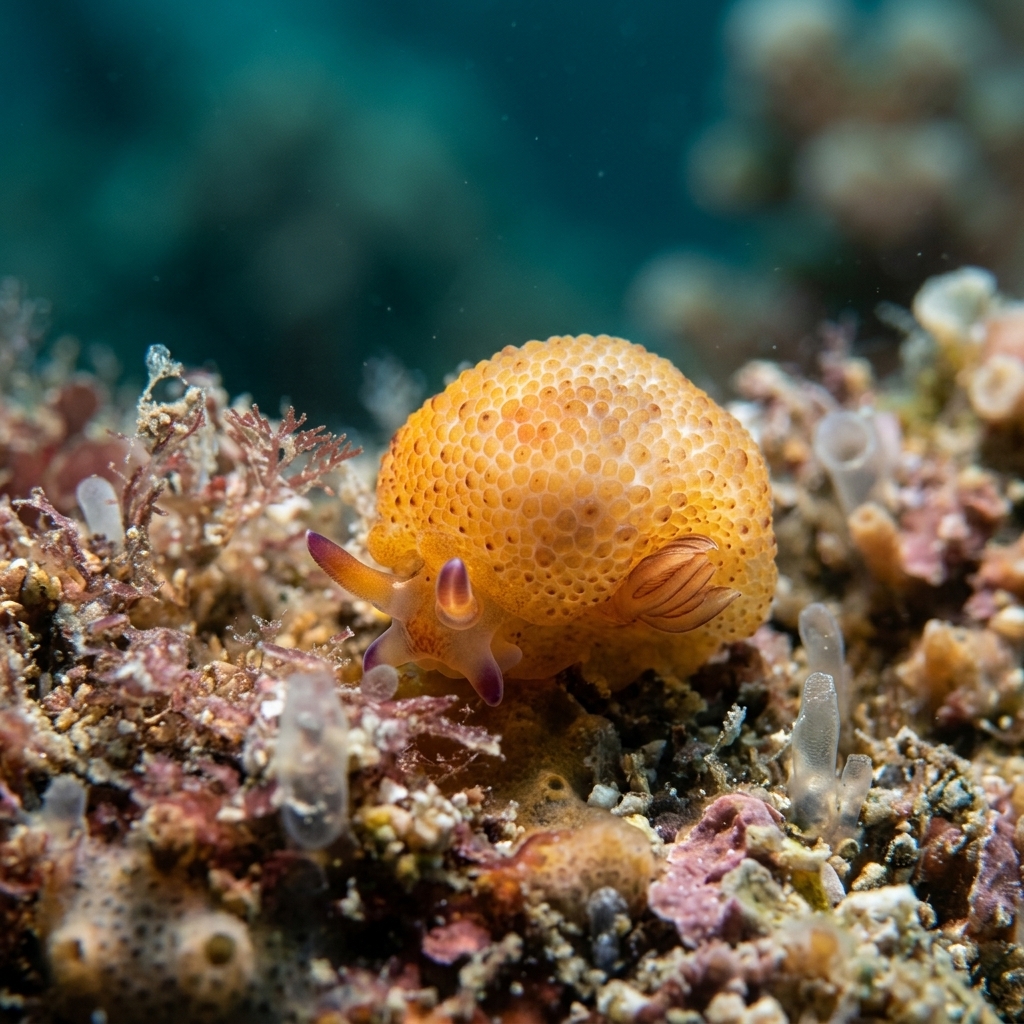
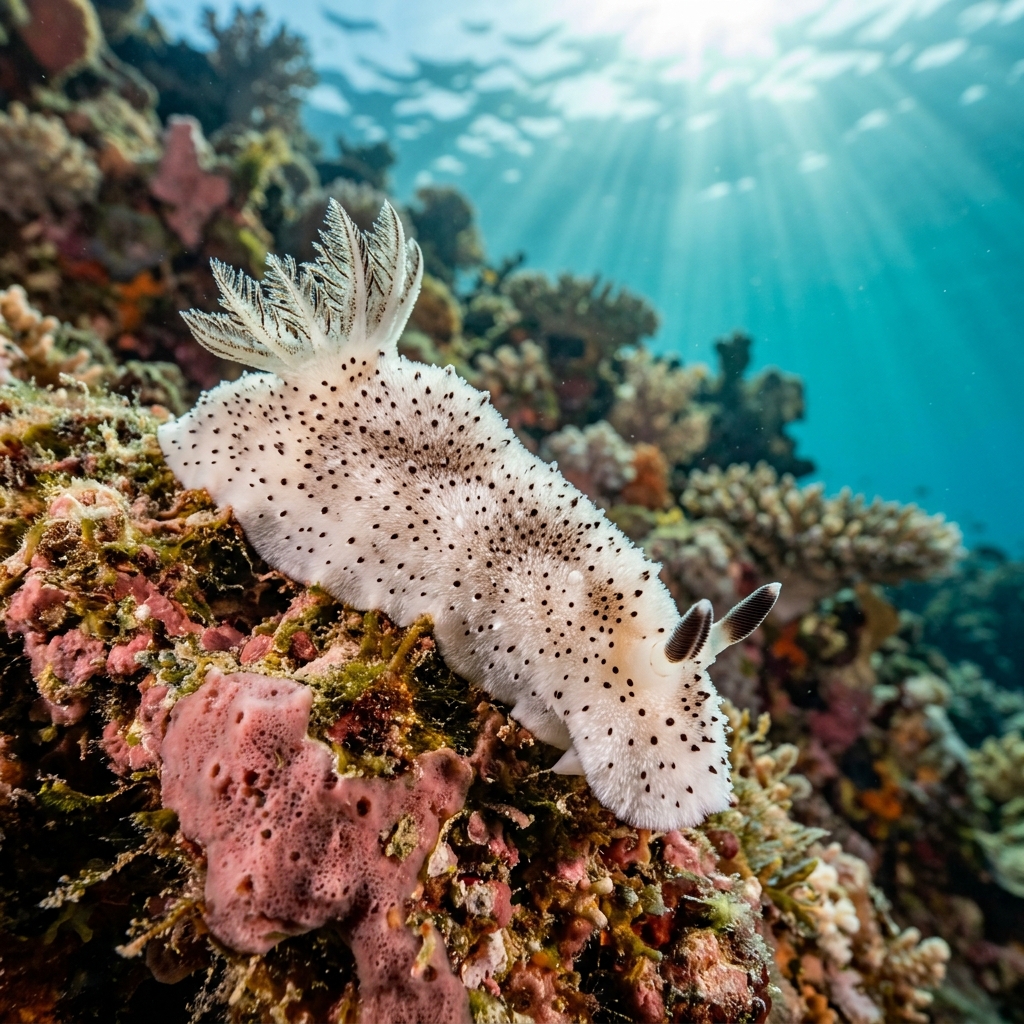
Reef neighbours a diver could mistake it for. Use the identification notes above to tell them apart.
Most reliably logged in Zeeland, Netherlands, which carries the bulk of sightings, followed by a strong showing across Brittany, France. Galicia in Spain adds another dependable population further south, with smaller numbers turning up in Occitanie, England, and the Channel Islands of Jersey and Guernsey.
Mapping where Warty Dorid is logged…
Zeeland in the Netherlands is the strongest area, with Brittany in France close behind. Galicia in Spain and parts of the English and Channel Island coasts also produce regular sightings.
There is no strong season in the sighting data, so it is logged across the year. Its comfortable temperature range of roughly 11 to 17.5C means it stays active through the cooler months typical of these European sites.
Look for a small, 4 cm bottom-dwelling slug with a bumpy, wart-covered body in whitish, yellowish, or greyish-brown mottled tones. Two small rhinophores sit up front and a gill rosette near the tail confirm it as a dorid.
They stay small, typically around 4 cm in length, so a slow scan of rocky and sedimented seabed is the best way to pick one out.
No, they pose no threat to divers and are safe to observe closely without any special precautions.
They graze on sponges, a diet shared with most dorid nudibranchs, and their textured skin is thought to help them blend in against that sponge growth.
Site and sighting data is aggregated from diver logs, iNaturalist and GBIF. For taxonomy and conservation status:
Light-spotted Aegires
3,168 sites