Pomacentrus wardi
A small blue-grey damselfish logged on Queensland reefs, uncommon but year-round in 24.5-28.8C water. Here's how to ID it.
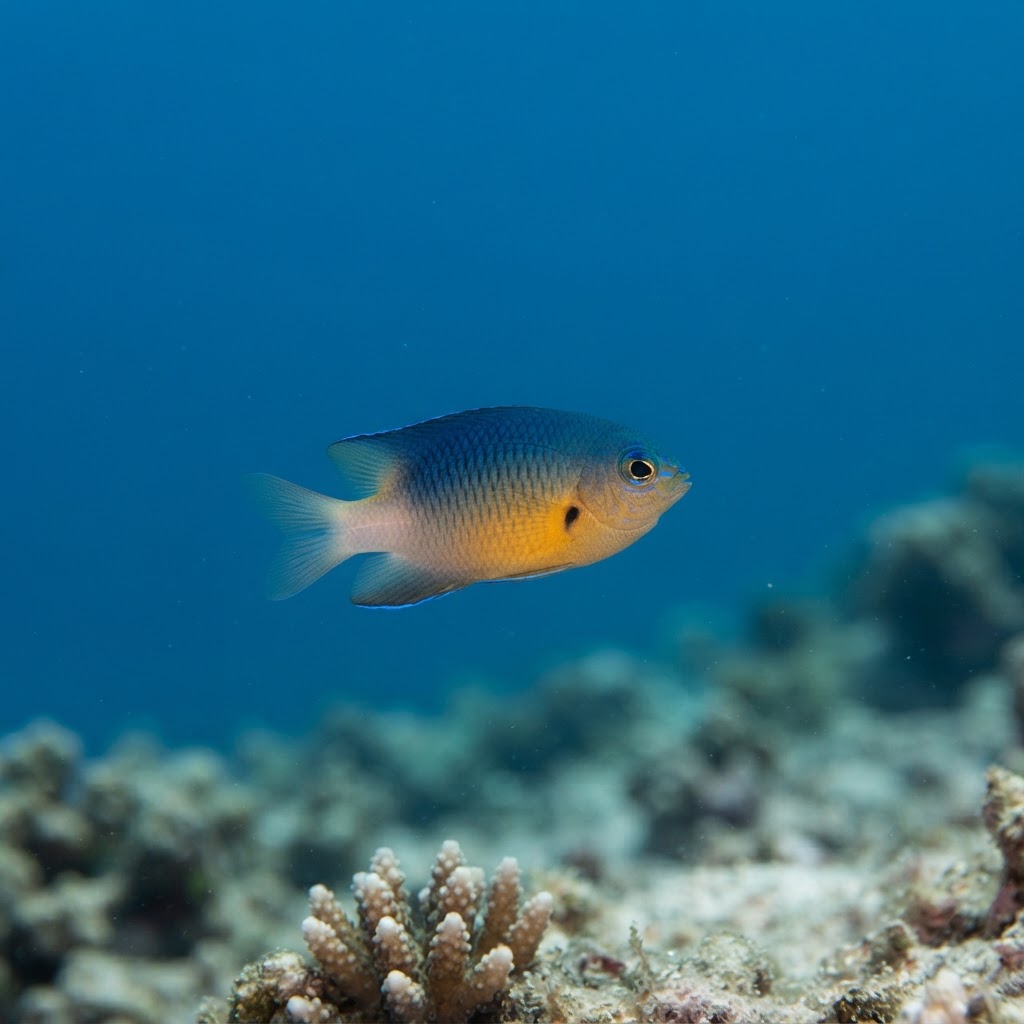
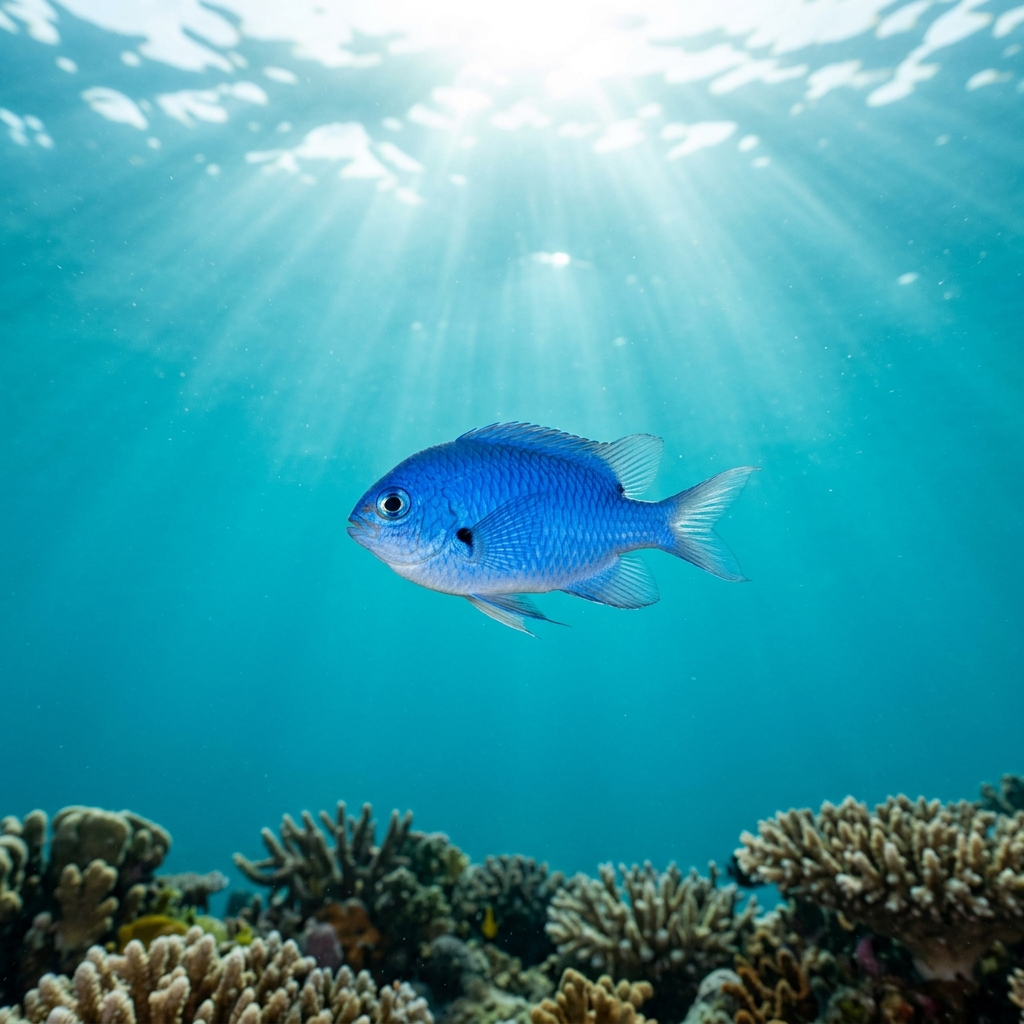
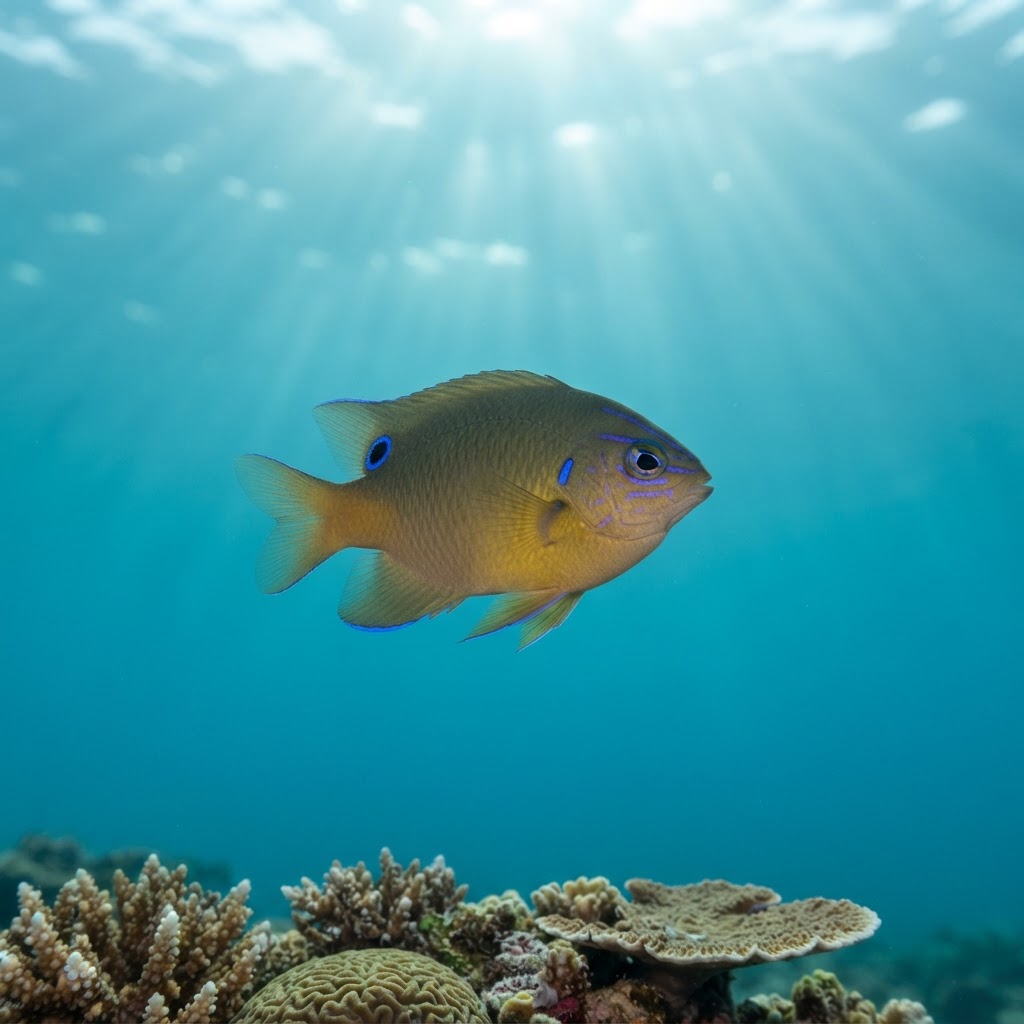
A compact damselfish topping out around 6 cm, with a slim oval body in muted blue-grey to olive tones that catches a faint blue sheen under torchlight. Look for a small dark blotch at the base of the tail, near the upper edge, which is the most reliable field mark against the reef backdrop. It swims in short, twitchy bursts rather than gliding, staying close to a patch of rubble or coral it treats as home.
Expect to see it hovering low over rubble or coral heads, darting a short distance to snap at drifting plankton before ducking back to its patch. It holds loose territory around a favoured bommie or ledge and will dip into cover when a diver gets close, though it rarely bolts far. Most sightings happen while scanning the reef base rather than the water column, since it does not stray far up off the bottom.
Like most Pomacentrus damselfish, individuals hold a small home patch of reef and will chase off other small fish that drift into it, a scrappy territoriality that is easy to spot once you know to look for it.
Sightings show no clear seasonal pattern, and with a comfortable range of roughly 24.5 to 28.8C, conditions on Queensland reefs support it year-round. Dive whenever you are heading to the Great Barrier Reef and keep an eye on rubble patches and coral bases.
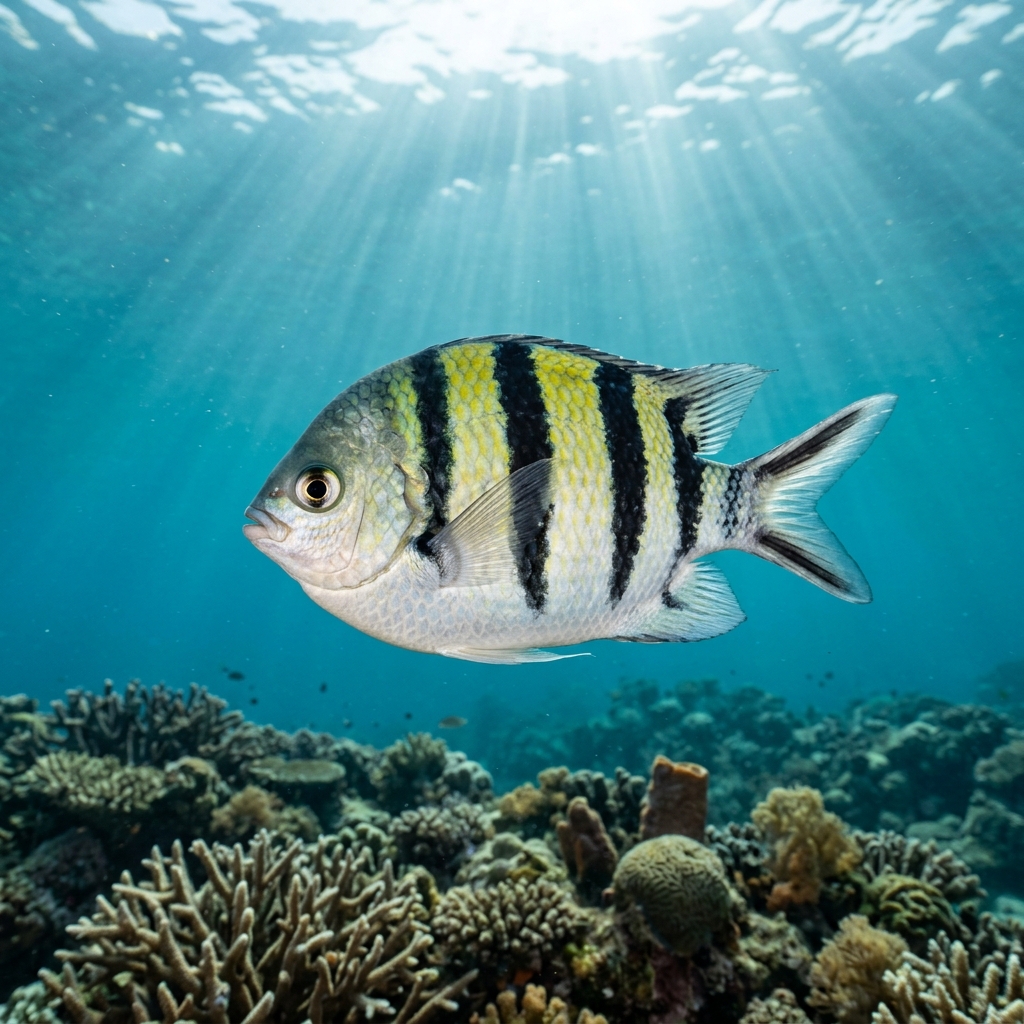
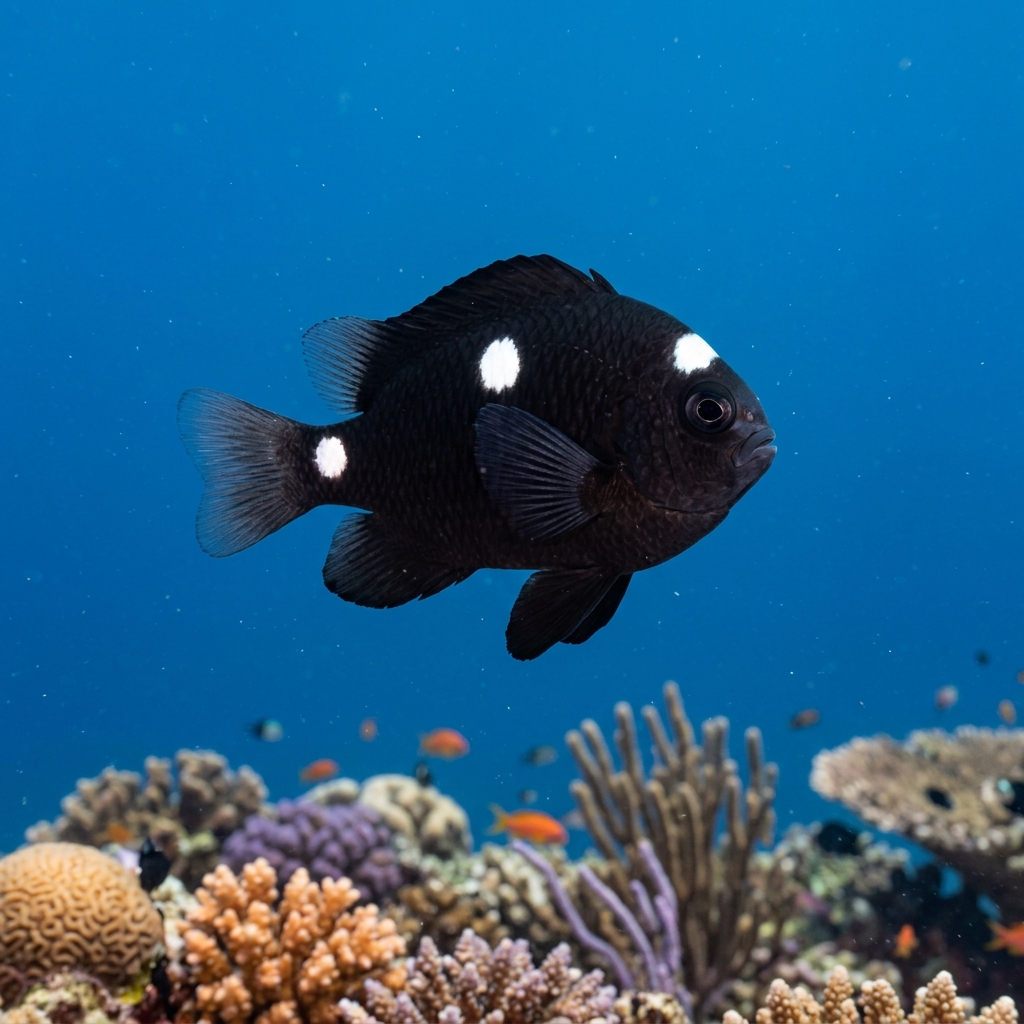
Reef neighbours a diver could mistake it for. Use the identification notes above to tell them apart.
All logged sightings so far come from Queensland, Australia, making it the region to target if you want to tick this one off. It turns up as an uncommon find across a handful of Great Barrier Reef and nearby sites, so it is not a fish you plan a trip around, more one you notice while looking at something else.
Mapping where Ward's Damsel is logged…
Confirmed sightings are concentrated in Queensland, Australia, on Great Barrier Reef sites. It is not reported elsewhere in current diver data, so Queensland is the safest bet for a sighting.
There is no strong seasonal pattern in the sightings, and water temperatures of 24.5 to 28.8C are typical year-round on Queensland reefs, so any time of year works.
Look for a small, blue-grey damselfish around 6 cm long with a dark spot at the base of the tail. It stays close to rubble or coral and moves in quick, short darts rather than smooth swimming.
They are small, typically reaching about 6 cm, in line with most Pomacentrus damselfish.
No. They are harmless to divers and will simply retreat into cover if you approach too closely.
Site and sighting data is aggregated from diver logs, iNaturalist and GBIF. For taxonomy and conservation status:
Dascyllus
3,697 sites