Hyperprosopon argenteum
Silvery schooling fish over California reefs, spotted in waters from 10.7 to 19°C year-round off the US coast.
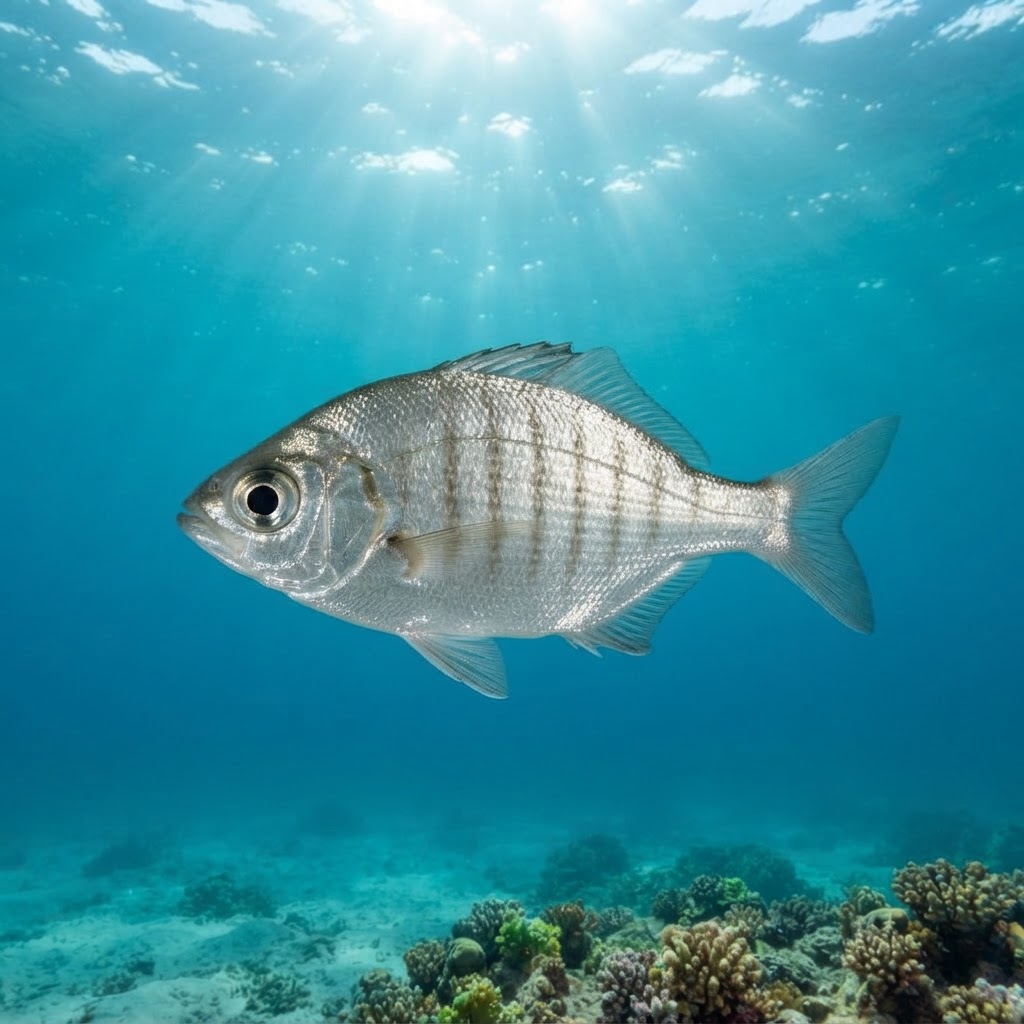
Compact, deep-bodied fish around 21 cm with a flattened, disc-like shape typical of surfperch. Overall silvery flanks with a faint yellowish tinge along the back, and a noticeably large eye that gives the species its name. Look for the thin dark edging on the dorsal and anal fins as the clearest field mark against other silvery schooling fish.
Usually seen moving in loose schools over rocky reef and open sand patches, staying in the mid to lower water column rather than hugging structure. They tend to keep a bit of distance from divers, drifting off as a group rather than scattering individually, and don't show much interest in interacting with people in the water.
Surfperch in this family are unusual among fish in giving birth to live young rather than laying eggs, a trait that sets Hyperprosopon argenteum apart from most reef fish divers encounter.
Sightings don't show a clear seasonal pattern, so treat this as a year-round possibility wherever water sits in the 10.7 to 19°C range typical of California's coast.
Logged exclusively off the United States so far, with every recorded sighting coming from California. Divers in California waters have the best shot at finding them, though they are not a headline species on any particular site.
Mapping where Walleye Surfperch is logged…
All logged sightings come from California, United States, making it the only confirmed region for this species so far.
There's no strong seasonal signal in the sightings, so they're considered a year-round find in California waters between roughly 10.7 and 19°C.
Look for a silvery, disc-shaped body about 21 cm long with a large eye and thin dark trim on the dorsal and anal fins, usually seen loosely schooling over reef or sand.
They typically reach about 21 cm in length, a modest size that fits their role as a schooling reef and nearshore fish rather than a big-ticket sighting.
Like other surfperches, they give birth to live young instead of laying eggs, which is unusual among the fish divers typically encounter on a reef.
Site and sighting data is aggregated from diver logs, iNaturalist and GBIF. For taxonomy and conservation status:
Meagre
1,159 sites