Macropharyngodon bipartitus
A small green wrasse with an orange maze pattern, most often logged uncommon on reefs across the Maldives' Central Atolls.
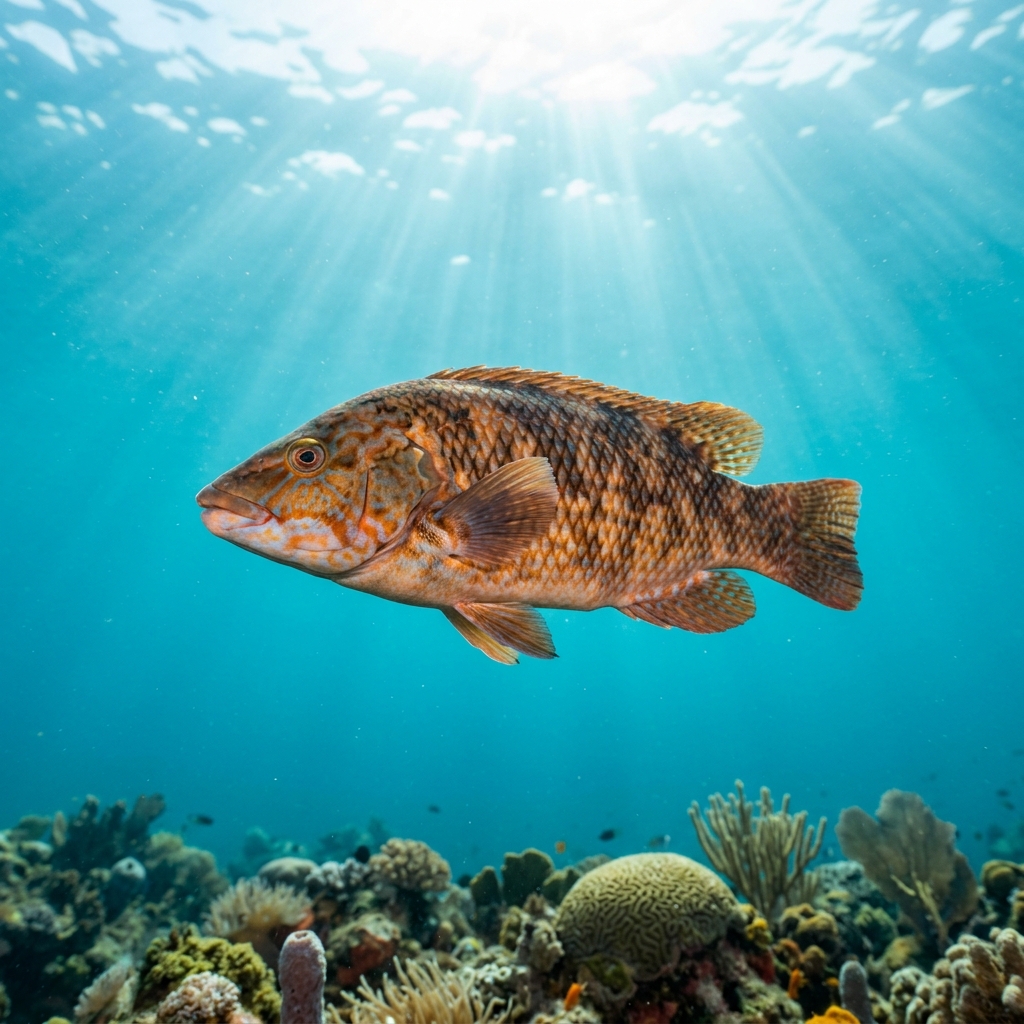
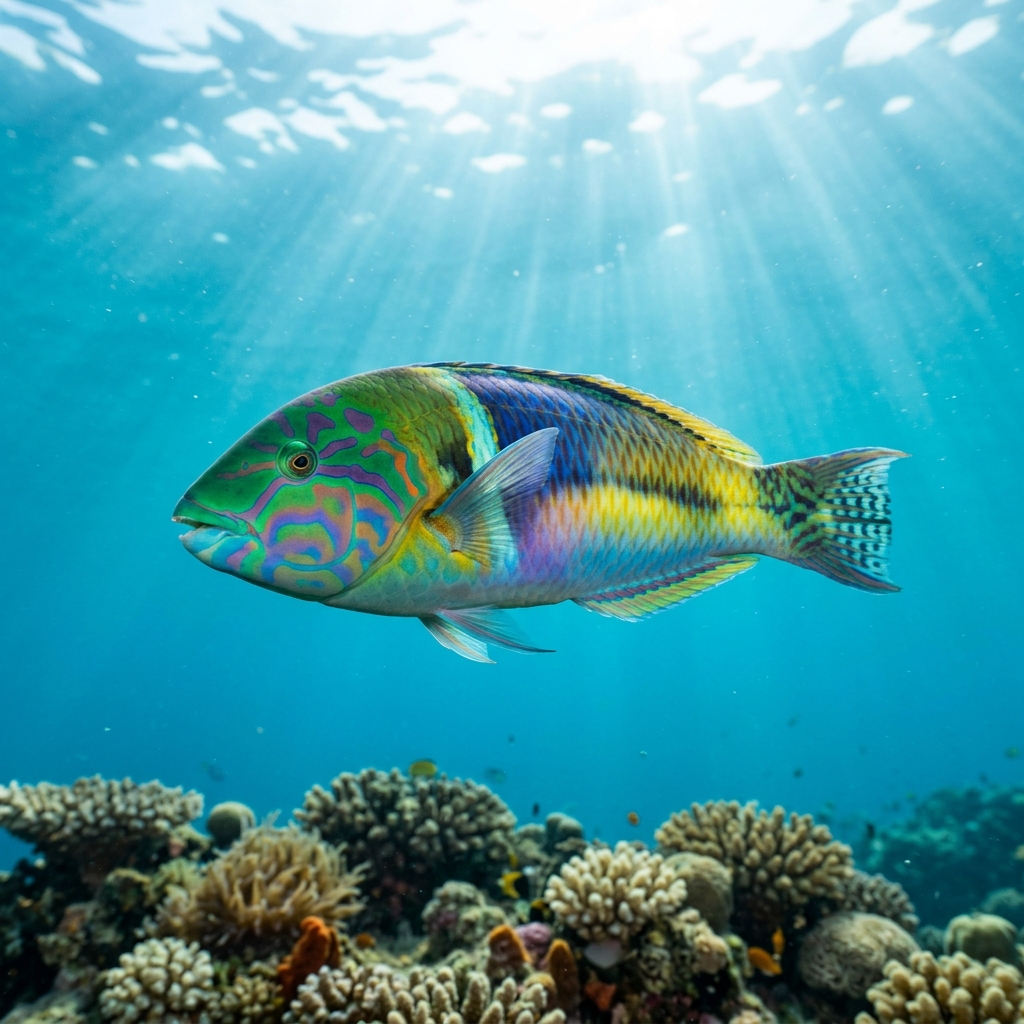
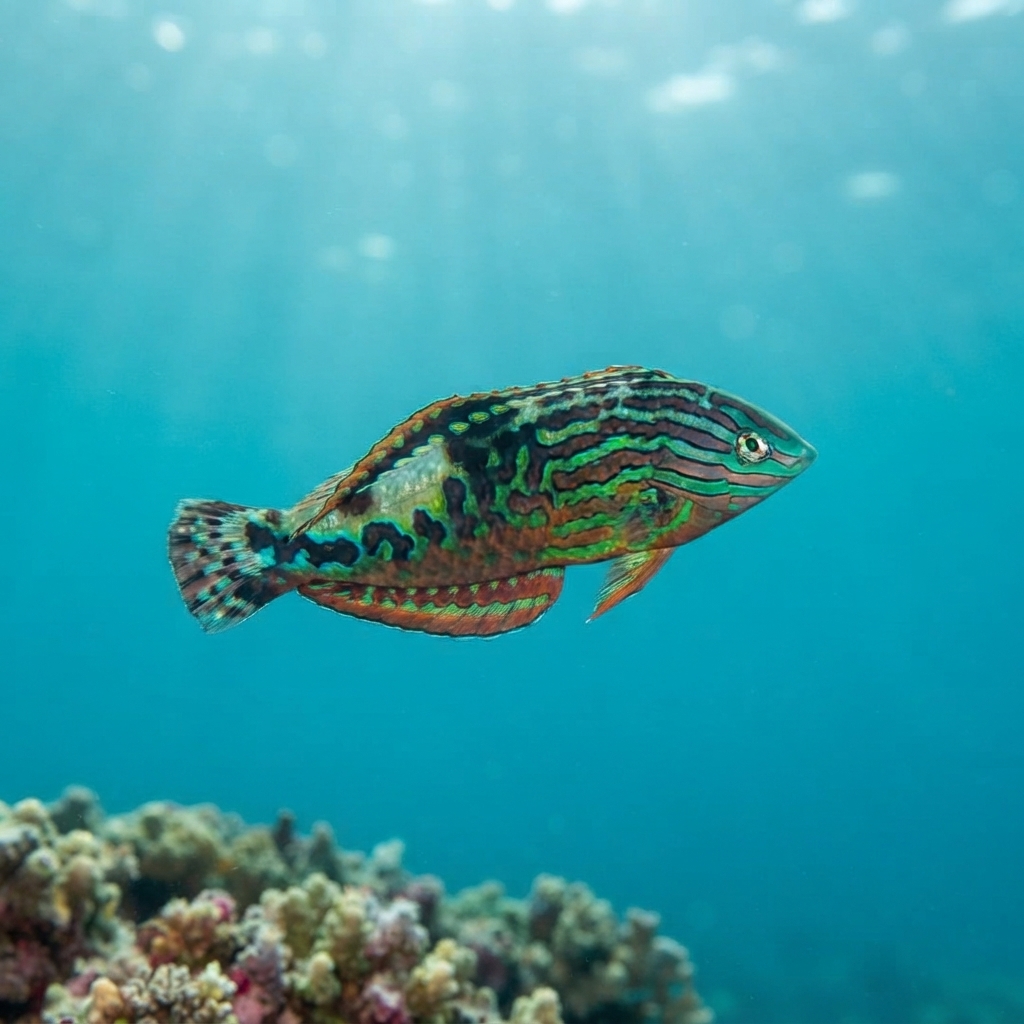
A small wrasse, rarely more than 9 cm, with a green to olive body covered in a maze of orange to reddish squiggly lines, the pattern that gives it its name. It has a pointed snout and swims low over the reef with quick, darting bursts rather than a smooth glide. Look for a scattering of small dark spots along the body against the vermiculate (worm-like) line work, which sets it apart from other small labrids at a glance.
Watch the sand patches and rubble edges close to coral heads, where this wrasse picks over the bottom for small invertebrates, darting from cover to cover rather than cruising in the open. It is generally logged as uncommon rather than abundant, so sightings tend to be brief, a quick flash of orange squiggles before it ducks under a ledge. Divers rarely get more than a fleeting look, since it is skittish and keeps a low profile over the reef.
Like many wrasses it can bury itself in sand when threatened or at night, using loose substrate as instant cover rather than fleeing across open reef.
No clear seasonal pattern shows up in the sightings, and with a comfortable range of roughly 25 to 29 C it stays active on these reefs year-round, so any month is fair game in the Maldives, Mauritius or Seychelles.
Most reliably found in the Maldives, especially across the Central Atolls, where it turns up on far more sites than anywhere else in the data. It also has strong footholds in Mauritius, particularly around Grand Baie and Trou aux Biches, and in the Seychelles' Inner Islands, with smaller but consistent numbers in South Africa's KwaZulu-Natal and Diani in Kenya.
Mapping where Vermiculate Wrasse is logged…
The Maldives' Central Atolls are the standout location, with strong secondary numbers in Mauritius around Grand Baie and Trou aux Biches, the Seychelles' Inner Islands, and along South Africa's KwaZulu-Natal coast and Diani in Kenya.
There is no strong seasonal signal in the sightings, and the water temperature range it favours, roughly 25 to 29 C, holds steady on these reefs all year, so it can be spotted in any month.
Look for a small, green-bodied wrasse under 9 cm covered in orange squiggly, worm-like lines with scattered dark spots. It moves in quick darts low over sand and rubble near coral rather than swimming in the open.
They stay small, typically reaching around 9 cm as adults, which along with their darting movements makes them easy to overlook on a reef.
No, they pose no danger to divers. They are small, shy reef fish that keep their distance and spend most of their time foraging near the substrate.
Like several wrasse species, it can dive straight into loose sand to hide from threats or settle for the night, disappearing almost instantly rather than swimming for cover.
Site and sighting data is aggregated from diver logs, iNaturalist and GBIF. For taxonomy and conservation status:
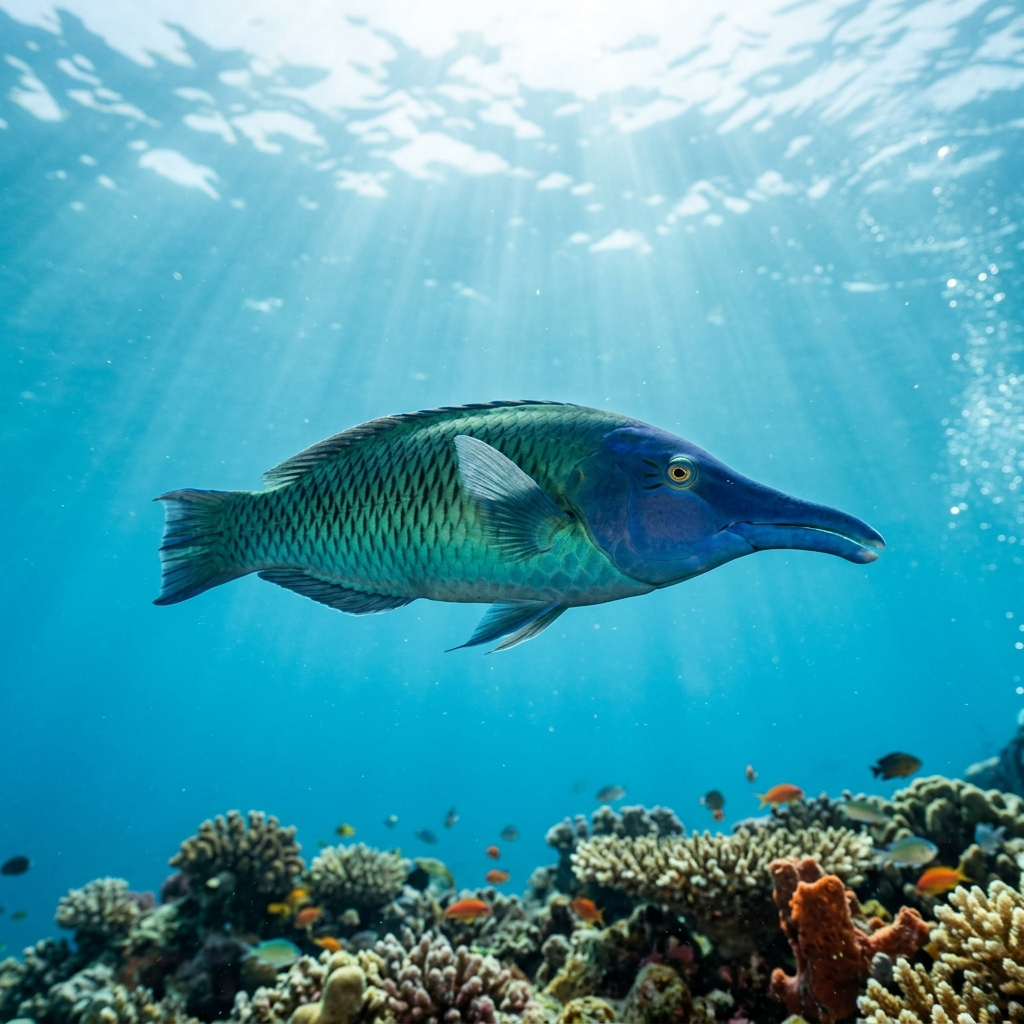
Bird Wrasse
3,632 sites