Synodus dermatogenys
Look for this mottled, motionless lizardfish propped on coral in South Sinai or New South Wales, 24-29 C year-round.
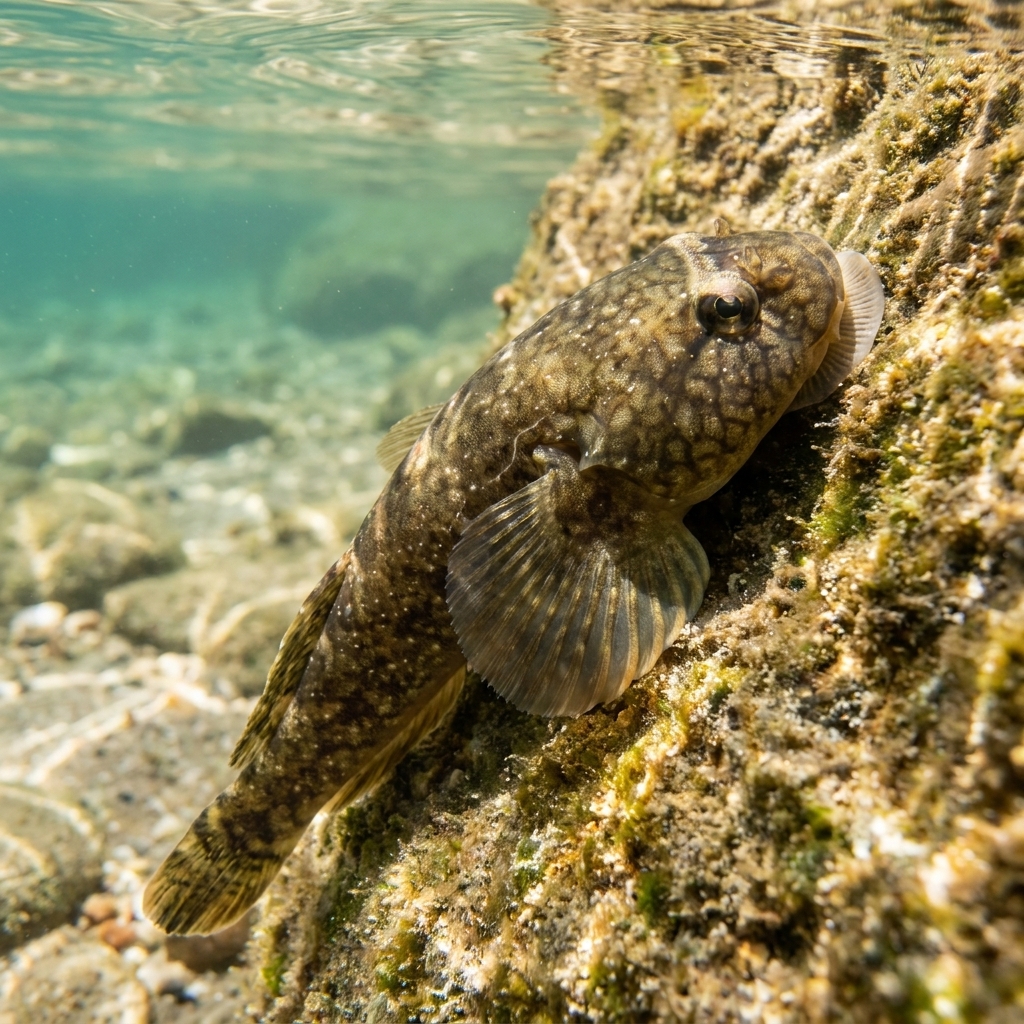
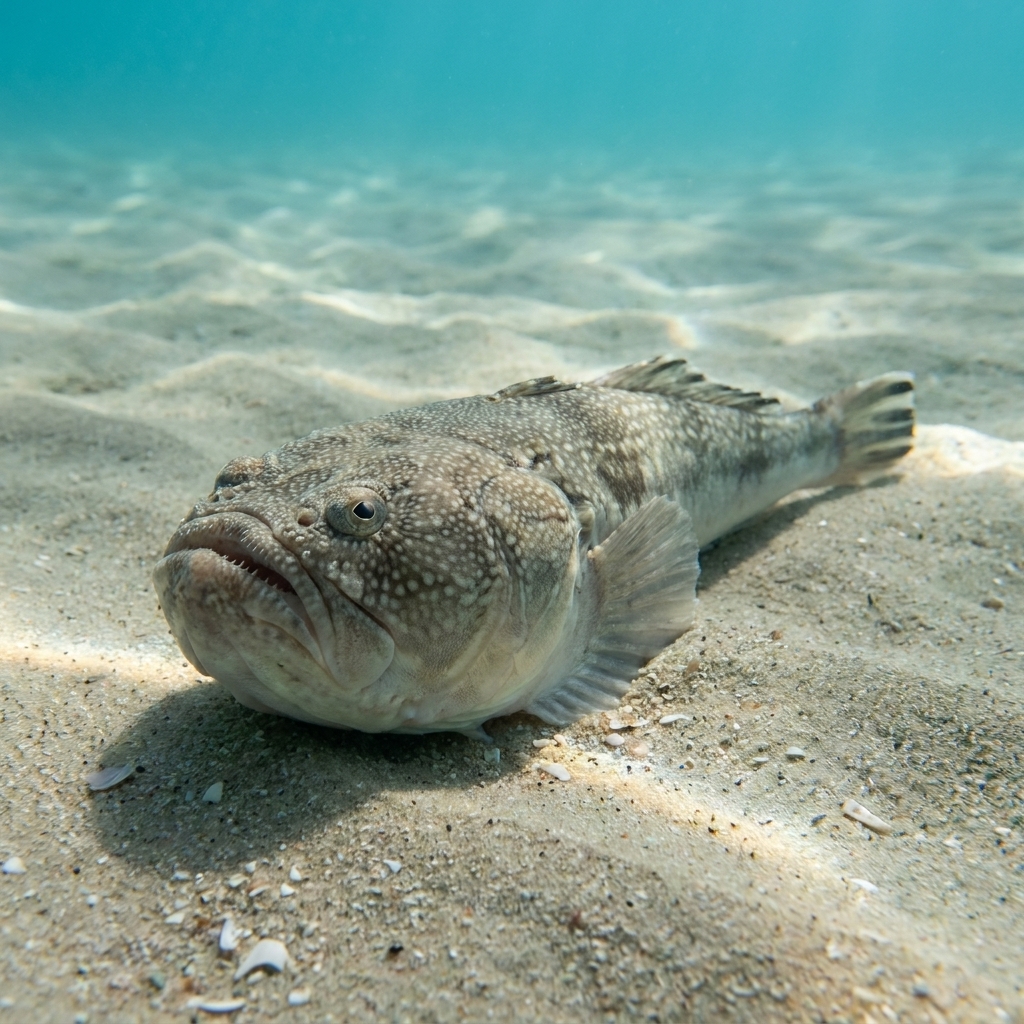
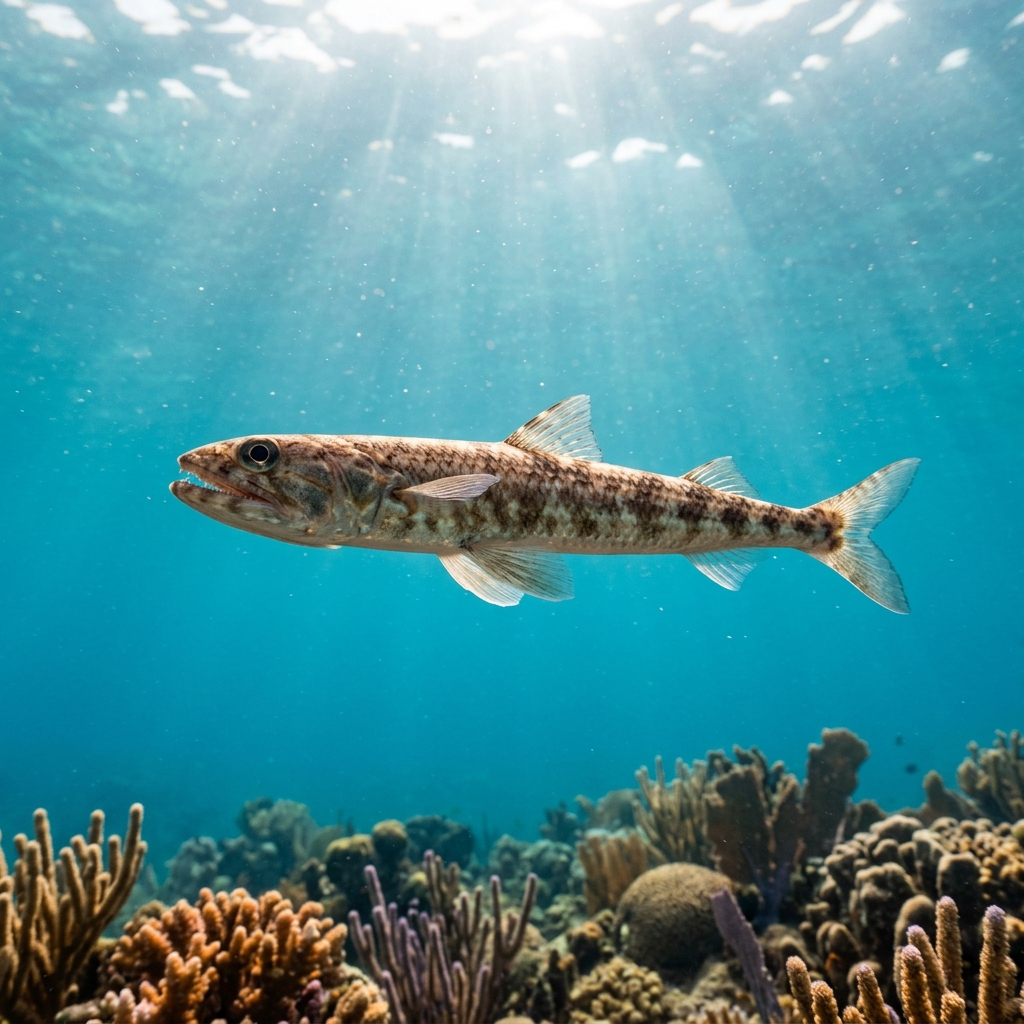
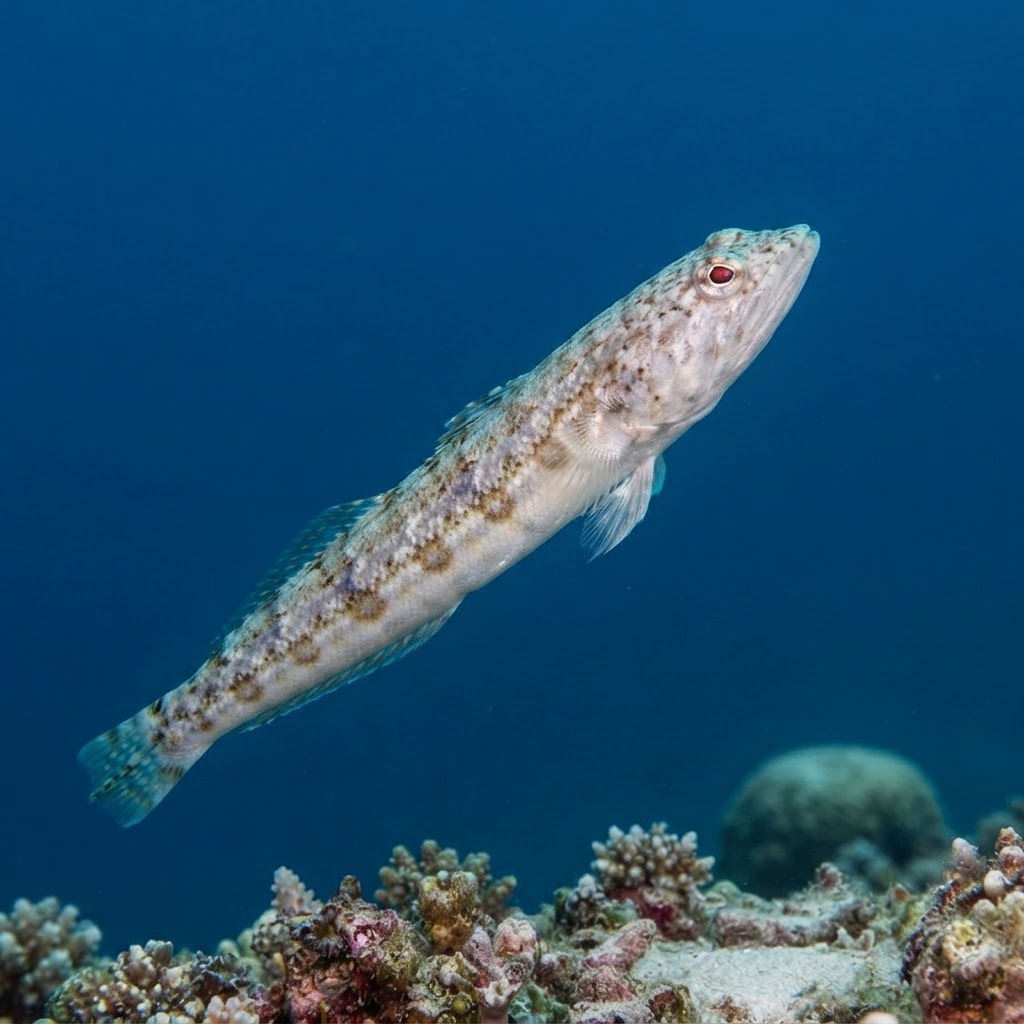
Slender, cylindrical body around 16 cm long with a pointed, reptilian snout that gives lizardfish their name. Skin is mottled in browns, tans and cream in an irregular blotched pattern that breaks up its outline against sand and rubble. Usually seen propped up on its lower fins, angled slightly upward, completely still. Look for the large upward-facing eyes and slightly underslung jaw, both suited to an ambush predator watching for prey above.
Spend most dives doing absolutely nothing, which is the point: it sits propped on rubble or dead coral, relying on camouflage and stillness to ambush small fish that swim past. Divers who get close often only notice it when it finally bolts a short distance and resettles, rather than swimming away. Most sightings happen on the reef floor or on flat sandy patches near coral, at any time of day since it is not tied to a particular light cycle.
That frozen, propped-up posture is not resting, it is hunting: lizardfish strike upward in a burst too fast to see, snapping up small fish that pass overhead before settling straight back into position.
No clear seasonal pattern in the sightings data, and its comfort range of roughly 24 to 29 C matches tropical and subtropical reefs year-round, so any month you are diving South Sinai or similar sites is fair game.
Most reliably logged in South Sinai, Egypt, which accounts for the bulk of recorded sightings, followed by New South Wales in Australia and Trou aux Biches in Mauritius. Smaller numbers turn up in Sulawesi (Indonesia), Nha Trang (Vietnam) and Reunion, so it has a wide but patchy Indo-Pacific and Red Sea spread. At any given site it tends to be logged as uncommon rather than a guaranteed find, so treat it as a nice bonus sighting rather than a headline target.
Mapping where Bluestripe Lizardfish is logged…
South Sinai in Egypt has the strongest record of sightings, with New South Wales in Australia and Trou aux Biches in Mauritius also worth checking. It shows up in smaller numbers across Indo-Pacific sites like Sulawesi and Nha Trang too.
There is no strong season in the data, and its 24 to 29 C comfort range means it is present on tropical reefs all year, so timing your trip around the species is not necessary.
Look for a slim, torpedo-shaped fish around 16 cm long, mottled brown and cream, propped motionless on rubble or sand with a pointed snout and large upward-facing eyes. It rarely moves unless disturbed, which is often the giveaway.
They typically reach about 16 cm, a small, easily overlooked reef fish rather than anything imposing.
Its stillness is a hunting strategy, not laziness. It ambushes passing prey with a fast upward strike from its propped resting position, then settles back into camouflage.
No, they pose no threat to divers and will simply dart a short distance away if approached too closely.
Site and sighting data is aggregated from diver logs, iNaturalist and GBIF. For taxonomy and conservation status:
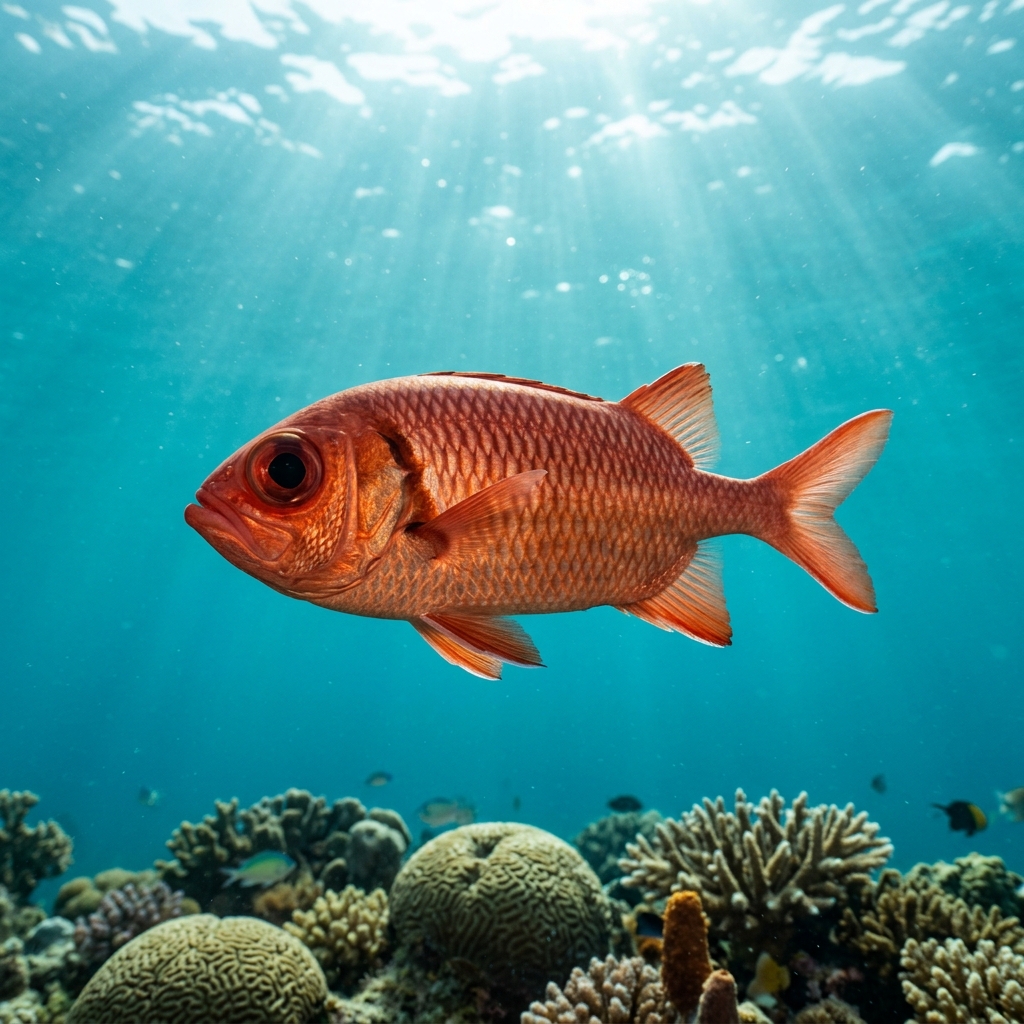
Soldierfish
3,612 sites