Synodus variegatus
Mottled and motionless on reef sand, variegated lizardfish turn up on hundreds of dives from Visayas to Fiji, most often as an uncommon but easy find.
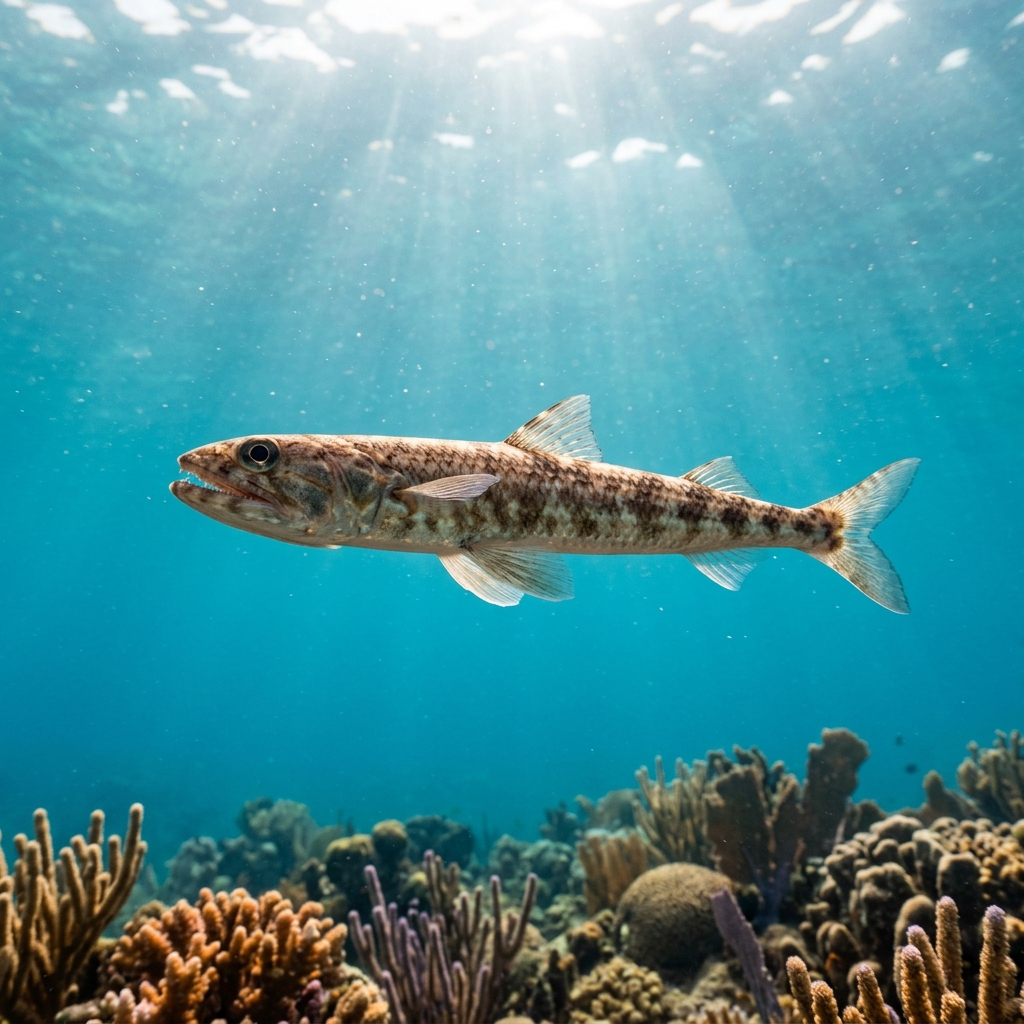
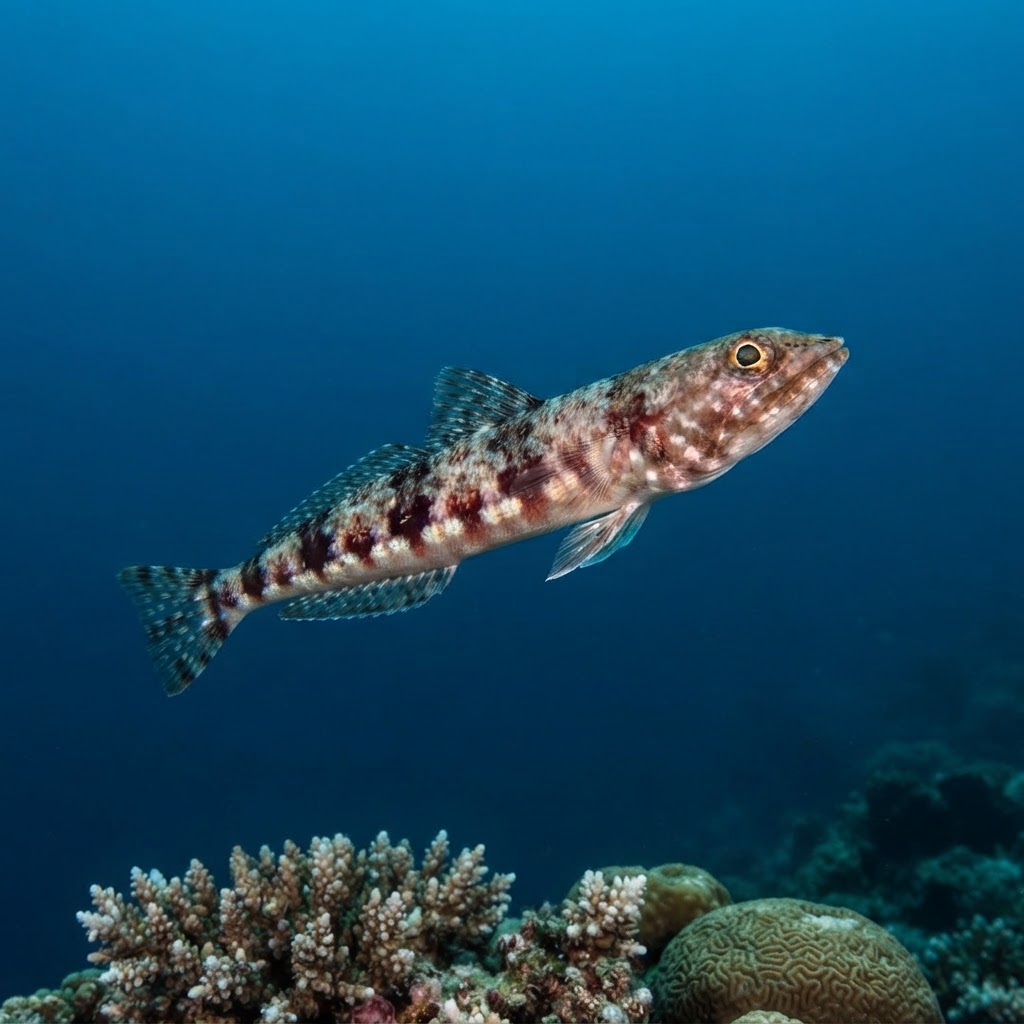
Torpedo-shaped body about 28 cm long, propped up on its lower fins as it rests on sand, rubble, or coral rock. Mottled brown, cream, and rust patterning breaks up its outline against reef substrate, with a pointed, almost reptilian snout full of visible teeth. It sits dead still for long stretches, which is usually the giveaway rather than any movement.
Spends most of its time propped motionless on sand or rubble, using its camouflage to ambush small fish that swim past rather than chasing them down. Divers usually find it on the reef floor or at the base of coral heads, often during the day, and it tends to hold its position even as you approach for a photo. When it does move, it's a short, fast dart forward to grab prey before settling back into stillness.
That frozen, propped-up posture is a hunting strategy: it relies on mottled camouflage and a burst of speed to snatch passing fish rather than active pursuit, so a lizardfish sitting still is a lizardfish actively working.
No clear seasonal pattern shows up in the data, and with a comfortable range of 24.2 to 29.0 C it's a year-round find on tropical reefs. Plan around the destination's general dive season rather than a lizardfish-specific window.
Most reliably logged across the Philippines, especially Visayas, Luzon, and Palawan, where sandy patches and reef flats give it plenty of resting spots. Strong numbers also turn up in Fiji (Viti Levu and Taveuni), Queensland in Australia, Thailand's Koh Phi Phi, Malaysia, and the Maldives' Central Atolls, plus sites in India and Egypt.
Mapping where Variegated Lizardfish is logged…
They're a common sight across the Philippines, particularly Visayas, Luzon, and Palawan, and also show up reliably in Fiji, Queensland in Australia, Thailand, Malaysia, the Maldives, India, and Egypt.
There's no strong season in the sighting data, and their comfortable temperature range of 24 to 29 C means they're present on tropical reefs all year round.
Look for a slim, torpedo-shaped fish around 28 cm long with mottled brown and cream markings, propped motionless on sand or rubble with a pointed, tooth-filled snout.
They typically reach around 28 cm in length, a slender build that keeps them well camouflaged against sand and rubble.
No, they pose no threat to divers. They're small ambush predators focused on tiny reef fish and will usually just hold still as you swim by.
Rather than chasing prey, they rely on camouflage and stillness, lying propped on the reef floor until a small fish swims close enough for a quick ambush strike.
Site and sighting data is aggregated from diver logs, iNaturalist and GBIF. For taxonomy and conservation status:
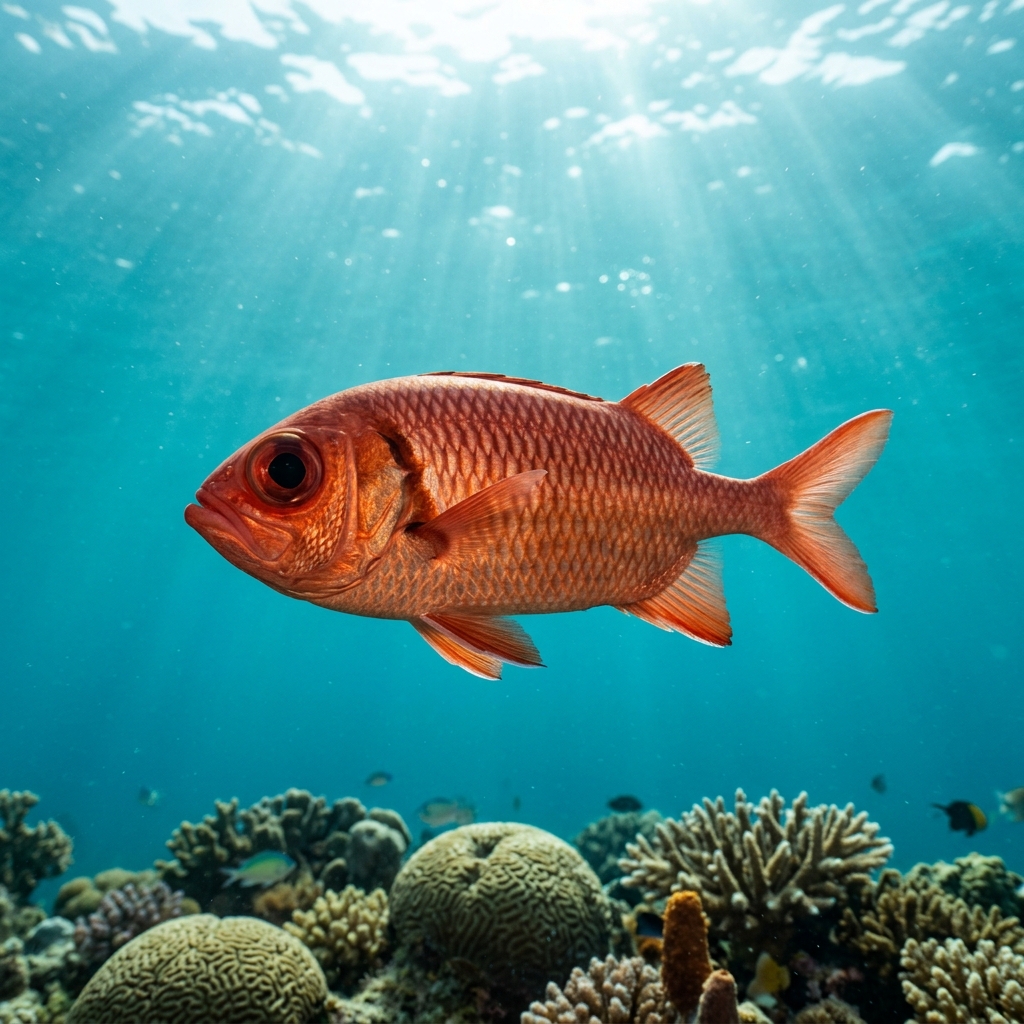
Soldierfish
3,612 sites