Diademichthys lineatus
Just 3cm long and striped to vanish among urchin spines, find this tiny clingfish year-round in Sihanoukville and the Visayas.
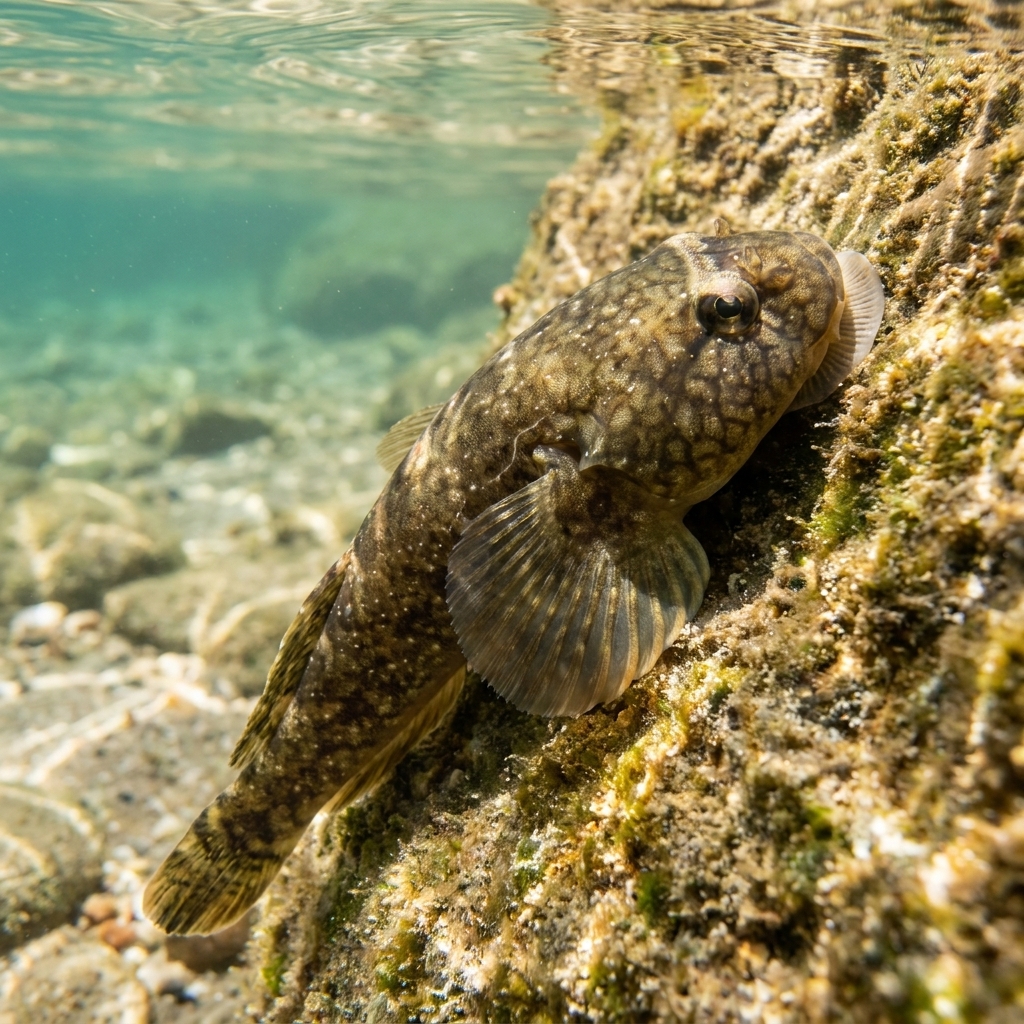
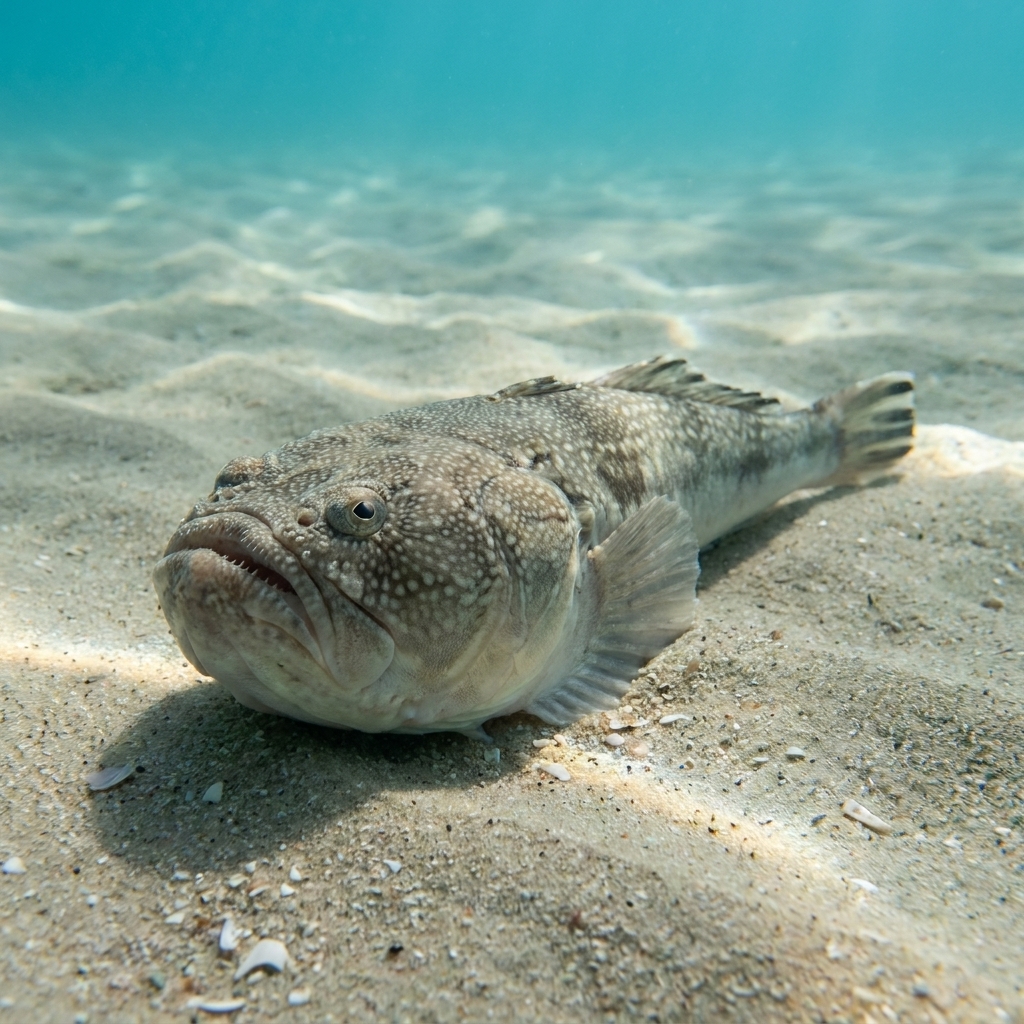
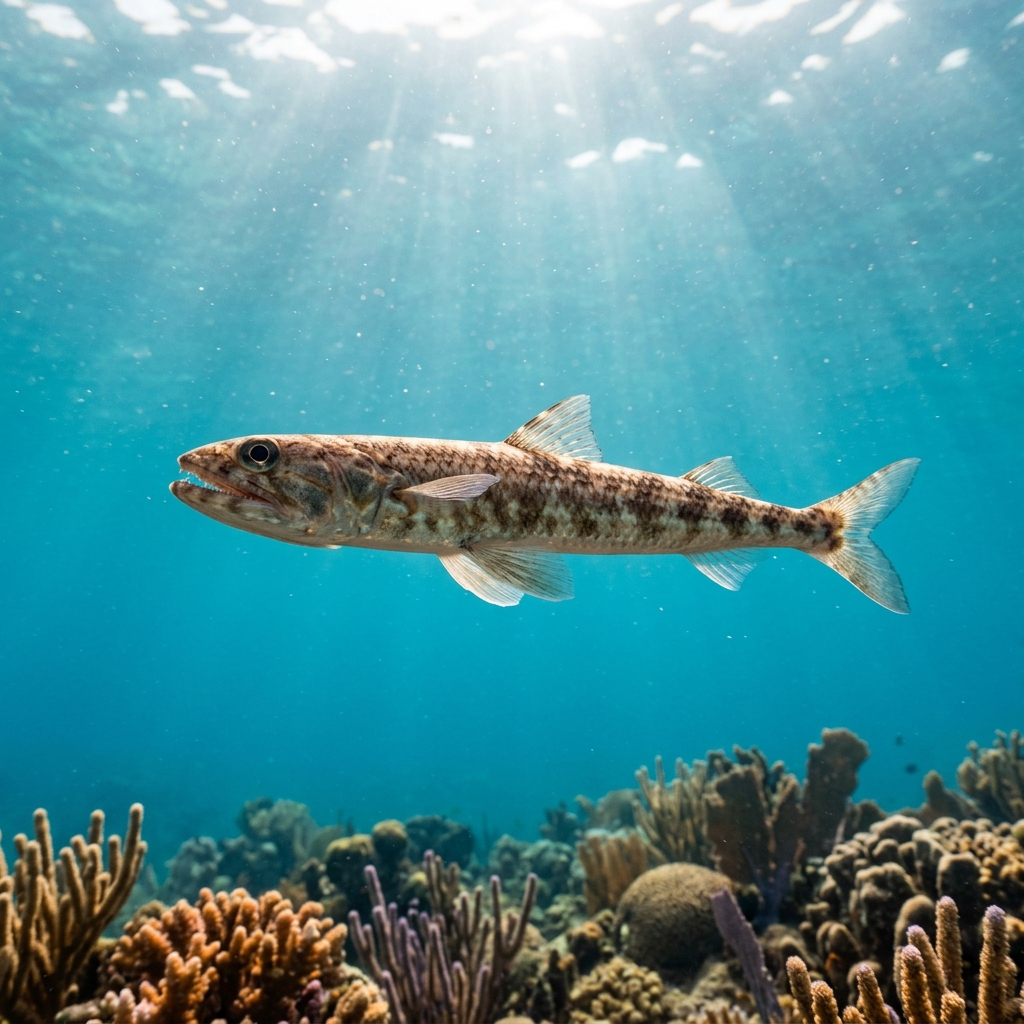
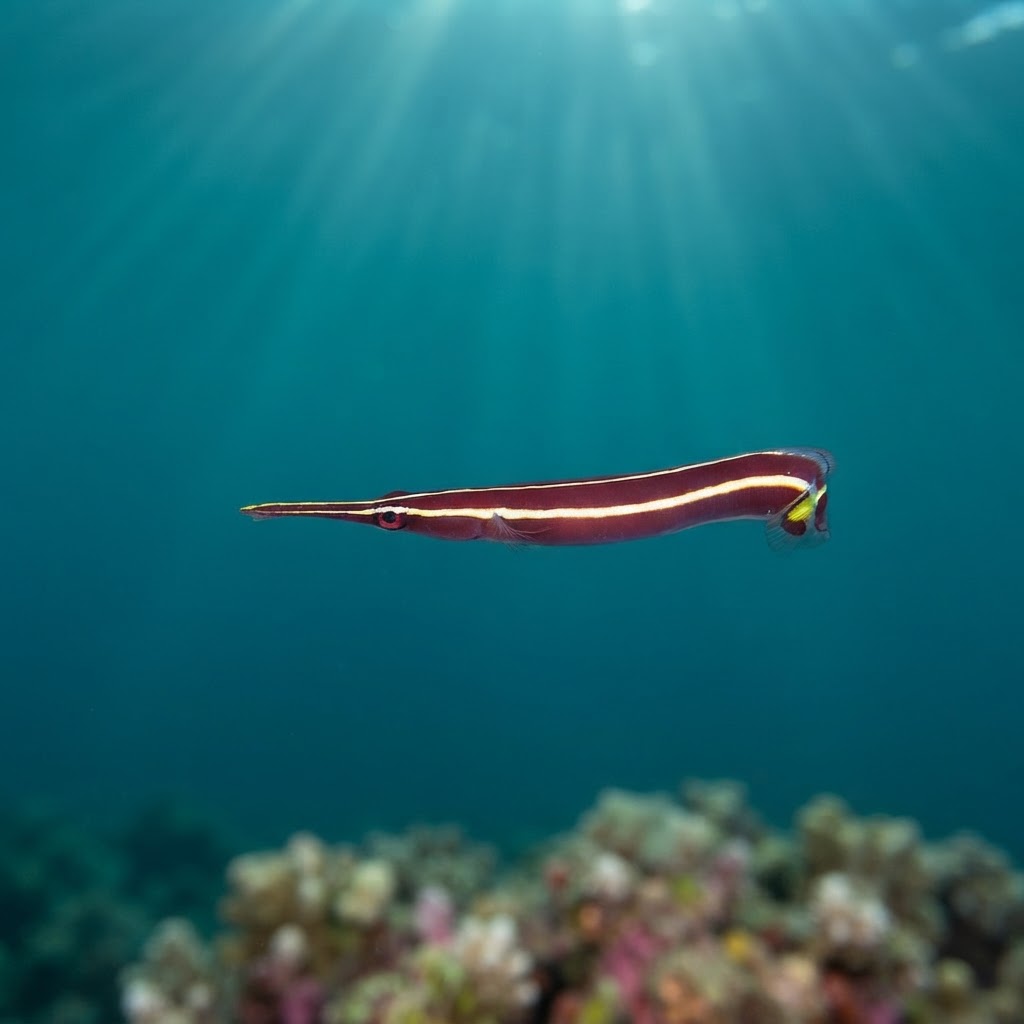
A slender, almost translucent fish barely 3cm long, marked with a bold dark stripe running the length of its body from snout to tail, sometimes flanked by a second thinner line. It has the elongated, tadpole-like shape typical of clingfish, with a flattened head and a modified sucking disc on its underside that you'll rarely see unless it's clinging to something in the open. Look closely among the spines of long-spined sea urchins and crinoids rather than scanning open reef, since this fish spends nearly all its time tucked against its host.
Divers usually find this one hovering motionless right against the spines of a long-spined urchin or wedged into a crinoid's arms, using its striped body to blend into the host's spiky outline. It rarely strays far from that shelter and shows almost no reaction to a diver hovering close, since it relies on camouflage rather than flight. Most sightings happen on slow macro-focused dives where someone takes the time to check urchins and crinoids one by one rather than swimming past.
Its stripe pattern and slim shape aren't just decoration, they mimic the spines of its urchin host closely enough that most divers swim straight past without ever noticing it's there.
No clear season shows up in the sightings, and with a comfortable range of about 24.7 to 29.2C it's present on these tropical reefs all year round. Plan around the destination's usual dive season rather than a specific month for this species.
Most reliably found in Cambodia, especially around Sihanoukville, and in the Philippines through the Visayas, with strong numbers also logged across Indonesia in Bali, Nusa Tenggara, Maluku and Sulawesi. Smaller numbers turn up in New Caledonia around Nouméa, plus single sites in Vietnam, Thailand and Australia.
Mapping where Urchin Clingfish is logged…
Cambodia's Sihanoukville area and the Visayas in the Philippines are the most productive regions, with good numbers also reported across Indonesian sites in Bali, Nusa Tenggara, Maluku and Sulawesi.
There's no strong seasonal pattern in the sightings, and the species tolerates a wide tropical temperature range, so it's considered a year-round find on the reefs where it occurs.
Look for a tiny, slender fish around 3cm long with a dark stripe running head to tail, sitting motionless against the spines of a sea urchin or within a crinoid. Its shape and camouflage are the main giveaways rather than any bright colour.
They stay small, typically around 3cm in length, which is one reason they're easy to overlook against their urchin hosts.
It lives in close association with long-spined sea urchins and crinoids, using a sucking disc on its belly to cling to its host and a striped pattern to disappear among the spines.
No, they pose no risk to divers at all. They're small, non-aggressive and spend their time hiding against their host rather than interacting with anyone nearby.
Site and sighting data is aggregated from diver logs, iNaturalist and GBIF. For taxonomy and conservation status:
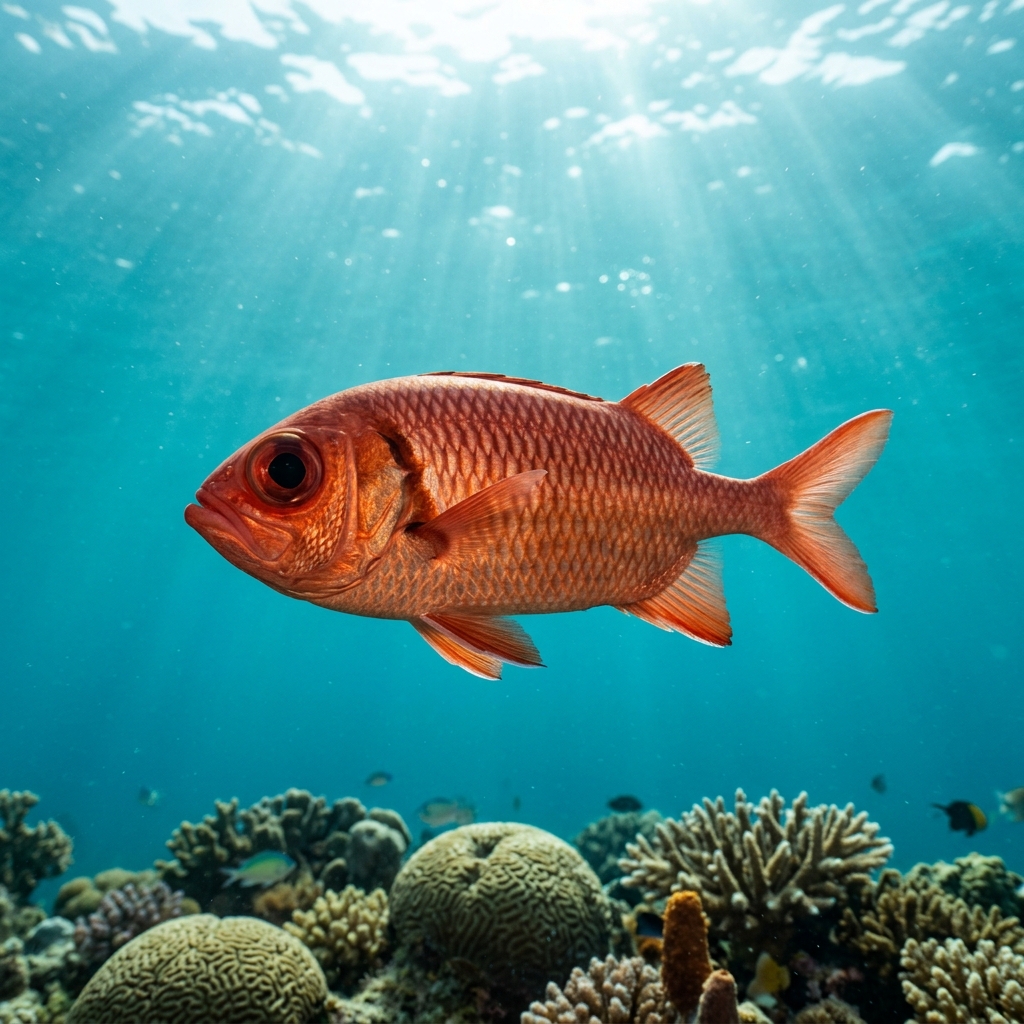
Soldierfish
3,612 sites