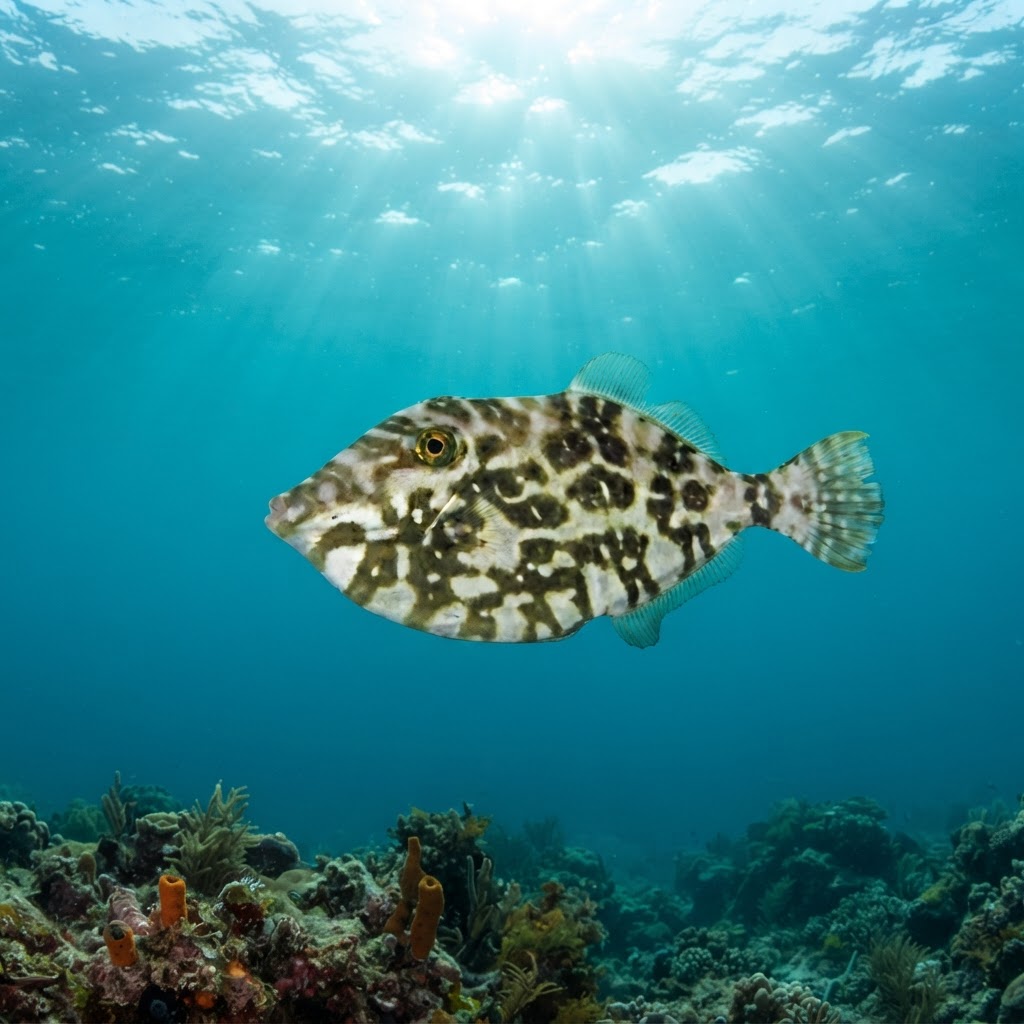
Aluterus monoceros
A rare find off Rio de Janeiro and Mexico's Pacific coast, this pale oval-bodied filefish rewards a slow, careful look at the reef.
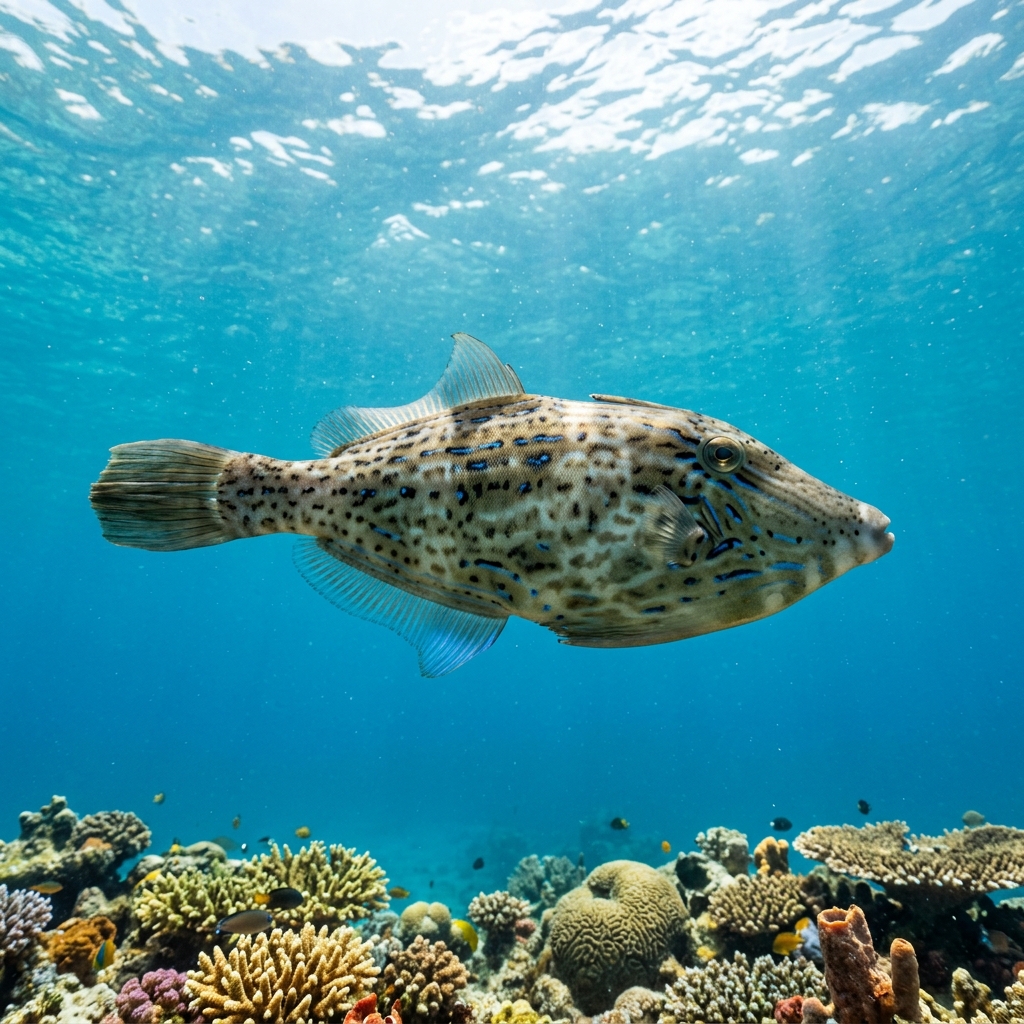
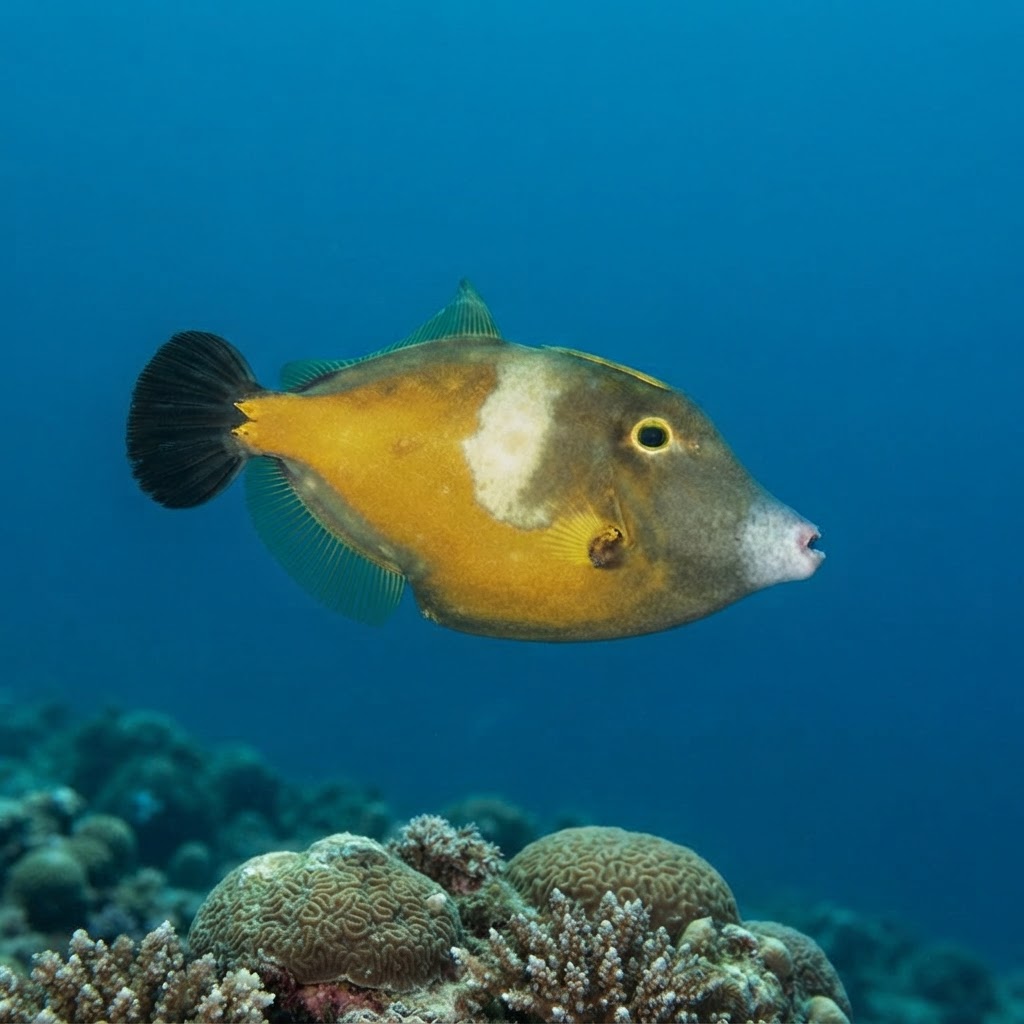
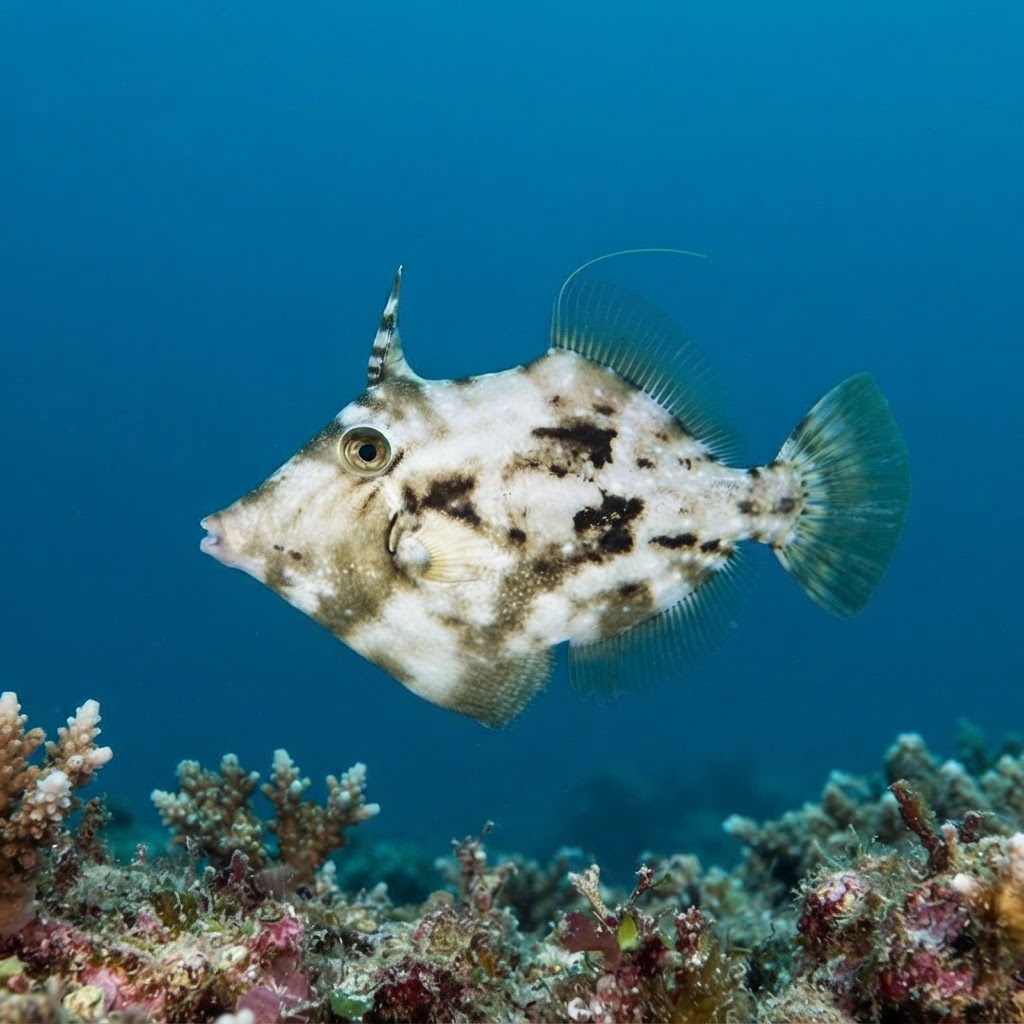
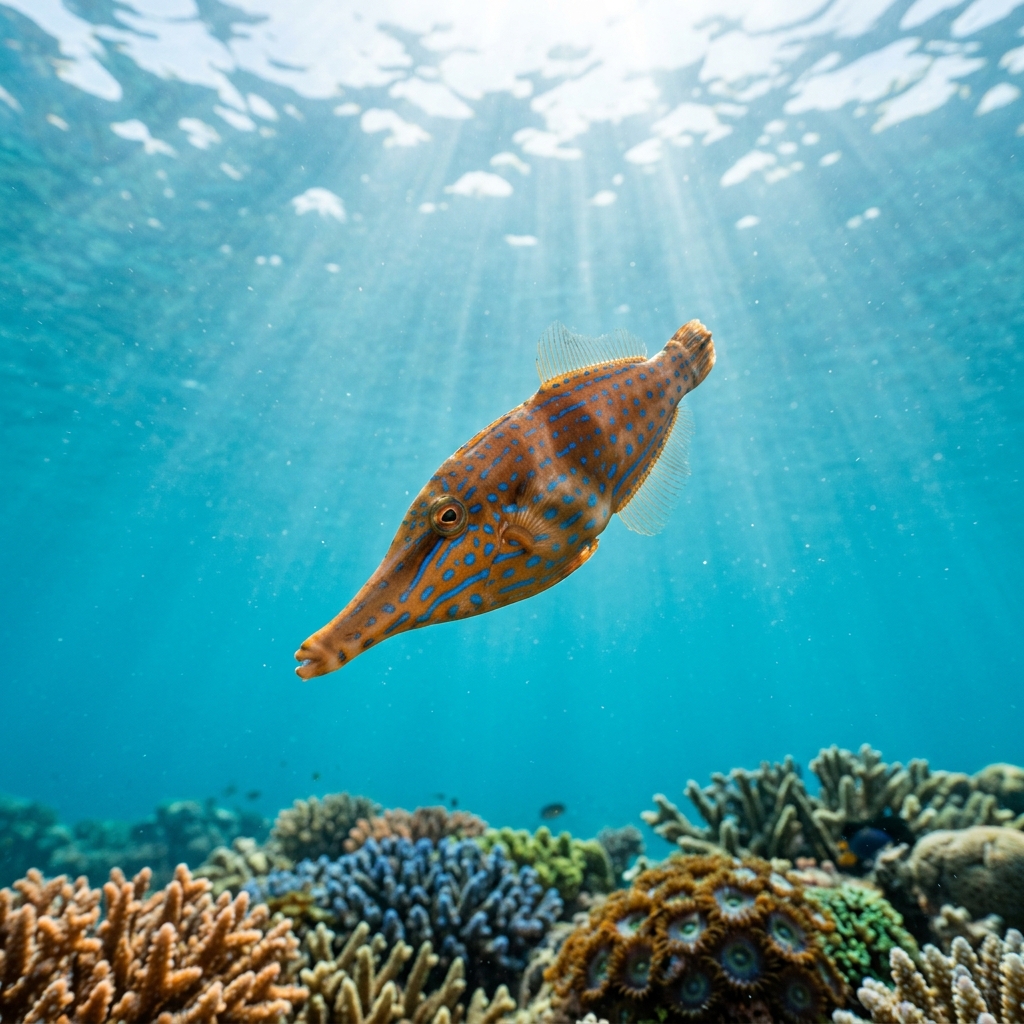
A tall, laterally flattened oval body in pale grey to olive-brown, sometimes with faint dark speckling, gives this filefish an almost leaf-like profile in the water. Look for the single slender spine set forward on the head, just above the eye, and the small mouth built for nibbling rather than biting. It grows to around 53 cm, making it one of the larger filefish a diver is likely to log, and it tends to hang with its body angled or tilted rather than swimming level like most reef fish.
This is a slow, deliberate swimmer, often seen hovering at an angle near rocky or reef structure rather than cruising open water. It tends to hold its distance from divers without bolting, drifting off calmly if approached too closely, and is easy to miss thanks to its plain colouring and low-key movement. Most sightings come from a single fish rather than a group, and it's logged as rare at nearly every site where it turns up.
Filefish get their name from the rough, sandpaper-like texture of their skin, once used literally as a rasp, and this species locks its dorsal spine upright to jam itself into crevices when threatened.
There's no clear seasonal pattern in the sightings, and with a comfortable range of roughly 23 to 29 C it seems to sit on these reefs year-round rather than showing up for a narrow window. Plan around when you can dive Rio de Janeiro or Mexico's Pacific coast rather than around a specific month.
Reef neighbours a diver could mistake it for. Use the identification notes above to tell them apart.
Brazil is the strongest bet, with sightings concentrated around Rio de Janeiro, and Mexico's Pacific coast is the other reliable region in the data. Outside these two countries it barely registers in diver logs, so treat any sighting elsewhere as a bonus rather than an expectation.
Mapping where Unicorn Filefish is logged…
The most reliable sightings come from around Rio de Janeiro in Brazil, with a smaller but consistent presence along Mexico's Pacific coast. Elsewhere it's logged only occasionally, so these two regions are the best starting point.
There's no strong seasonal pattern in the sightings, and its comfort range of roughly 23 to 29 C suggests it's present year-round on the reefs where it's found. Timing a trip to Rio de Janeiro or Mexico's Pacific coast matters more than picking a particular month.
Look for a tall, oval, laterally flattened body in pale grey or olive-brown, a small mouth, and a single forward-set spine above the eye. It often hovers at an angle near structure rather than swimming level, which is a useful giveaway.
They reach around 53 cm, making them one of the larger filefish species divers commonly encounter, though most individuals seen are solitary rather than in groups.
No, they pose no danger to divers. They're calm, unhurried fish that will simply drift away if you get too close rather than react defensively.
Like other filefish, its skin has a rough, file-like texture, and it can lock its dorsal spine upright to wedge itself into rock or reef crevices when it feels threatened.
Site and sighting data is aggregated from diver logs, iNaturalist and GBIF. For taxonomy and conservation status:
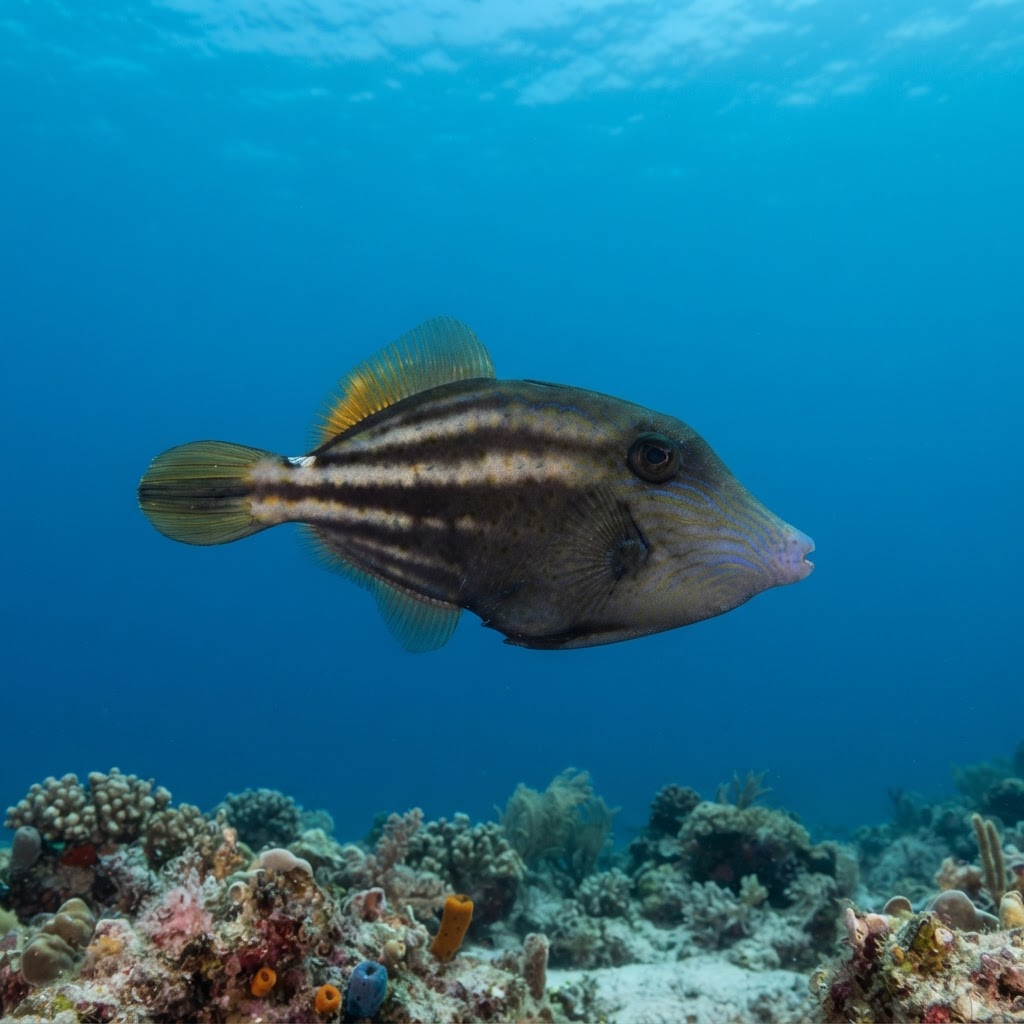
Orangespotted Filefish
836 sites