Cryptolithodes sitchensis
A shell-mimic crab found on cold-water dives in British Columbia and California, hiding under a shell-shaped shell in 8.5 to 14.5C water.
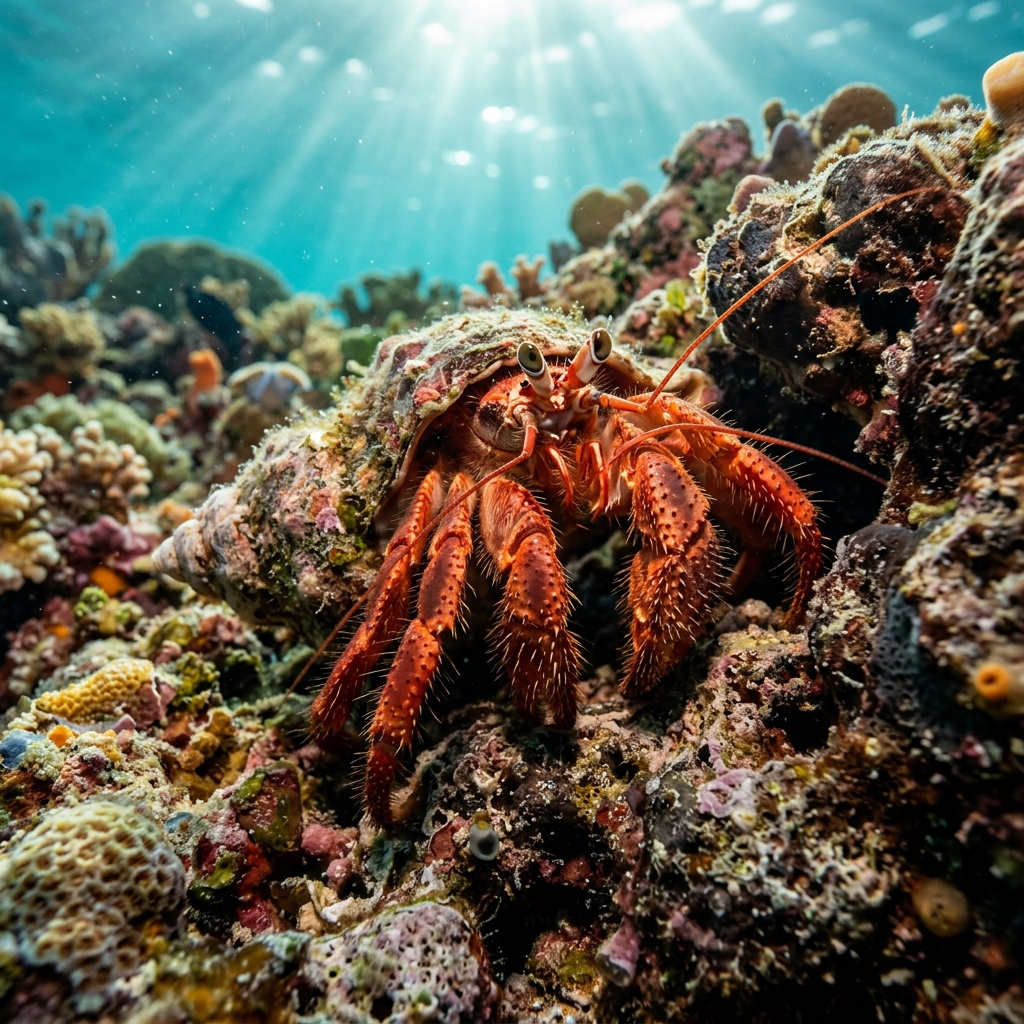
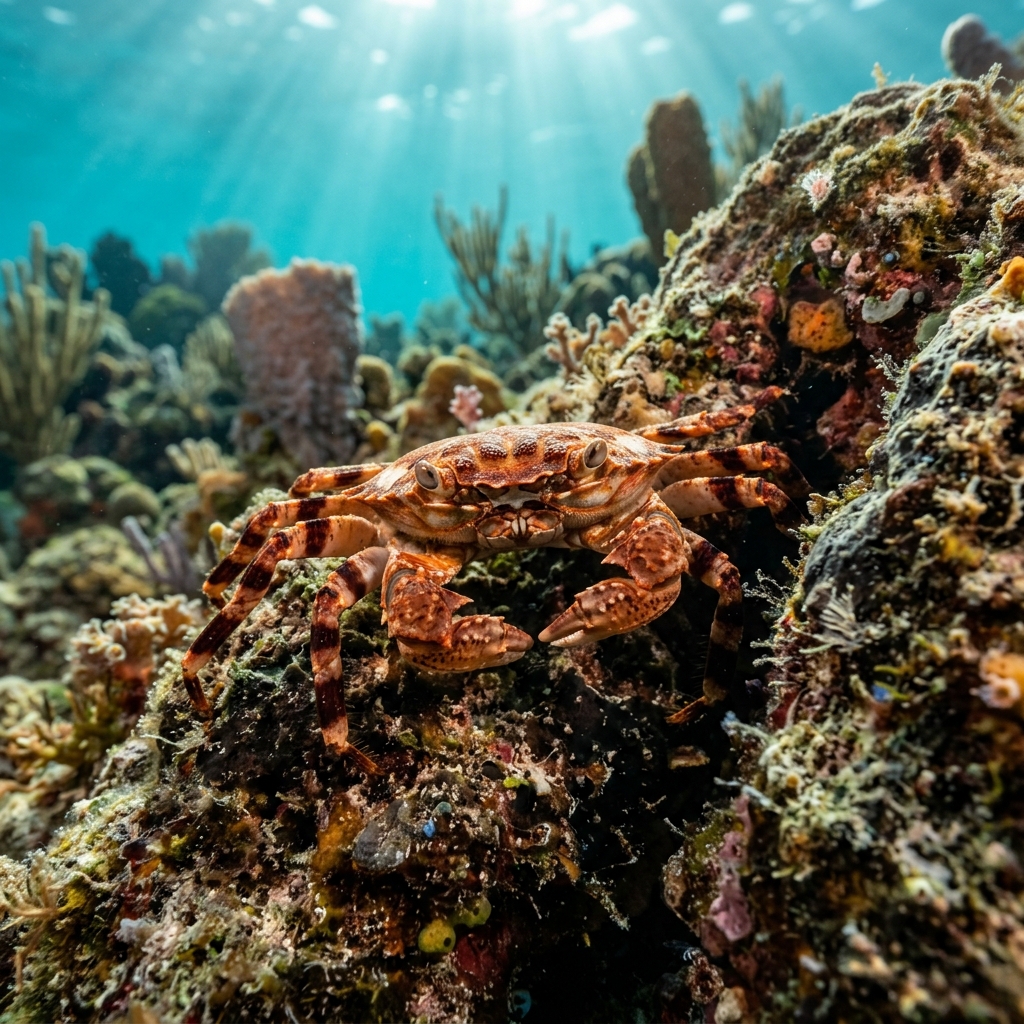
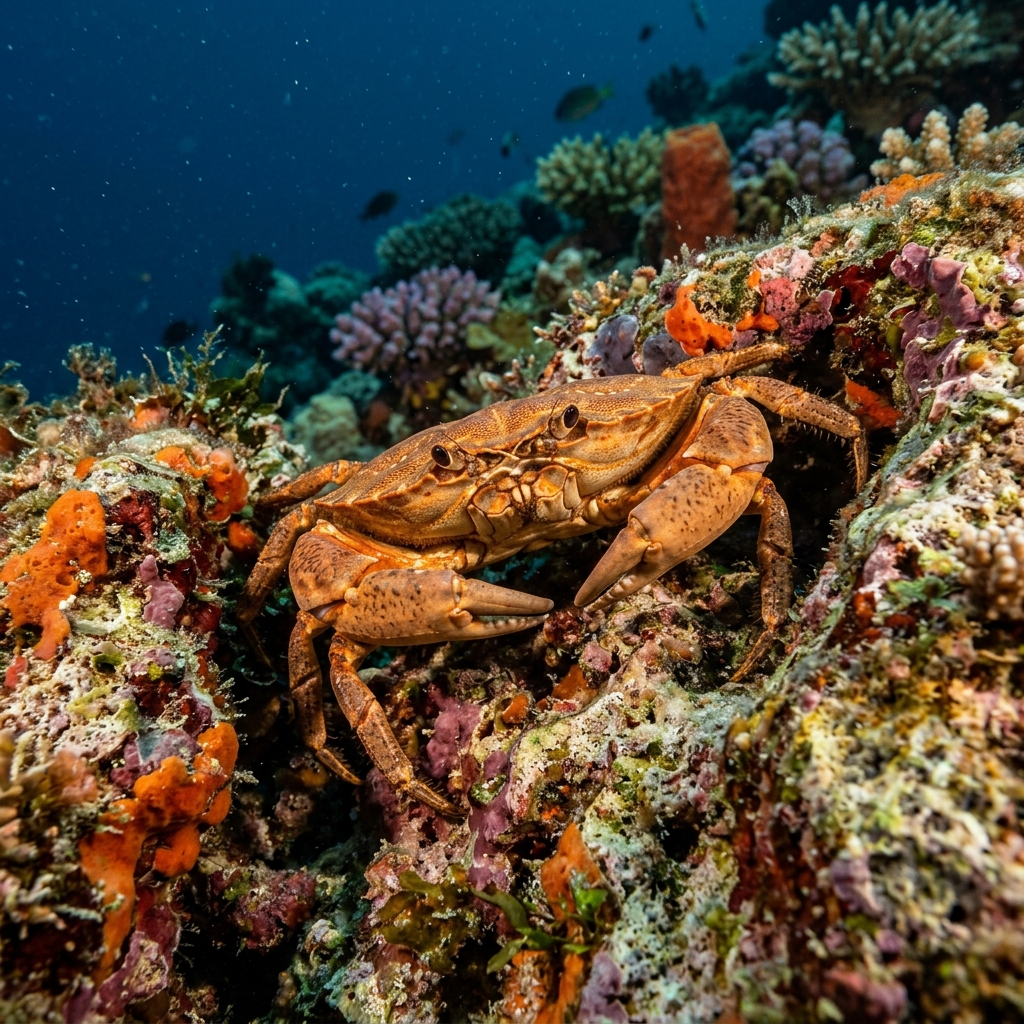
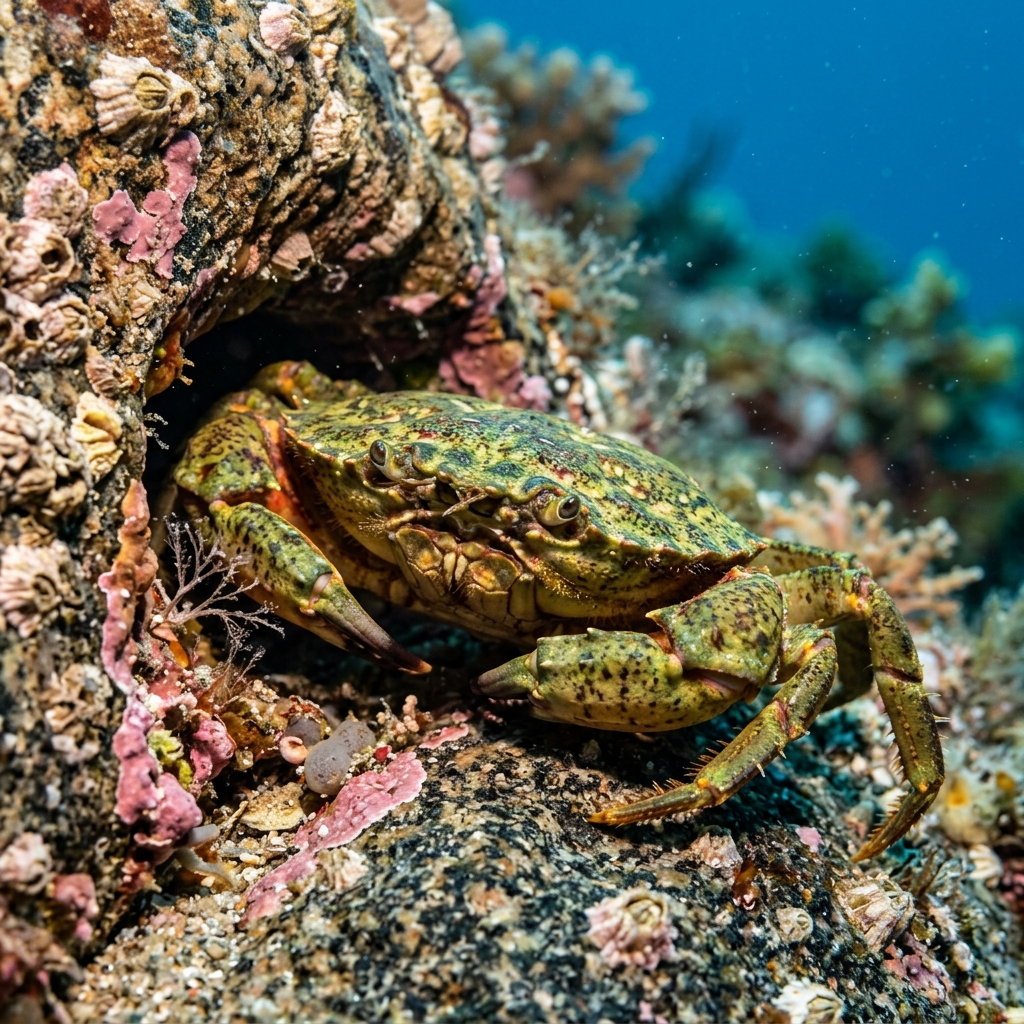
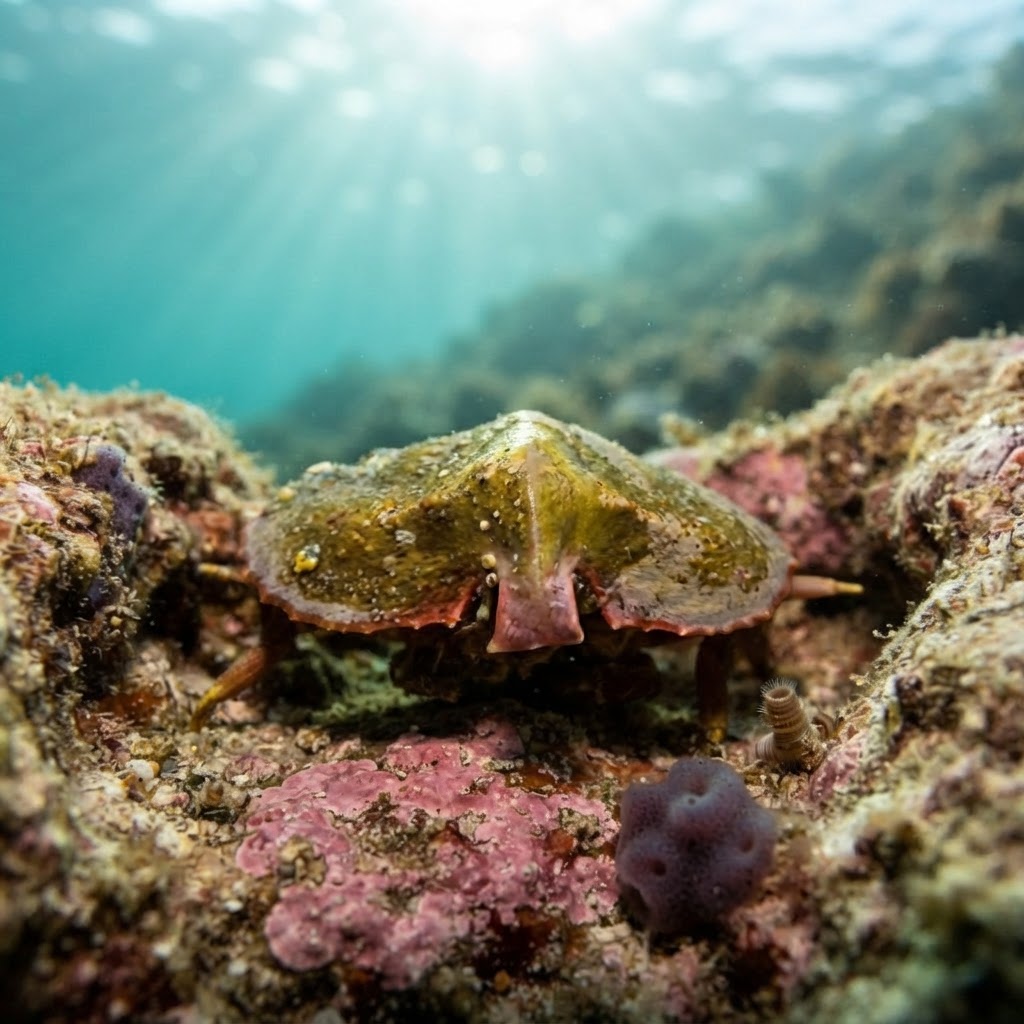
Look for a flat, oversized carapace (shell covering the back) that fans out well past the legs, giving it a disc or shell-like silhouette rather than a typical crab outline. Colouring runs in mottled patches of white, pink, purple or brown, closely matching broken shell and rock rubble on the seafloor. At around 6 cm across, it is small and easy to swim past, so divers usually spot it by noticing the odd straight-edged shell shape rather than any obvious crab movement.
Divers usually find it wedged low against rock or sitting motionless on cobble, relying on its shell-shaped carapace to blend in rather than fleeing when approached. It is logged as uncommon to rare at most sites, so finding one often means slowing down and scanning rubble patches closely rather than swimming a normal pace over the reef. It shows no reaction to divers beyond staying still, consistent with an animal that survives by looking like debris.
Its carapace edges extend out to cover its own legs almost completely, so a resting individual can look like a flat piece of broken shell lying on the bottom rather than an animal at all.
Sightings so far don't show a clear seasonal pattern, and with a water-temperature niche of 8.5 to 14.5C it fits the cool water present on Pacific Northwest and California dives across much of the year. Treat it as a year-round find rather than a species tied to a particular month.
Most reliably logged in British Columbia, Canada, with additional sightings in California and the wider Pacific Northwest in the United States. This is a cold-water species tied to rocky reef and cobble habitat along the northeast Pacific coast, so sightings cluster in these two countries rather than anywhere tropical.
Mapping where Umbrella Crab is logged…
It is most reliably found on rocky reef dives in British Columbia, Canada, with further sightings in California and the Pacific Northwest region of the United States.
There is no strong seasonal pattern in the sightings logged so far, so it is best treated as a year-round find in the cool coastal waters it favours, typically between 8.5 and 14.5C.
Look for a flat, oversized shell that extends past the legs, giving it a disc-like shape mottled in white, pink and brown to match shell rubble on the seafloor. At about 6 cm across it is easy to overlook unless you check rocky, cobbled patches closely.
They stay small, typically around 6 cm across the shell, making them one of the more easily missed crabs on a Pacific Northwest or California dive.
Its carapace flares out to cover its legs almost entirely, so a still individual can look like a loose piece of broken shell rather than a living animal, which is its main defence against predators and curious divers alike.
Site and sighting data is aggregated from diver logs, iNaturalist and GBIF. For taxonomy and conservation status:
European Green Crab
2,469 sites