Halichoeres prosopeion
Small, quick-moving reef wrasse logged across Visayas and Queensland reefs at 25-29 C, seen year-round on shallow coral.
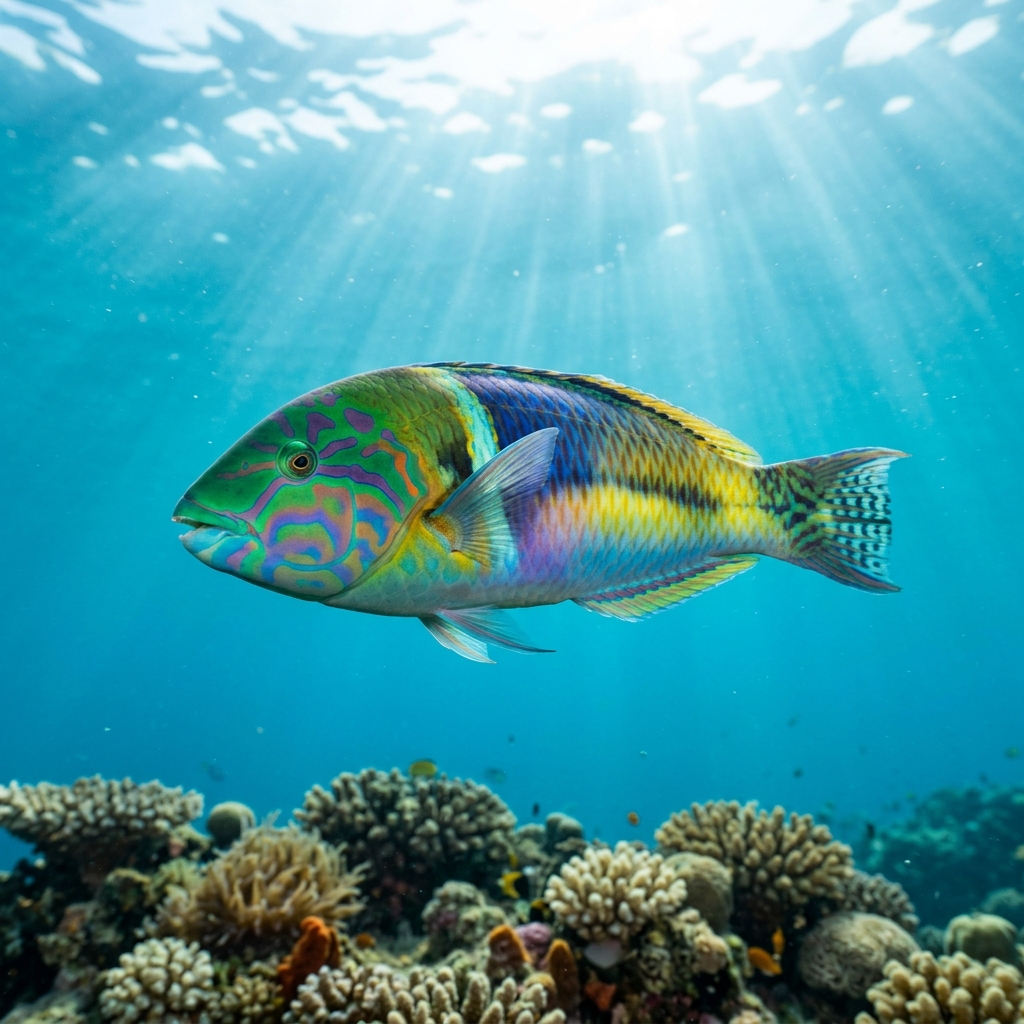
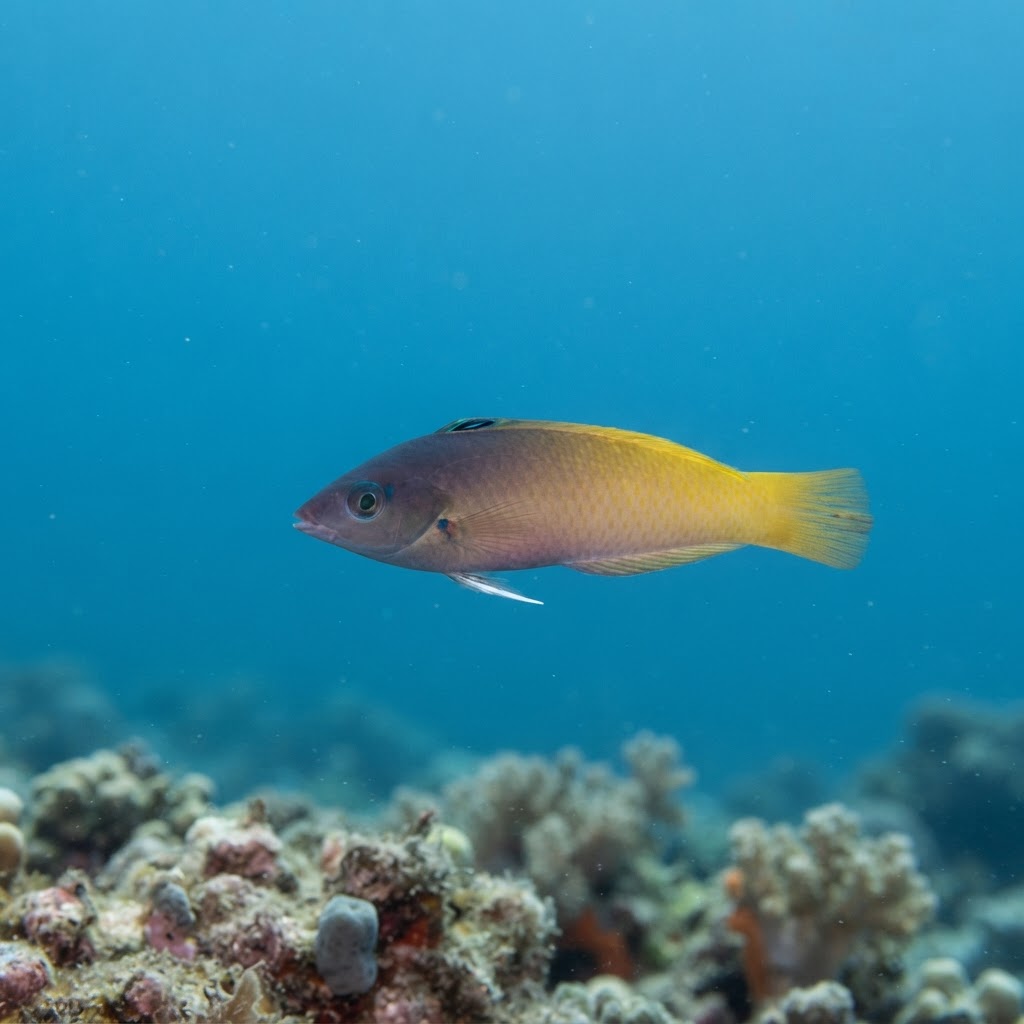
A small wrasse, rarely more than 9 cm, split neatly down the middle: the front half runs blue to purple-grey while the back half and tail glow bright yellow. A thin dark stripe runs through the eye, and the body has that classic wrasse torpedo shape built for quick darting bursts rather than sustained cruising. The sharp colour break between front and back is the single fastest tell underwater.
Look for it picking around coral rubble and sandy patches close to the reef, darting between bommies rather than holding still for a photo. It is logged as uncommon at most sites, so it is a fish you notice while scanning the reef edge rather than something that dominates a dive, though a handful of sites report it as common. Divers rarely get a reaction from it beyond a quick retreat into cover, as it is not bold around people but not especially shy either.
Like many wrasses in the Halichoeres genus, twotone wrasse bury themselves in sand at night and when startled, a defensive trick that also means a fish you saw resting on the bottom at dusk may simply vanish into the substrate.
No clear seasonal pattern shows up in the sightings data, and with a comfortable water temperature niche of roughly 25 to 29 C, this wrasse sits on tropical reefs year-round rather than appearing in a particular window. Plan around good visibility at your chosen site rather than a specific month.
This is very much a Philippines fish first, with the Visayas and Luzon regions supplying the bulk of logged sightings, followed by strong numbers on Queensland reefs in Australia. It also turns up reliably in Sulawesi and Raja Ampat in Indonesia, on Atauro Island and around Dili in Timor-Leste, and on reefs off Taveuni in Fiji, with smaller numbers reported from Papua New Guinea, Vietnam and Palau.
Mapping where Twotone Wrasse is logged…
Most reliably seen on Philippine reefs in the Visayas and Luzon regions, with good numbers also logged on Queensland reefs in Australia, Sulawesi and Raja Ampat in Indonesia, and around Atauro Island and Dili in Timor-Leste.
There is no strong seasonal pattern in the sightings, and the fish tolerates a wide tropical temperature range of roughly 25 to 29 C, so it is present on reefs throughout the year.
Look for a small wrasse under 10 cm with a sharp colour split: blue to purple-grey on the front half of the body and bright yellow across the back half and tail, plus a thin dark stripe through the eye.
They are small, typically reaching around 9 cm in length, making them one of the more compact wrasses divers encounter on Indo-Pacific reefs.
No. It poses no threat to divers, staying close to the reef and retreating into rubble or sand if approached rather than showing any defensive behaviour toward people.
Like other Halichoeres wrasses, it can dive straight into sand to hide from predators or disappear for the night, so a fish resting near the bottom may seem to vanish instantly when startled.
Site and sighting data is aggregated from diver logs, iNaturalist and GBIF. For taxonomy and conservation status:
Bird Wrasse
3,632 sites