Halichoeres biocellatus
A small, uncommon wrasse turning up on reefs from Luzon to Taveuni, in water around 26 to 29 C year-round.
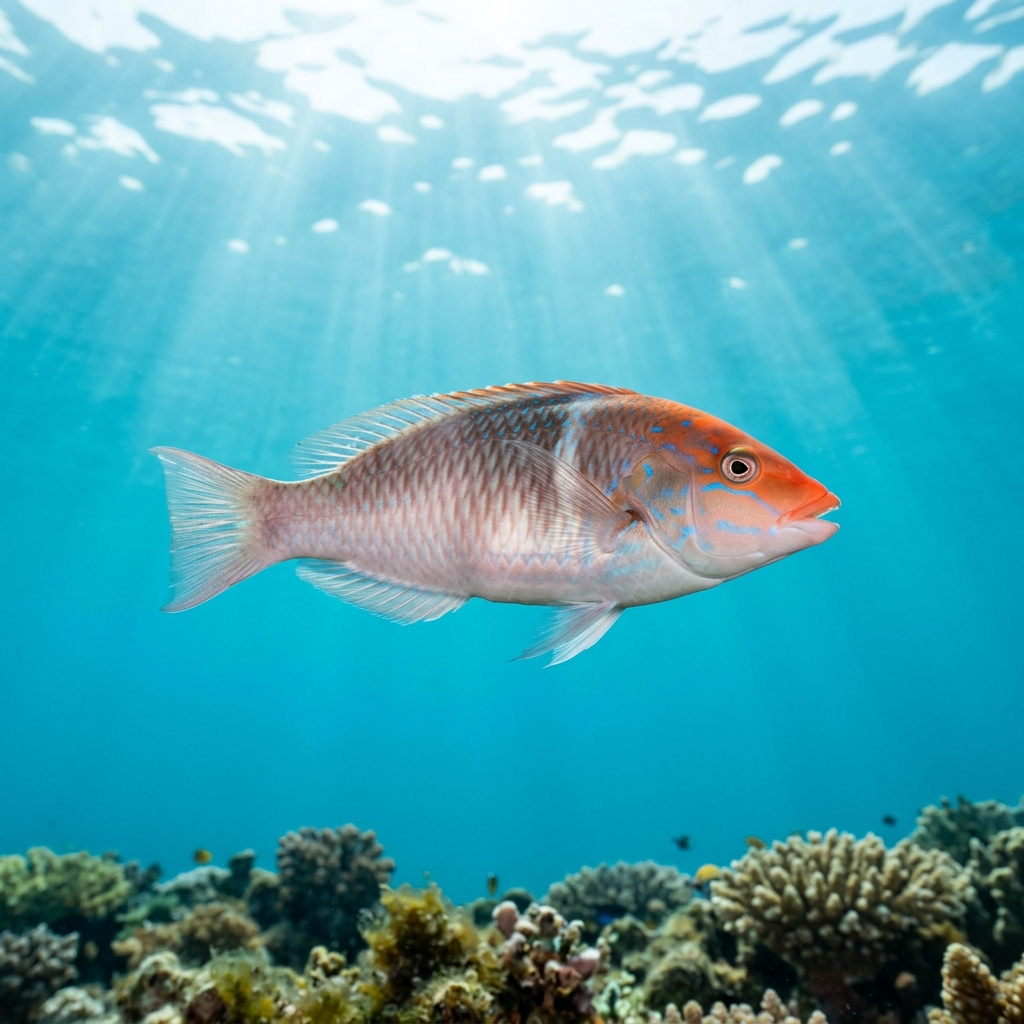
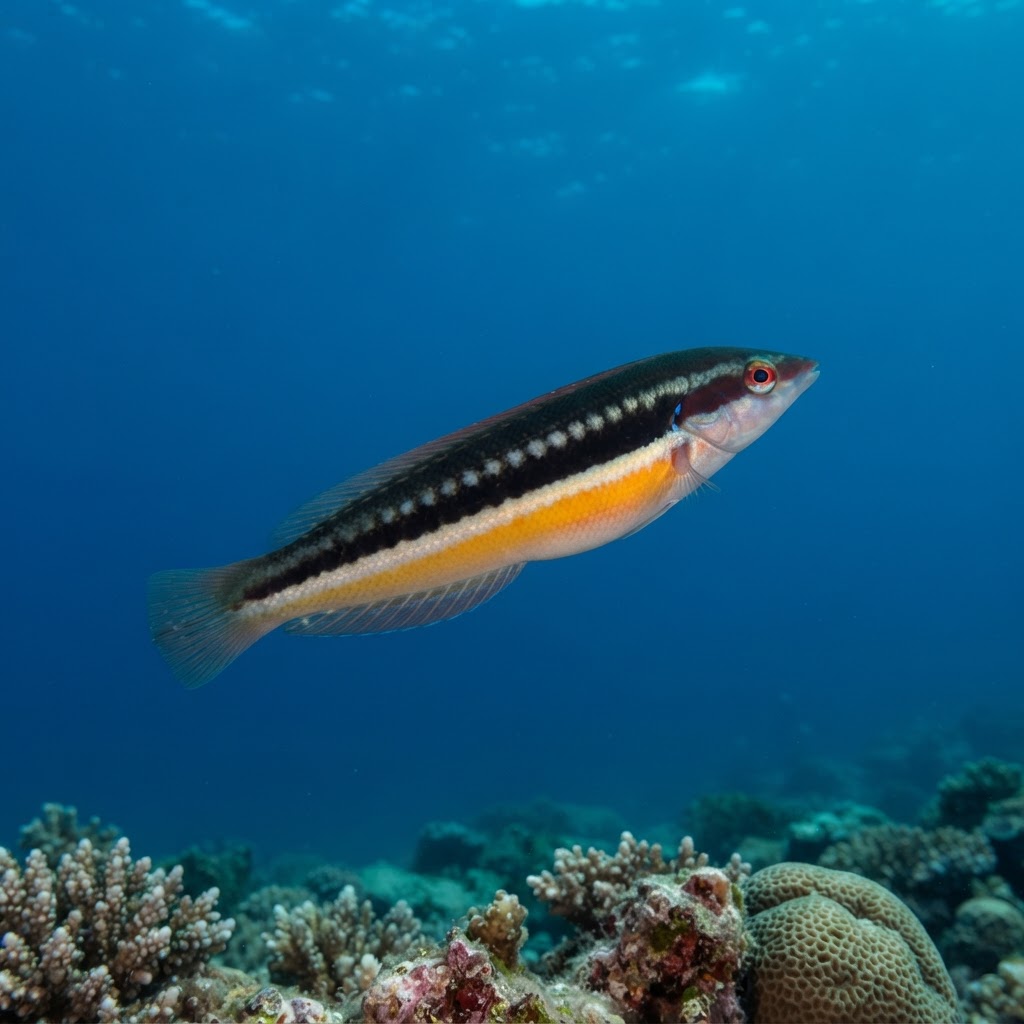
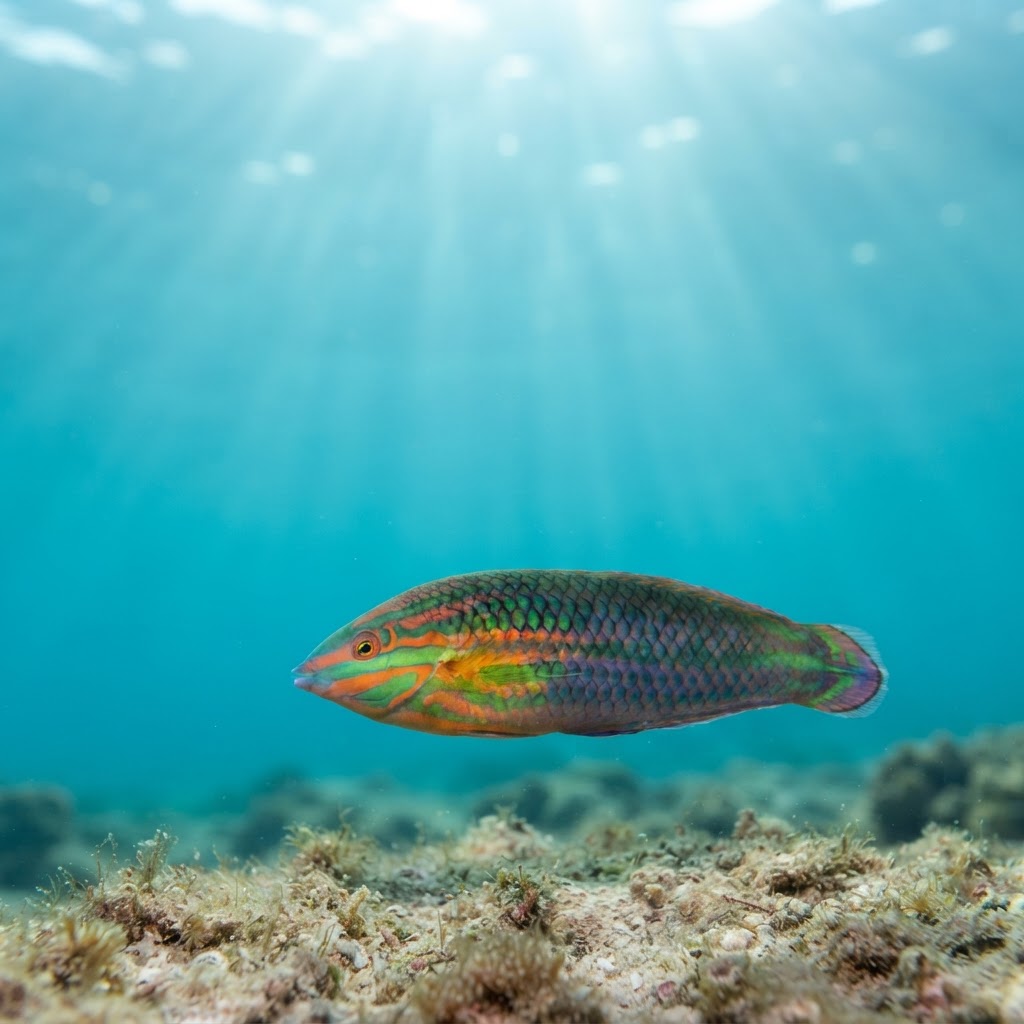
Small and slender, topping out around 8 cm, with a body that tapers to a pointed snout typical of the wrasse family. Look for two dark, distinct spots along the body, one usually higher on the back near the dorsal fin, which give this fish its name. It swims in short darting bursts rather than gliding, close to the substrate, and its base colour is pale enough that the two dark spots are the main feature that stands out against the reef.
Expect to find it picking around low reef structure and rubble patches rather than out in open water, moving in quick, short hops between cover. It's not a fish that approaches divers or holds still for long, so patient, slow observation near the substrate gives the best chance of a good look. Most divers log it as an incidental sighting while working a reef slope rather than a targeted find.
Like many small wrasses, it's most often noticed by attentive reef-scanning divers rather than sought out directly, since its small size and quick movements make it easy to miss among rubble and coral debris.
Sightings show no clear seasonal pattern, and with water in the 25.6 to 28.9 C range at recorded sites, it's a fish you can look for on tropical reefs any month of the year.
Most consistently logged in the Philippines, particularly around Luzon and the Visayas, with strong showings in Sabah, Malaysia and Saipan in the Northern Mariana Islands. Taveuni in Fiji and Peleliu in Palau are also reliable spots, with fewer records from Guam and a single logged site in Kenting, Taiwan.
Mapping where False-eyed Wrasse is logged…
It's most commonly logged in the Philippines, especially Luzon and the Visayas, and also shows up reliably in Sabah, Malaysia, Saipan in the Northern Mariana Islands, Taveuni in Fiji, and Peleliu in Palau.
There's no strong seasonal pattern in the sightings, and it's found in water between roughly 25.6 and 28.9 C, so it's a reasonable find on tropical reefs throughout the year.
Look for a small, slender wrasse around 8 cm long with two dark spots along its body, one typically near the back. It moves in short, quick darts low over the reef rather than swimming in the open.
They stay small, reaching around 8 cm in length, which is typical for many reef-dwelling wrasses in this genus.
No, they pose no danger to divers. They're small, harmless reef fish that keep to themselves near the substrate.
Site and sighting data is aggregated from diver logs, iNaturalist and GBIF. For taxonomy and conservation status:
Bird Wrasses
3,632 sites