Oxycheilinus bimaculatus
A small, quick-moving wrasse logged across Visayas and Bali reefs in warm 25-29C water, seen year-round on rubble and coral edges.
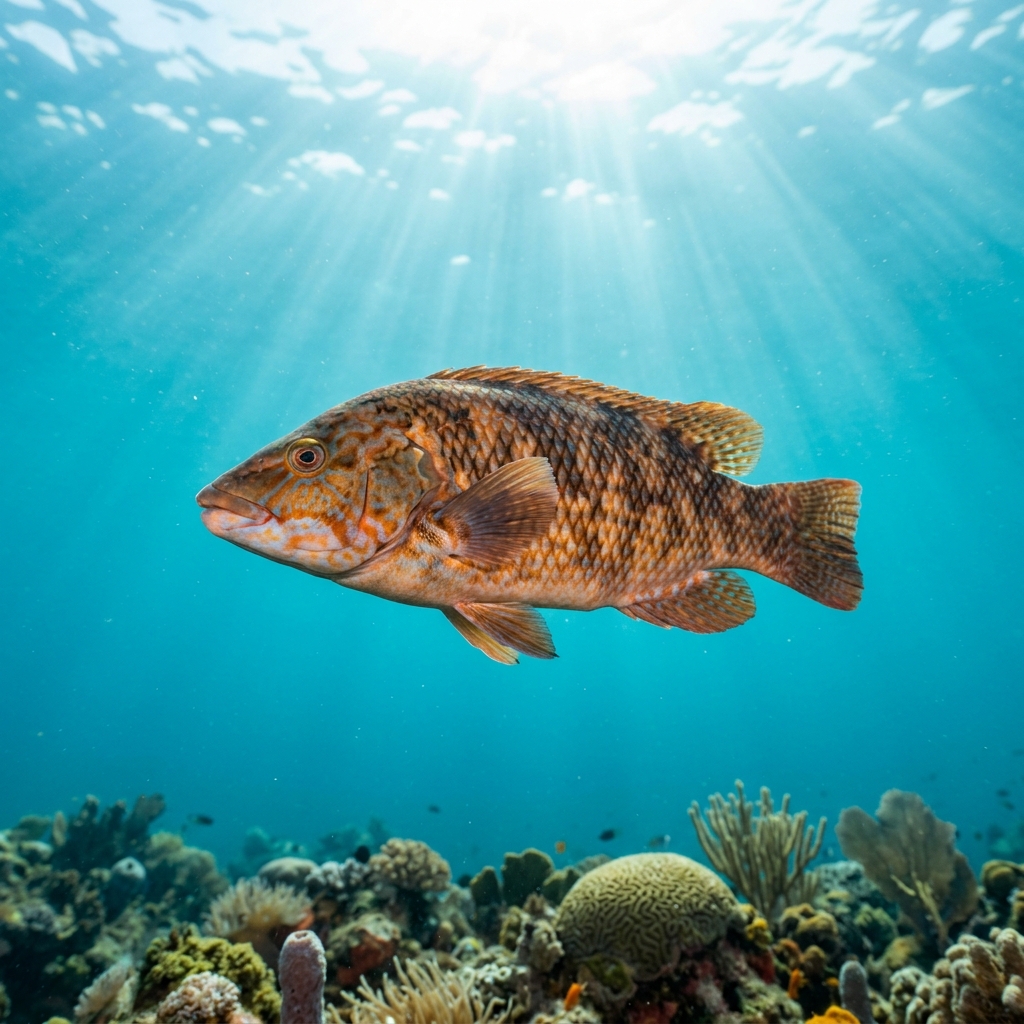
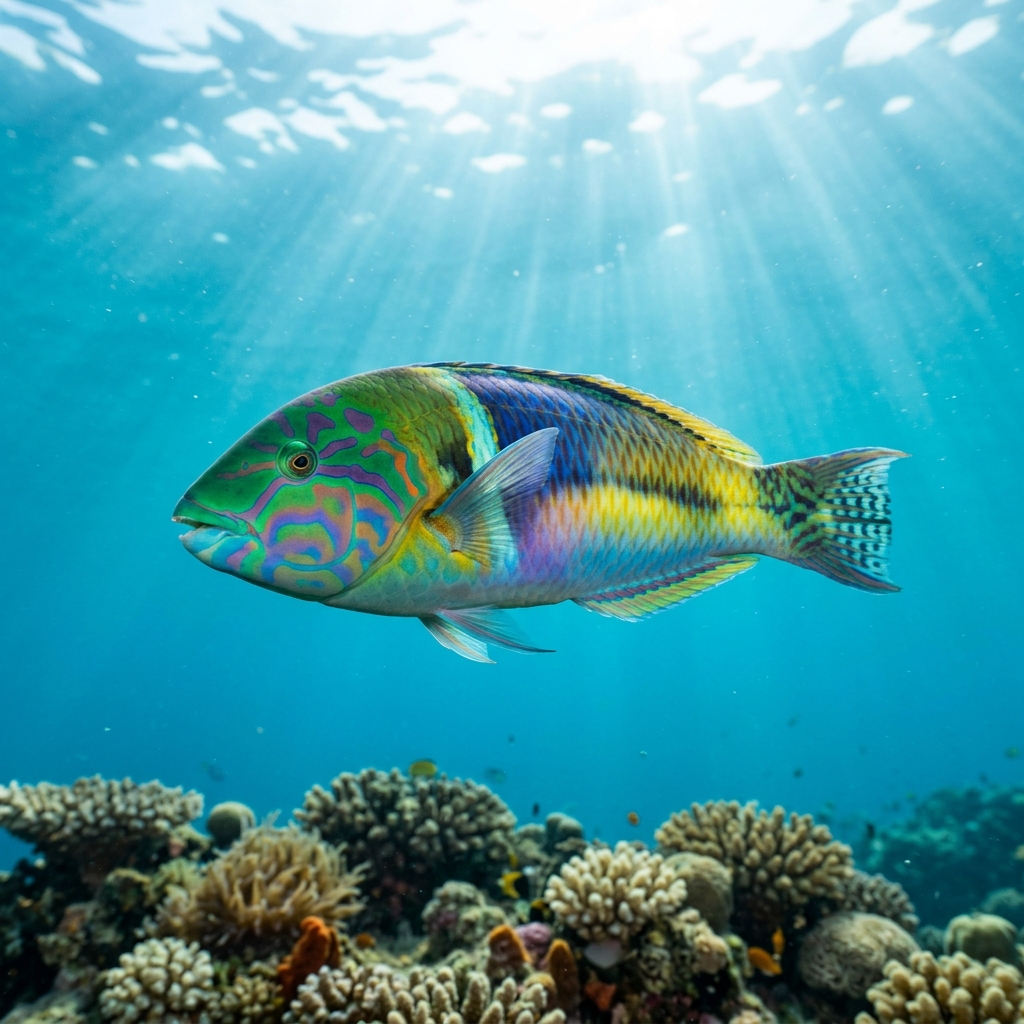
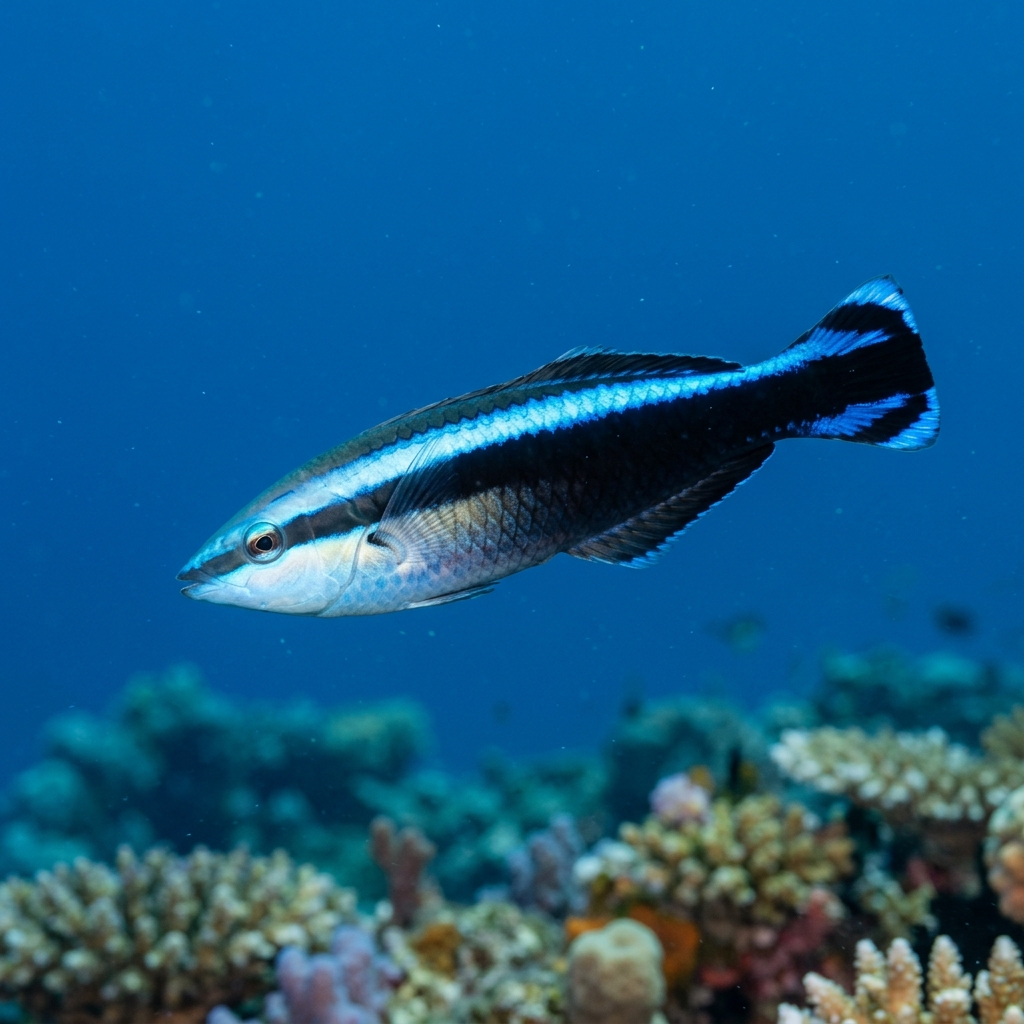
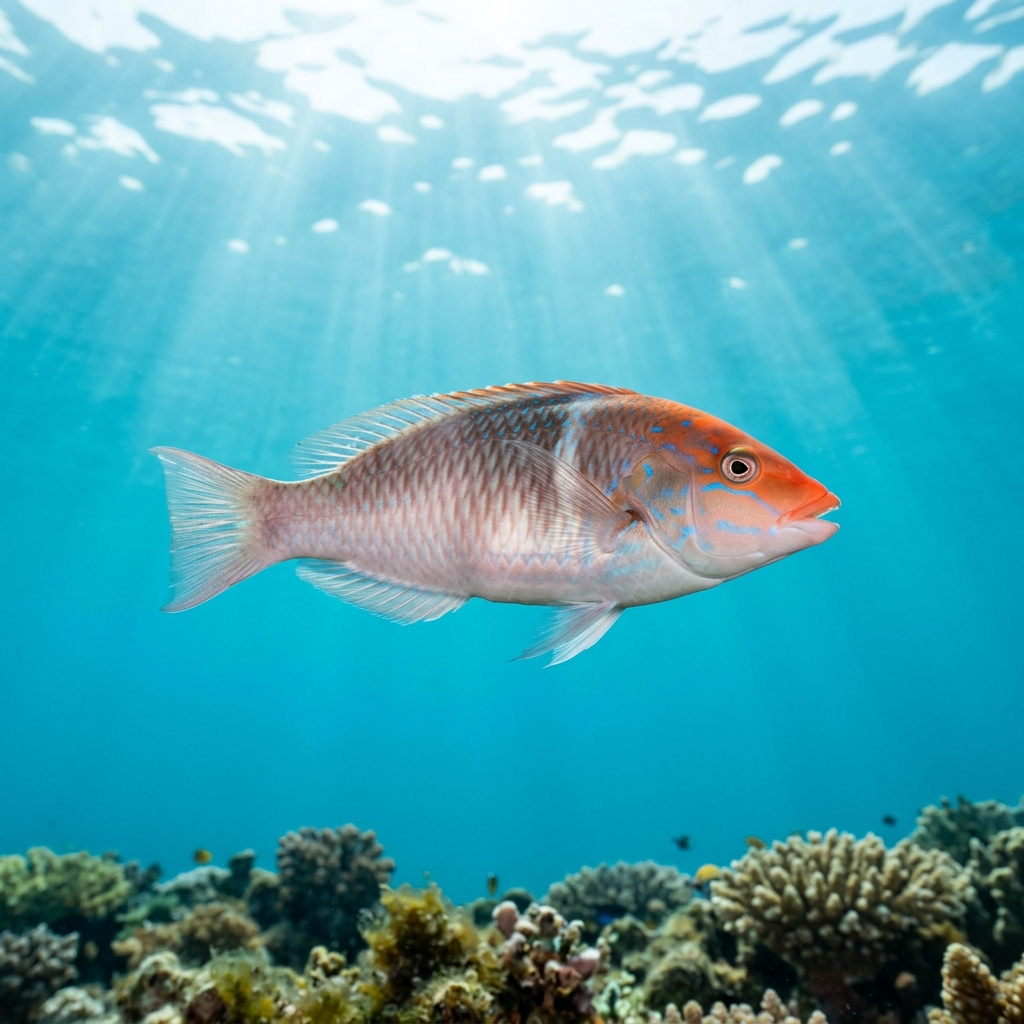
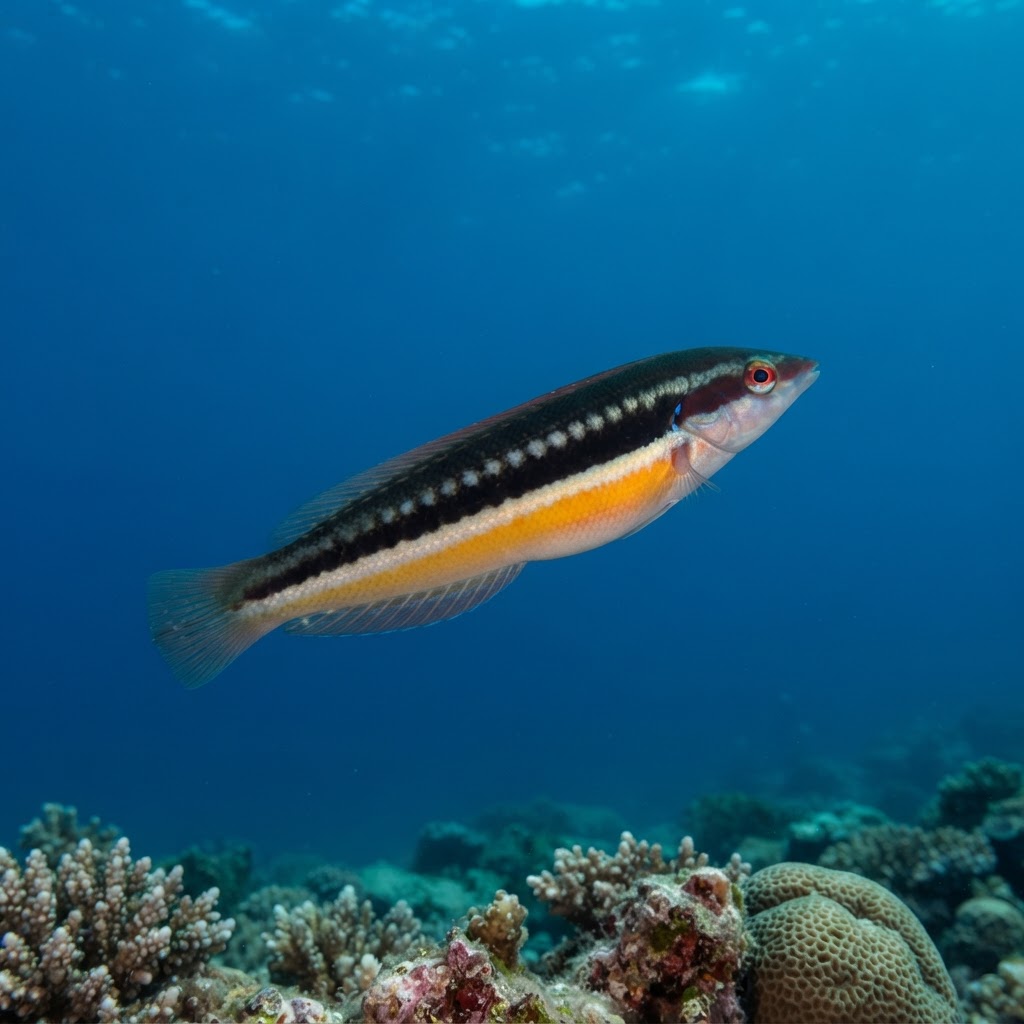
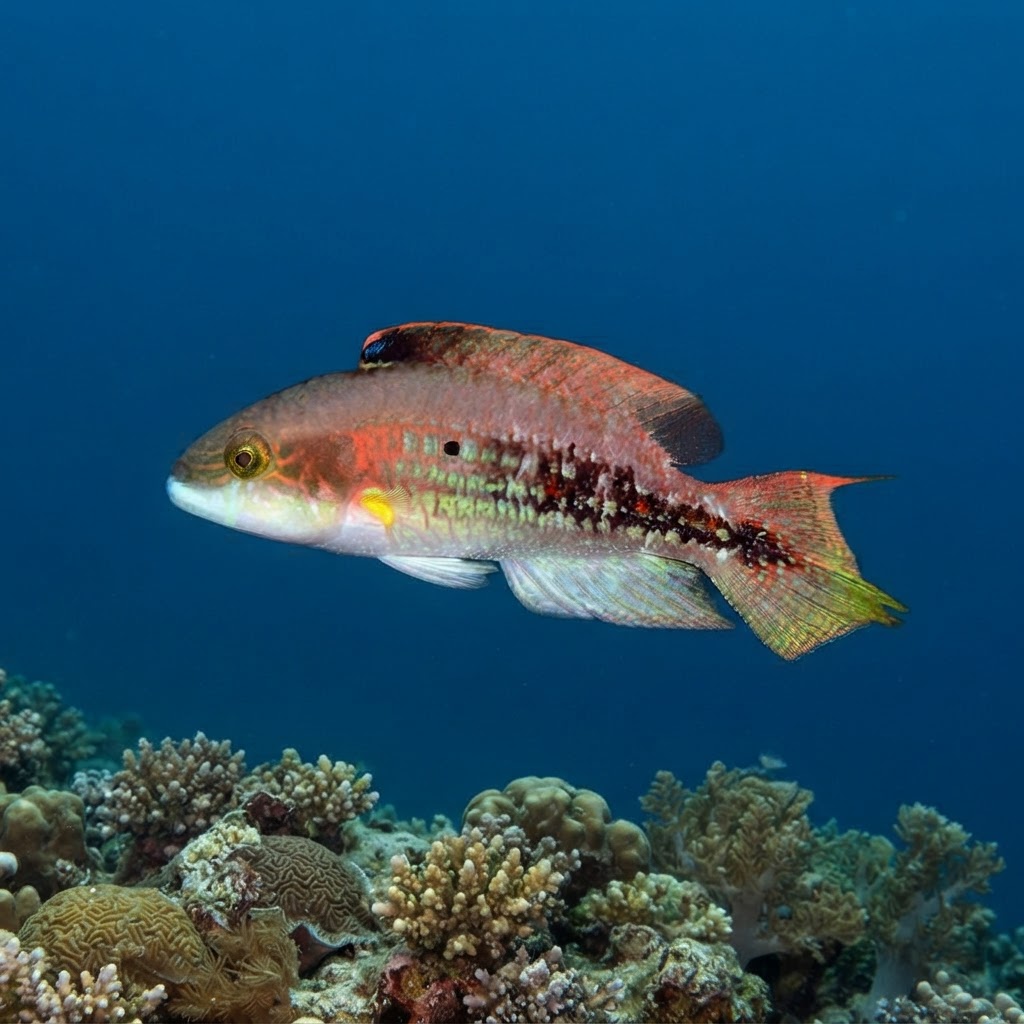
A small, slender wrasse at just 11 cm, easy to miss unless you're looking close to the reef floor. Look for a reddish-brown to olive body with a scatter of pale spots and the two dark blotches near the tail base that give it its name. It moves in quick darts rather than a steady cruise, pausing low over rubble and coral rubble patches between bursts.
Divers typically spot it darting low over rubble, coral heads and reef edges rather than in open water, snapping up small invertebrates as it goes. It's a wary, fast mover that tends to duck behind coral or into crevices when a diver gets close, so a slow approach and a bit of patience improve your odds of a clear look.
It ranges from shallow snorkel depth right down to 120 metres, a wider vertical spread than most small reef wrasses, which is part of why it turns up on such a broad mix of dive sites.
No clear seasonal pattern shows up in the sightings, and it sits comfortably in 25.2 to 29.0C water year-round, so any month on a tropical Indo-Pacific reef is fair game.
Most reliably logged in the Philippines, especially around the Visayas and Luzon, and in Indonesia across Bali, Nusa Tenggara, Sulawesi, West Papua and Maluku. Smaller but consistent numbers come from Hawaii in the United States, plus Taiwan, Australia, Timor-Leste and Papua New Guinea.
Mapping where Twospot Wrasse is logged…
The Philippines (Visayas and Luzon) and Indonesia (Bali, Nusa Tenggara, Sulawesi) turn up the most sightings. It's also logged in Hawaii, Taiwan, Australia, Timor-Leste and Papua New Guinea.
There's no strong season in the data, and it tolerates a wide 25.2 to 29.0C range, so it's a year-round sighting on tropical Indo-Pacific reefs.
Look for a small, 11 cm reddish-brown to olive wrasse with pale spots and two dark blotches near the tail base. It moves in quick, darting bursts low over rubble and reef edges rather than swimming steadily in open water.
They stay small, typically around 11 cm, making them one of the less conspicuous wrasses on a reef and easy to overlook among bigger fish.
No. They're small carnivorous reef fish with no recorded risk to divers, and they tend to dart away from people rather than approach.
Most sites that log this species report it as uncommon rather than common or rare, so you'll need to look closely over rubble and coral edges to find one.
Site and sighting data is aggregated from diver logs, iNaturalist and GBIF. For taxonomy and conservation status:
Bird Wrasses
3,632 sites