Chrysiptera biocellata
Small dark damselfish with a pale saddle, most reliably logged around Zanzibar and the Maldives' Central Atolls in 25-29C water.
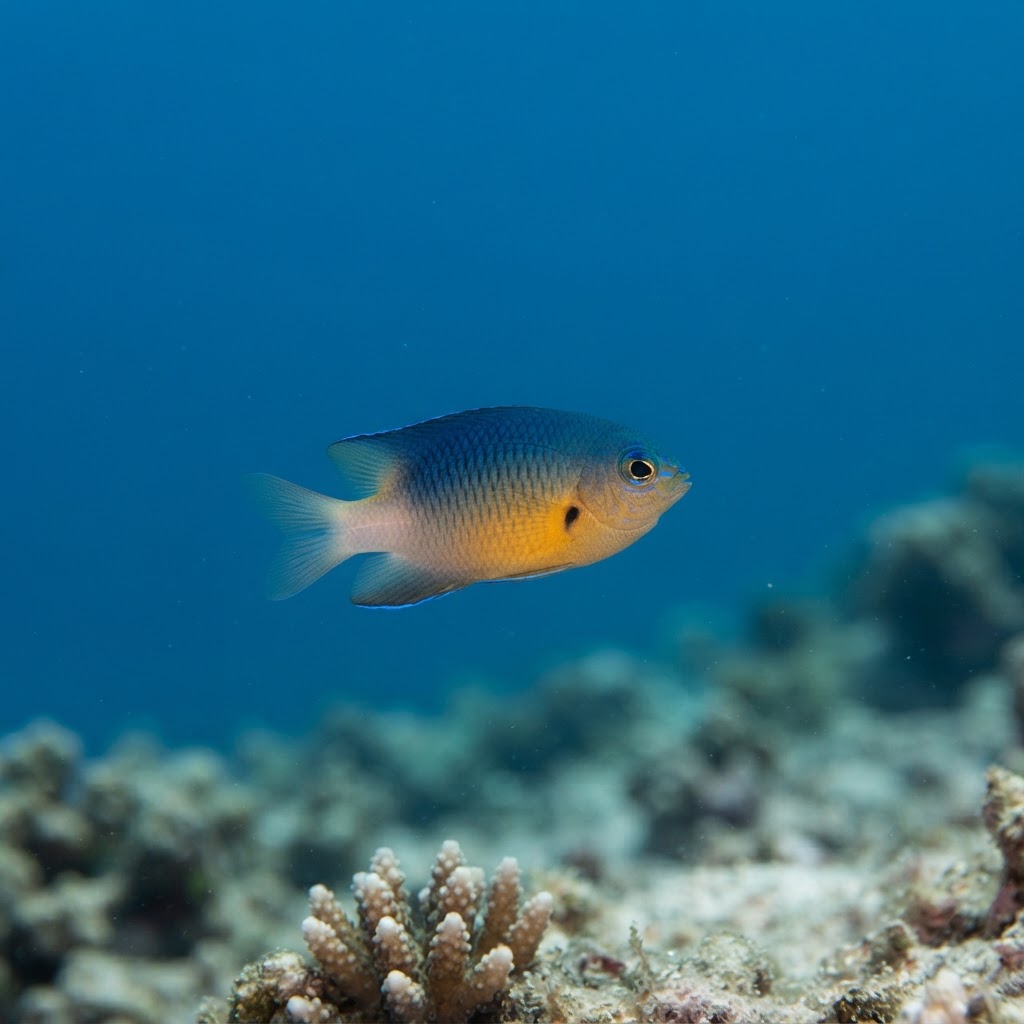
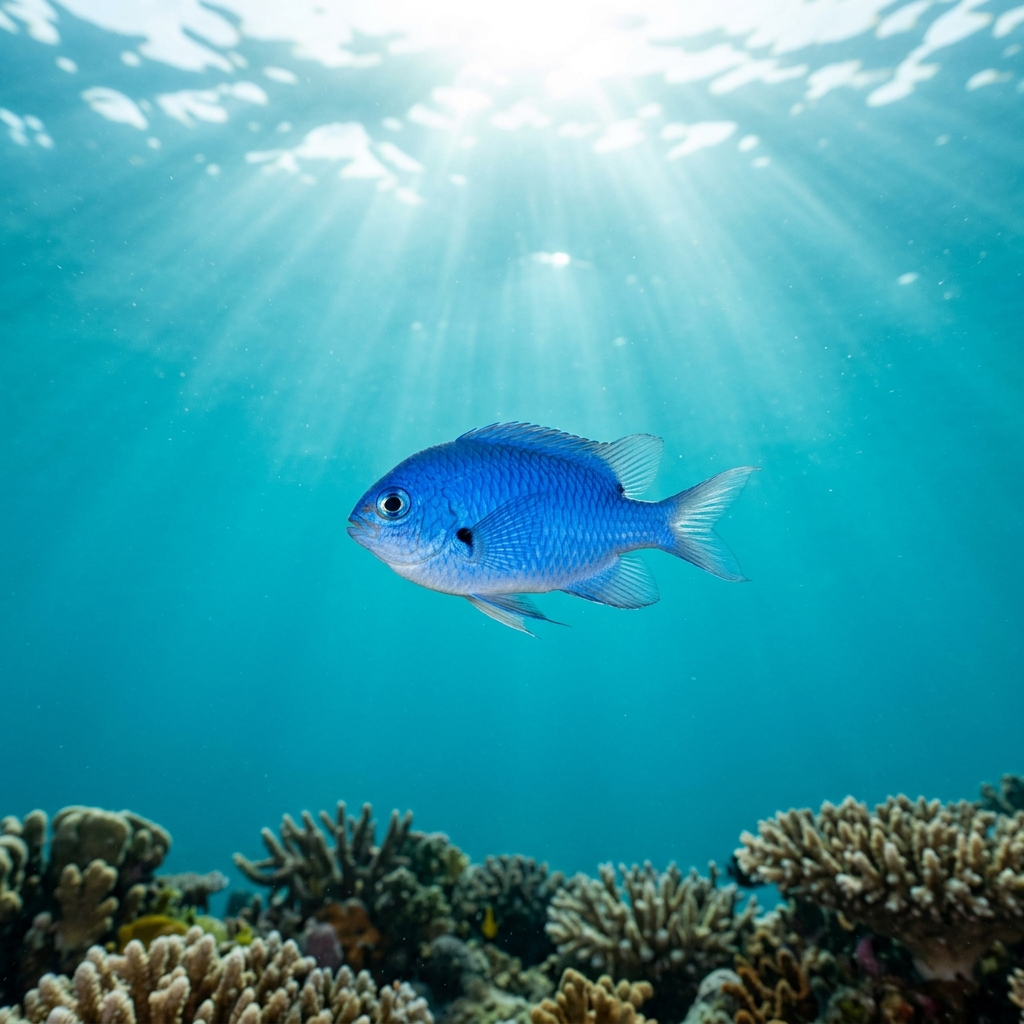
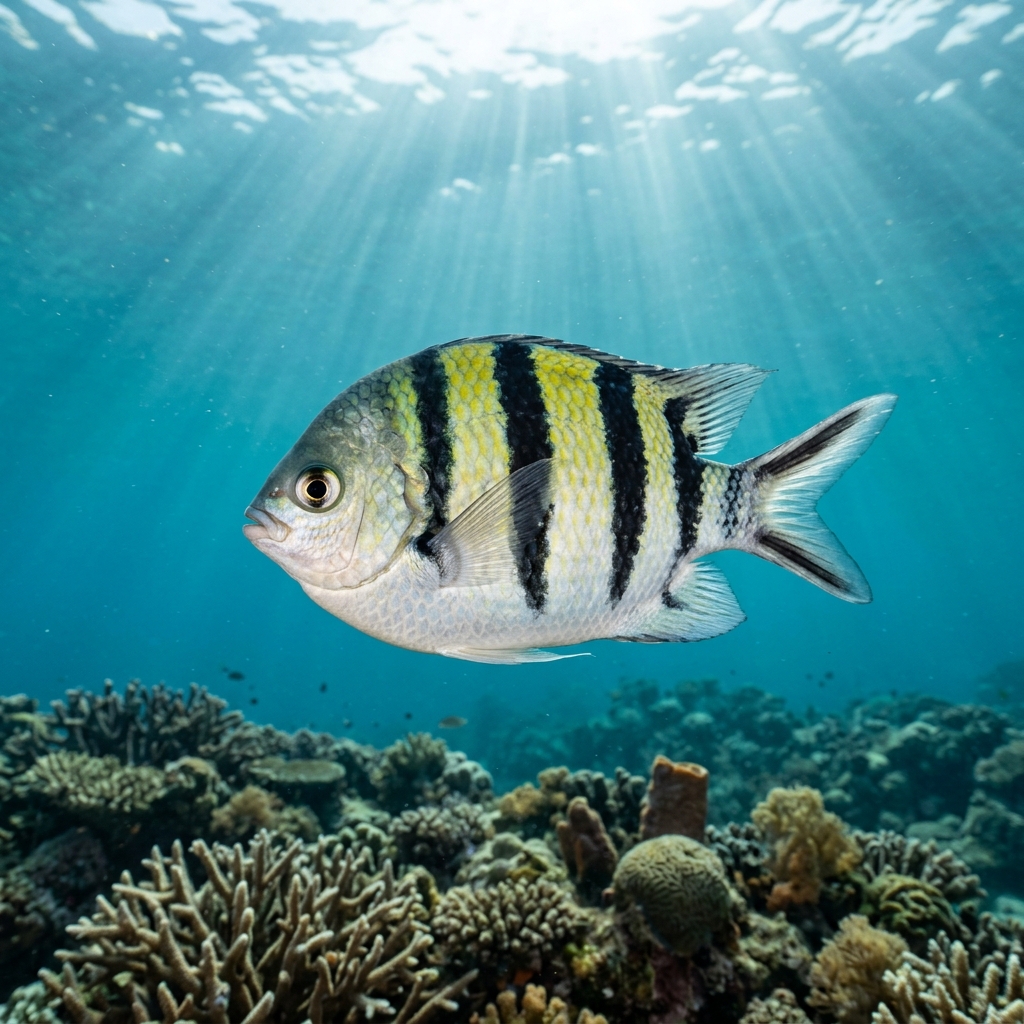
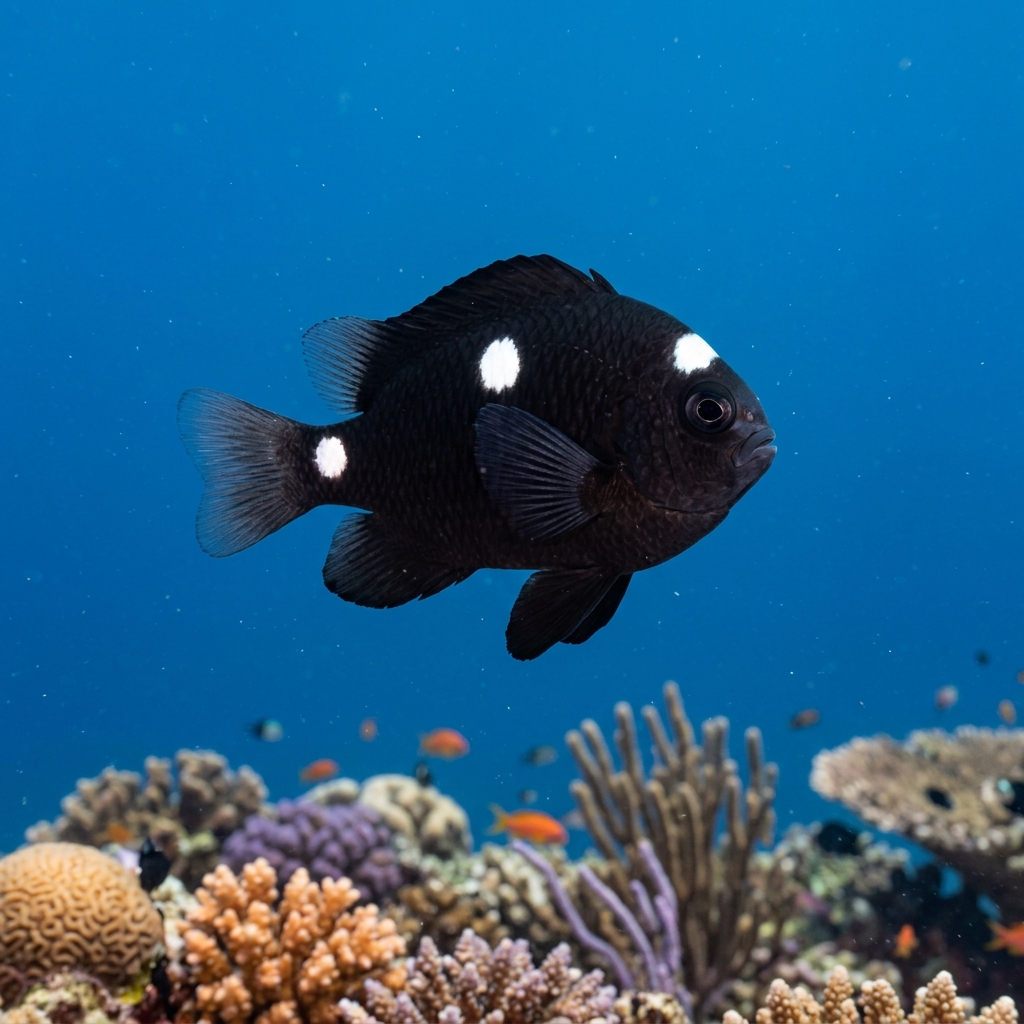
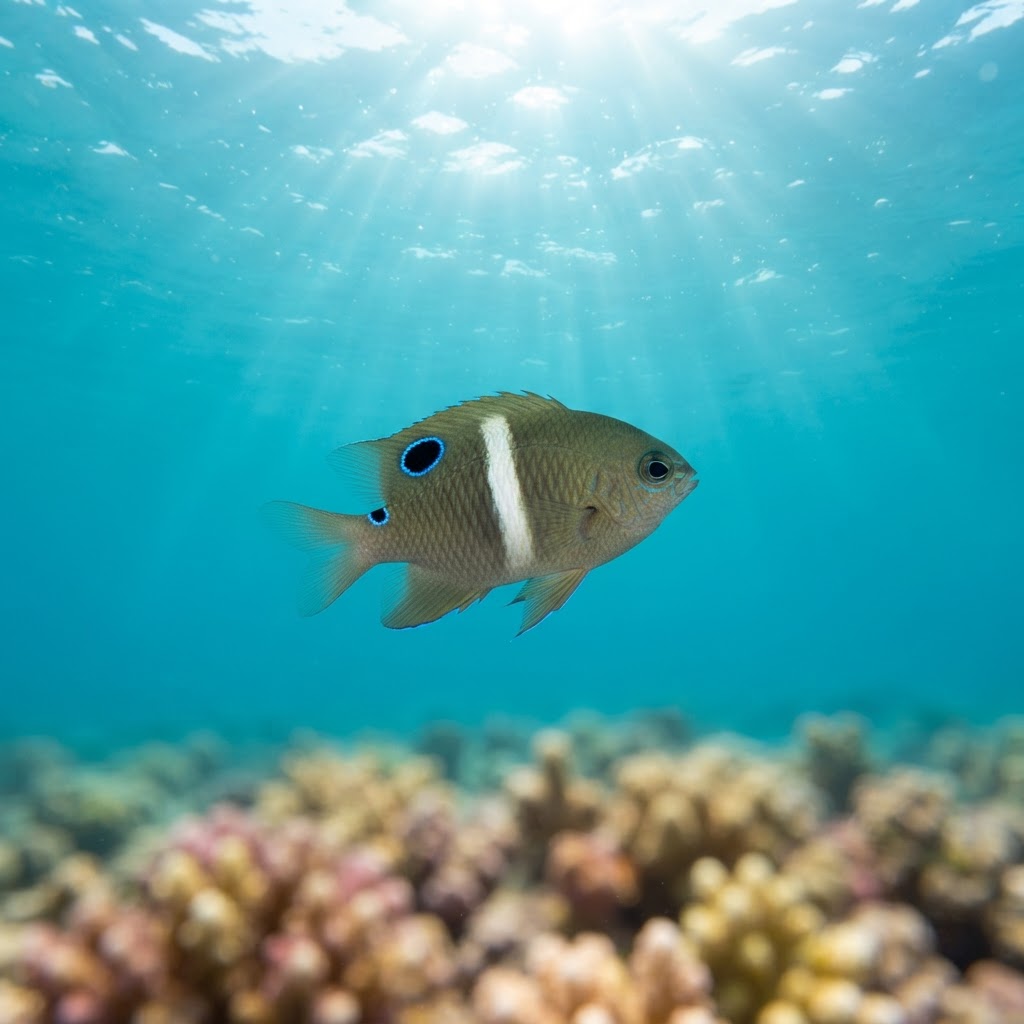
Small, stocky damselfish to about 8cm with a dark grey to blackish body and a pale, often white, saddle-like bar across the middle. Two small blue-ringed spots (the source of the name) sit on the upper back near the dorsal fin, though they can be subtle and hard to pick out at a glance. Look for the blunt head and the way it hovers close to a chosen patch of reef rather than schooling in open water.
Spends most of its time close to a patch of rubble, dead coral, or reef structure, darting for cover rather than roaming. It holds territory around a small patch and will dart in and out of crevices when divers approach, more shy than aggressive compared with some of its damselfish relatives. Best looked for by scanning shallow to mid-reef rubble zones slowly rather than expecting it to come to you.
Like other damselfish, it lays eggs on a cleared patch of hard substrate and the male stands guard over the clutch, chasing off intruders many times its own size until the eggs hatch.
No clear seasonal pattern shows up in the sightings, and with a comfortable range of 25.4 to 29.3C it has no need to migrate with temperature, so any time of year on these reefs works. Treat it as a year-round resident rather than a seasonal target.
Reef neighbours a diver could mistake it for. Use the identification notes above to tell them apart.
Most reliably logged in the Maldives, particularly the Central Atolls, and around Zanzibar in Tanzania. Fiji, especially Viti Levu and the Yasawa Islands, and New Caledonia's waters around Nouméa also turn up steady sightings, though at every one of these sites divers rate it uncommon rather than a given.
Mapping where Twospot Demoiselle is logged…
The strongest sightings come from the Maldives' Central Atolls and Zanzibar in Tanzania, with further records around Viti Levu and the Yasawa Islands in Fiji and Nouméa in New Caledonia. Even in these areas it's logged as uncommon, so it's a bonus sighting rather than a guaranteed one.
There's no detected season in the sightings data, and it tolerates a broad 25.4 to 29.3C range, so it's present on these reefs year-round. Plan around the best diving conditions for your chosen region rather than around this fish's calendar.
Look for a small, dark grey to blackish damselfish around 8cm with a pale bar across the middle of its body. Two faint blue-ringed spots on the upper back give it its name, though they're not always easy to spot without a close look.
They top out around 8cm, a typical size for a reef damselfish, staying small and easy to overlook among rubble and coral debris.
No, they pose no danger to divers. They're territorial toward other small fish but simply retreat into cover when a diver gets close.
Site and sighting data is aggregated from diver logs, iNaturalist and GBIF. For taxonomy and conservation status:
Dascyllus
3,697 sites