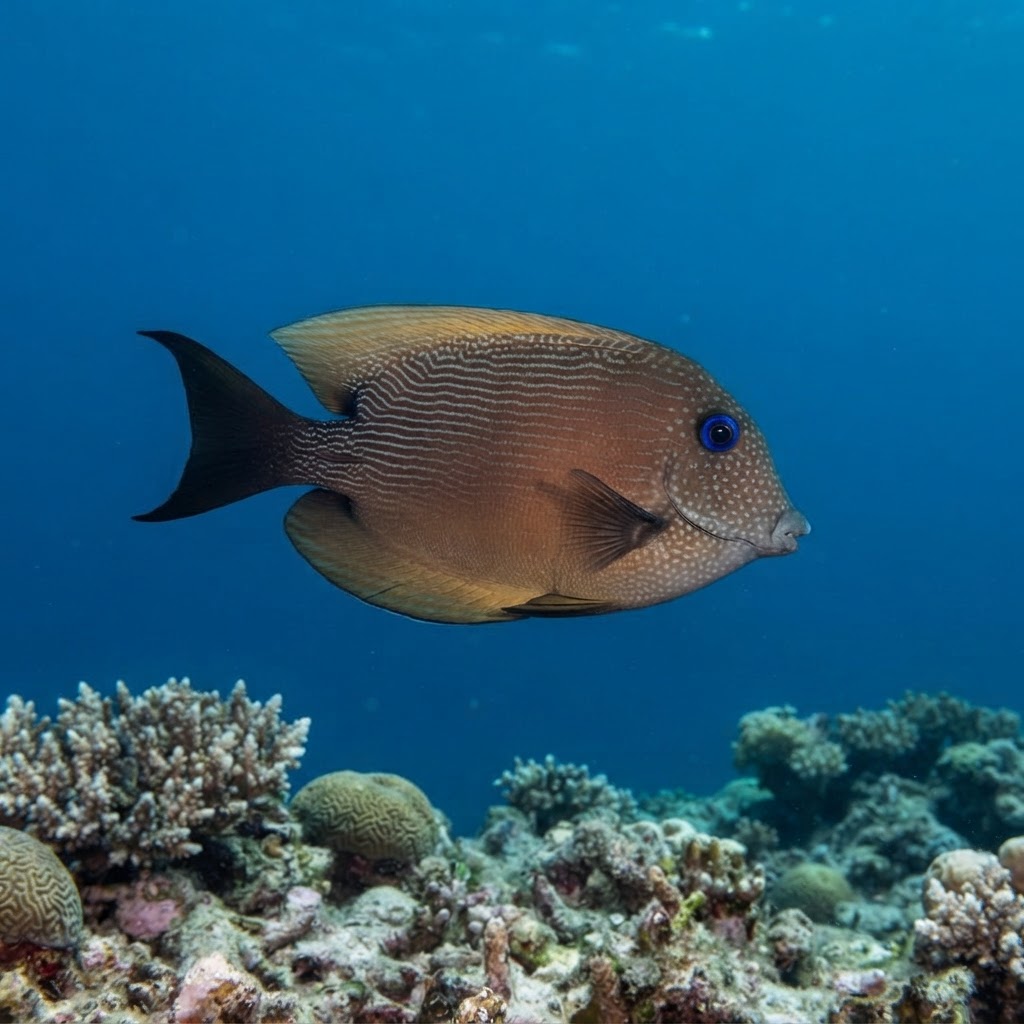
Ctenochaetus binotatus
A common reef surgeonfish across the Visayas and Sulawesi, best spotted grazing rubble in 24.5-28.9C water year-round.
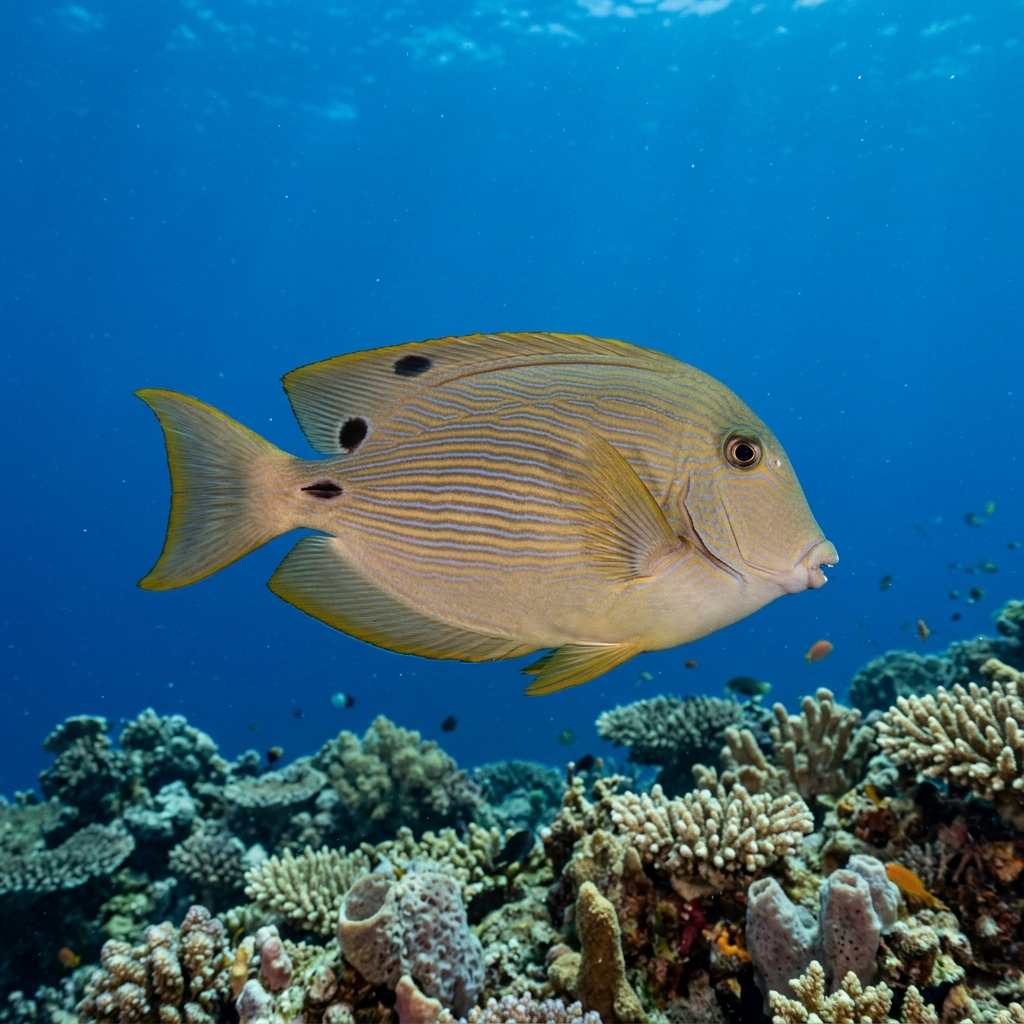
A small, oval-bodied surgeonfish around 15 cm, brownish-grey overall with fine pale speckling that runs down the flanks in rows. The giveaway is the pair of dark spots at the base of the tail (the feature behind the common name), best seen when the fish flicks past at an angle. Look also for the fine bristle-like teeth marks around the mouth if you get a close, unhurried look, though the tail spots are the faster field mark.
Usually seen picking at algae and detritus over rubble and dead coral, moving in a slow, unhurried grazing pattern rather than schooling tightly. It tends to hold its ground at a cautious distance from divers rather than bolting, and is most often noticed on the lower reef slope or over flatter rubble patches rather than up in open water.
Like other bristletooth surgeonfish, it feeds by scraping fine algal film and detritus off rock and dead coral with comb-like teeth, helping keep those surfaces clear for coral larvae to settle.
No clear seasonal pattern shows in the data, and with a comfortable range of 24.5 to 28.9C this fish sits on reef flats and slopes year-round. Plan around good visibility and calm conditions at your chosen site rather than a particular month.
Reef neighbours a diver could mistake it for. Use the identification notes above to tell them apart.
Most reliably logged across the Philippines, especially the Visayas and Mindanao, and in Indonesia's Sulawesi, with Bali adding further sightings. Vietnam's Nha Trang, Timor-Leste's Dili area, and Fiji's Taveuni also turn up steady records, with smaller numbers reported from Luzon, Vanuatu, Australia, and Taiwan.
Mapping where Twospot Bristletooth is logged…
It is a reliable find across the Philippines, particularly the Visayas and Mindanao, and in Sulawesi and Bali in Indonesia. Nha Trang in Vietnam, the Dili area of Timor-Leste, and Taveuni in Fiji also produce steady sightings.
There is no strong season in the sighting data, and it tolerates a wide temperature range of 24.5 to 28.9C, so it turns up on reefs year-round rather than at a particular time of year.
Look for a small brownish-grey surgeonfish, around 15 cm, with fine pale speckling and a pair of dark spots at the base of the tail. It is usually seen grazing slowly over rubble or dead coral rather than schooling in open water.
They typically reach about 15 cm, a small, compact reef surgeonfish rather than one of the larger tang species.
No, they are not considered dangerous to divers and simply graze algae on the reef without aggressive behaviour toward people.
It uses comb-like bristle teeth to scrape fine algal film and detritus off rock and dead coral, a grazing habit shared with other bristletooth surgeonfish that helps keep reef surfaces clear.
Site and sighting data is aggregated from diver logs, iNaturalist and GBIF. For taxonomy and conservation status:
Striped Surgeonfish
3,289 sites