Pomatoschistus flavescens
A tiny reef goby common on cold dives in Zeeland and Brittany, active year-round in water as cool as 9 to 13C.
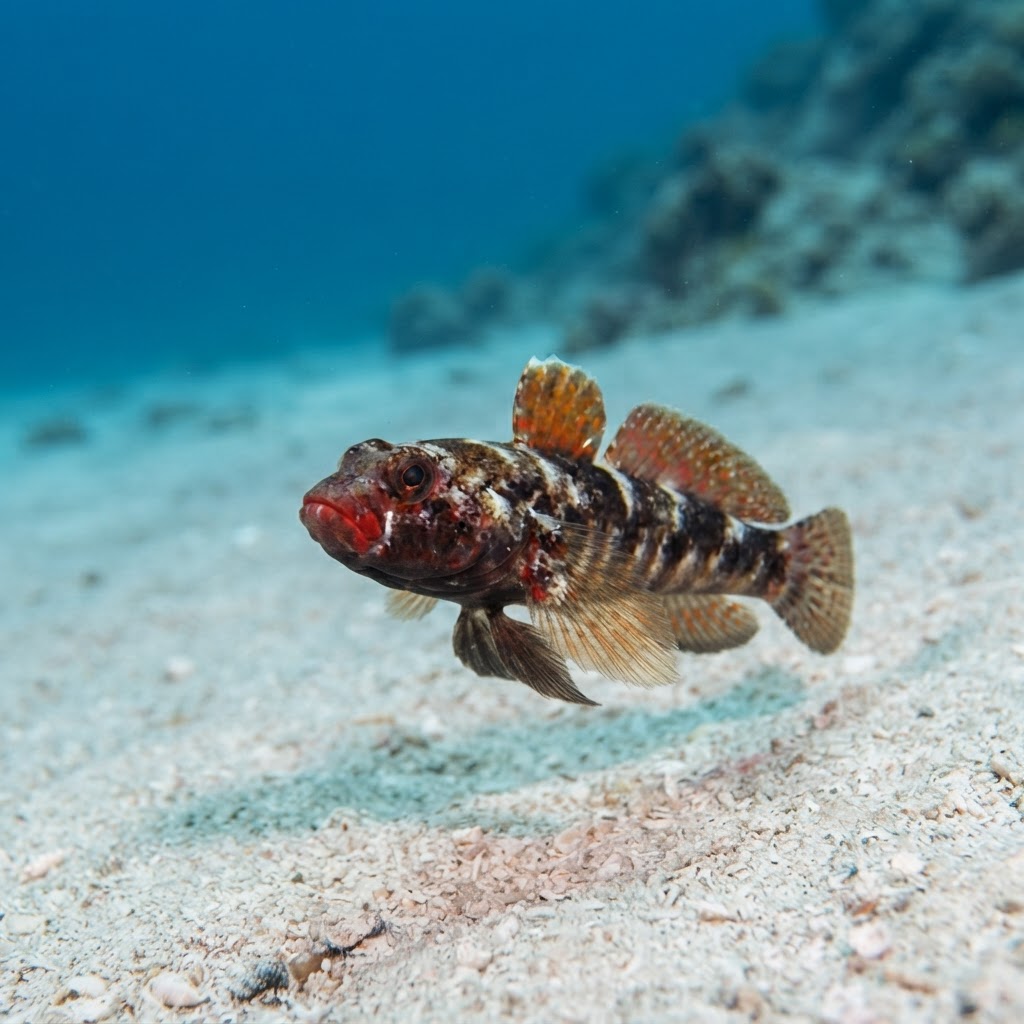
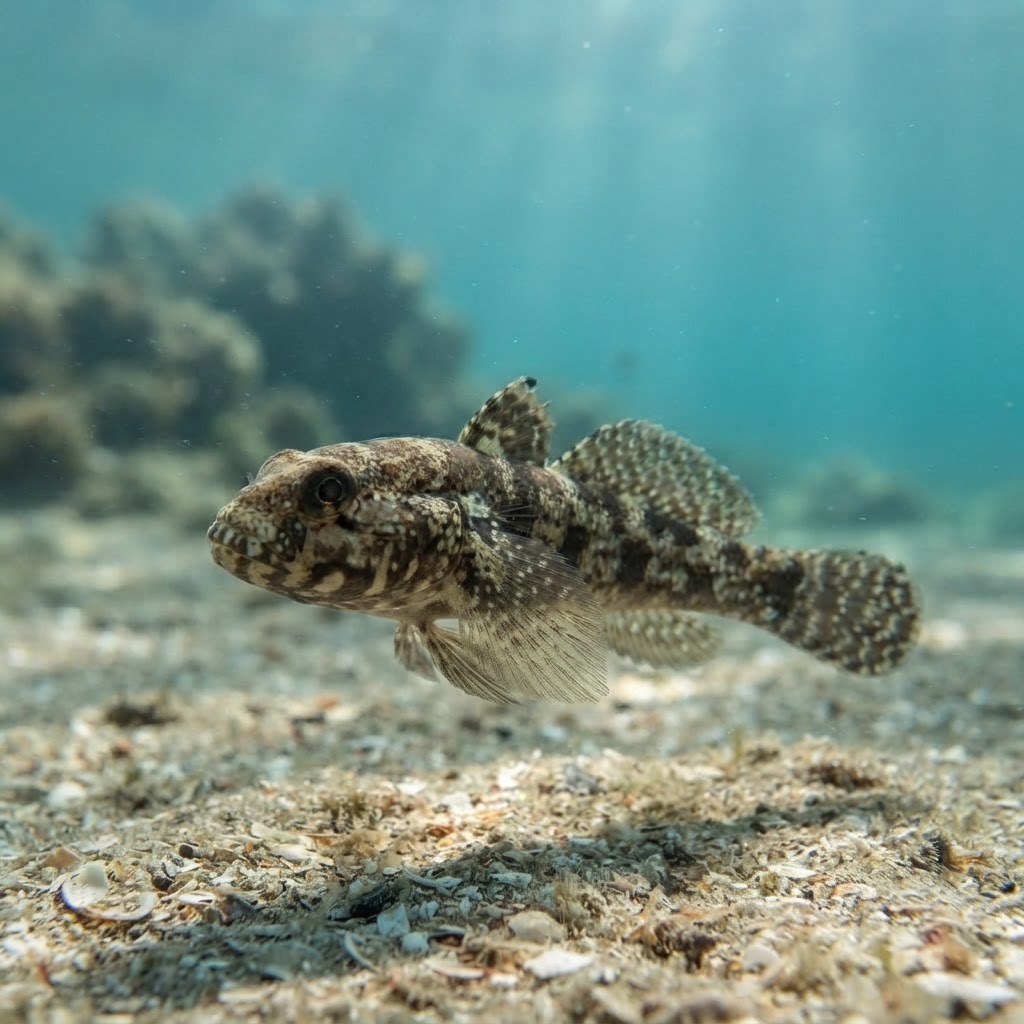
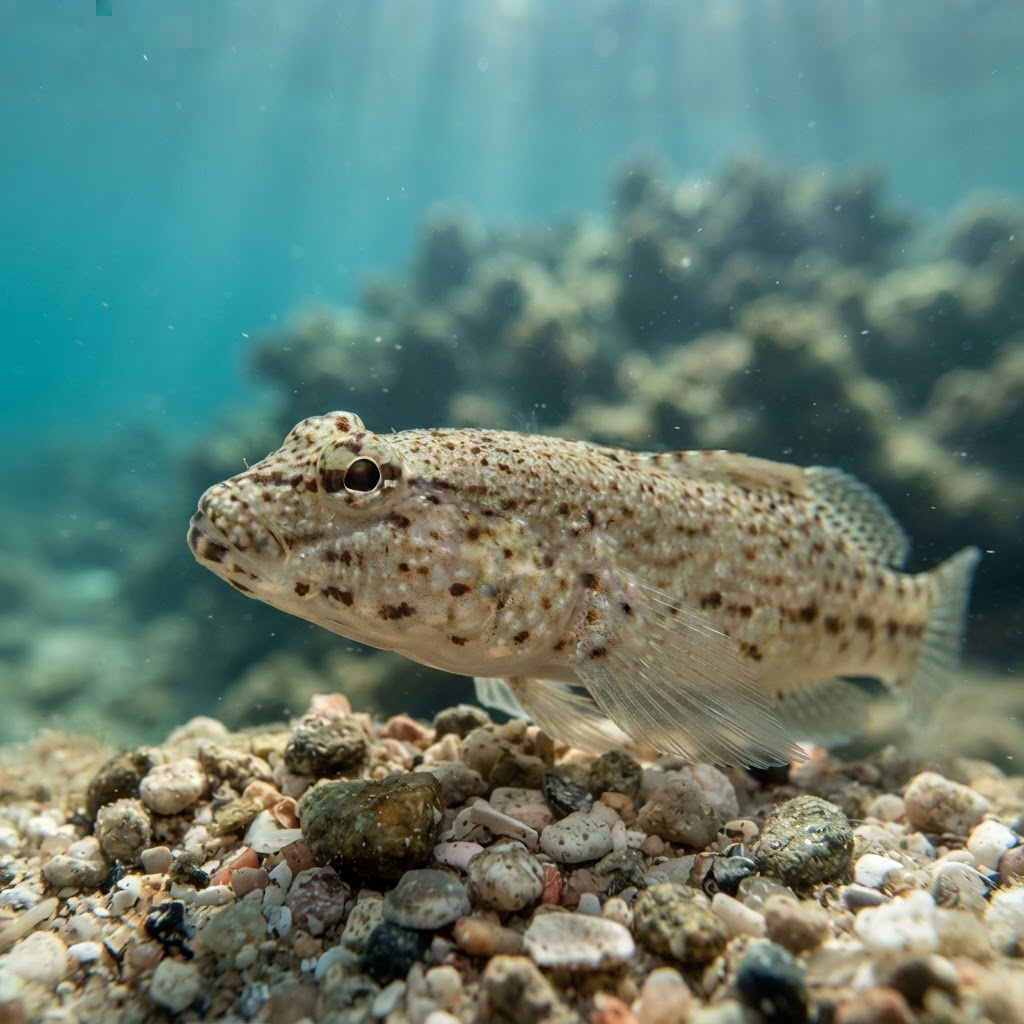
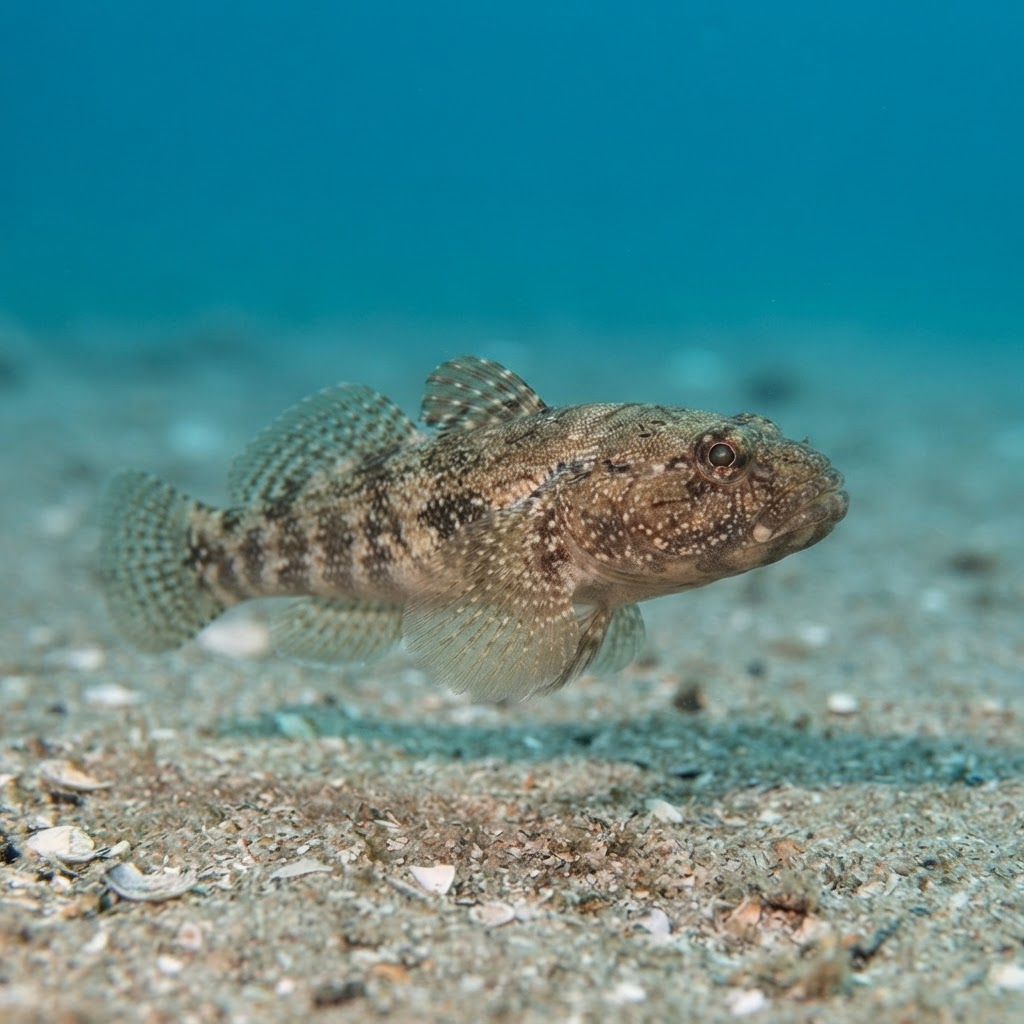
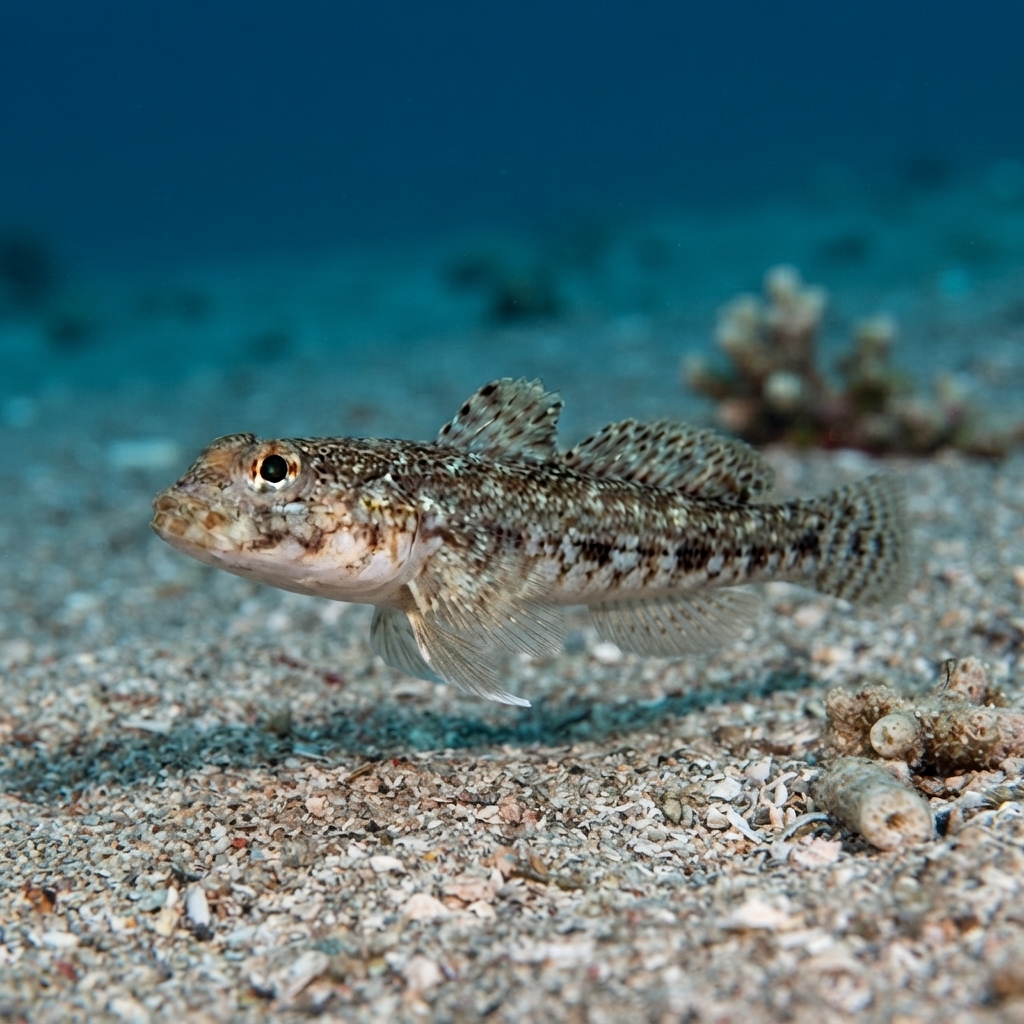
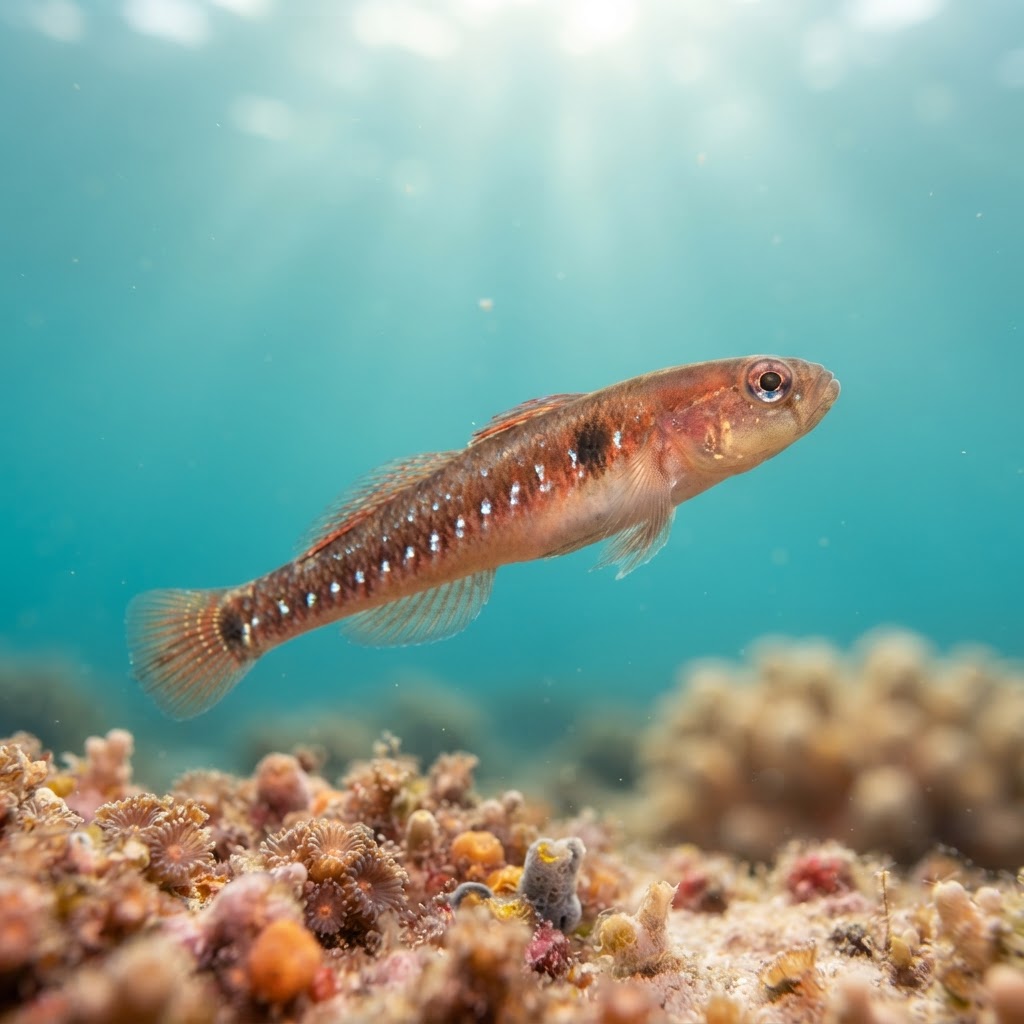
Barely finger-length at around 4 cm, this goby has a slender, tapering body in sandy to olive tones that blends against rock and gravel. Look for the pair of dark spots near the base of the tail and another dark mark below the first dorsal fin, the detail most divers use to pin down the ID against similar small gobies. It rests propped on its pelvic fins rather than swimming freely, which is often the first clue you have found one rather than a juvenile blenny.
Expect to find it sitting still on sand, gravel or low rock rather than cruising in open water, usually tucked close to the substrate where it can dart for cover the moment a shadow passes overhead. It is a species you spot by slowing down and scanning the bottom carefully rather than one that comes to you, and most logs describe it as uncommon to common rather than something seen on every dive. Divers report it at shallow depths, generally within the top five metres, so it is as much a snorkel and shore-dive find as a boat-dive one.
Like other small gobies it has no swim bladder, which is why it never hovers in midwater and instead perches or rests directly on the bottom between short darting movements.
Sightings are logged across the year with no strong seasonal peak in the data, and the observed water temperature range of 8.9 to 13.1C suggests it stays active through the cooler months typical of these Atlantic and North Sea sites. Treat it as a year-round find rather than something tied to a particular month.
Reef neighbours a diver could mistake it for. Use the identification notes above to tell them apart.
This is very much a cold-water Atlantic species, most consistently logged in Zeeland in the Netherlands and Brittany in France, with a further reliable presence around Northern Ireland, Wales, the Lisbon Coast in Portugal, Schleswig-Holstein in Germany, Jutland in Denmark and Galicia in Spain. Zeeland alone accounts for the largest share of logged sites, making the Dutch coast a strong bet if you want a good chance of finding one.
Mapping where Two-spotted Goby is logged…
It turns up most reliably around Zeeland in the Netherlands and Brittany in France, with further sightings in Northern Ireland, Wales, Portugal's Lisbon Coast, Germany's Schleswig-Holstein coast, Danish Jutland and Galicia in Spain.
There is no clear seasonal pattern in the sightings, so it is logged year-round. Its comfort range of roughly 9 to 13C fits the cooler Atlantic and North Sea waters it is found in for most of the year.
Look for a small, sandy-to-olive fish around 4 cm long resting on rock, sand or gravel rather than swimming in the open. The giveaway is a pair of dark spots near the tail base plus a dark mark under the first dorsal fin.
They are tiny, typically around 4 cm long as adults, so spotting one takes a slow, close look at the substrate rather than scanning the open reef.
No. They are small, harmless bottom-dwellers with no venom or aggressive behaviour towards divers, and will simply dart away if approached too closely.
Like most true gobies it lacks a swim bladder, so it cannot hover in midwater. Instead it rests propped on its pelvic fins directly on the seabed between short bursts of swimming.
Site and sighting data is aggregated from diver logs, iNaturalist and GBIF. For taxonomy and conservation status:
Slender Goby
806 sites