Diplecogaster bimaculata
A 4cm cling-to-rock fish rarely spotted in Brittany's cold Atlantic water, 8.9 to 13C, year-round if you know where to look.
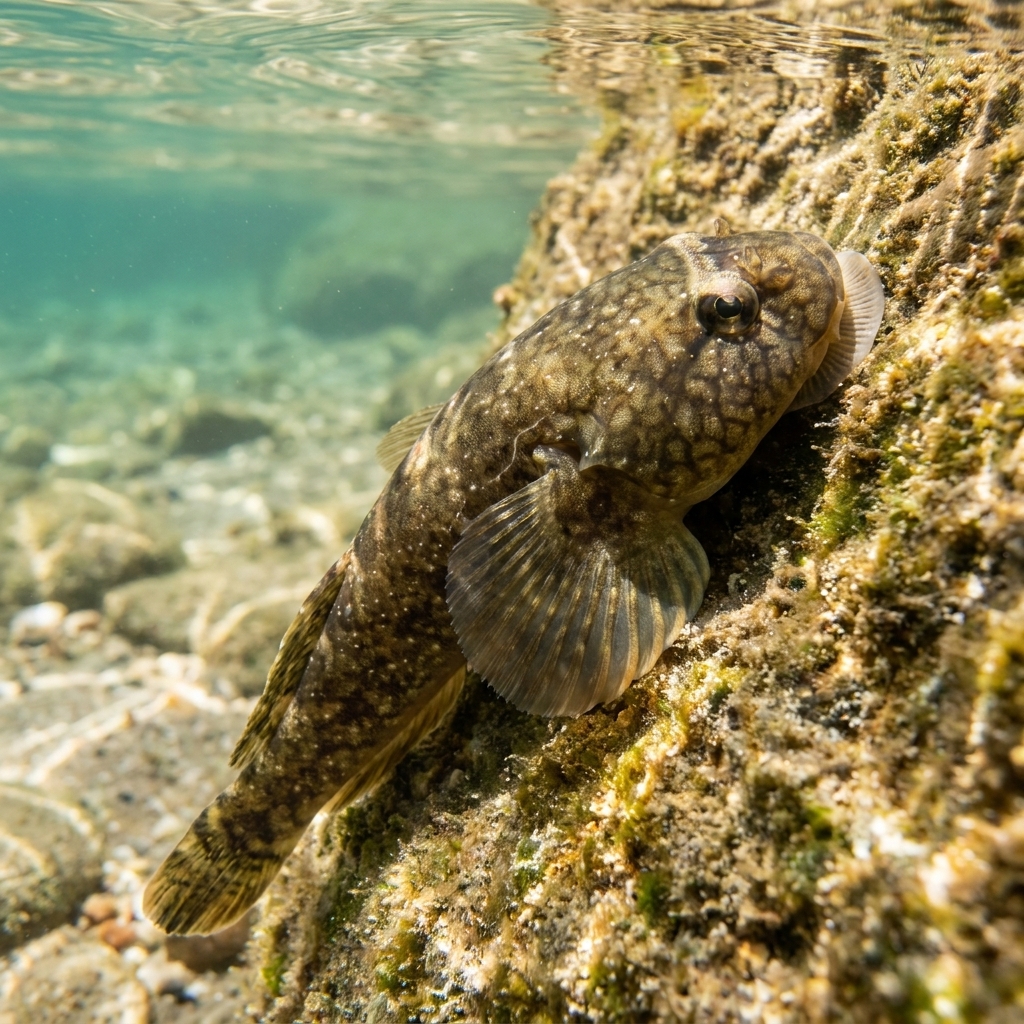
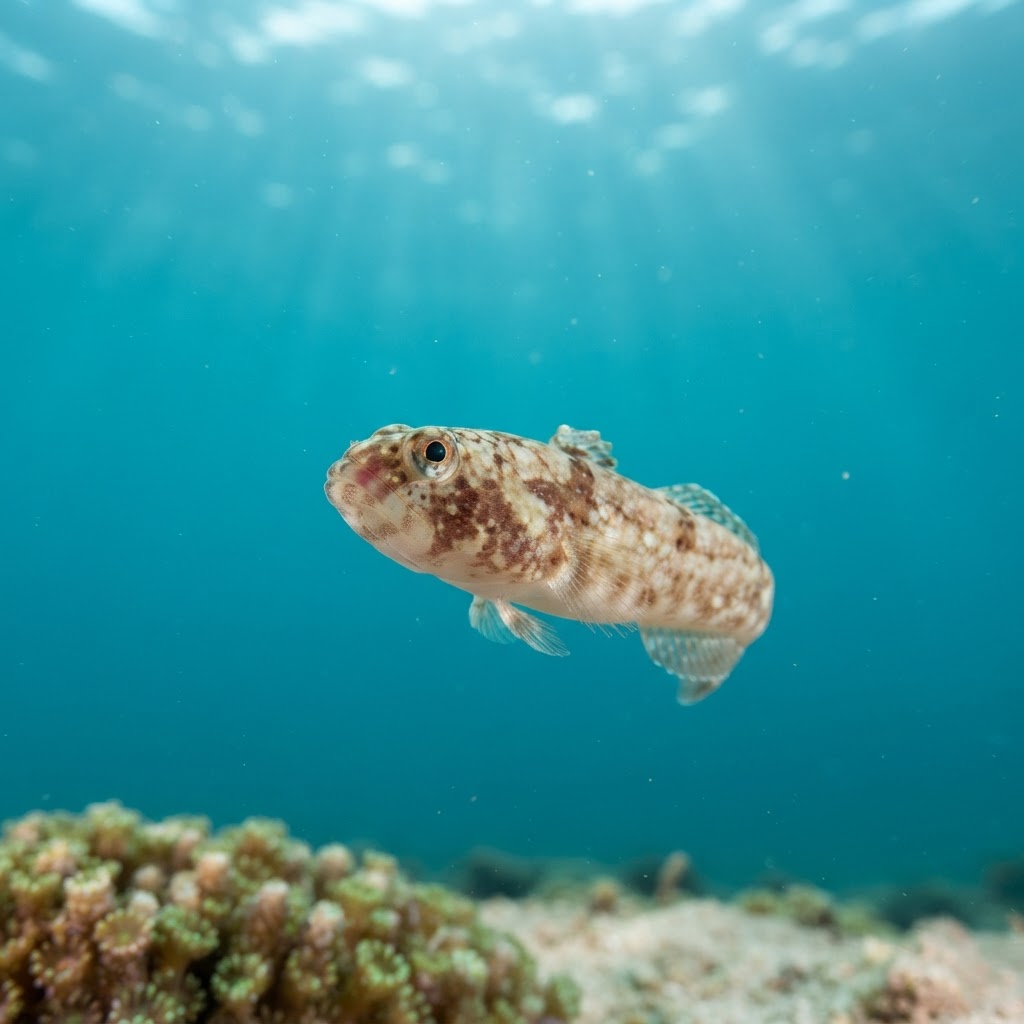
Barely 4cm long and shaped like a small tadpole, with a flattened head and a body that tapers to a slim tail. The giveaway is a pair of dark spots near the base of the tail, set against a pale, mottled, sandy-brown body that blends into rock and shell gravel. It has no scales and lies flush against hard surfaces using a sucker formed from modified pelvic fins, so look on the underside of rocks and stones rather than swimming in open water.
Spend most of a dive tucked under stones or flat against rock and shell debris, using its sucker disc to stay put even in surge. Divers find it by turning over loose rocks on gravelly or shelly seabeds rather than by spotting it swimming past. It sits still when disturbed rather than darting off, which makes a torch and a patient eye more useful than speed.
Named for the two dark spots near its tail, but the species also shows one of the more pronounced size differences between males and females of any clingfish, with females generally noticeably larger than males.
Sightings don't show a clear seasonal pattern, and with a temperature niche of 8.9 to 13C it's suited to cool Atlantic and Channel water year-round, so any month on a Brittany or Scottish dive is fair game.
Most reliably logged in Brittany, France, which accounts for the bulk of recorded sightings, with further records from Scotland and Northern Ireland in the UK and a single site on the French Riviera. It is a cold, temperate-water species tied to rocky, gravelly seabeds rather than reef systems, so look to sites in these regions rather than tropical destinations.
Mapping where Two-spotted Clingfish is logged…
Brittany, France is the most reliable region, with additional records from Scotland and Northern Ireland in the UK. Look on rocky, gravelly seabeds rather than open reef.
There's no strong season in the sighting data, and its 8.9 to 13C temperature range suits cool Atlantic water year-round, so it can turn up on any dive in these regions.
Look for a tiny, 4cm, pale mottled fish clinging flat to the underside of rocks, with two dark spots near the base of its tail. It has no scales and a flattened, tadpole-like shape rather than a typical fish silhouette.
They max out around 4cm, making them one of the smallest fish a diver is likely to log on a Brittany or Scottish dive.
They use a sucker disc formed from fused pelvic fins to grip rock surfaces against current, and females grow distinctly larger than males, an unusual degree of size difference between the sexes for a small fish.
Site and sighting data is aggregated from diver logs, iNaturalist and GBIF. For taxonomy and conservation status:
Soldierfish
3,612 sites