Chalaroderma ocellata
A rare 5cm blenny logged only in the Western Cape, in cool 13-19C water. Here's how to spot one.
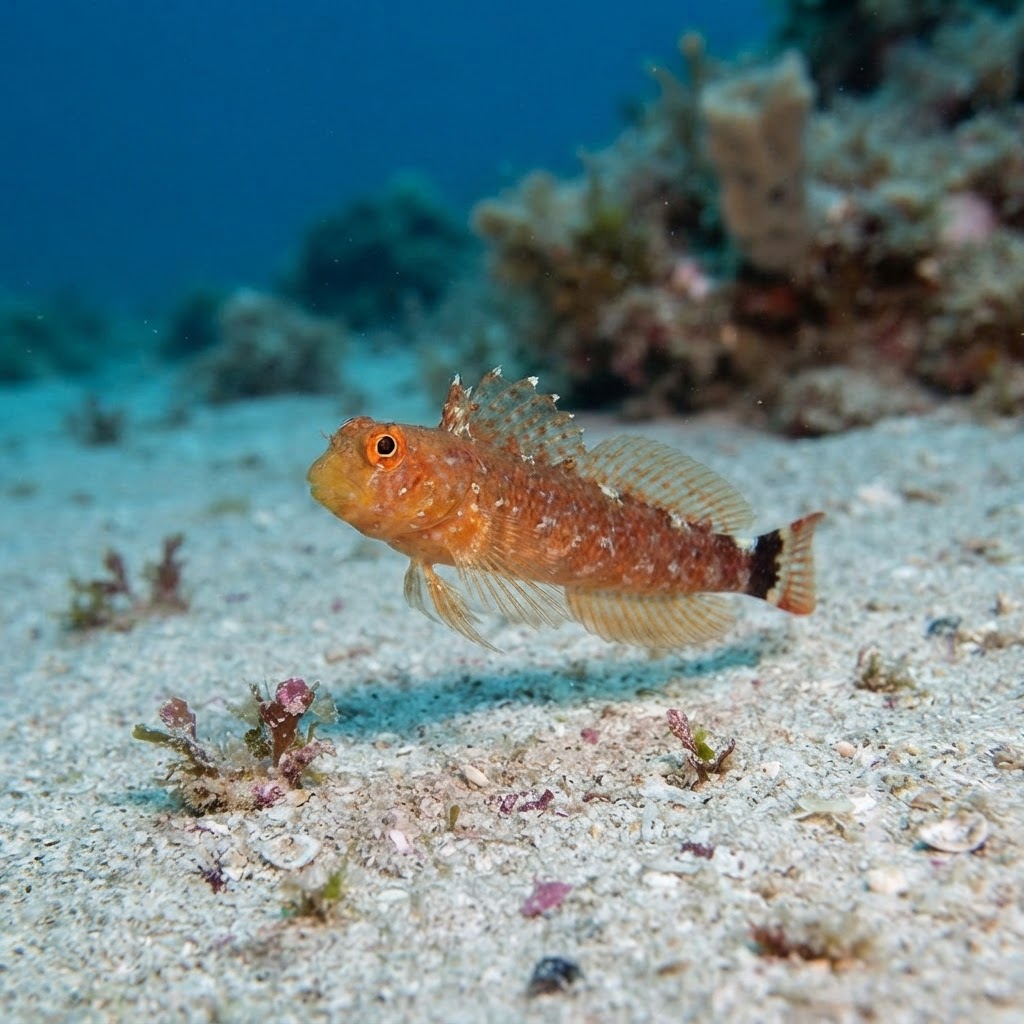
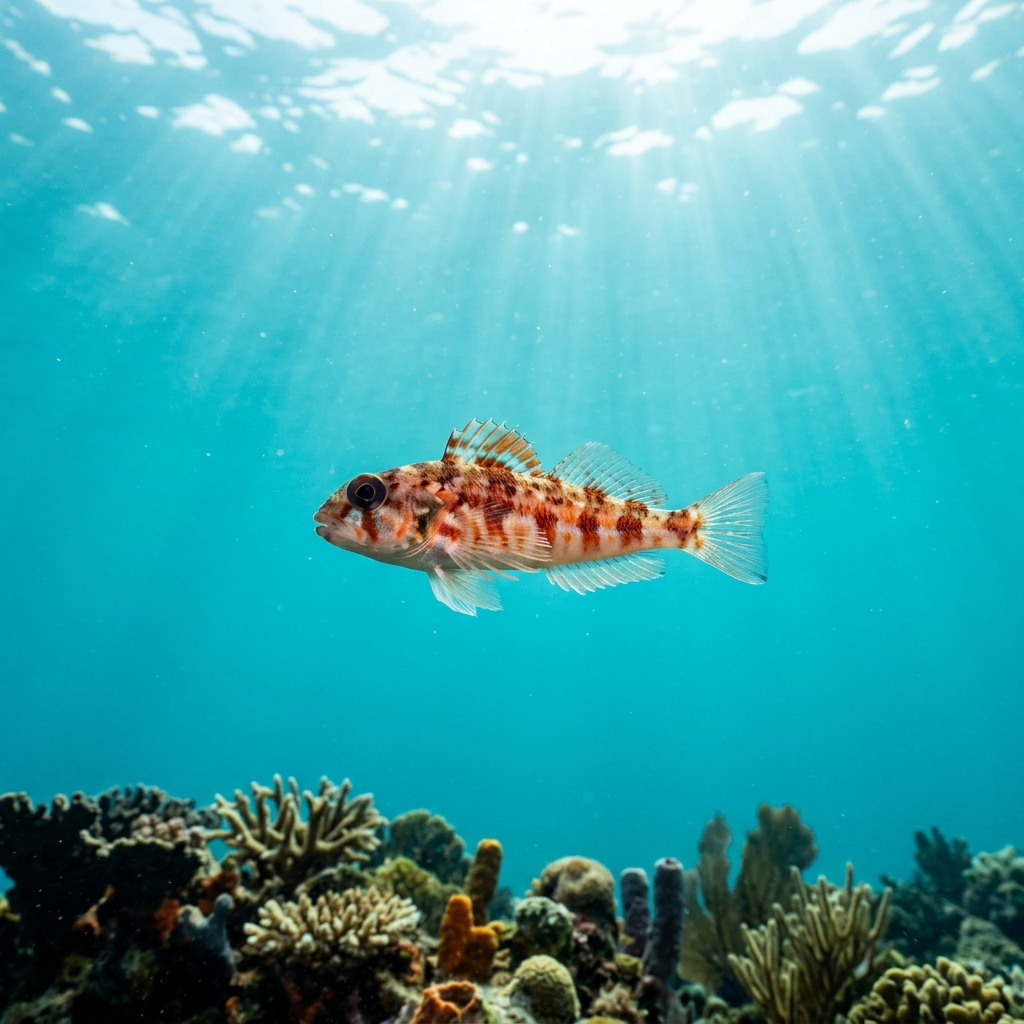
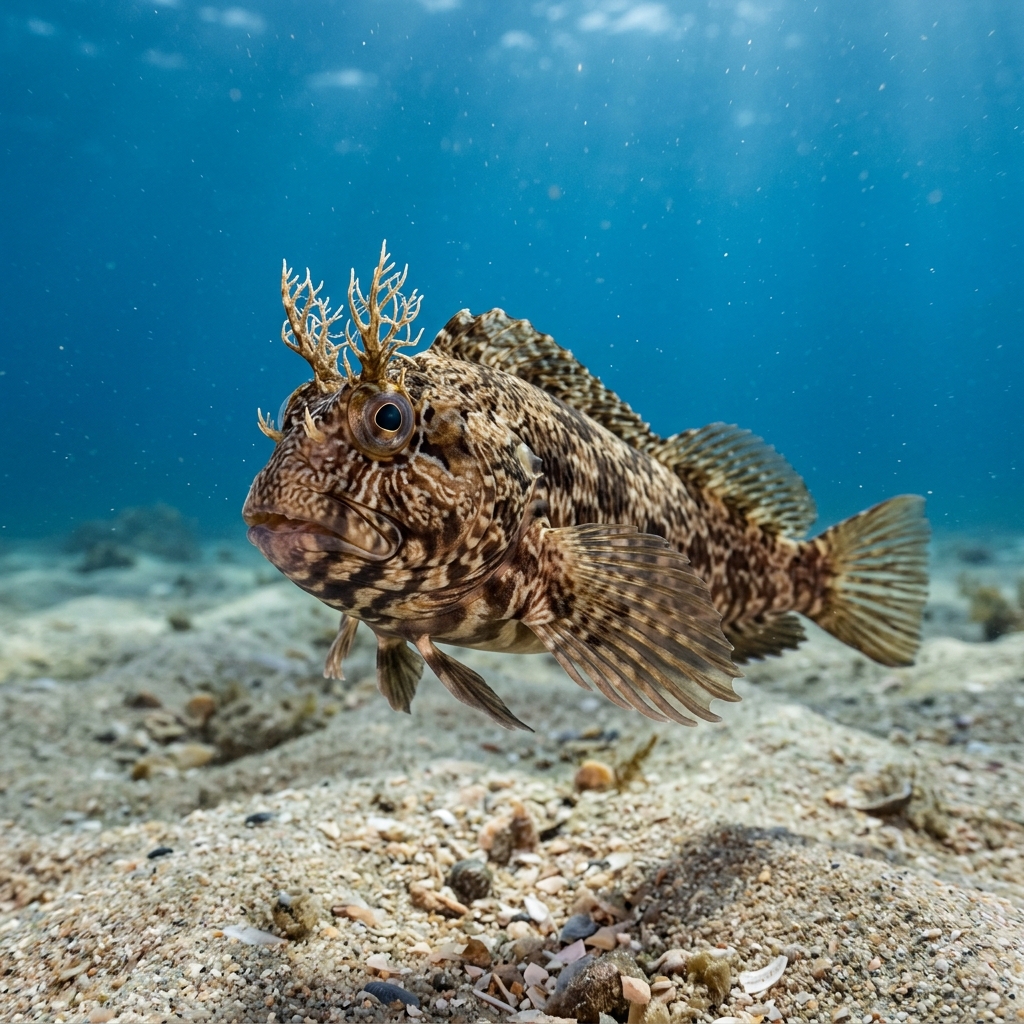
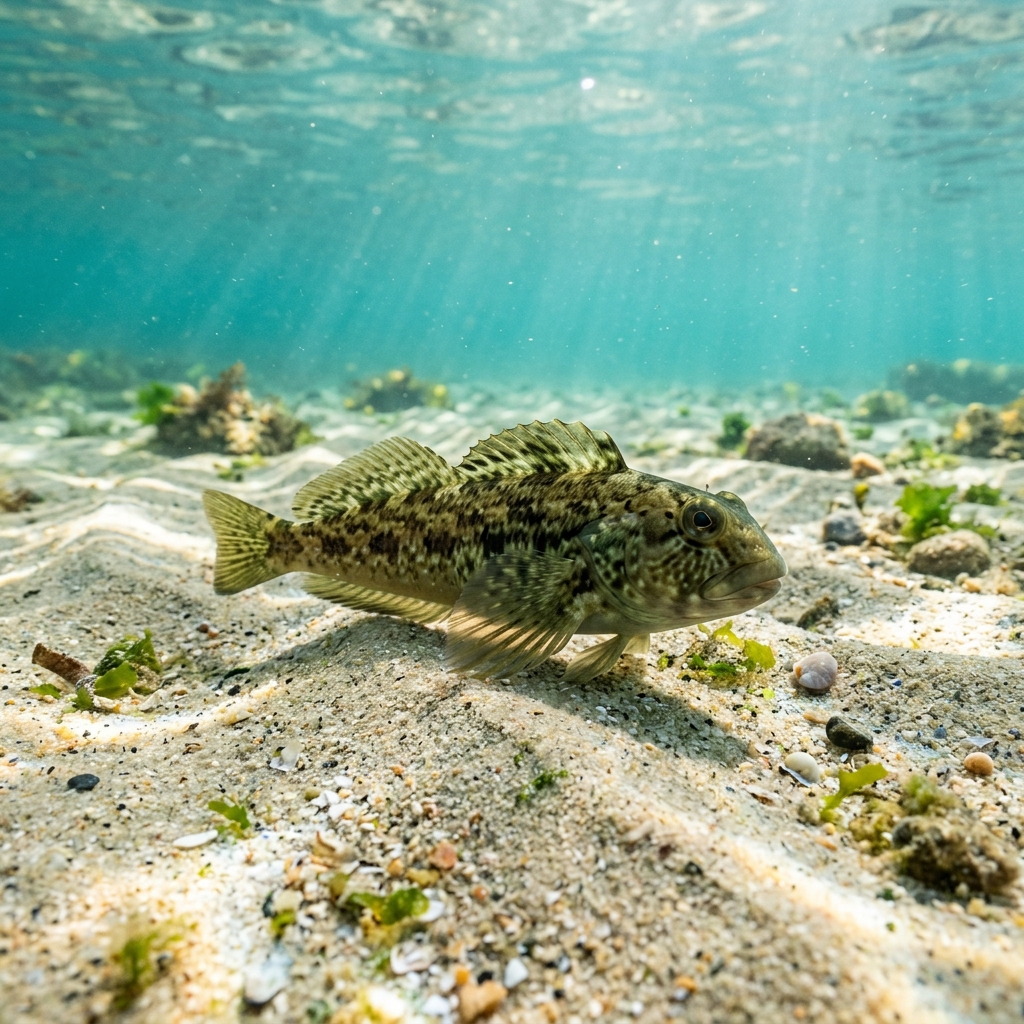
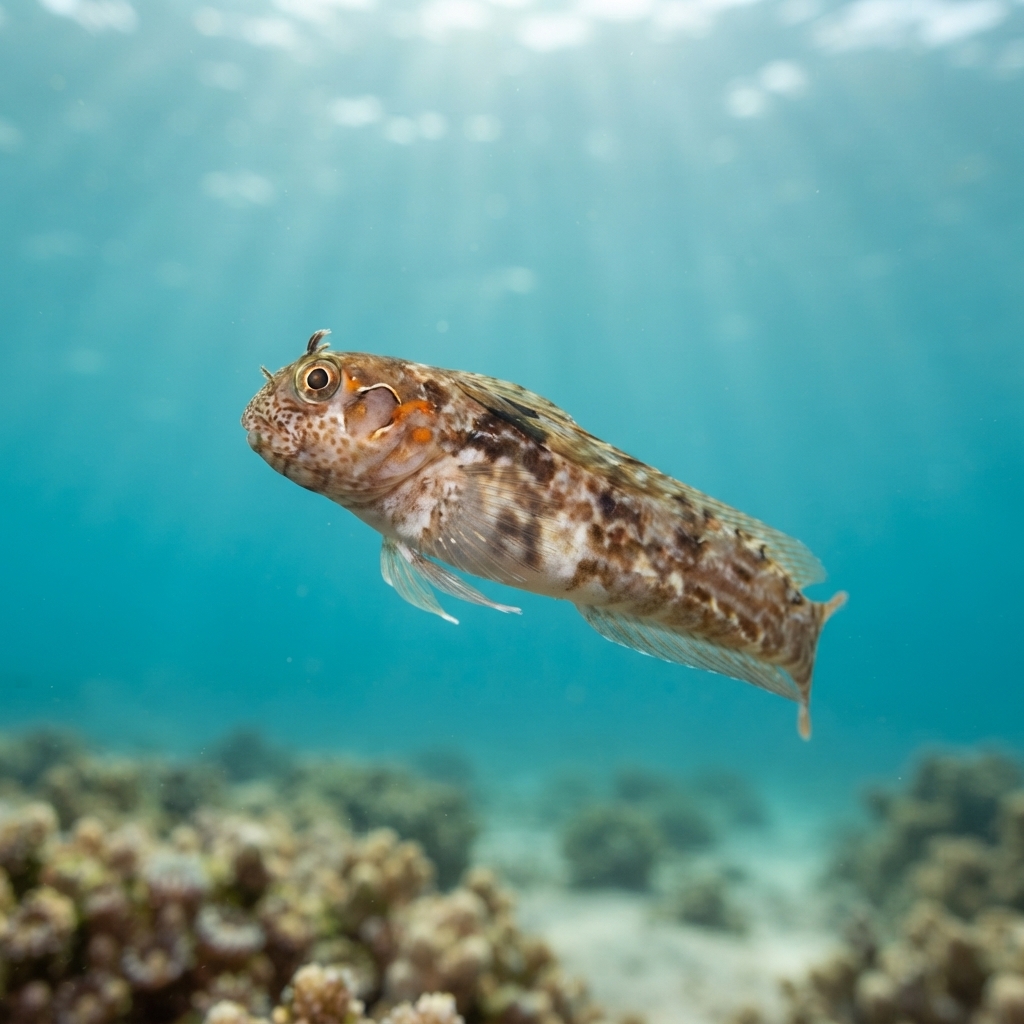
A tiny blenny, barely 5cm long, with a mottled brown-and-cream body that blends into rocky reef and kelp holdfasts. Look for a stocky head with two prominent eyes set high on the skull and short, fleshy cirri (small tentacle-like growths) above them. It perches on rock rather than swimming freely, propped on its pelvic fins, which is often the first thing that gives it away.
Expect to find it wedged into a crevice or resting on a rock ledge rather than cruising in open water, typical blenny behaviour for a small, bottom-hugging fish with no swim bladder buoyancy to spare. It tends to hold still and rely on camouflage when a diver approaches, so slow, close looking pays off more than fast swimming past. Given how rarely it's logged, most sightings likely come from divers specifically searching rock crevices rather than spotting it in passing.
Like other blennies, it almost certainly lacks a swim bladder, which is why it stays glued to the reef instead of hovering mid-water like most reef fish.
There isn't enough monthly data yet to point to a real season, so treat it as a year-round possibility in the Western Cape. Sightings sit in a cool 13.4 to 19.4C range, consistent with the region's temperate water most of the year.
Reef neighbours a diver could mistake it for. Use the identification notes above to tell them apart.
Every logged sighting so far comes from South Africa, and specifically the Western Cape, making it the only region divers currently associate with this species. Within the Western Cape it turns up on rocky reef sites rather than sand or coral, so target reef and kelp forest dives in that area.
Mapping where Two-eyed Blenny is logged…
So far it's only been logged in South Africa, concentrated in the Western Cape. It favours rocky reef habitat over sand or coral, so that's where to look.
There's no clear season in the data, so it's best treated as a year-round sighting in the Western Cape's cool 13 to 19C water rather than tied to a particular month.
Look for a small, 5cm mottled brown fish perched on rock rather than swimming in open water, with a stocky head, prominent eyes, and short fleshy cirri above them.
They're small, topping out around 5cm, which along with their camouflage colouring is a big part of why they're easy to miss on a dive.
No. They're tiny, sedentary reef fish with no known risk to divers.
Site and sighting data is aggregated from diver logs, iNaturalist and GBIF. For taxonomy and conservation status:
Rusty Blenny
2,605 sites