Risor ruber
A 1cm goby that lives inside sponges, most reliably spotted at Lighthouse Reef, Belize and Tent Reef, Saba in warm Caribbean water.
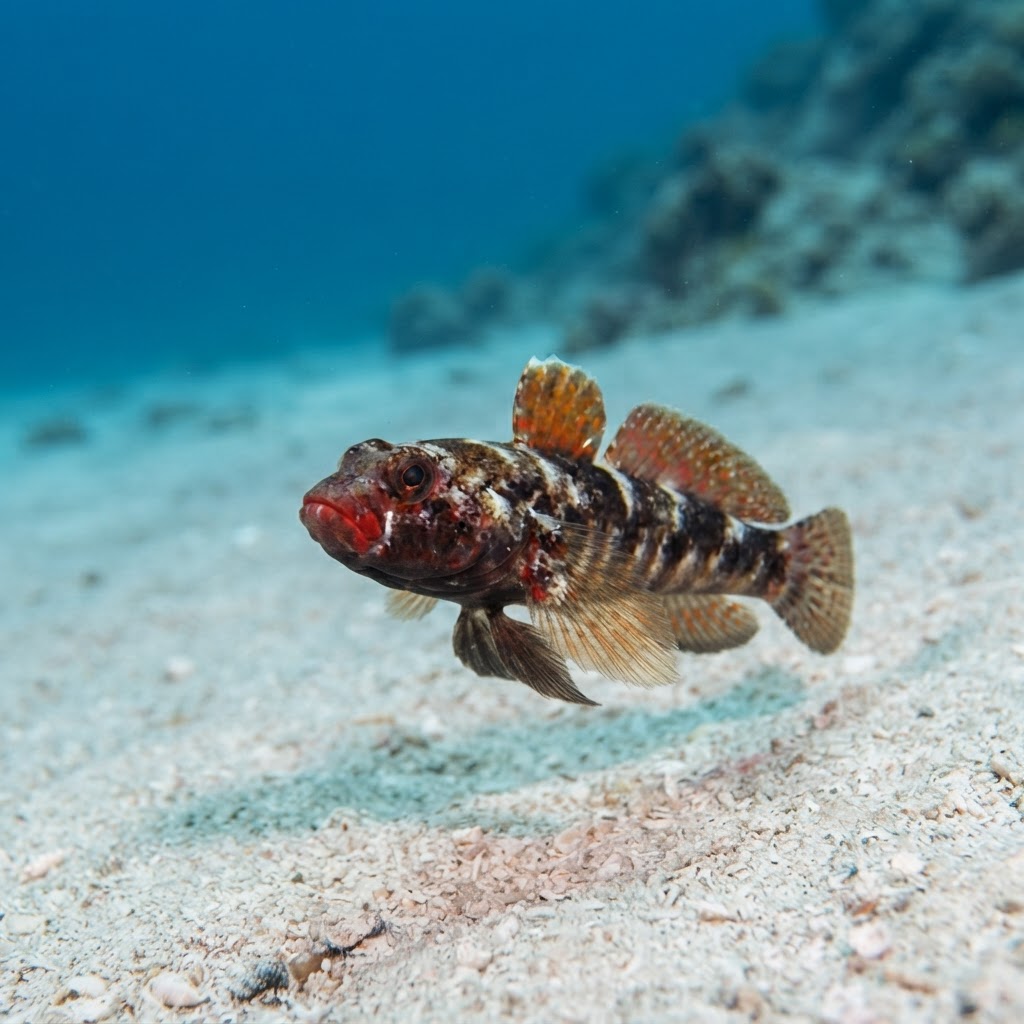
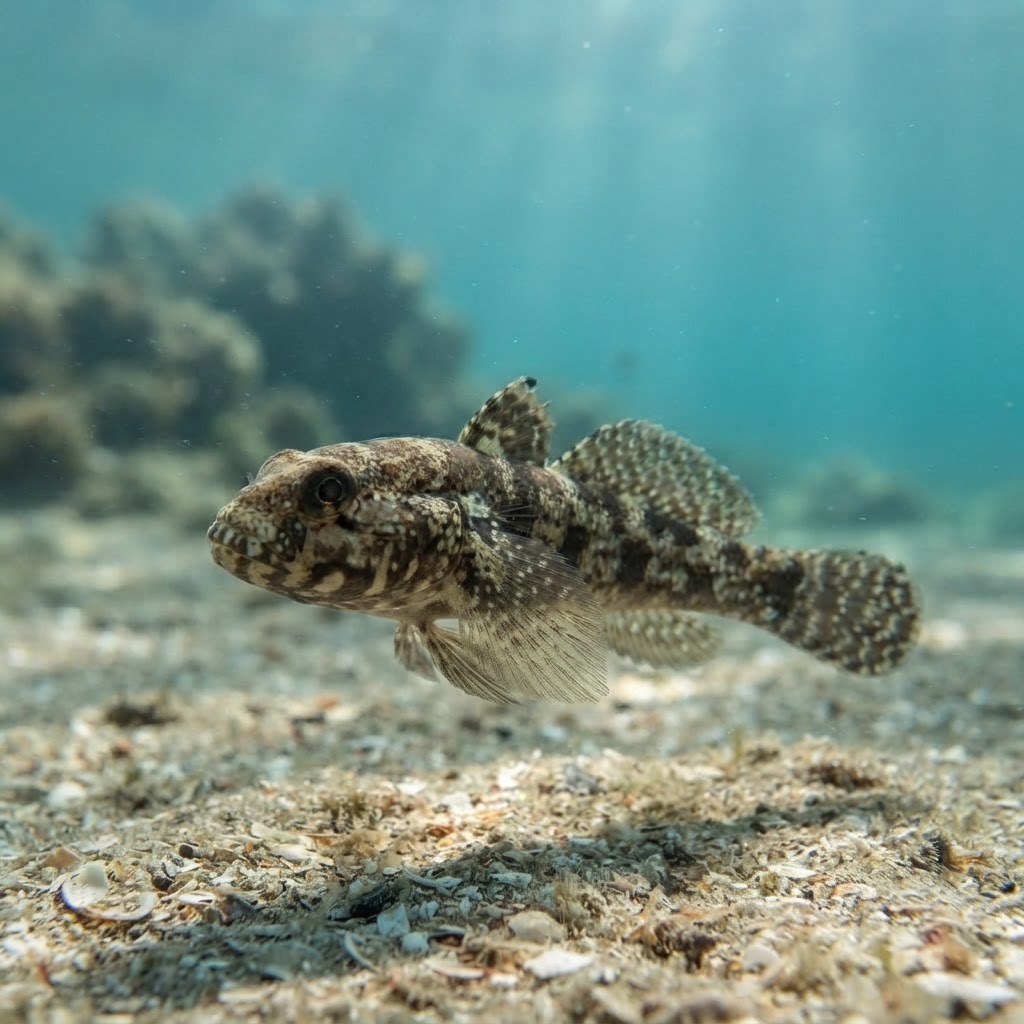
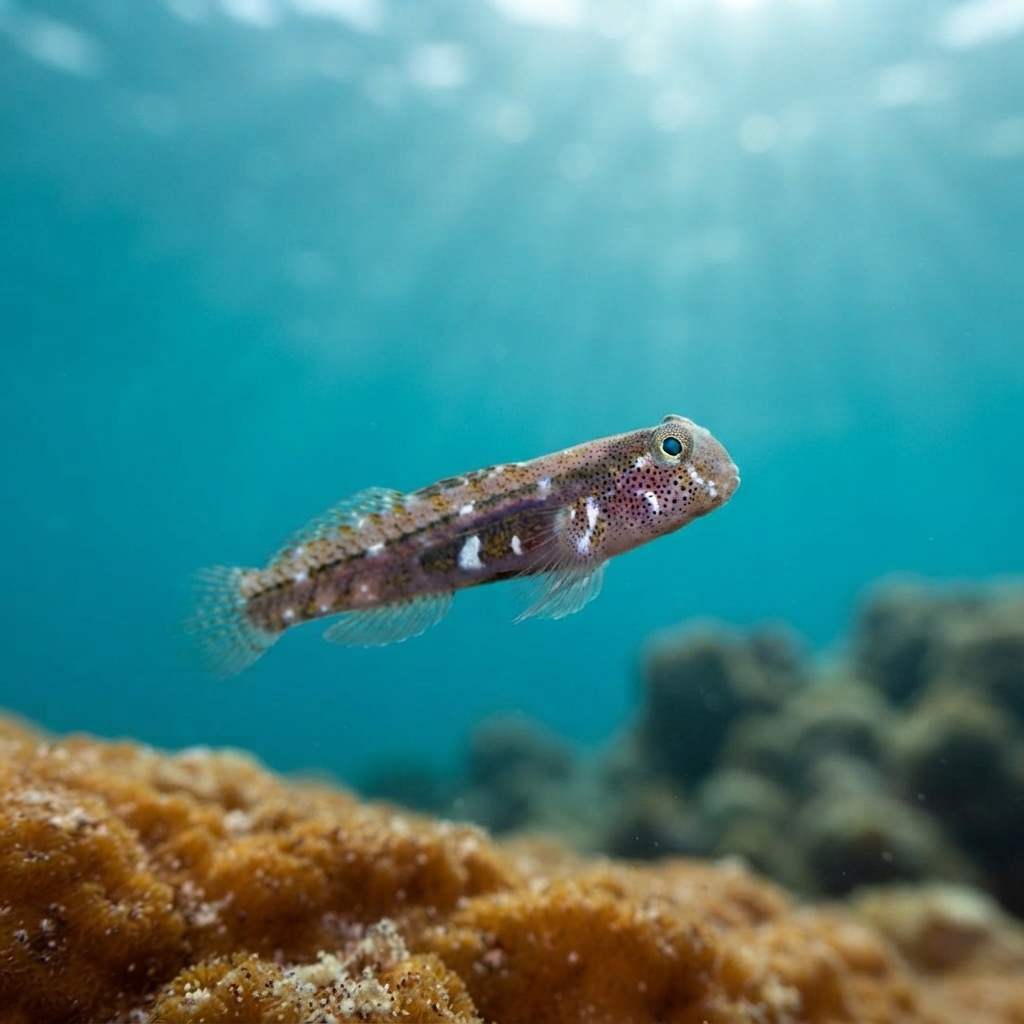
At barely a centimetre long, this goby is one of the smallest fish you'll deliberately hunt for on a reef. Look for a slender, translucent to reddish-pink body perched motionless at the mouth of a barrel or tube sponge rather than out on open coral. The body is nearly see-through under a torch, with faint internal markings and a blunt head; there's no bold pattern to spot from a distance, so you're looking for shape and posture more than colour.
This goby spends its time tucked into the internal cavity or oscula of sponges, rarely straying far from that shelter. Divers who find one usually do so by shining a light into a barrel sponge and holding still, since the fish tends to sit motionless rather than dart away. It's most often noticed on slow, methodical dives where someone is specifically checking sponges rather than cruising past them.
It's considered one of the smallest marine fish species known, and its entire adult life is spent living inside the internal chambers of sponges rather than out on the reef surface.
No clear seasonal pattern shows up in the sightings, and the observed water temperature range of 24.4 to 28.2 C covers most of the diving calendar at these sites. Go year-round and focus on picking the right habitat rather than the right month.
Belize is the strongest bet, with repeated sightings around Lighthouse Reef, followed by Tent Reef in Saba and Long Island in the Bahamas. Across all three, it's logged as uncommon, so treat any of these sites as a possibility rather than a guarantee and plan on checking several sponges per dive.
Mapping where Tusked Goby is logged…
The most consistent sightings come from Lighthouse Reef in Belize, Tent Reef in Saba, and Long Island in the Bahamas. At all of these it's logged as uncommon, so it takes a bit of searching rather than a guaranteed encounter.
There's no detected season, and it turns up in water from about 24 to 28 C, which covers most of the year at its known sites. Diving any month is reasonable as long as you're checking sponges closely.
Look inside barrel and tube sponges rather than on open reef, since this goby lives tucked into their cavities. At about 1 cm it's translucent to reddish and easy to miss without a torch and a patient look.
It stays around 1 cm long as an adult, making it one of the tiniest reef fish a diver can realistically try to spot.
It lives its whole adult life inside the internal chambers of sponges, using the host as permanent shelter rather than just an occasional hiding spot. That tight sponge association, combined with its size, makes it one of the smallest known marine fish.
Site and sighting data is aggregated from diver logs, iNaturalist and GBIF. For taxonomy and conservation status:
Slender Goby
806 sites