Daira perlata
Find True Crabs tucked into reef rubble in the Visayas and Okinawa, spotted year-round in warm 22.5-28.5C water.
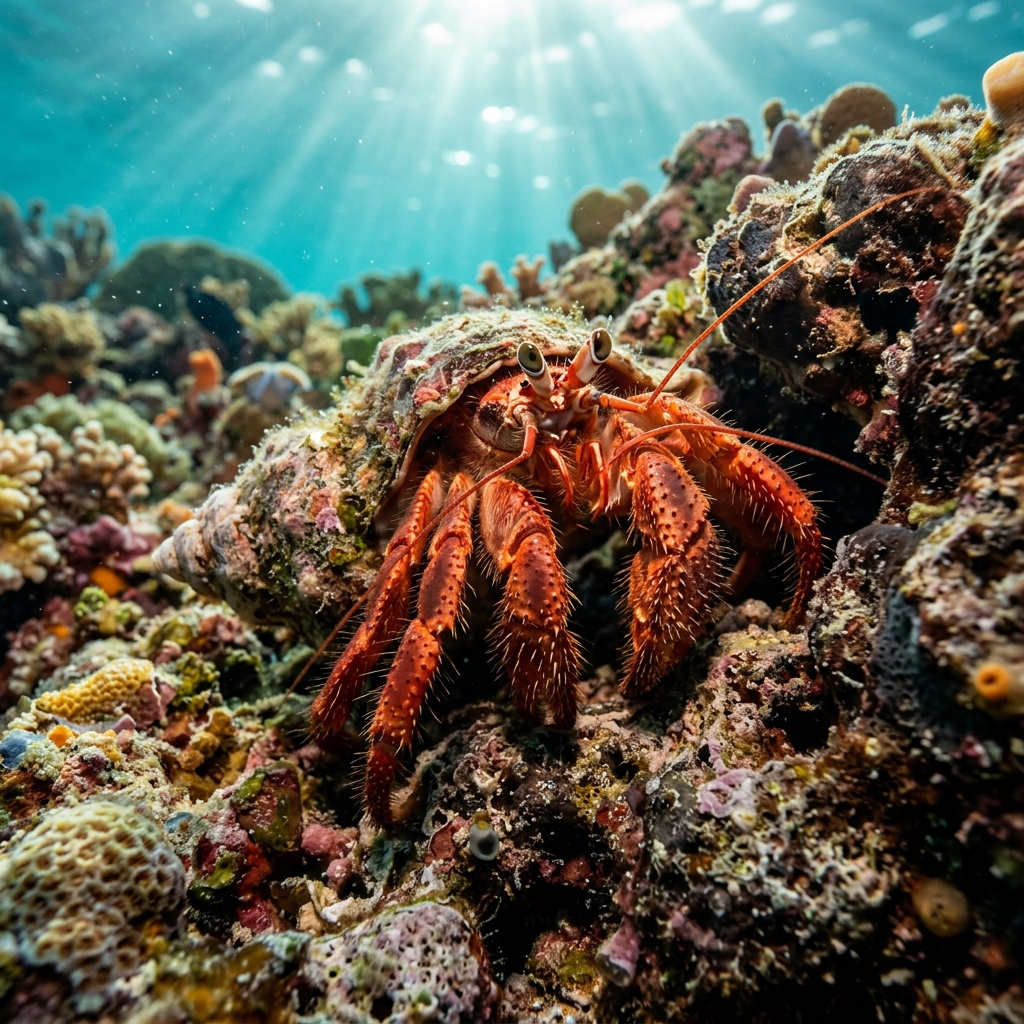
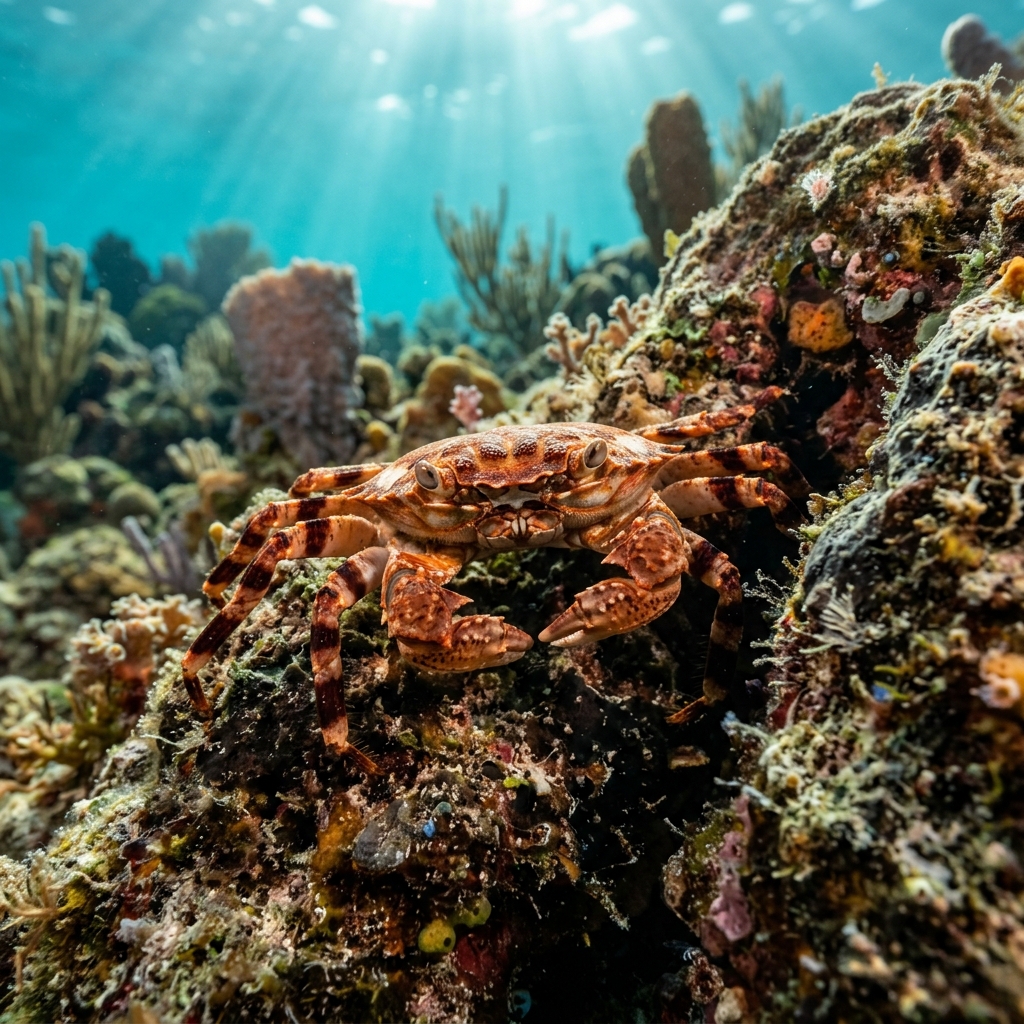
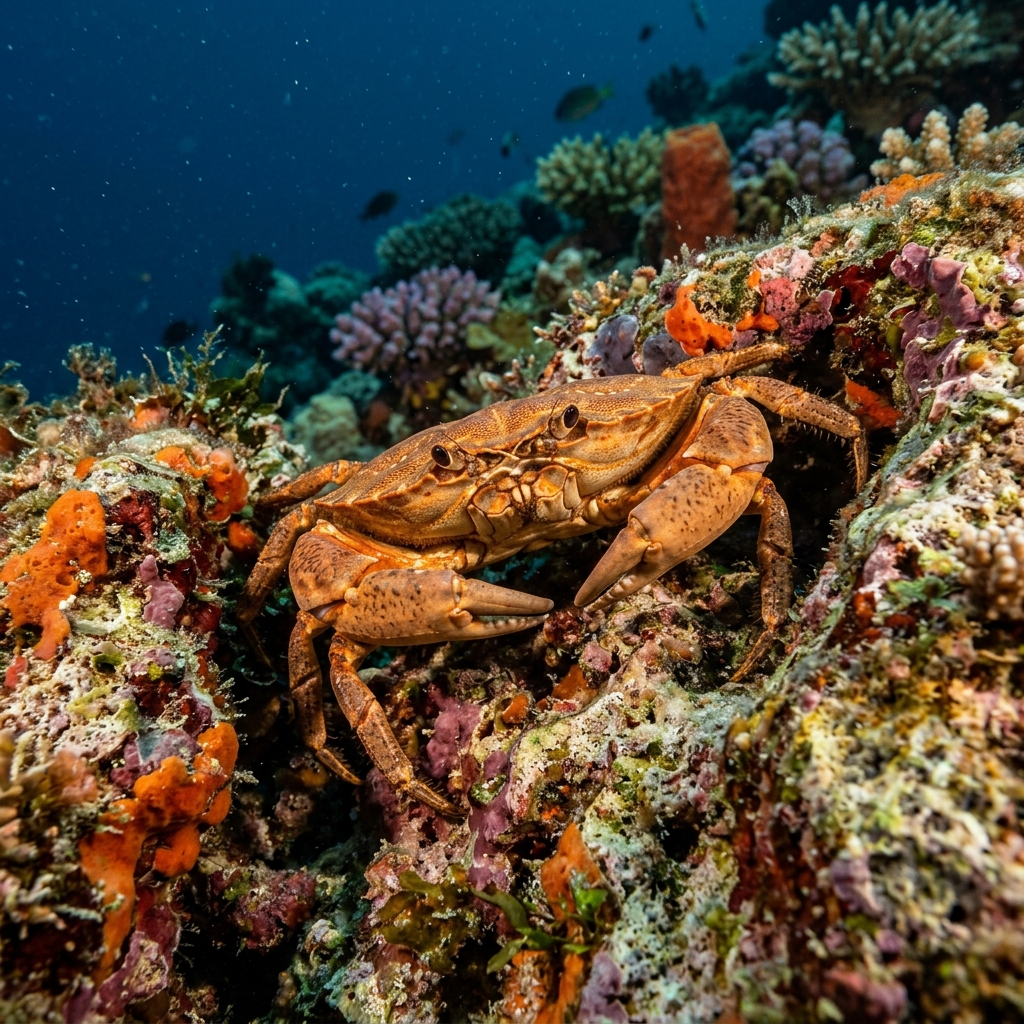
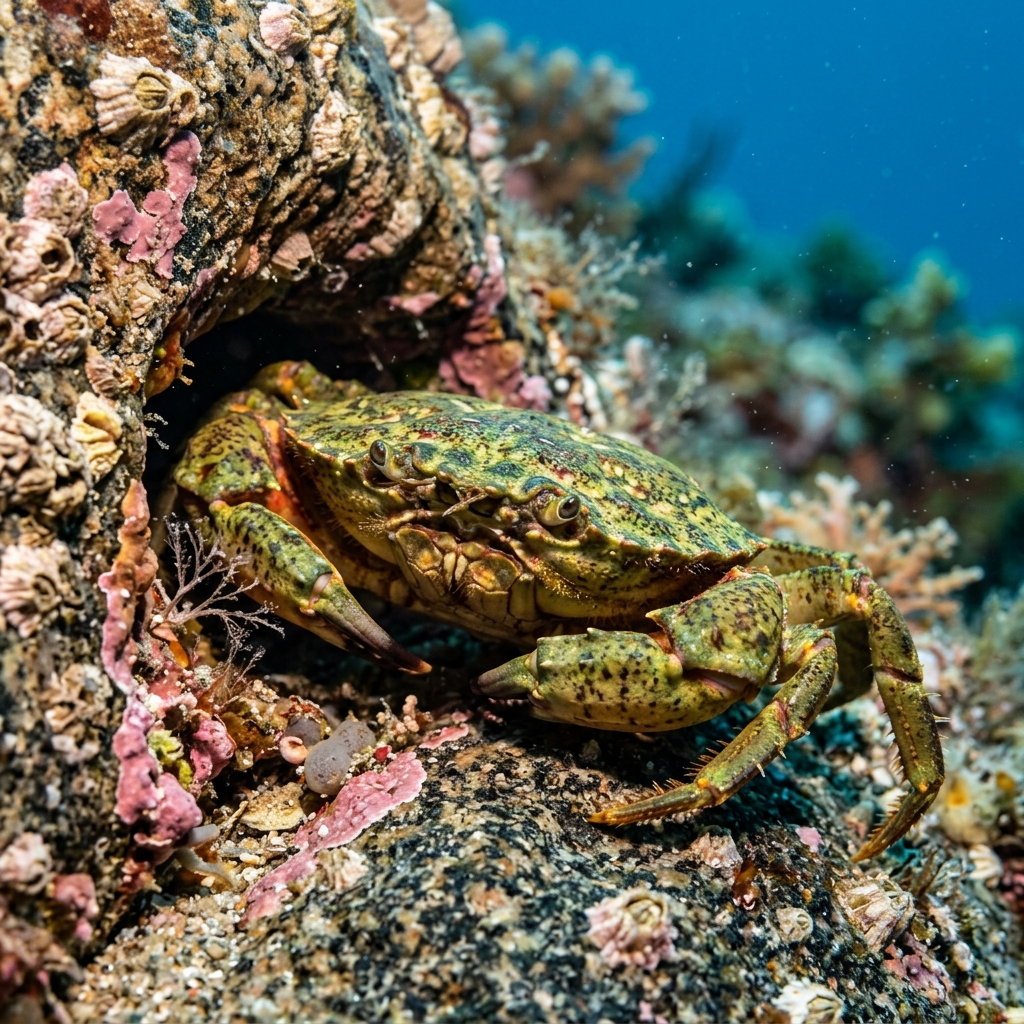
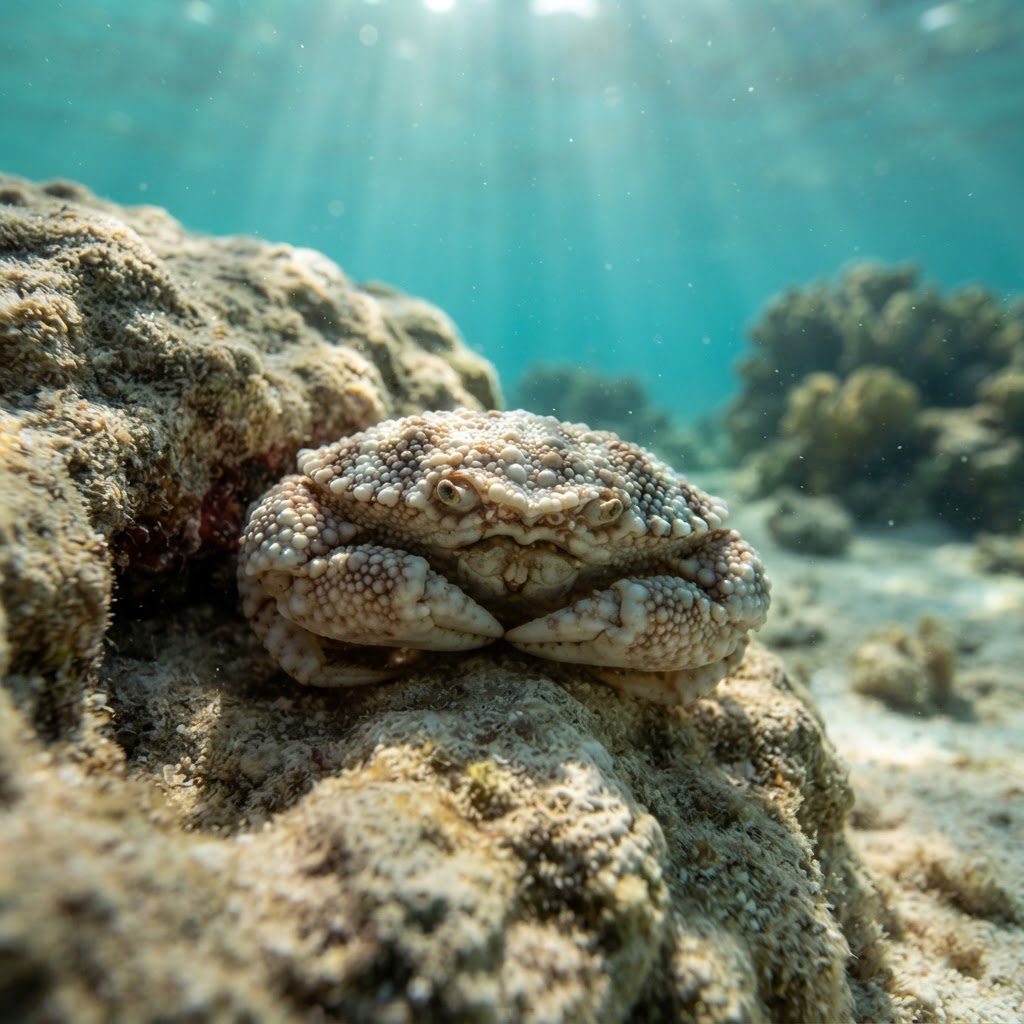
Look for a rounded, almost boulder-shaped shell with a coarse, pebbly texture rather than a smooth carapace. The colouring runs mottled brown to reddish, which helps it disappear against rubble and coral debris. Its claws are stout and roughly equal in size, held close to the body rather than raised out like a swimmer crab's. Size in the water is modest, easy to miss unless you're scanning crevices closely.
Divers usually find this one wedged into rubble patches or tucked under coral rock rather than out in the open, relying on its dull, textured shell to blend in. It doesn't scuttle off in a panic when approached, more likely to sit tight and let its camouflage do the work. Most sightings come from slow, close-focus looks at reef rubble zones rather than mid-water encounters.
Its bumpy, rock-like shell isn't just for show, it's a camouflage strategy that lets it sit motionless in rubble fields where smoother-shelled crabs would stand out.
No clear seasonal pattern shows up in the sightings, so treat this as a year-round find. Its comfort range of 22.5 to 28.5C covers most of the diving calendar across the Visayas and Okinawa, so timing your trip around water temperature isn't really necessary.
Most reliably logged in the Philippines, particularly across the Visayas, and in Japan's Okinawa and Ryukyu Islands, where it turns up on reef rubble and crevice habitat. A smaller number of sightings come from Reunion's Saint-Paul region, so it's worth a look there too if you're diving the western Indian Ocean.
Mapping where Beaded Crab is logged…
The strongest sightings come from the Visayas in the Philippines and Okinawa and the Ryukyu Islands in Japan, with a smaller number logged around Saint-Paul in Reunion.
There's no detected season, so they're considered a year-round sighting. Water temperatures of 22.5 to 28.5C at the sites where they're found cover most of the year in these regions.
Look for a rounded, pebbly-textured shell in mottled brown or reddish tones, tucked into rubble or crevices rather than swimming in the open. Its claws are stout and held close to the body rather than raised like a swimmer crab's.
Exact size data isn't confirmed for this species, but divers typically describe it as a modest, easy-to-overlook crab best spotted by scanning rubble closely rather than looking for something large.
No, this crab poses no danger to divers. It's a small reef dweller that relies on camouflage rather than defence against anything as large as a diver.
Its coarse, boulder-like shell texture is its main trick, letting it sit motionless among coral rubble where a smoother-shelled crab would be spotted immediately.
Site and sighting data is aggregated from diver logs, iNaturalist and GBIF. For taxonomy and conservation status:
European Green Crab
2,469 sites