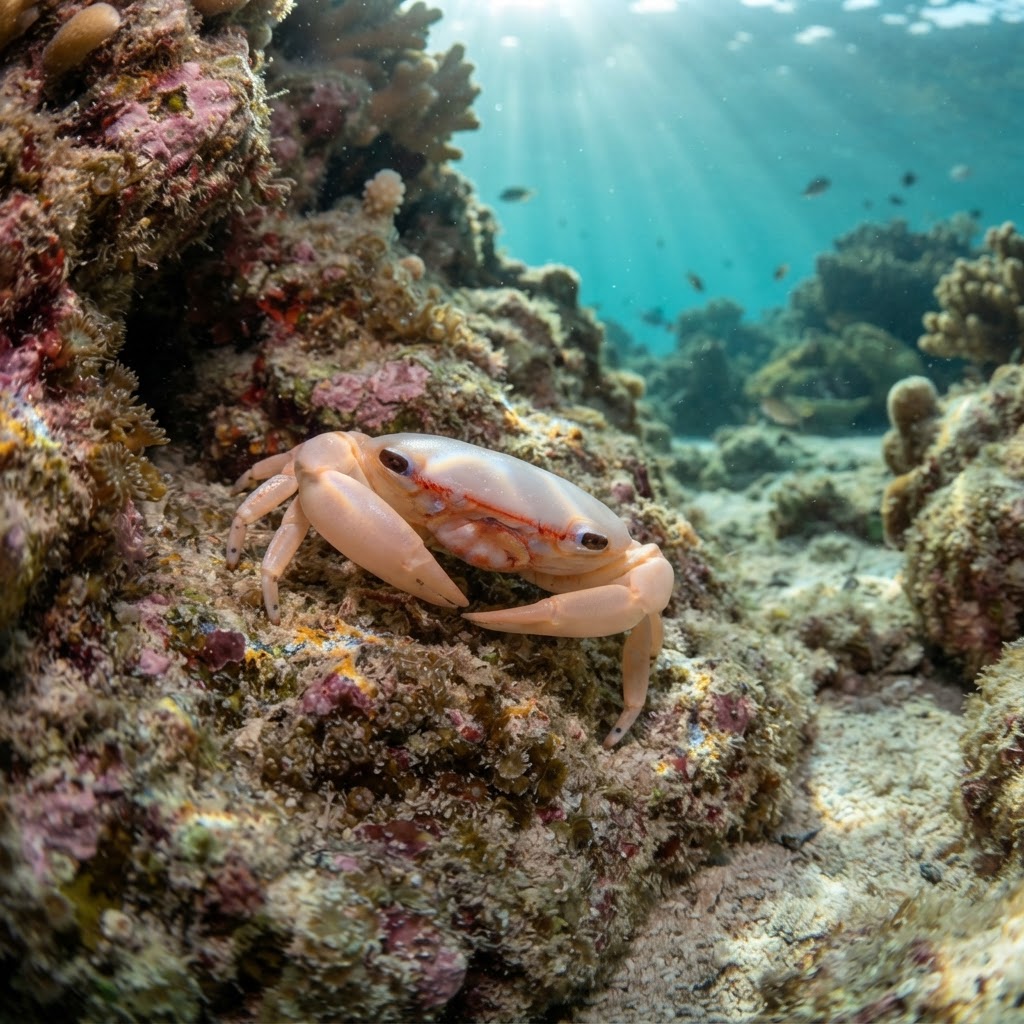
Tetralia glaberrima
Tiny coral-dwelling crabs found across Sabah's reefs, living inside Acropora branches in 26-32C water year-round.
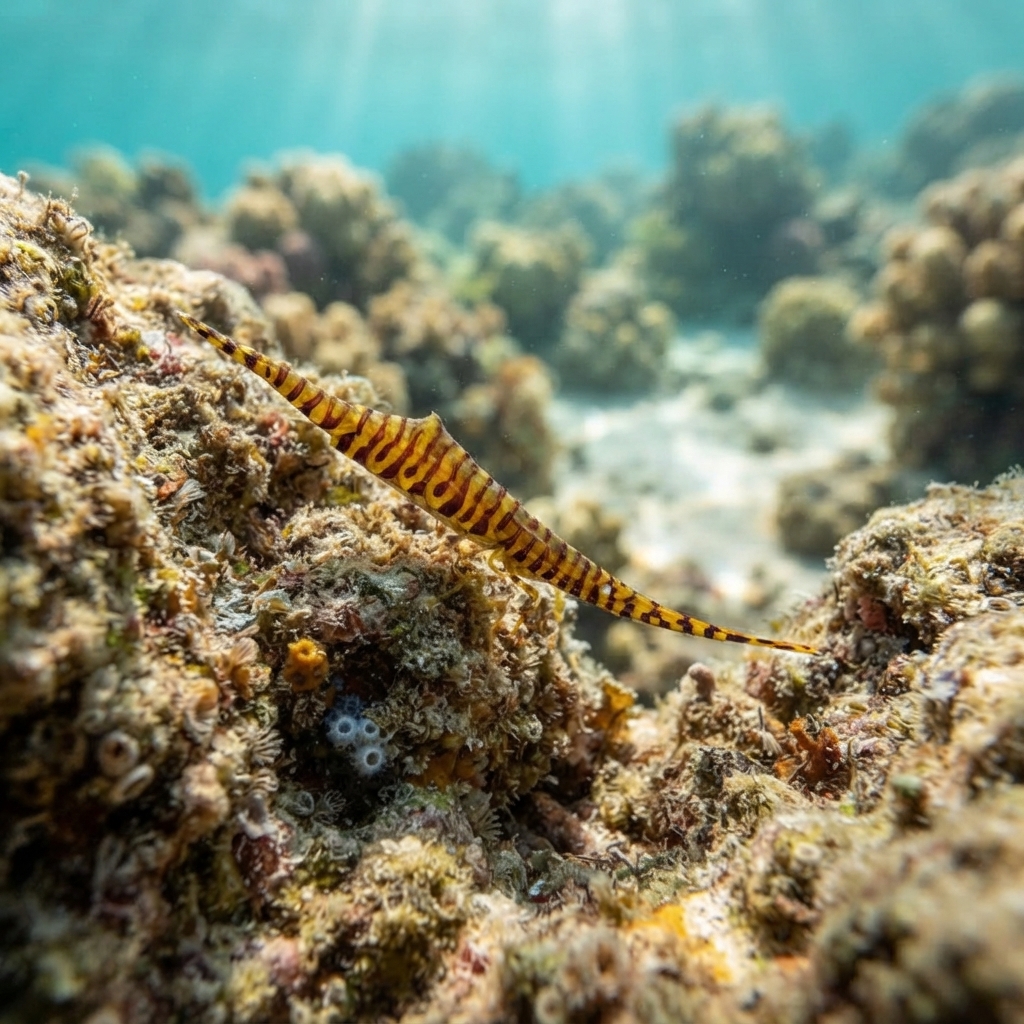
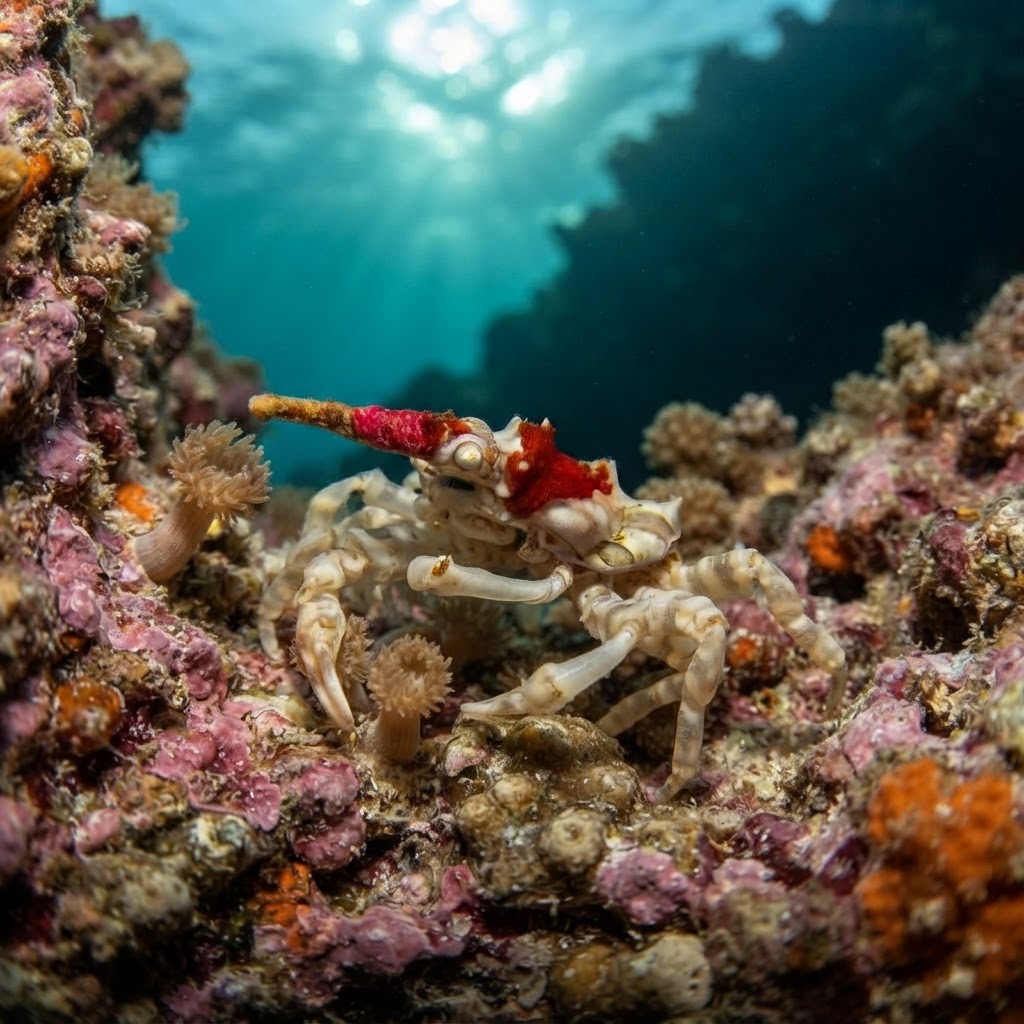
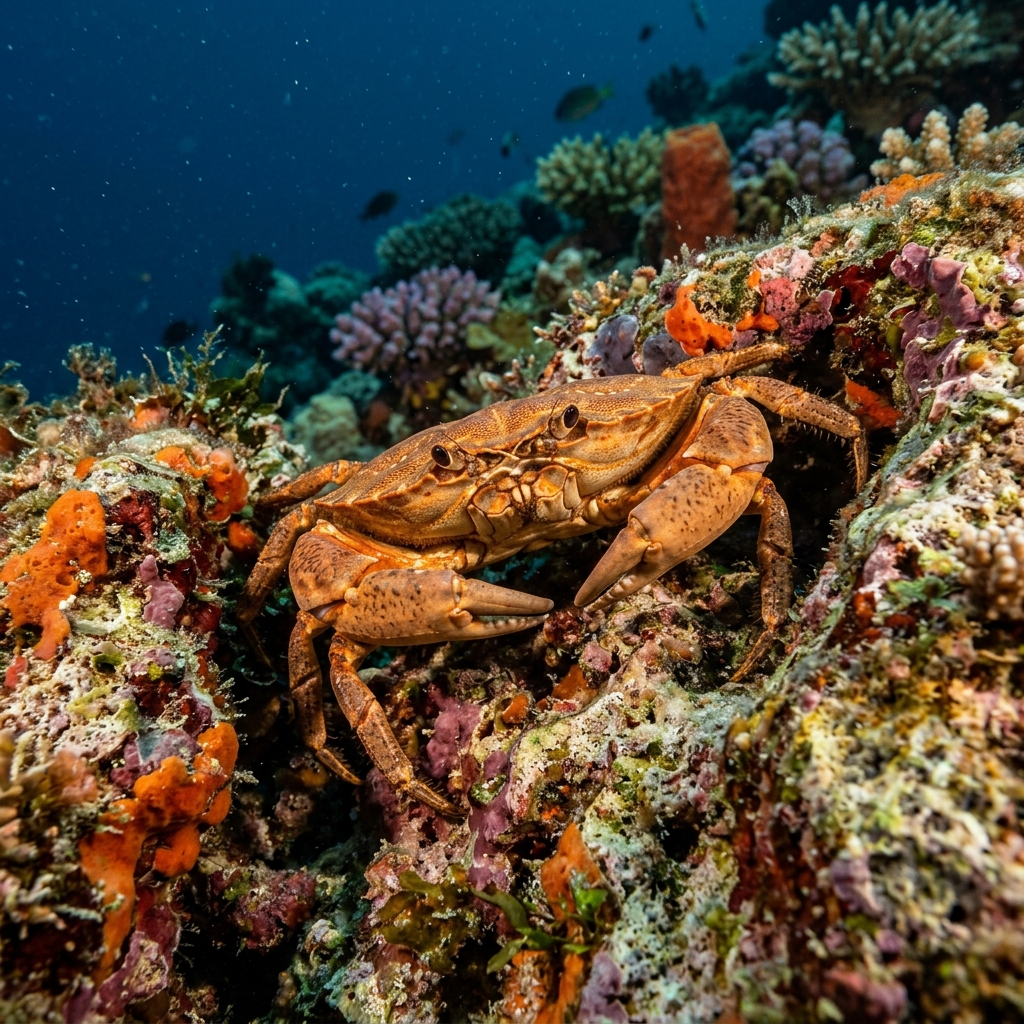
Small, flattened crab, easily overlooked at only a centimetre or two across, usually pale cream to yellowish to match its host coral. Look for a smooth, rounded carapace and legs tucked in close to the branches of an Acropora coral rather than out in the open. It rarely strays from the coral it lives in, so divers spot it by scanning coral branches closely rather than the open reef.
Spend most of the dive tucked between the branches of its host Acropora coral, rarely venturing onto open reef. Divers usually find it by parting or peering closely into a coral head rather than spotting movement, since it holds still and relies on the coral's structure for cover. Largely indifferent to divers as long as the coral itself isn't disturbed.
Lives its entire life on a single coral colony, feeding on mucus and tissue the coral produces and, in turn, is thought to help defend its host from some coral predators.
No clear season shows up in the sighting data, and with a comfortable range of 26 to 32 C this is a year-round find on tropical Acropora reefs rather than a seasonal one.
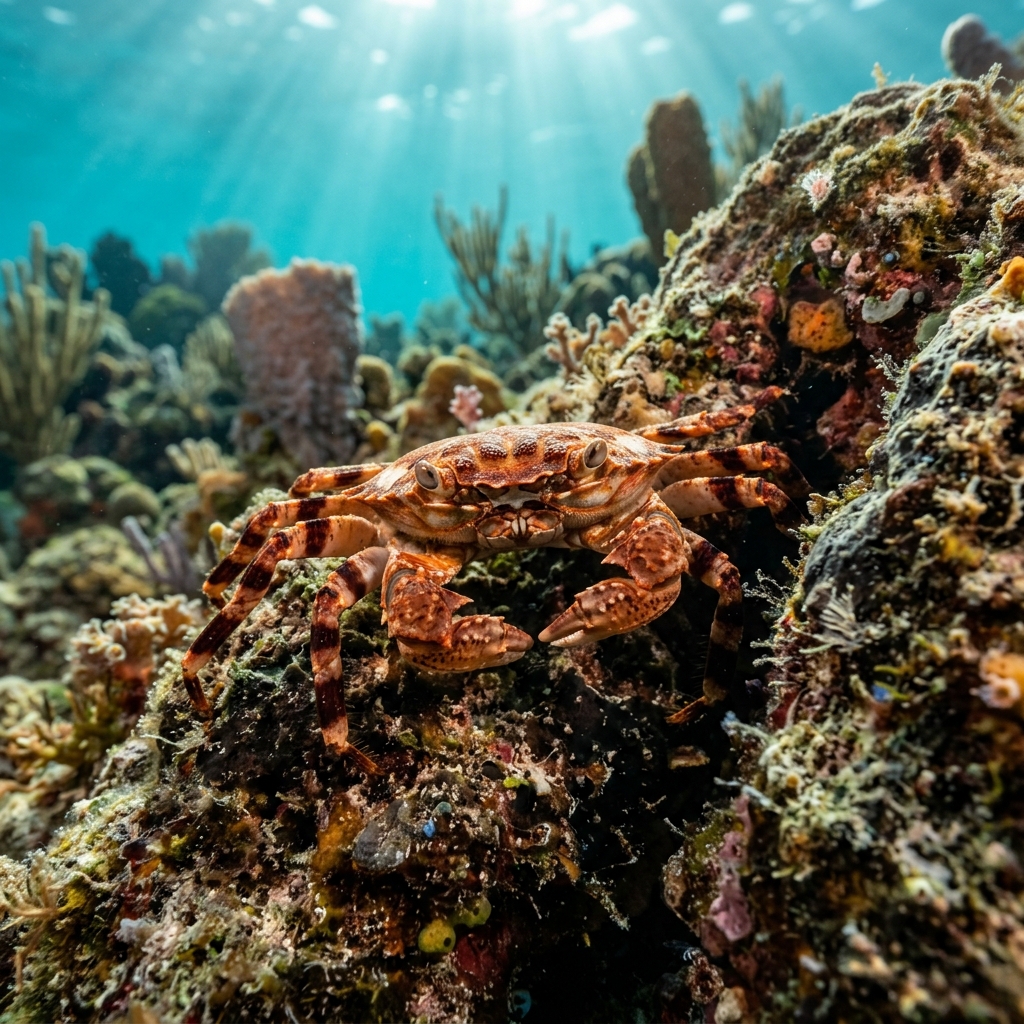
Reef neighbours a diver could mistake it for. Use the identification notes above to tell them apart.
Most reliably logged around Sabah in Malaysia, which accounts for the bulk of recorded sightings, with a smaller but steady presence in Sulawesi, Indonesia. Occasional records also come from Sai Kung in Hong Kong and the Visayas in the Philippines, so it turns up anywhere branching Acropora coral is healthy.
Mapping where Acropora Coral Crab is logged…
Sabah in Malaysia is the strongest spot, with further sightings in Sulawesi, Indonesia, and occasional records from Sai Kung in Hong Kong and the Visayas in the Philippines.
There's no detected season, so they're a year-round find on warm tropical reefs between roughly 26 and 32 C.
Look inside the branches of Acropora coral for a small, pale, flattened crab only a centimetre or two wide. It sits tucked close to the coral rather than out in the open, so a slow, close look at coral heads is key.
They stay tiny, typically just a centimetre or two across, which is one reason they're logged as uncommon even where present.
Each crab spends its whole life on one coral colony, feeding on the coral's mucus and tissue while apparently helping guard it from certain predators.
Site and sighting data is aggregated from diver logs, iNaturalist and GBIF. For taxonomy and conservation status:
European Green Crab
2,469 sites