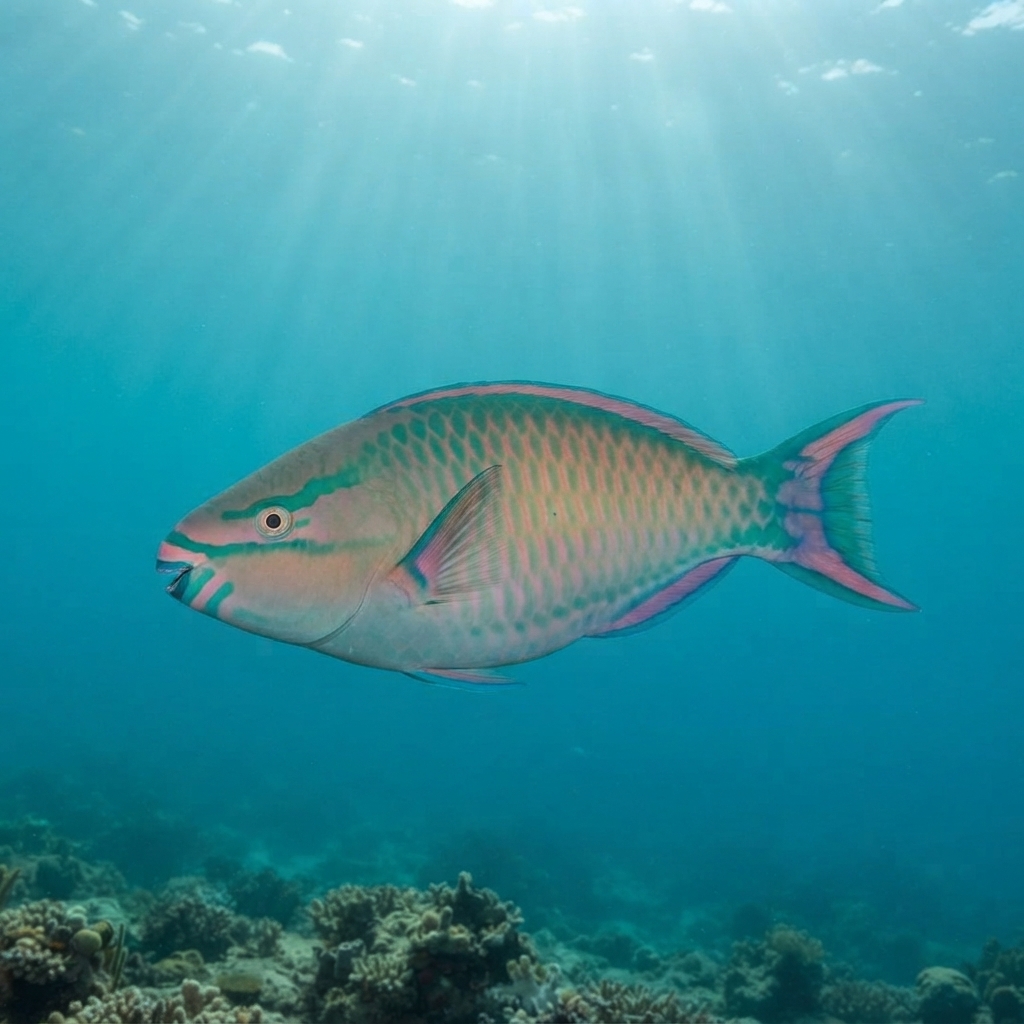
Scarus tricolor
Common on reefs in the Visayas and Sulawesi, this parrotfish grazes coral in warm 25-29C water year-round.
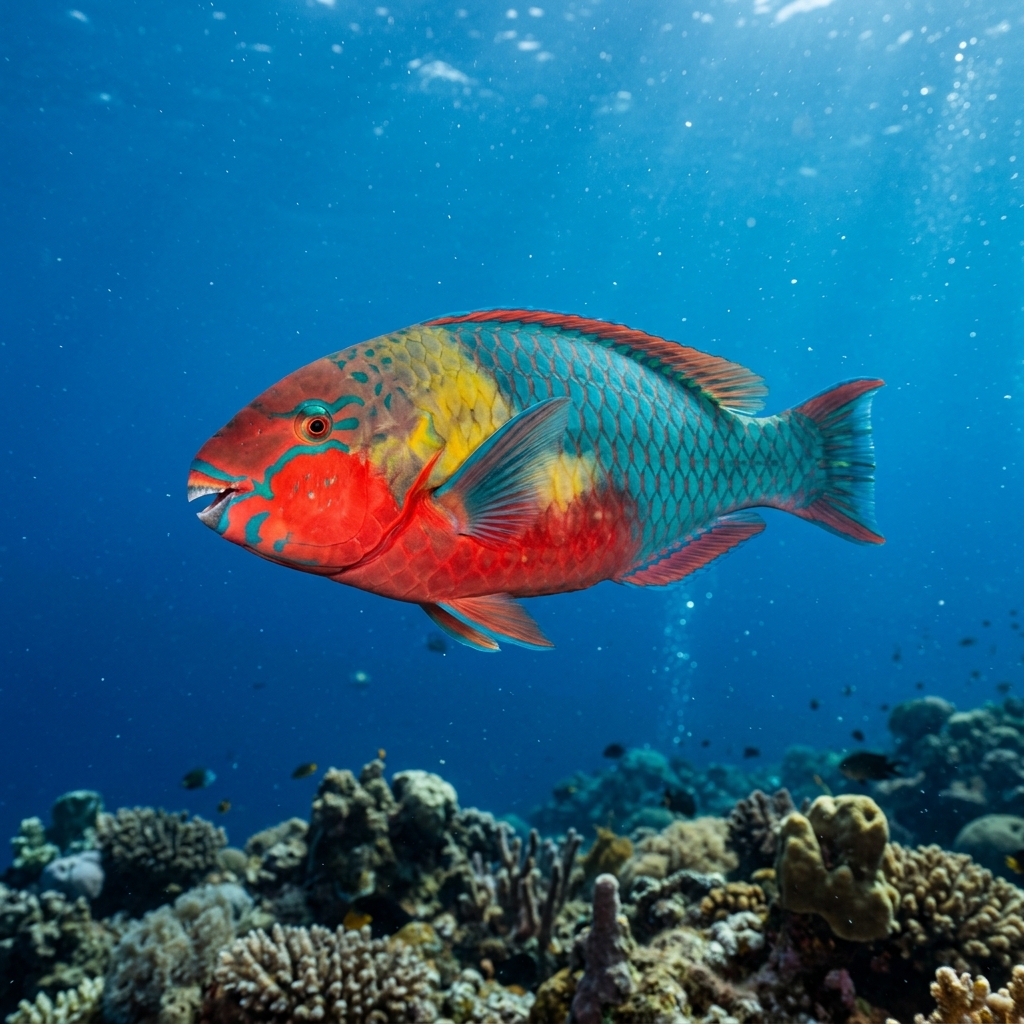
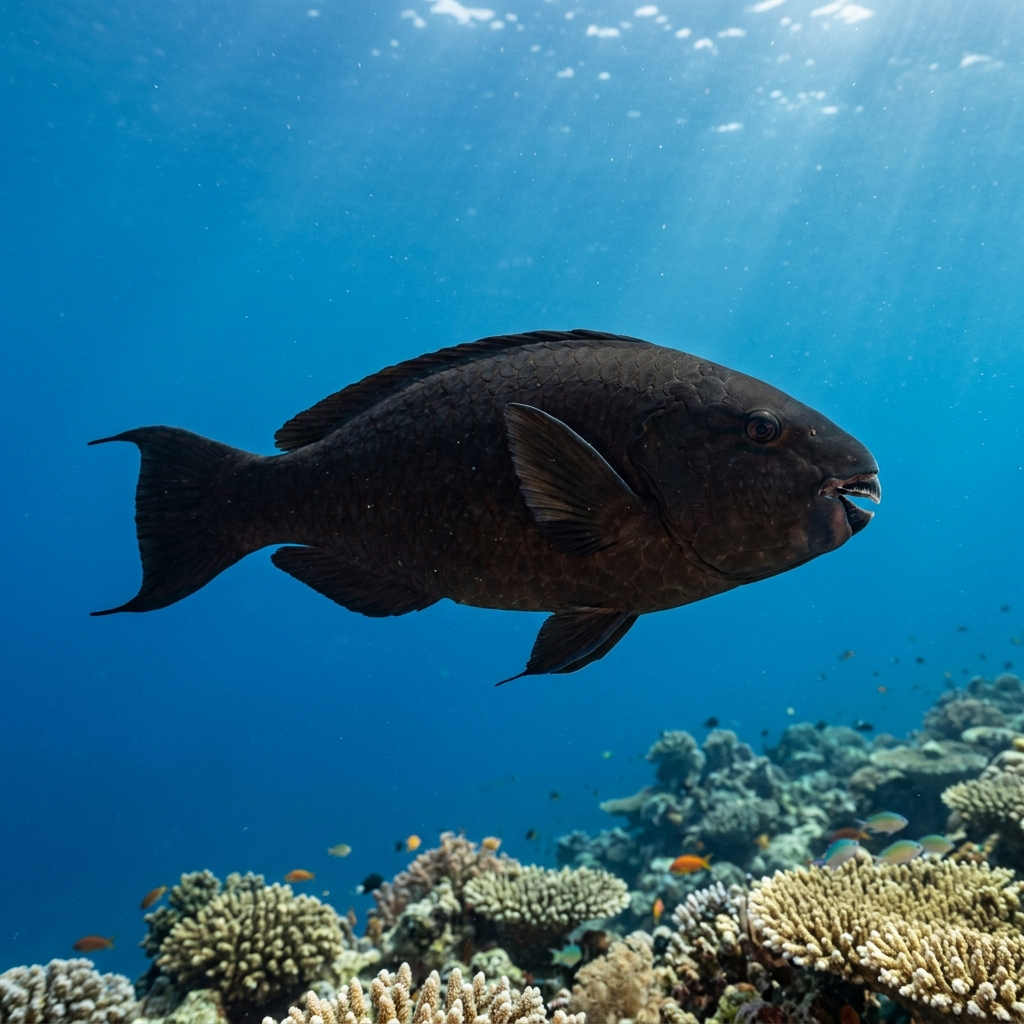
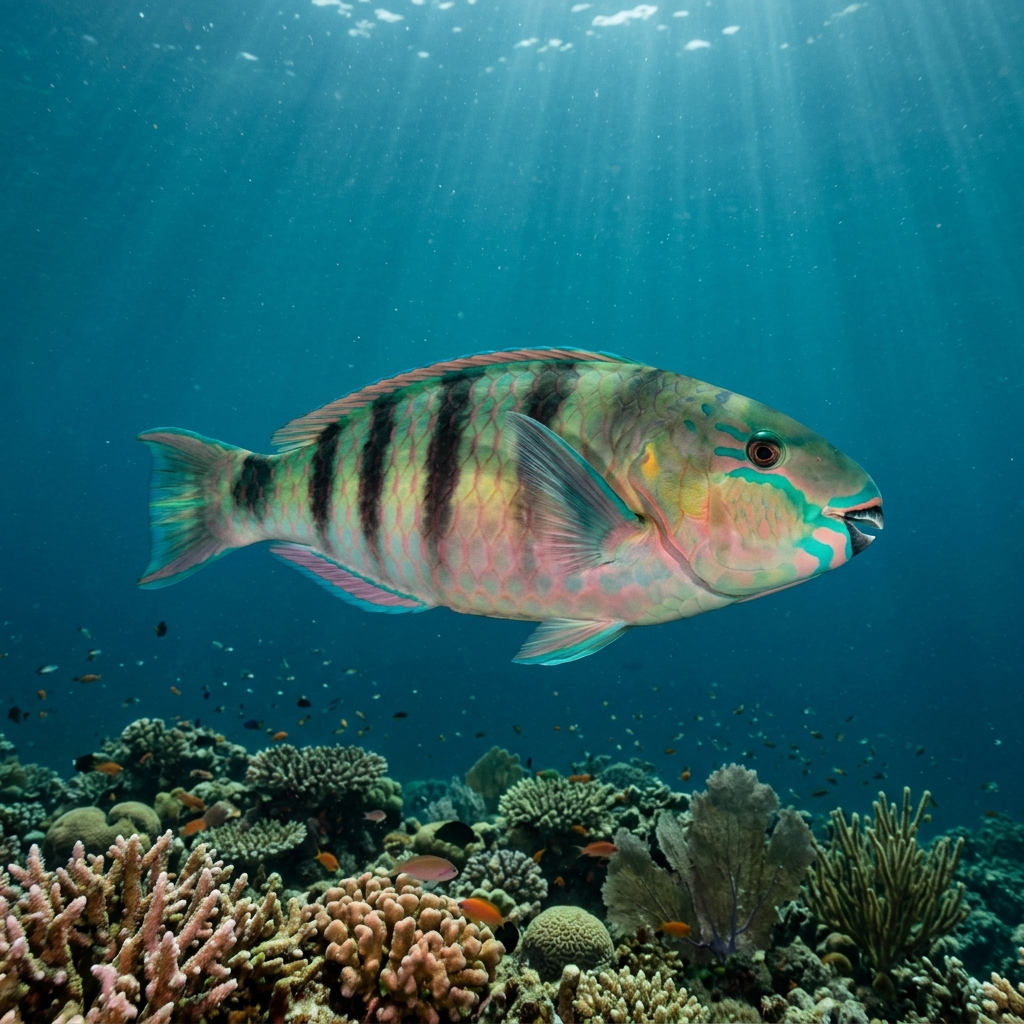
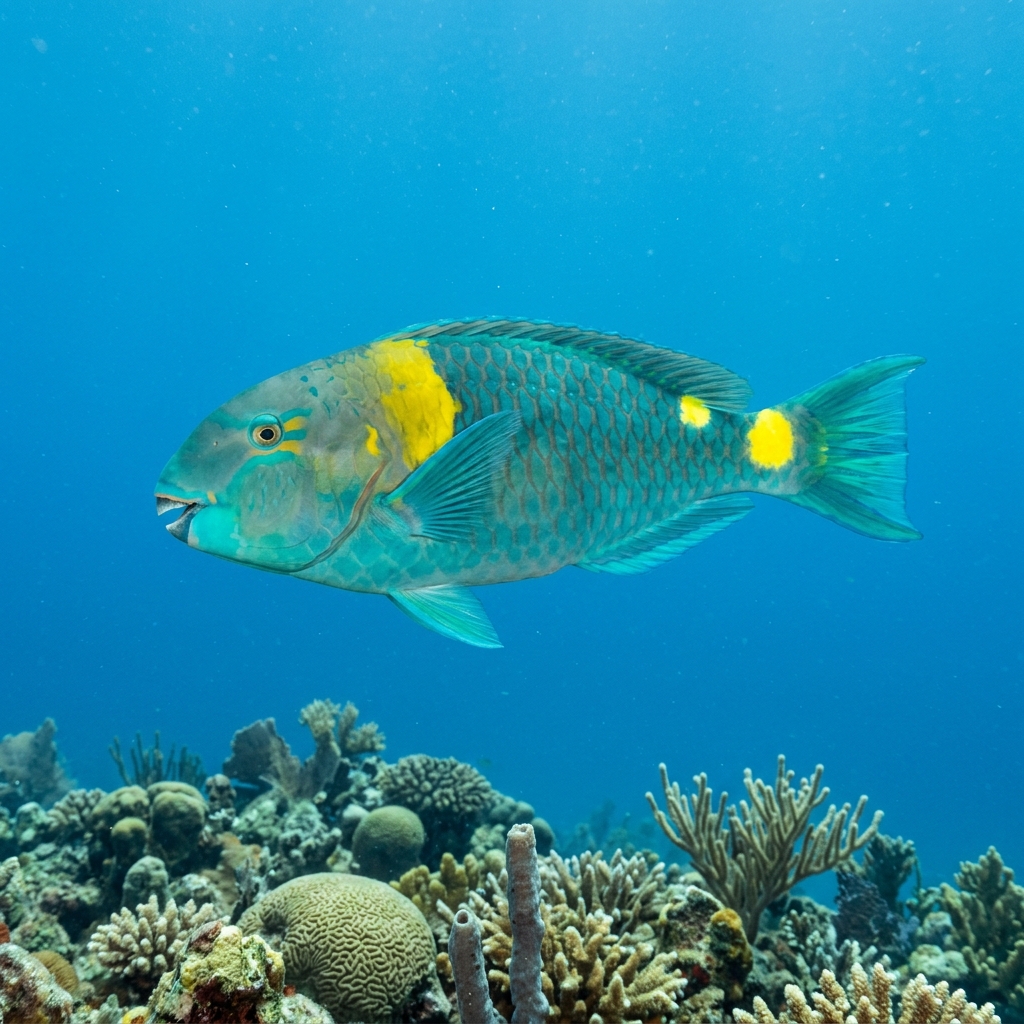
Grows to around 36 cm, with a stocky, deep-bodied shape typical of parrotfish and a fused, beak-like set of teeth used for scraping algae off rock and coral. Adults show a mix of blue-green and pinkish-brown tones across the body, often patchy rather than uniform, which is where the tricolor name comes from. Look for it grazing head-down against the reef surface rather than swimming in open water.
Divers usually find it working over hard and soft coral or rocky reef flats, scraping algae with steady, unhurried bites rather than darting around. It tends to hold its distance from divers but rarely bolts, so a slow approach along the reef often gets you a good look. Most sightings come from daytime dives in the 2 to 25 m range where light still reaches the reef surface it feeds on.
Like other parrotfish, it plays a direct role in reef upkeep by grazing down algae that would otherwise smother coral, and its feeding leaves the fine scrape marks divers sometimes notice on bare rock and dead coral.
No clear seasonal pattern shows up in the data, and with a comfortable range of about 25 to 29 C this fish is present on tropical reefs throughout the year. Plan around good visibility and reef conditions at your chosen site rather than a specific month.
Most reliably logged in the Philippines, especially across the Visayas, and in Indonesia, with strong numbers in Sulawesi, Raja Ampat, West Papua, and Bali. It also turns up in Thailand around Khao Lak, in the Maldives' Central Atolls, in Timor-Leste, and along the Kenyan coast, though at most sites divers describe it as an uncommon rather than guaranteed sighting.
Mapping where Tricolor Parrotfish is logged…
The Visayas in the Philippines and Sulawesi in Indonesia are the most consistent regions, with further sightings in Raja Ampat, West Papua, Bali, Khao Lak in Thailand, and the Maldives' Central Atolls.
There is no strong seasonal pattern in sightings, and it lives in water between about 25 and 29 C year-round, so it is a reasonable spot on tropical reef dives in any month.
Look for a stocky, 30 to 36 cm reef fish with a mottled blue-green and brownish-pink body and a fused beak-like mouth, usually seen grazing head-down against coral or rock rather than swimming freely.
They typically reach around 36 cm, a mid-sized parrotfish that is easy to mistake for reef background at a glance until you notice the grazing behaviour.
No, they pose no threat to divers. They are herbivores focused on grazing algae off the reef and will typically keep a comfortable distance rather than approach.
Site and sighting data is aggregated from diver logs, iNaturalist and GBIF. For taxonomy and conservation status:
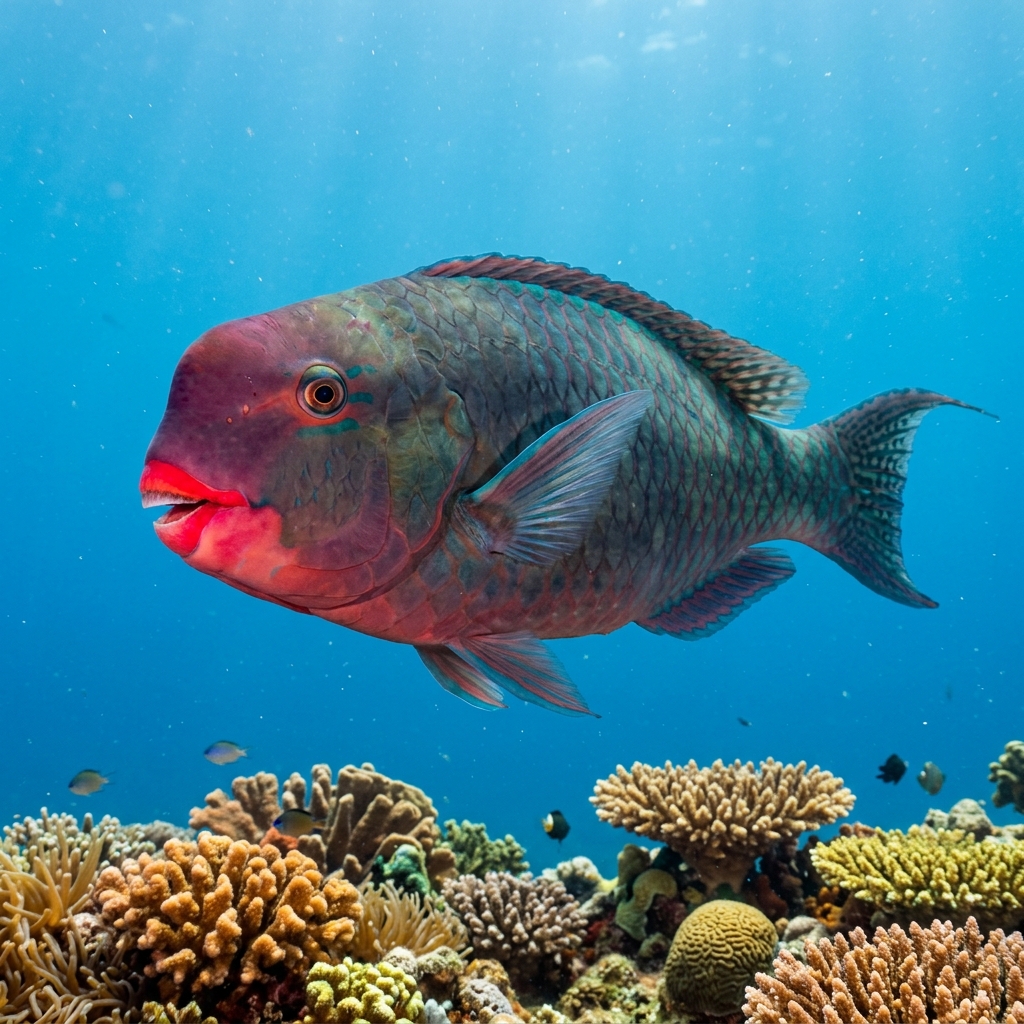
Redlip Parrotfish
2,789 sites