Trapania tamaraw
Logged just once in Bali, Indonesia, this tiny goniodorid nudibranch turns up on warm reefs of 25.5 to 31.5C. Here's what to look for.
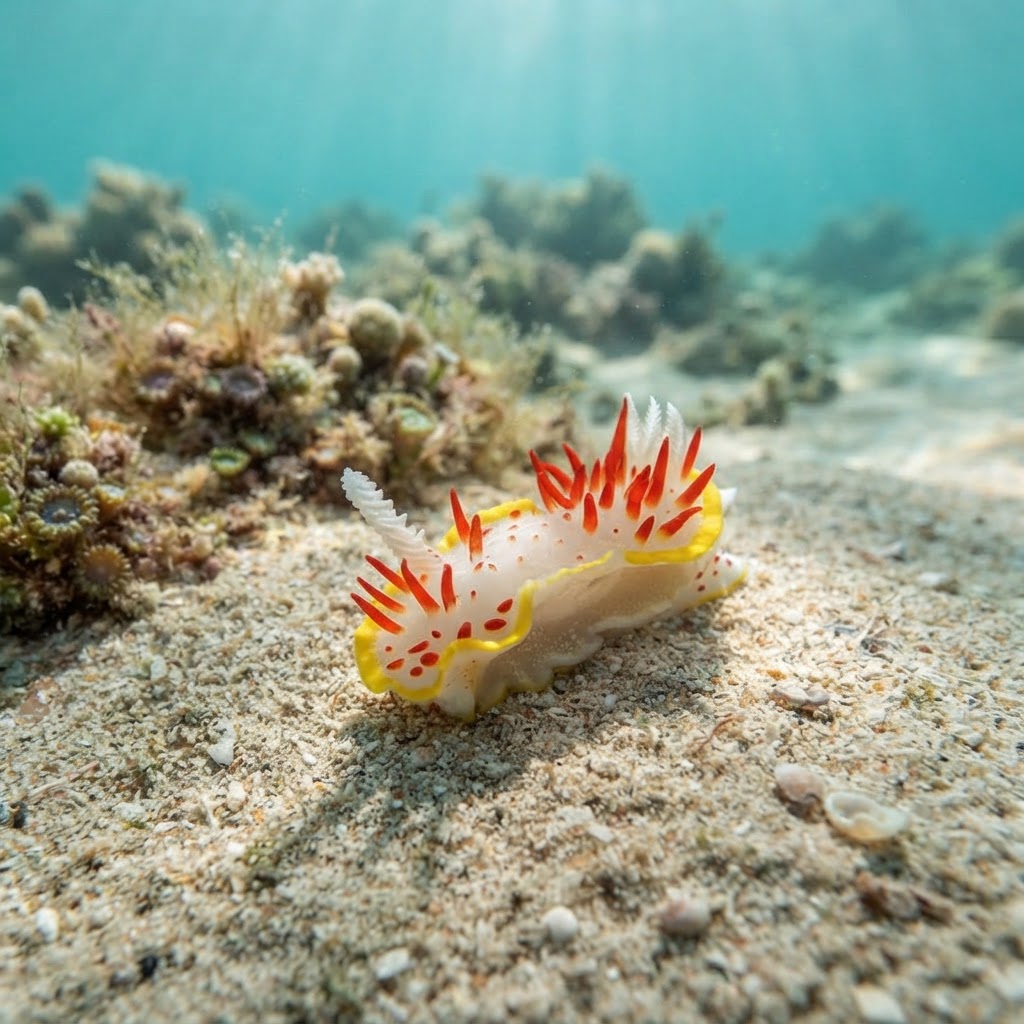
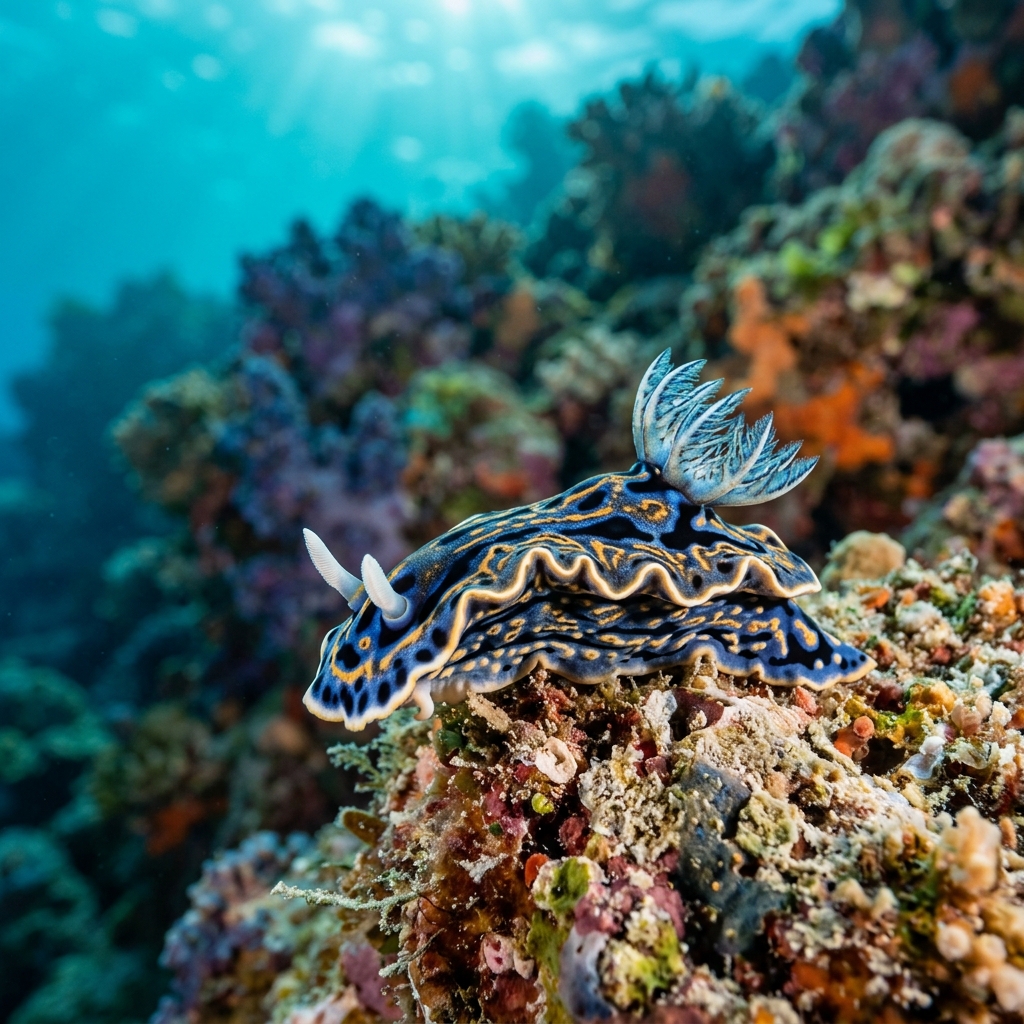
A small goniodorid nudibranch, built low and slug-like with the finger-like sensory extensions (called caruncles) typical of the Trapania genus running along its back. Look for a pale to translucent body punctuated by small dark or coloured markings, plus a pair of rhinophores (the stalked sensory organs on the head) that stand out against the muted body tone. Given its size and rarity, this is a macro subject best found by scanning coral rubble and sponge-covered surfaces closely rather than expecting it to catch your eye from a distance.
As with other Trapania species, expect to find it moving slowly over sponges and detritus on the reef or muck substrate, grazing rather than swimming. It shows no reaction to divers beyond continuing its slow crawl, and sightings tend to happen on careful, close-focus dives rather than during a general reef swim.
Trapania nudibranchs feed on bryozoans and use their caruncles as extra sensory feelers, a trait that sets the genus apart from other small dorid nudibranchs on the reef.
There isn't enough logged data to point to a season, and the observed temperature range of 25.5 to 31.5C spans Bali's reefs year-round, so there's no strong reason to expect it to be more common in one month over another.
Reef neighbours a diver could mistake it for. Use the identification notes above to tell them apart.
The only confirmed sightings so far come from Bali, Indonesia, making it the place to look if you want a real shot at this species. It hasn't turned up in dive logs elsewhere yet, so treat any Bali muck or reef dive as your best and really only documented opportunity.
Mapping where Trapania Tamaraw is logged…
The only logged sighting is in Bali, Indonesia, so that's currently the one place divers have documented this nudibranch.
There isn't enough data to identify a season, and the warm water range it's been found in (25.5 to 31.5C) is present in Bali year-round, so any time of year is worth trying.
Look for a small, pale-bodied nudibranch with finger-like caruncles along its back and stalked rhinophores on the head. It's a macro find best spotted with close, slow scanning of sponge and rubble surfaces.
Exact size data isn't confirmed for this species, but like other Trapania nudibranchs it is small, typically only a centimetre or two long, making it a dive for macro photographers.
No, this small nudibranch poses no risk to divers. It has no means of harming humans and simply crawls slowly across the reef surface.
Site and sighting data is aggregated from diver logs, iNaturalist and GBIF. For taxonomy and conservation status:
Blue Dragon
3,163 sites