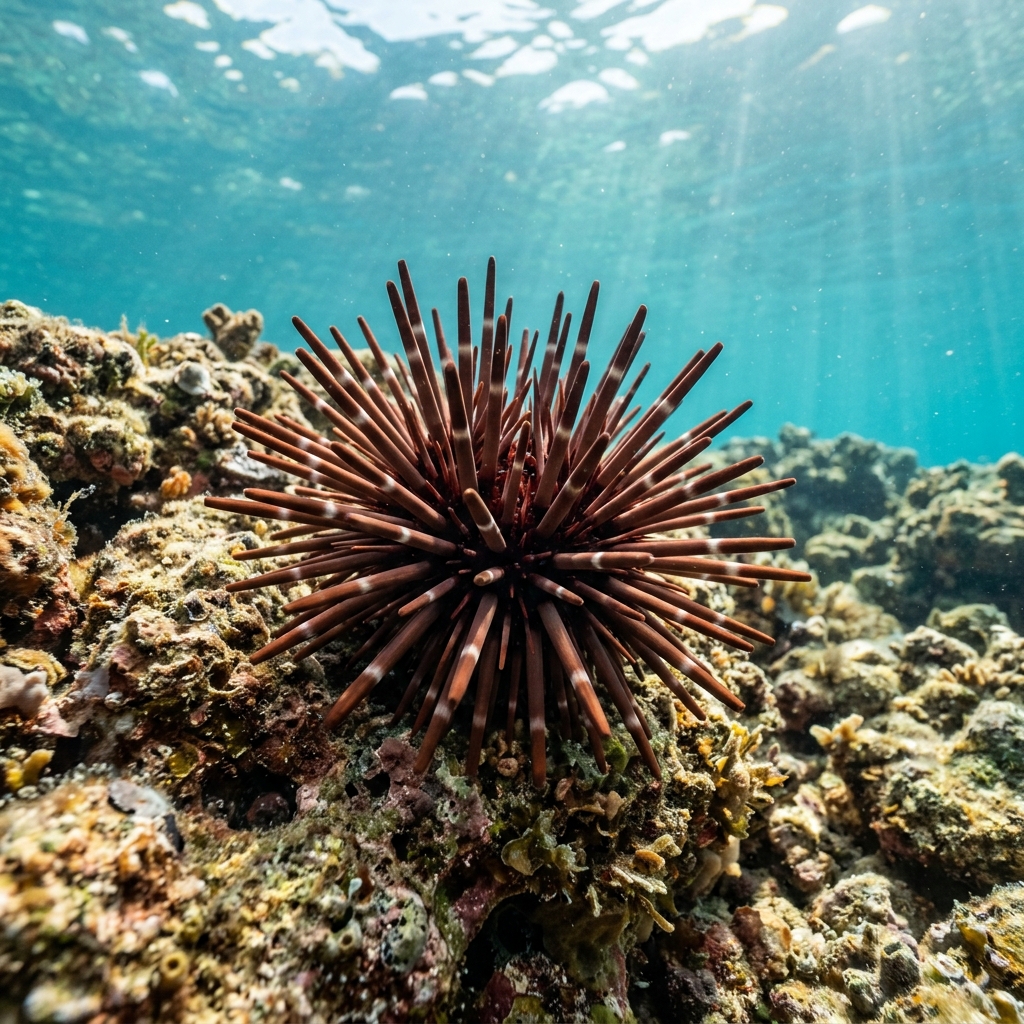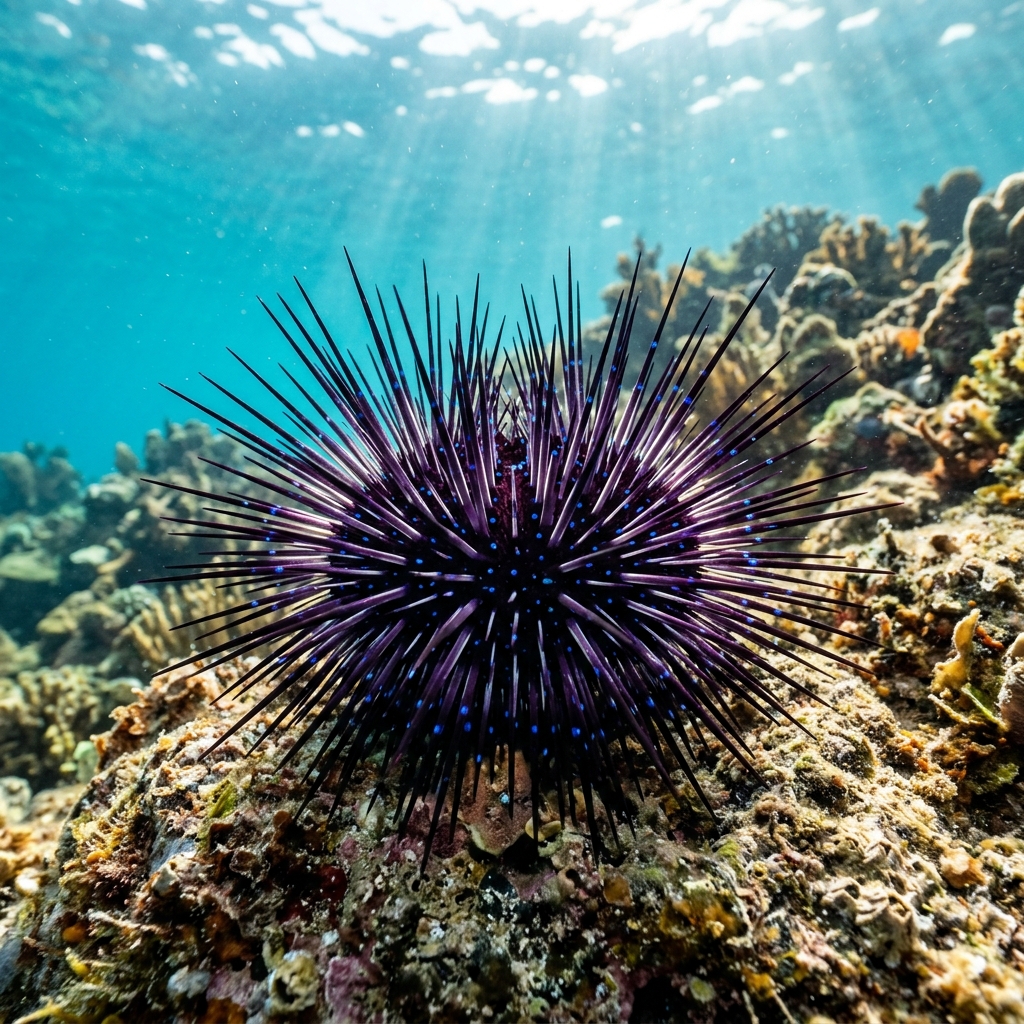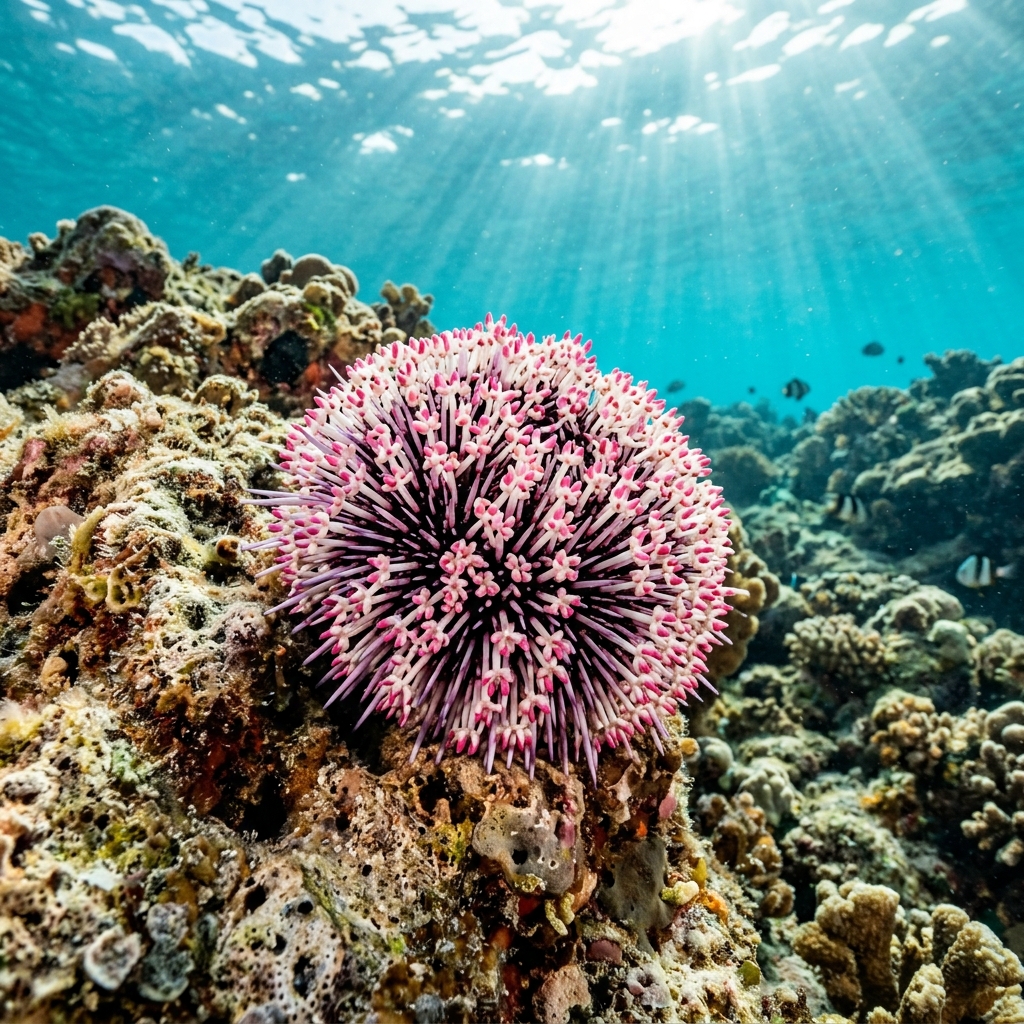
Toxopneustes spp.
Spot the flower urchin in the Visayas, Papagayo Gulf or Muscat, where sightings peak Jul, Dec in warm 23-29 °C tropical water.
Safety warning
The spines carry venom and snap off easily in the skin. Do not touch it, and never rest a hand or knee on the reef near one; the spines drive in on the lightest contact.
If you're stung
Venomous spinesGeneral first-aid guidance, not a substitute for professional medical care. In an emergency, call your local emergency number.
What makes the flower urchin unmistakable underwater is its surface of rounded, flower-like structures called pedicellaria (tiny pincer organs), which give it a soft, almost fluffy appearance completely unlike the bare spines of most urchins. The body is typically off-white to pale green or lavender, with each pedicellaria tipped in white or cream, creating a petal-covered look. Spines are short and largely hidden beneath this floral layer. The overall impression is of a rounded, pastel-coloured cushion sitting on the reef floor.
Flower urchins are typically found sitting on sandy patches, rubble, or mixed reef slopes where they move slowly across the substrate grazing on encrusting algae and detritus. They tend to stay low and stationary, making them easy to overlook until the unusual petal-like surface catches your eye. They do not react dramatically to diver presence, but the pedicellaria are in constant slow motion, opening and closing.
Those flower-like pedicellaria are not decorative. Each one contains a venom-delivering grasping claw, and contact with skin can cause intense localised pain, muscle paralysis, and in rare cases systemic reactions. The flower urchin holds a reputation as one of the most venomous echinoderms in the sea despite its gentle appearance.
In the Northern Hemisphere, sightings concentrate between July and December, so this window is your best bet in Mexico, the Philippines, Oman, and Taiwan. Southern Hemisphere data points to December through April for the best chances in East Africa and the tropical Pacific.
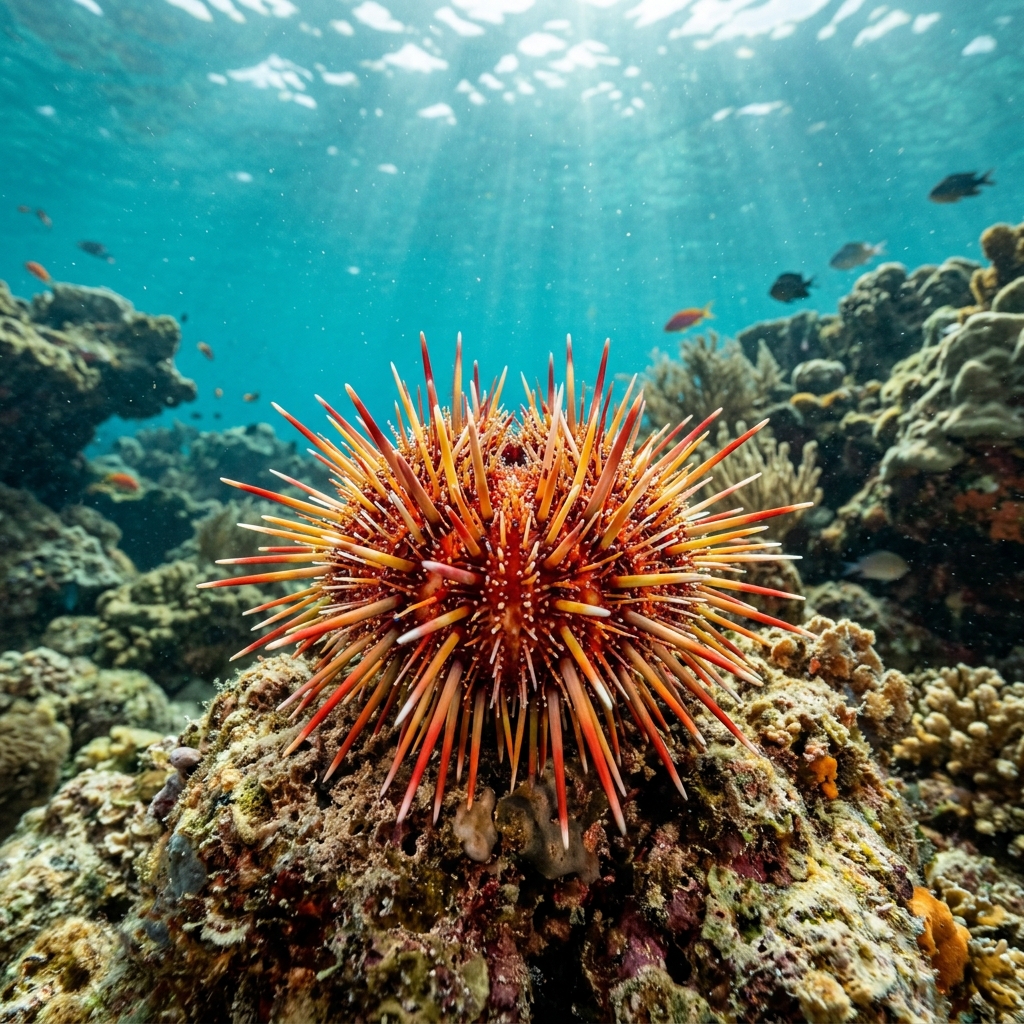
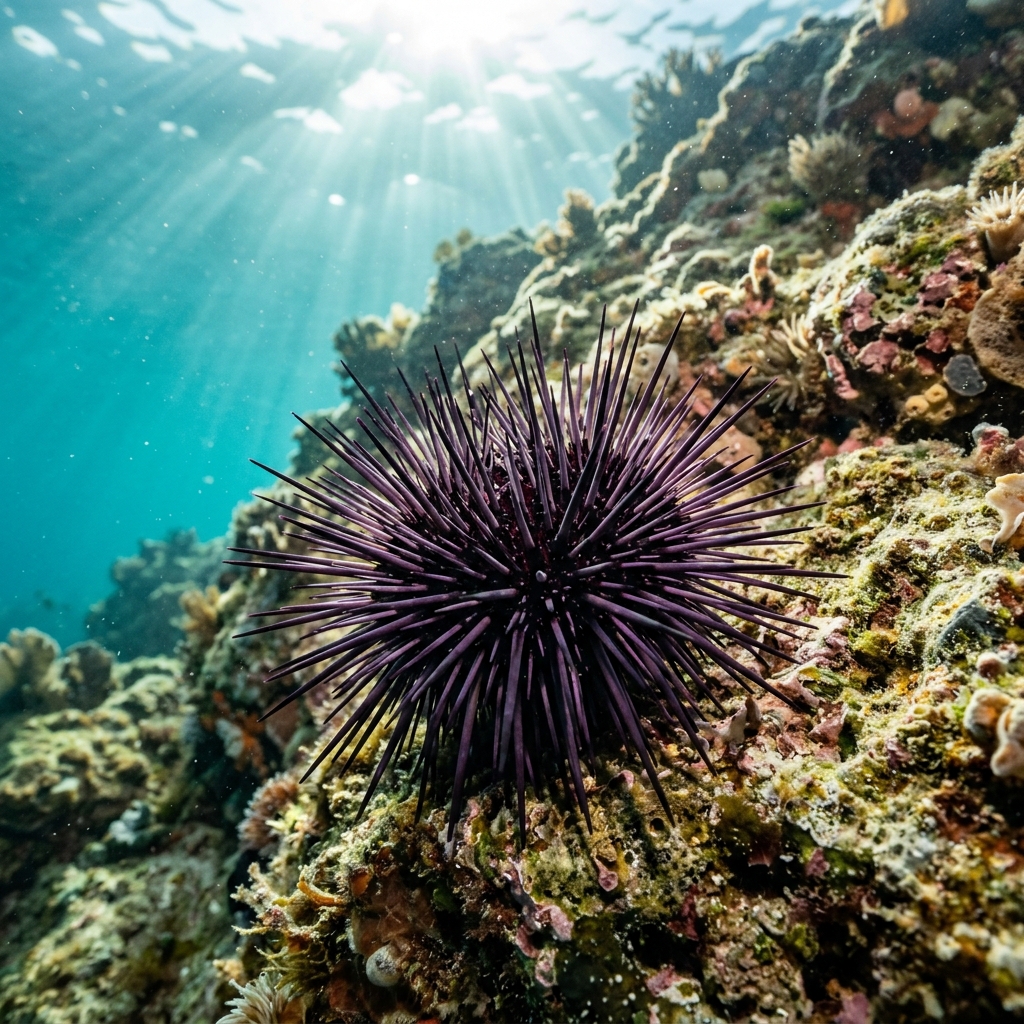
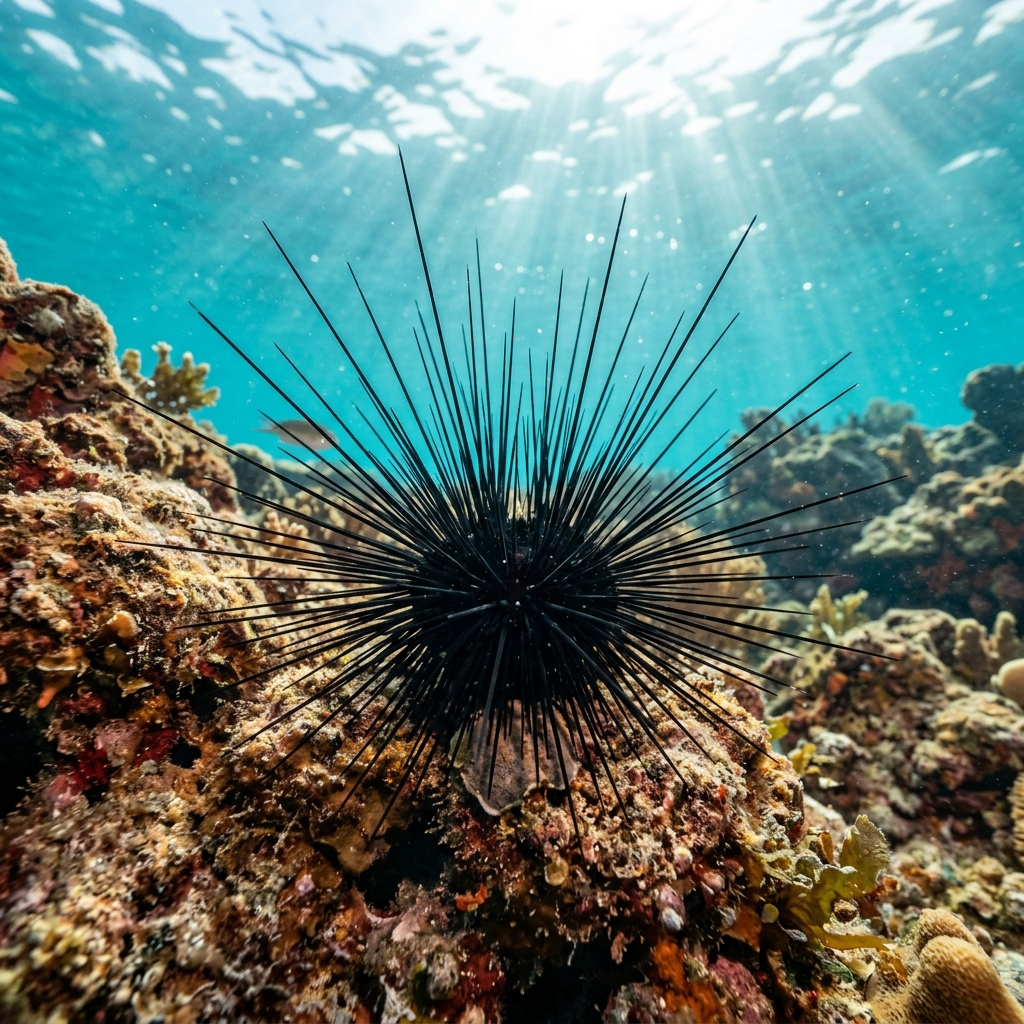
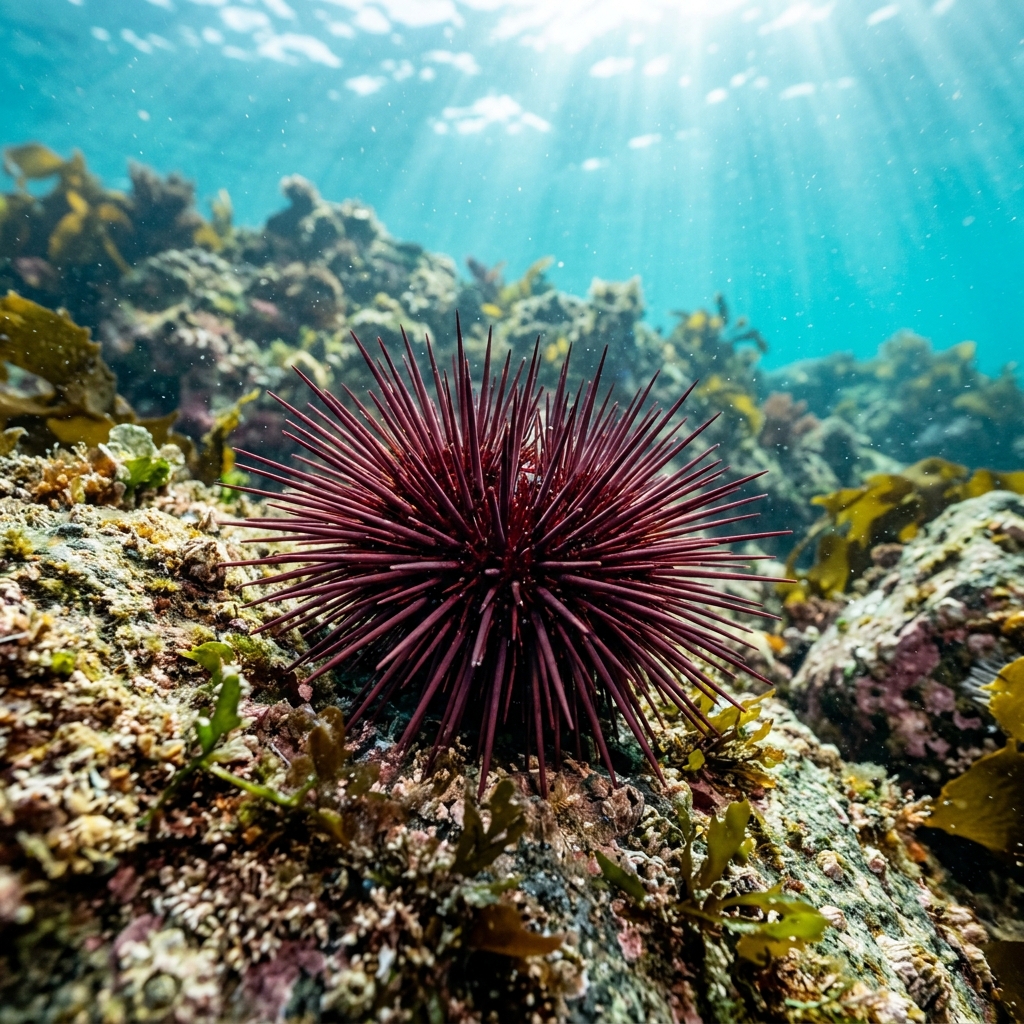
Reef neighbours a diver could mistake it for. Use the identification notes above to tell them apart.
Most logged in Mexico, particularly along the Pacific Coast and Baja California, and in the Philippines across the Central and Eastern Visayas. Strong populations also recorded in Costa Rica's Papagayo Gulf, around Malpelo in Colombia, and in the Muscat area of Oman. Zanzibar and Taiwan round out the spread.
Mapping where Flower Urchin is logged…
The most consistent records come from Mexico's Pacific Coast and Baja California, the Visayas in the Philippines, and Costa Rica's Papagayo Gulf. Oman's Muscat area, Malpelo in Colombia, Zanzibar in Tanzania, and Taiwan also have reliable sightings. Warm tropical reefs in the 23-29 °C range are the common thread.
In the Northern Hemisphere, sightings cluster from July through December, covering sites in Mexico, the Philippines, and Oman. In the Southern Hemisphere, December to April appears most productive. Outside those windows the species can still be present, but encounter rates drop.
They are not aggressive, but touching one is a serious mistake. The petal-like structures covering the body are venomous pincers that can cause sharp localised pain, swelling, and occasionally systemic effects including muscle weakness. Keep hands well clear and never rest on the substrate near them.
Look for a rounded urchin that appears to be covered in small white or cream flowers rather than obvious spines. The pedicellaria give the surface a soft, layered texture quite unlike any other common urchin. Body colour ranges from pale green to lavender or off-white. That distinctively fluffy, petal-covered look is the key field mark.
At most sites where the species has been recorded, divers log it as uncommon rather than common, so expect to look carefully rather than stumble across one on every dive. Slow, bottom-focused dives on sandy rubble and mixed reef zones in warm tropical water give the best odds.
Site and sighting data is aggregated from diver logs, iNaturalist and GBIF. For taxonomy and conservation status:
Red Sea Urchin
1,068 sites