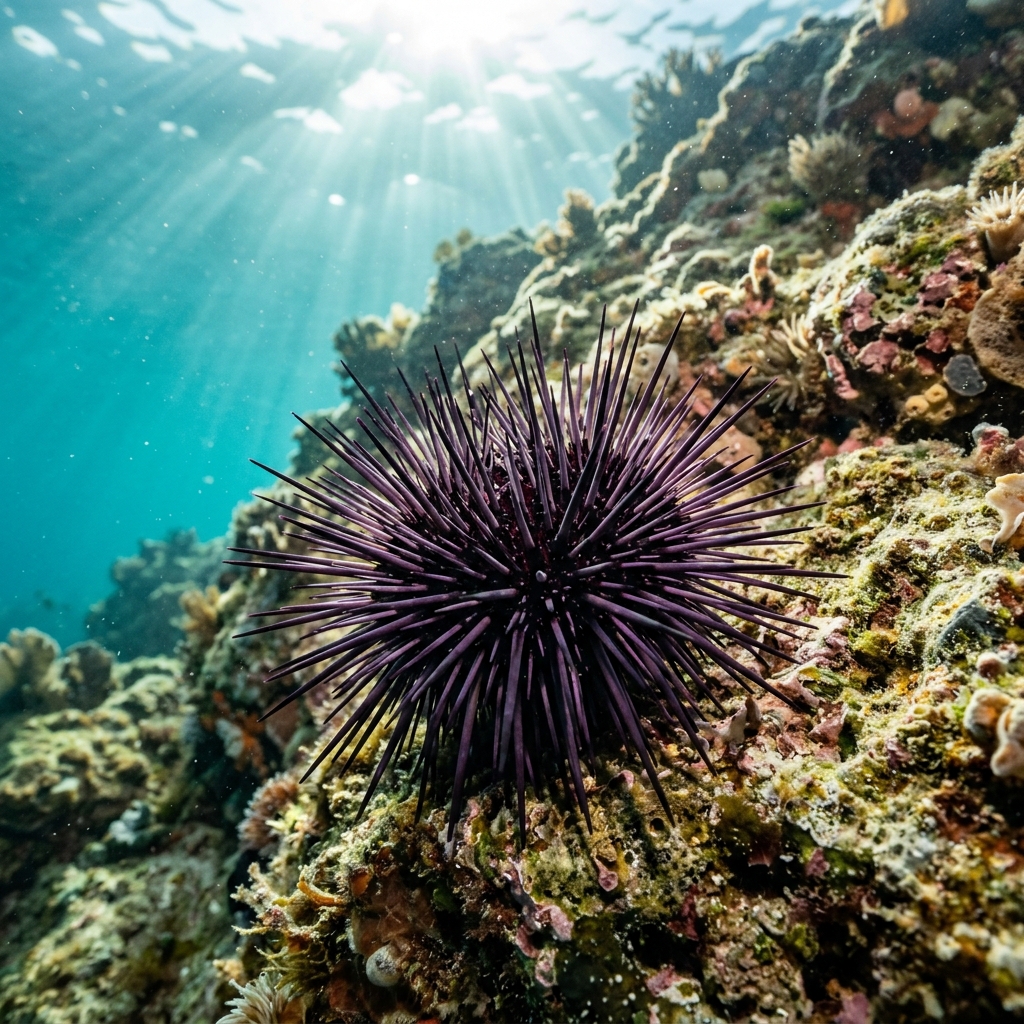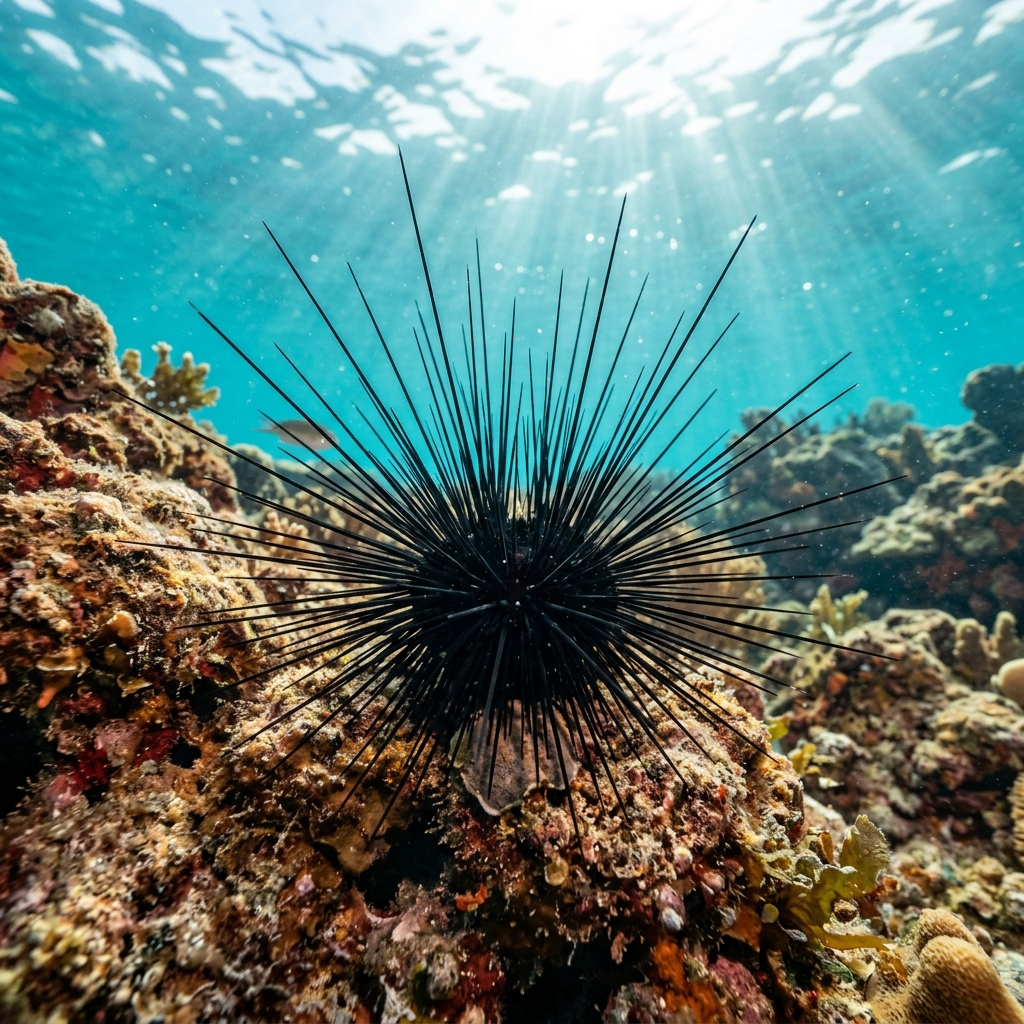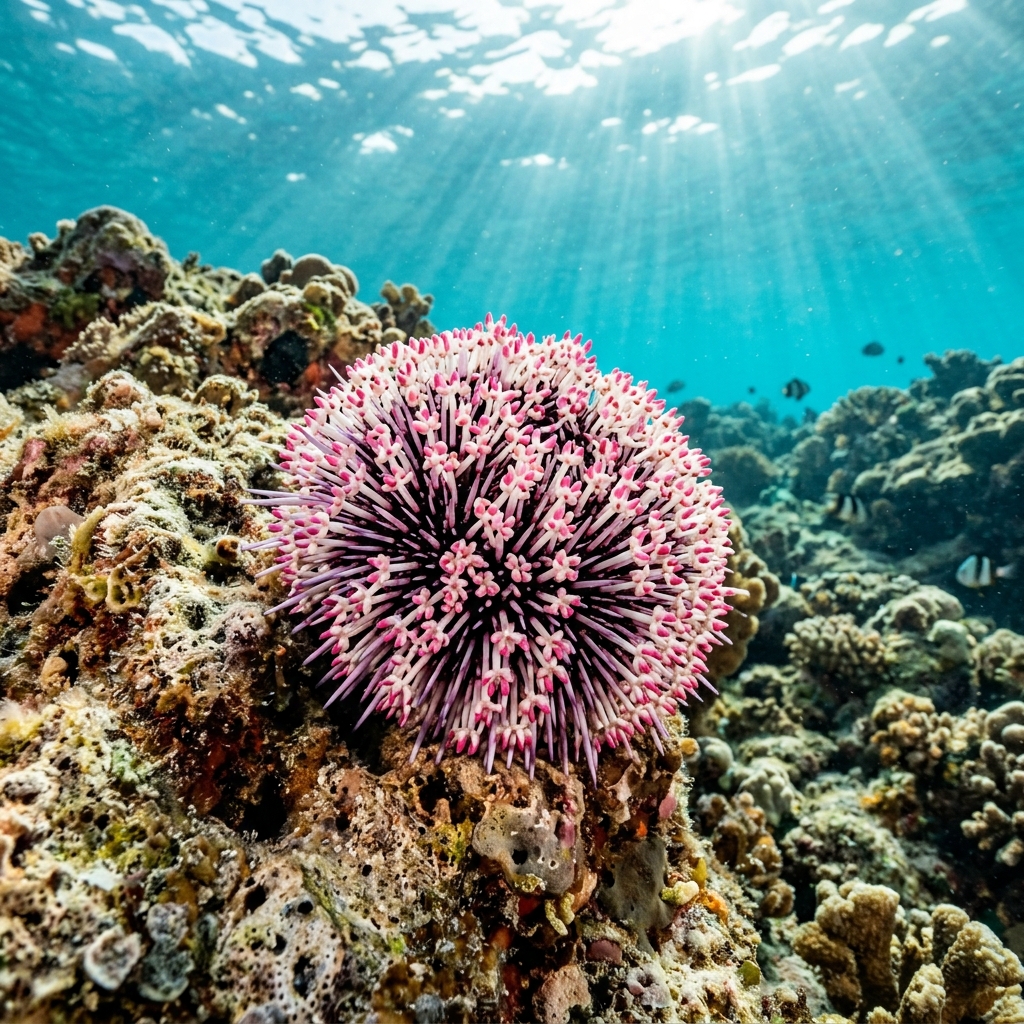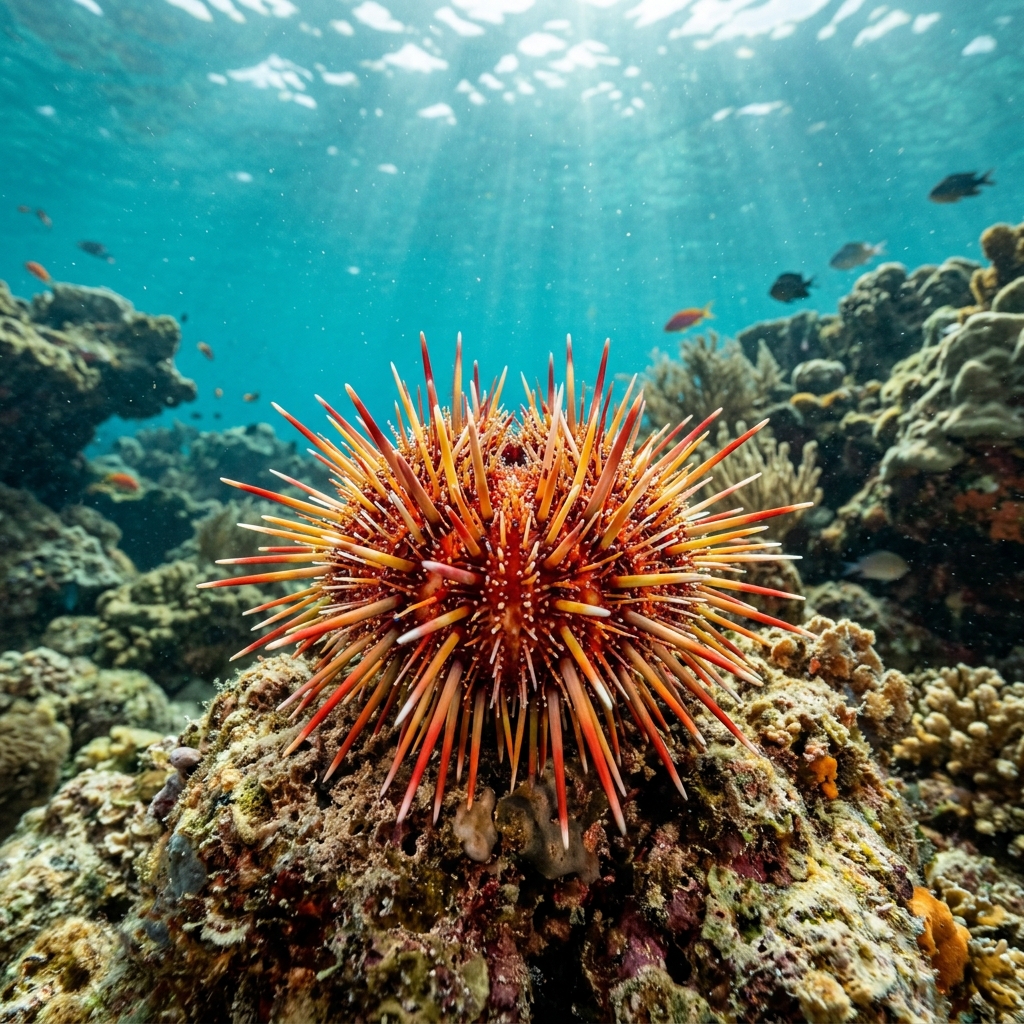
Heterocentrotus mamillatus
Spot the Slate Pencil Urchin in Hawaii, the Red Sea, and beyond. Thick, blunt spines make it unmistakable on tropical reefs year-round.
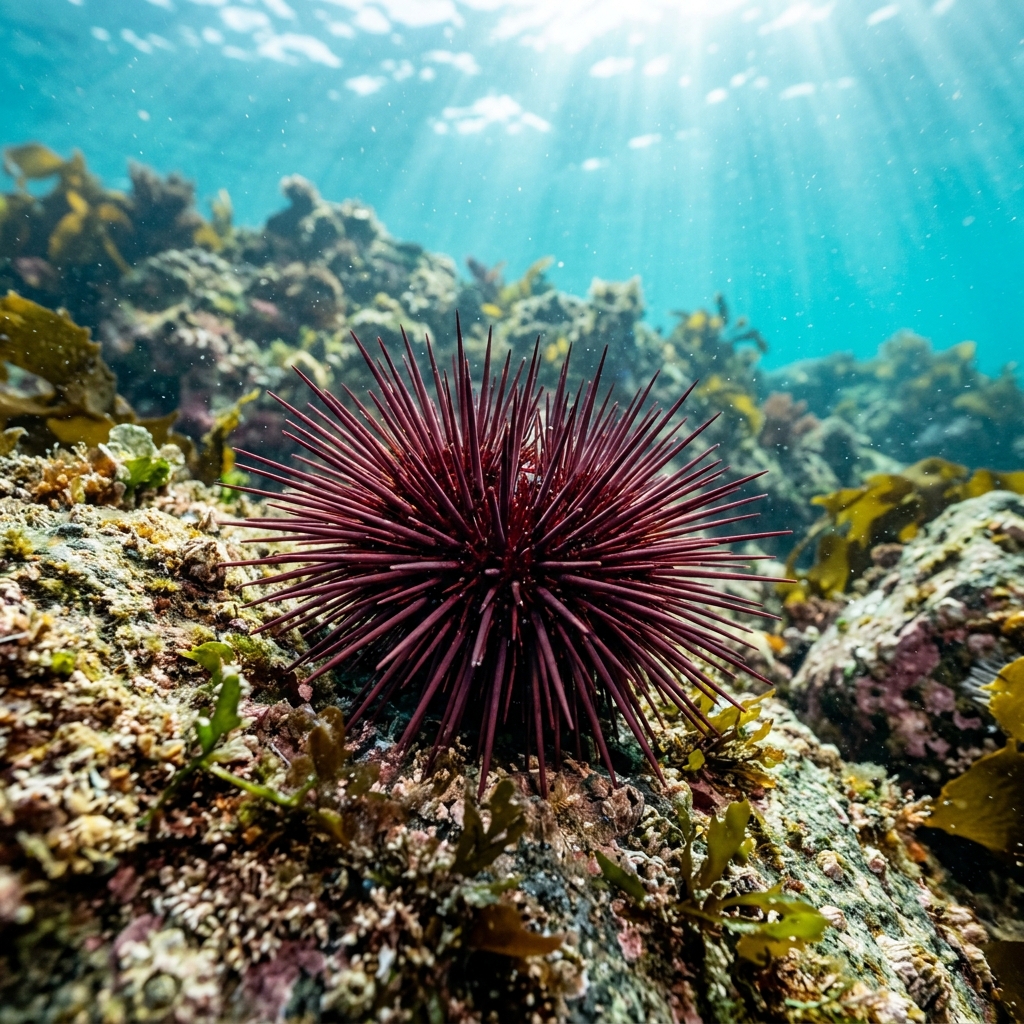
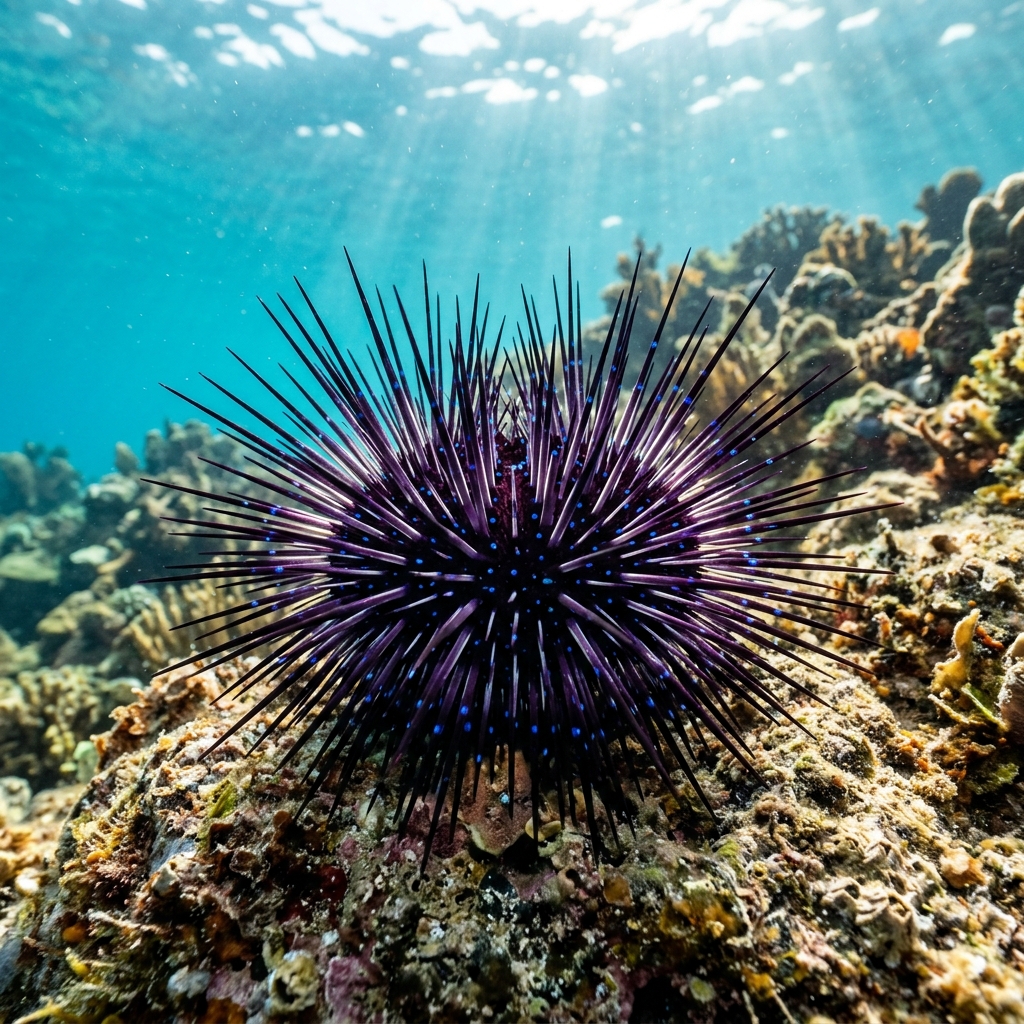
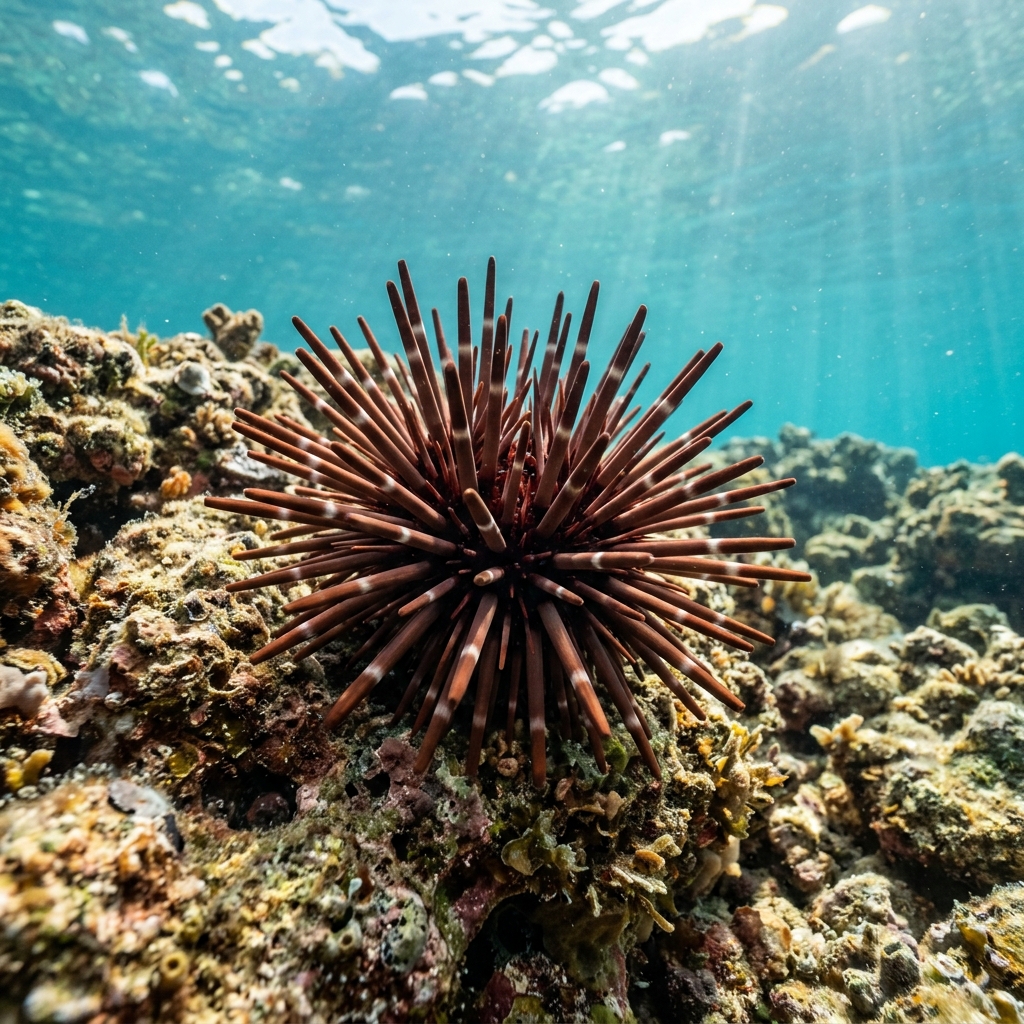
Those thick, club-like spines are the giveaway, unlike the needle-thin spines of most urchins, slate pencil urchin spines are blunt, rounded at the tip, and can be as wide as a pencil, which is exactly what they look like. Colouration ranges from reddish-brown and orange to pale pink or cream, often with banded patterns along each spine. The body (test) beneath is compact and rounded, and the spines are arranged in a relatively sparse, orderly pattern compared to more bristling urchin species.
You'll typically find one wedged into a coral crevice or tucked under a ledge, using its sturdy spines to brace itself firmly against the reef, a technique that makes it very difficult for predators to extract. It doesn't move far or fast, and largely ignores divers, so you can observe it closely without it reacting. Most active at night when it ventures out to graze on algae; daytime sightings are usually of a stationary animal in shelter.
Those broad spines aren't just for show, the slate pencil urchin actively uses them as levers, pushing against rock surfaces to wedge itself so securely into crevices that even determined predators like pufferfish struggle to dislodge it.
Present year-round with no concentrated season, which fits its preference for warm tropical water in the 24 to 27 °C range, conditions that hold steady on most reefs where it lives.
Most commonly logged in Hawaii and the Egyptian Red Sea, particularly around Sharm el Sheikh and Safaga, where it turns up across a wide spread of sites. Strong populations are also documented in Okinawa, Jordan's Aqaba region, the Seychelles, and the Maldives, making it a species you can reasonably search for across the Indo-Pacific and Red Sea.
Mapping where Slate Pencil Urchin is logged…
Hawaii and the Egyptian Red Sea (especially Sharm el Sheikh and Safaga) are the most reliably logged locations. You'll also find them in Okinawa, Jordan's Aqaba, the Seychelles, and the Maldives, broadly across Indo-Pacific and Red Sea reef systems.
Any time of year. Observations show no concentrated season, and the species is comfortable in the warm tropical water temperatures, around 24 to 27 °C, that persist year-round at its main sites.
Look for the spines, they are the defining feature. Thick, blunt, and rounded at the tip, they resemble chunky pencils rather than needles. Colouration is typically reddish-brown, orange, or cream, sometimes banded. No other common reef urchin has spines this wide and blunt.
No. The spines are thick and blunt rather than sharp or venomous, so they pose no significant risk to divers. Standard reef etiquette applies, don't handle or stand on them, but there's no specific hazard associated with this species.
The body (test) typically reaches around 6 to 8 cm in diameter, with spines adding considerable bulk around it. The overall impression underwater is of a compact, sturdy animal, noticeably chunkier than most urchins you'll encounter on a reef.
It uses its broad, strong spines as props, levering itself tightly against the rock. This wedging behaviour is an active defence strategy, once braced, the urchin is extremely hard to dislodge. It's one of the reasons you'll almost always spot it partially tucked into the reef rather than out in the open.
Site and sighting data is aggregated from diver logs, iNaturalist and GBIF. For taxonomy and conservation status:
Fire Urchin
1,415 sites