Asthenosoma spp.
Sitting exposed on rubble and sand across Luzon and Sulawesi, fire urchins glow in warm 24-29C water year-round. Here's how to spot one without touching it.
Safety warning
Contact with the spines causes a sharp, burning sting that can linger for hours, so treat any urchin sitting in the open as something to photograph, not touch. Watch your hand placement and fin kicks on rubble and sandy slopes where it commonly sits in plain sight, and brief buddies unfamiliar with the genus before the dive.
If you're stung
Venomous spinesGeneral first-aid guidance, not a substitute for professional medical care. In an emergency, call your local emergency number.
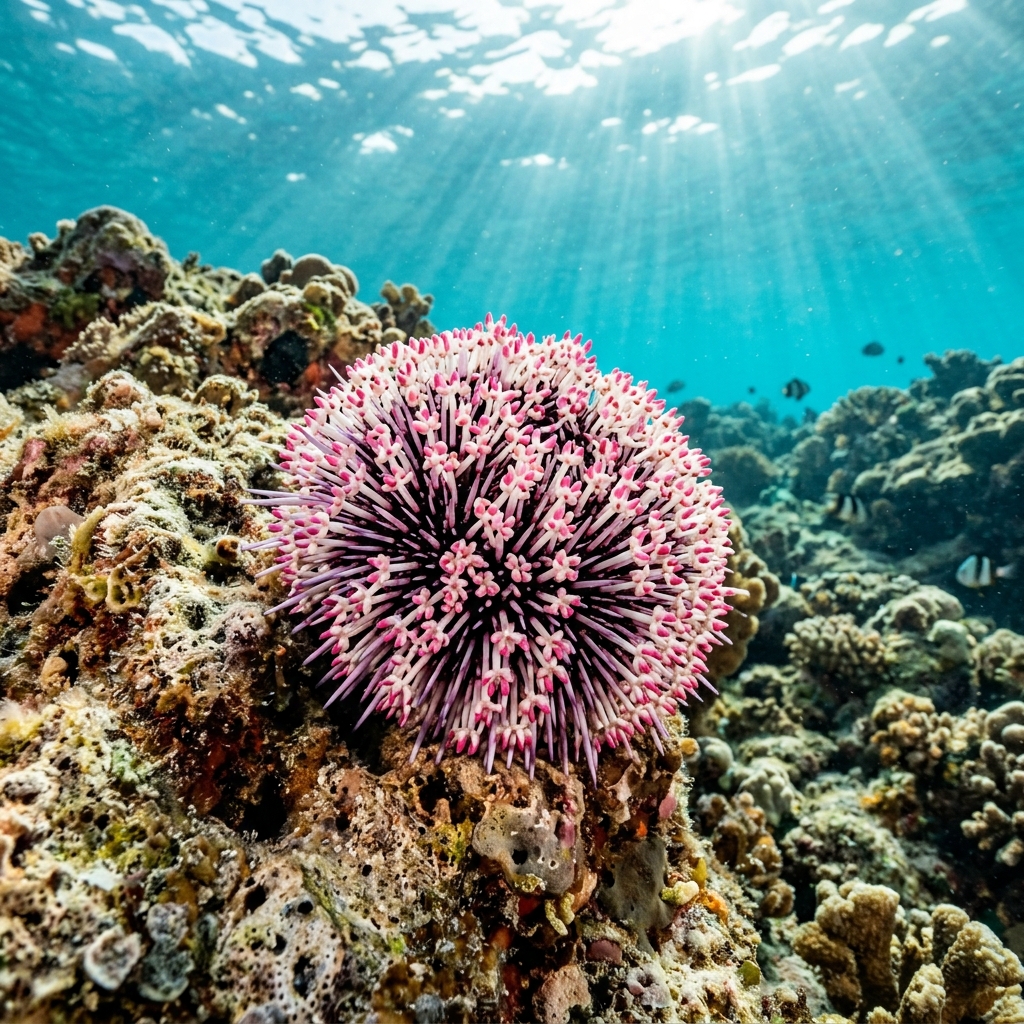
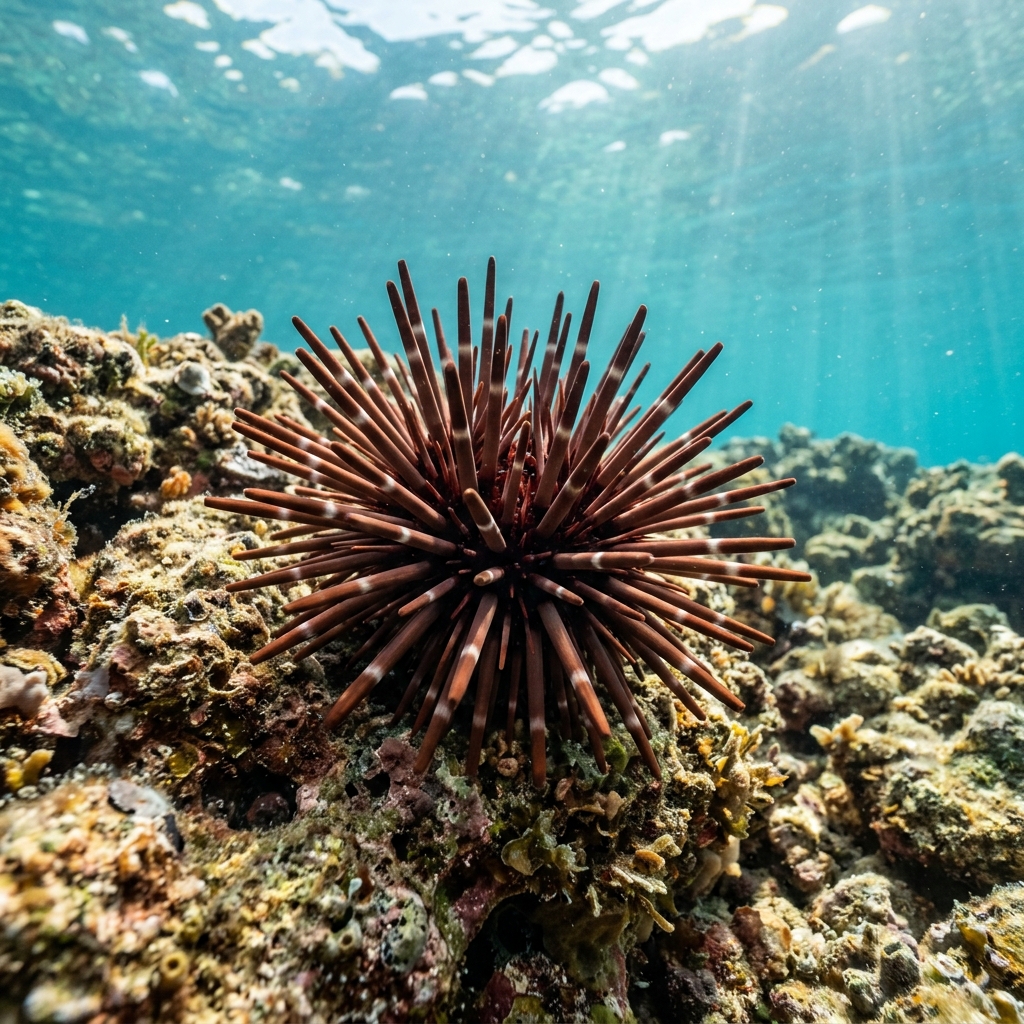
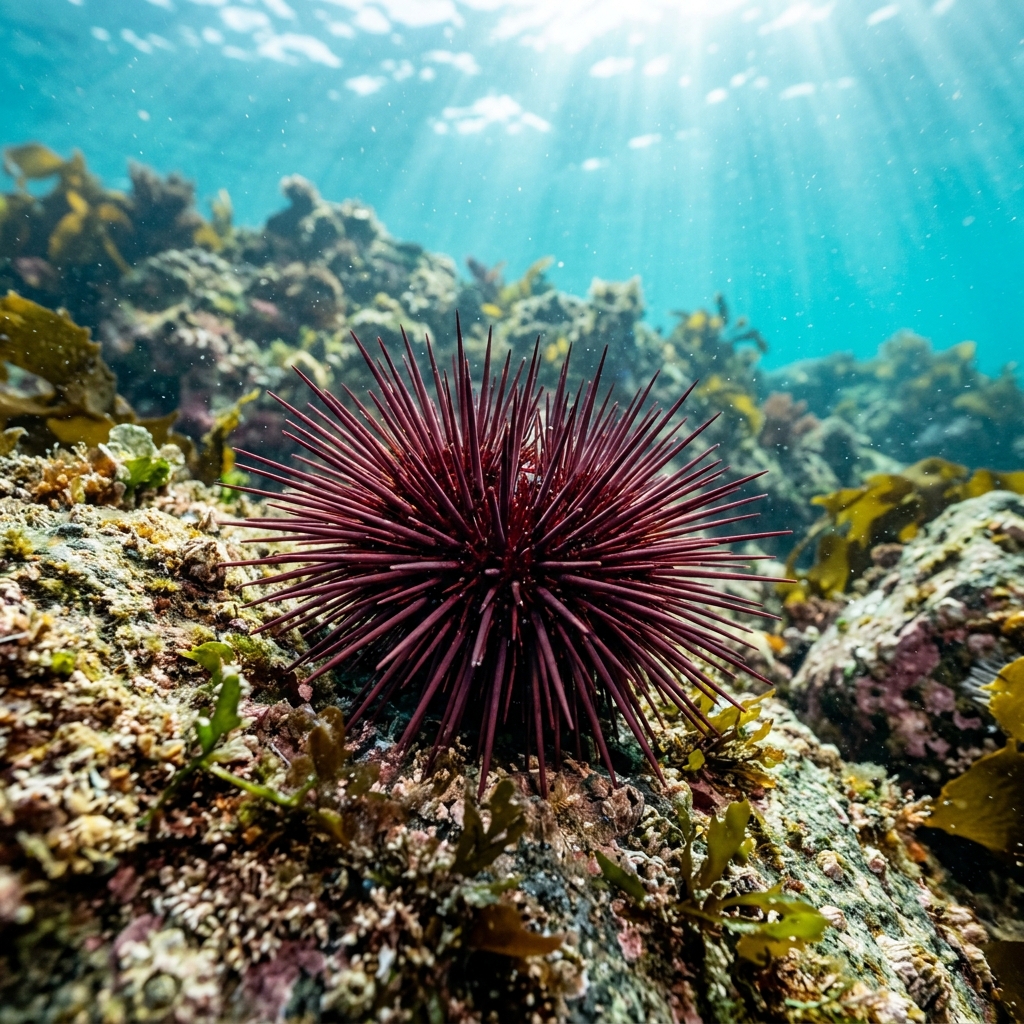
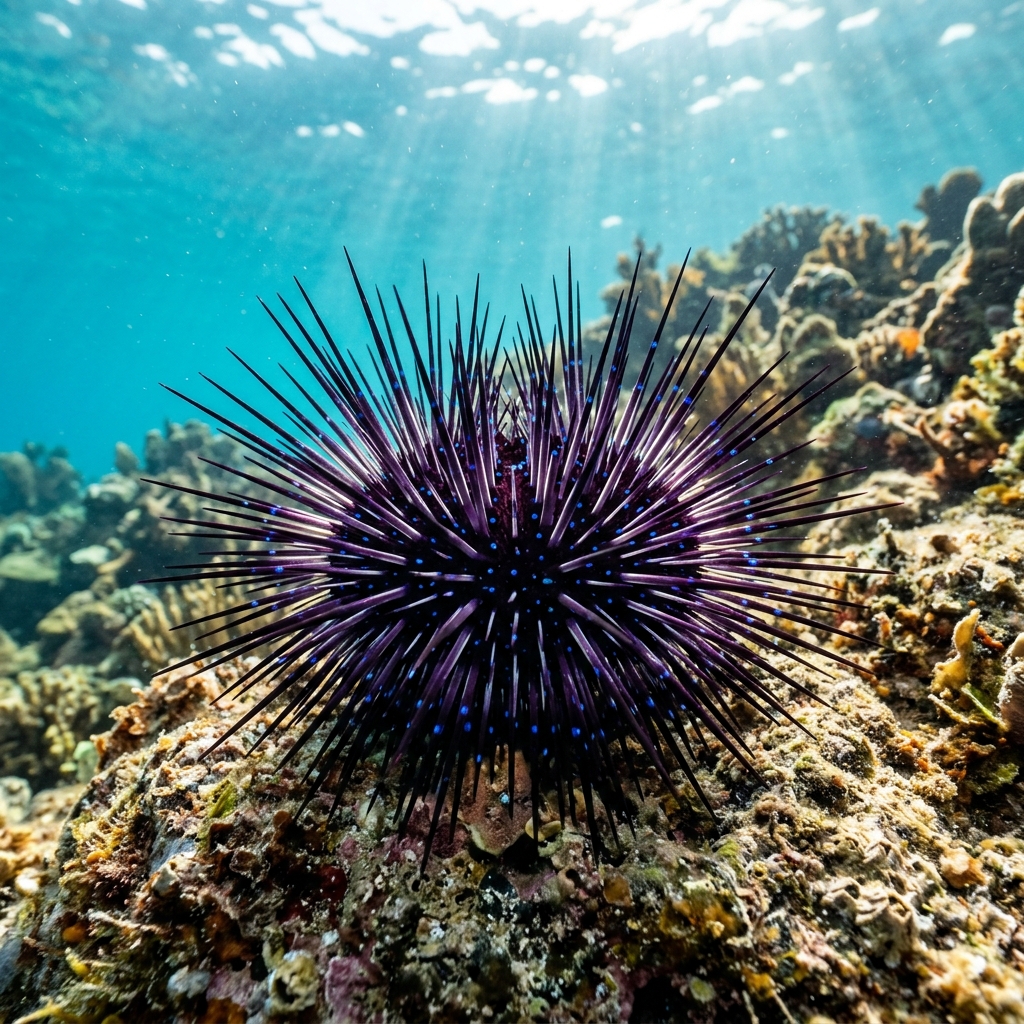
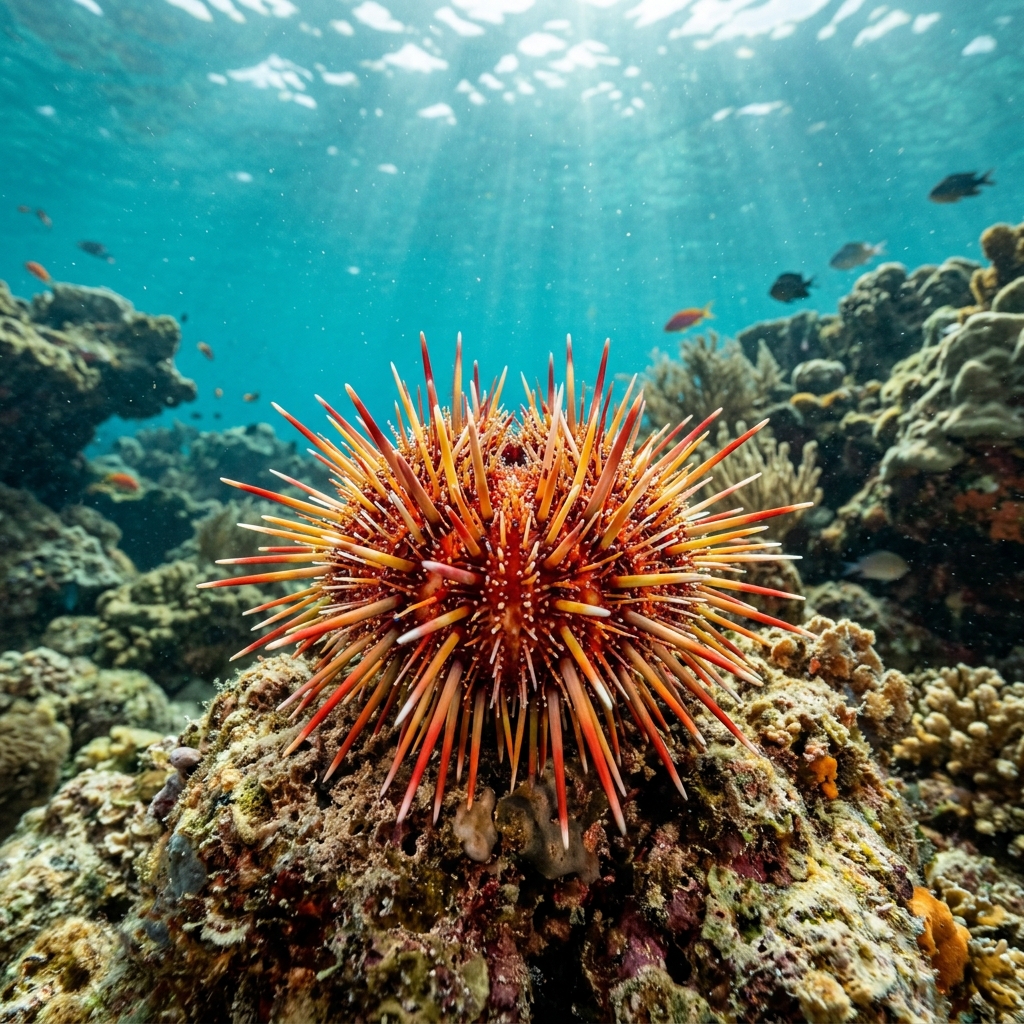
Look for a rounded, softish-bodied urchin covered in orange to reddish-brown spines, each often tipped with a small venom sac that gives the spine a bulbous look under torchlight. Unlike most urchins, this genus sits fully exposed on sand, rubble, or coral rather than wedged into a crevice, so the whole rounded body is usually visible at once. Some individuals show iridescent blue-green flecks between the spines, a detail that separates them from plainer species nearby.
Divers usually find it parked in the open on rubble slopes or sandy patches in daylight, moving so little on its tube feet that it barely counts as active. It does not bolt for cover when a diver drifts close, instead relying on its spines to make the point that it should be left alone. That daytime, out-in-the-open habit makes it easier to spot than most urchins, which tend to hide until dark.
Those swollen spine tips are venom sacs, not just decoration, and a light brush can deliver a sting well out of proportion to the animal's slow, harmless-looking posture.
No clear season shows up in the sighting data, and with a comfortable range of 24.3 to 29.4C it sits happily on tropical reefs all year round. Plan around the destination's general dive season rather than chasing a window for this animal specifically.
Reef neighbours a diver could mistake it for. Use the identification notes above to tell them apart.
Most reliably logged across the Philippines, especially Luzon, Palawan, Visayas, and Mindanao, with strong numbers also coming out of Sulawesi in Indonesia and Sabah in Malaysia. Queensland in Australia and Thailand also produce regular sightings, and it turns up as far west as the Red Sea coast of Egypt and Saudi Arabia.
Mapping where Fire Urchin is logged…
The Philippines is the strongest spot, particularly Luzon, Palawan, Visayas, and Mindanao, with Sulawesi in Indonesia and Sabah in Malaysia close behind. They also show up regularly in Queensland, Thailand, and the Red Sea coast of Egypt and Saudi Arabia.
There's no detected season for this genus, and it tolerates a wide warm-water range of roughly 24 to 29C, so it's a year-round sighting on tropical reefs rather than something tied to a particular month.
Yes. Their spines carry venom and deliver a painful sting on contact, even though the animal itself moves slowly and makes no attempt to flee. Give it space and never handle it, even for a photo.
Look for a rounded, soft-bodied urchin with orange-red spines that have slightly swollen, venom-sac tips, often flecked with iridescent blue. It sits fully exposed on sand or rubble in daylight rather than hiding in a crevice.
Exact size data isn't well documented for this genus, but they read as medium to fairly large urchins underwater, noticeably bulkier and softer-bodied than typical reef urchins.
Site and sighting data is aggregated from diver logs, iNaturalist and GBIF. For taxonomy and conservation status:
Red Sea Urchin
1,068 sites