Strongylocentrotidae
Red sea urchins thrive in cold Atlantic and North Sea waters. Find them along Brittany, Southwest Ireland, and South Coast England reefs year-round.
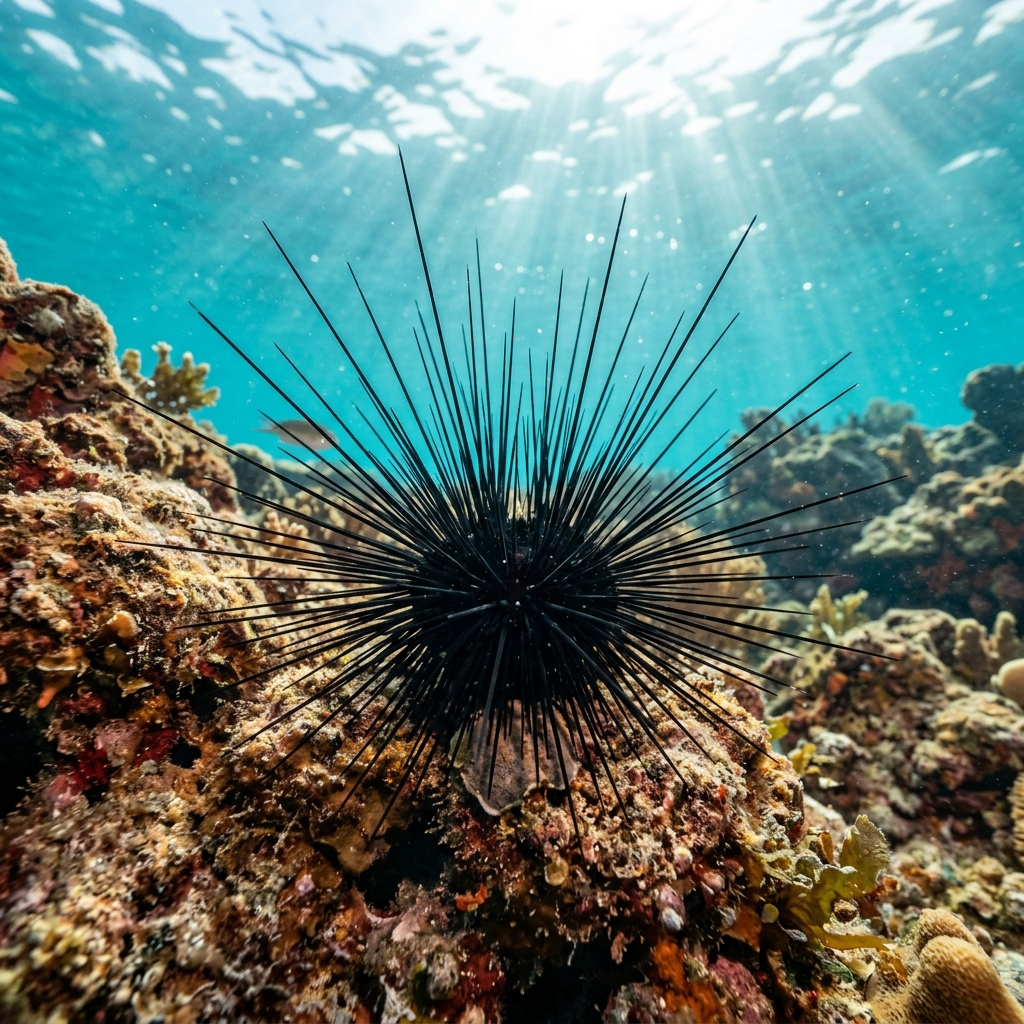
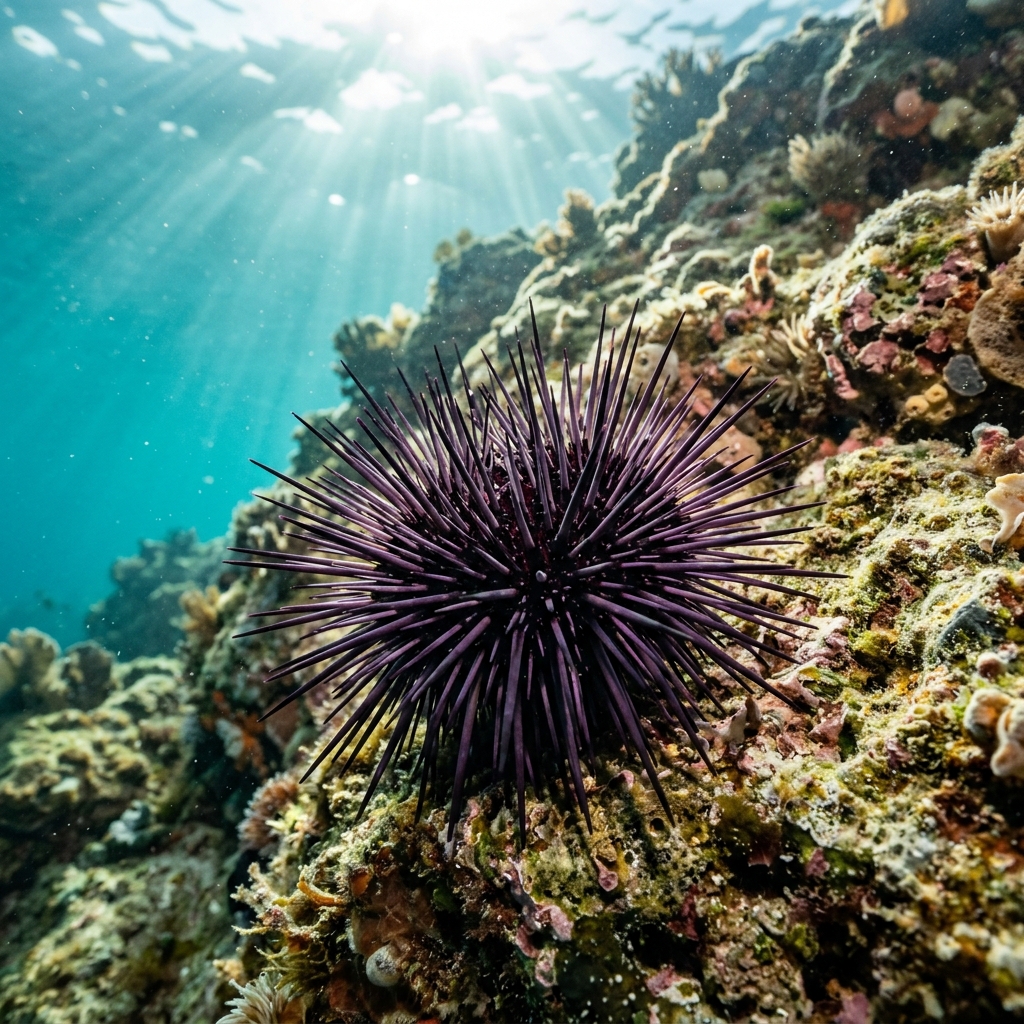
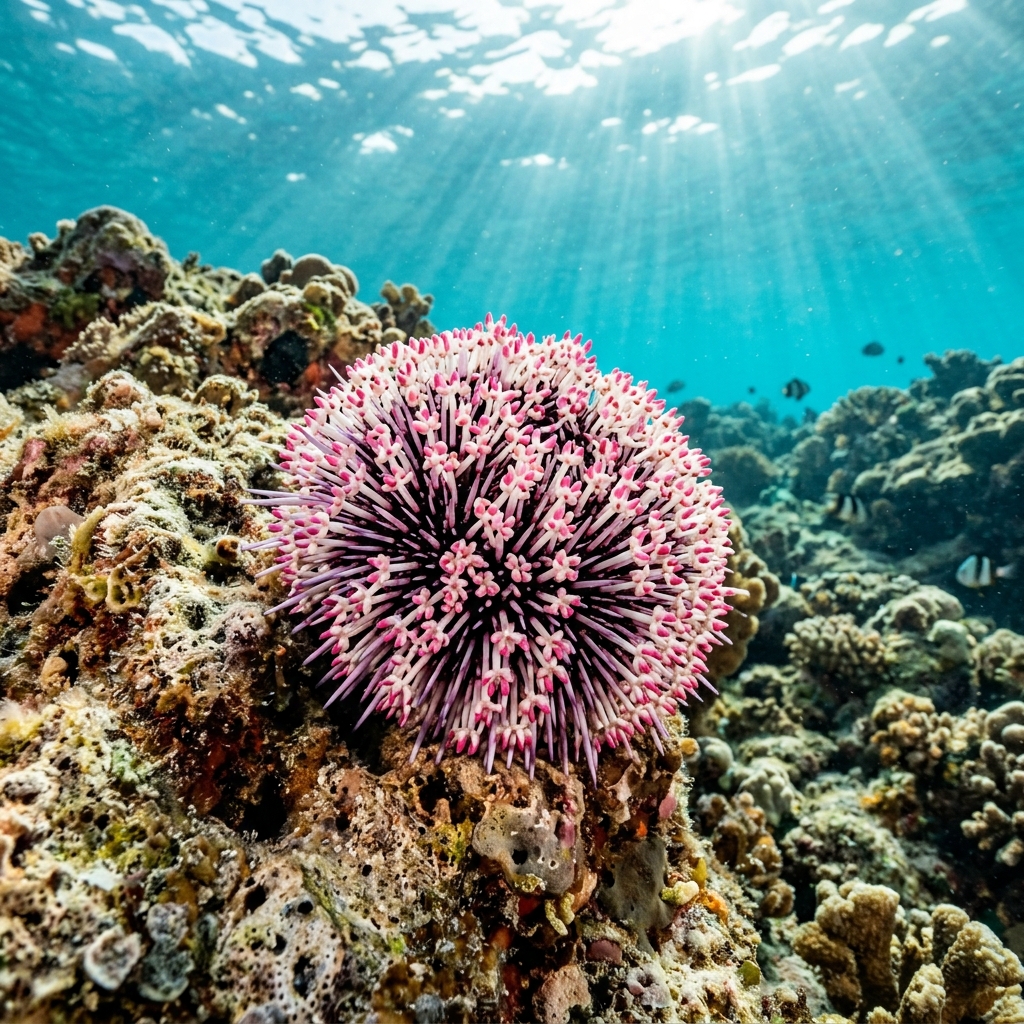
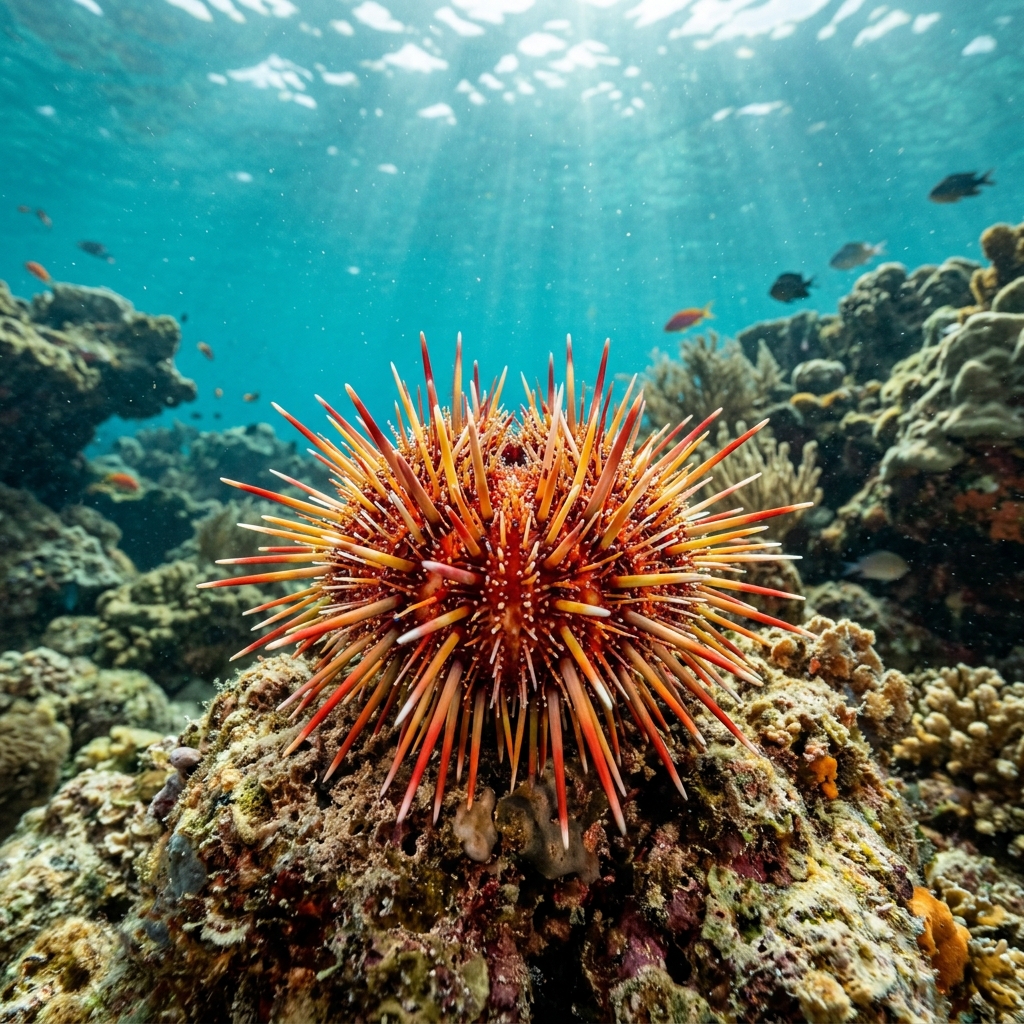
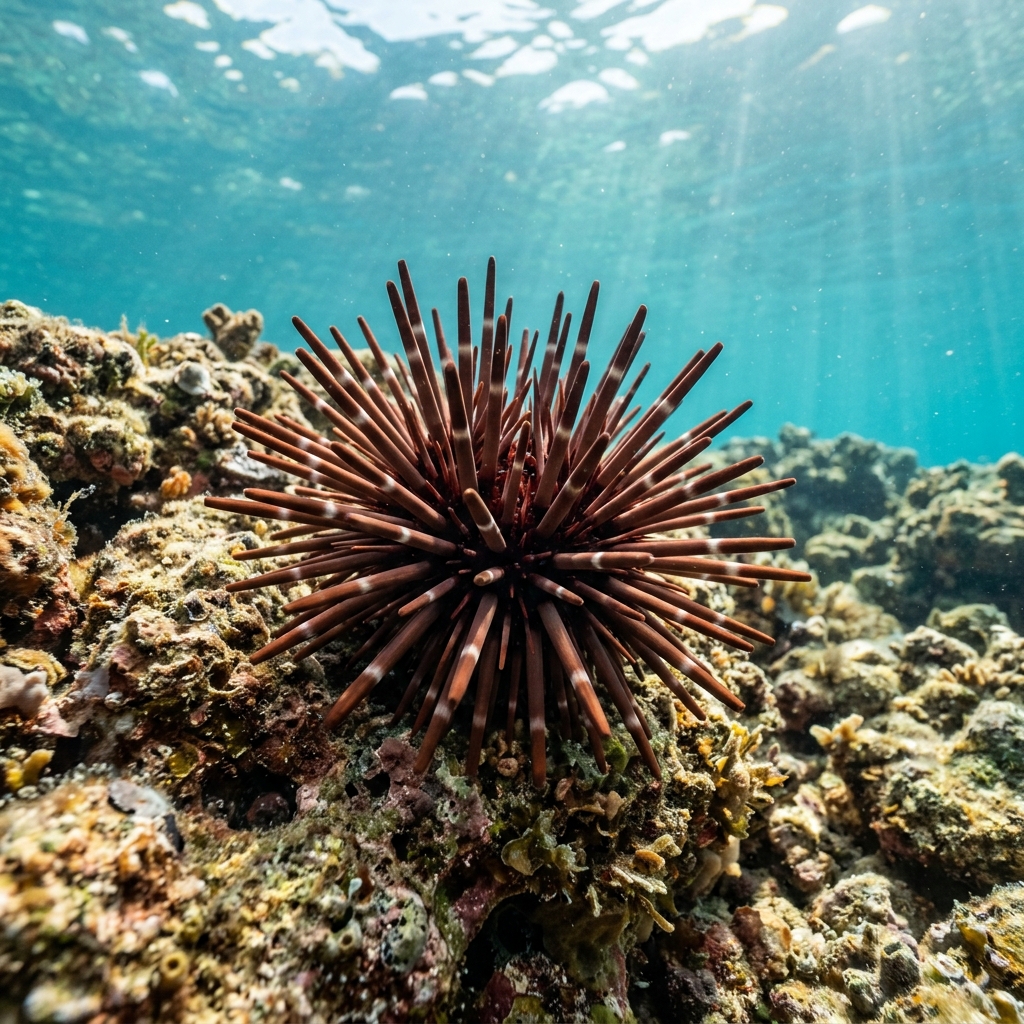
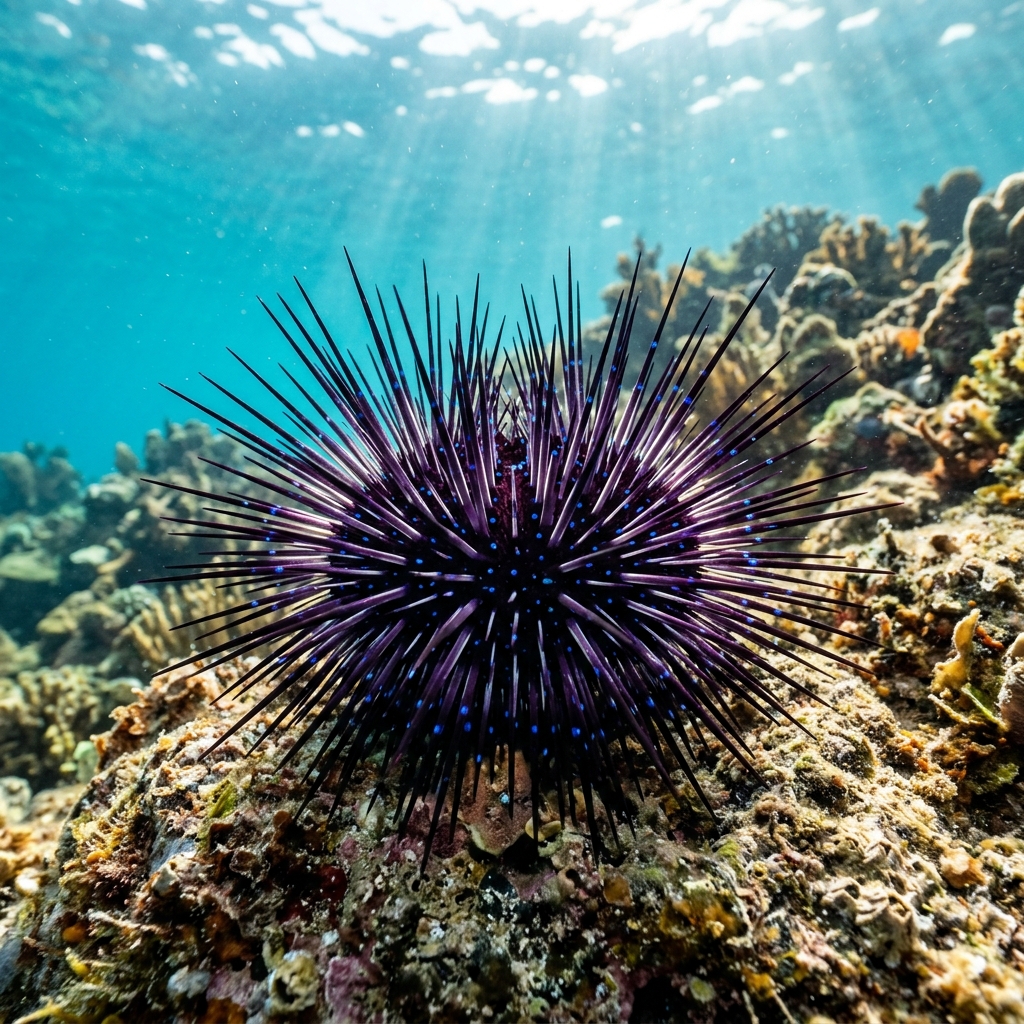
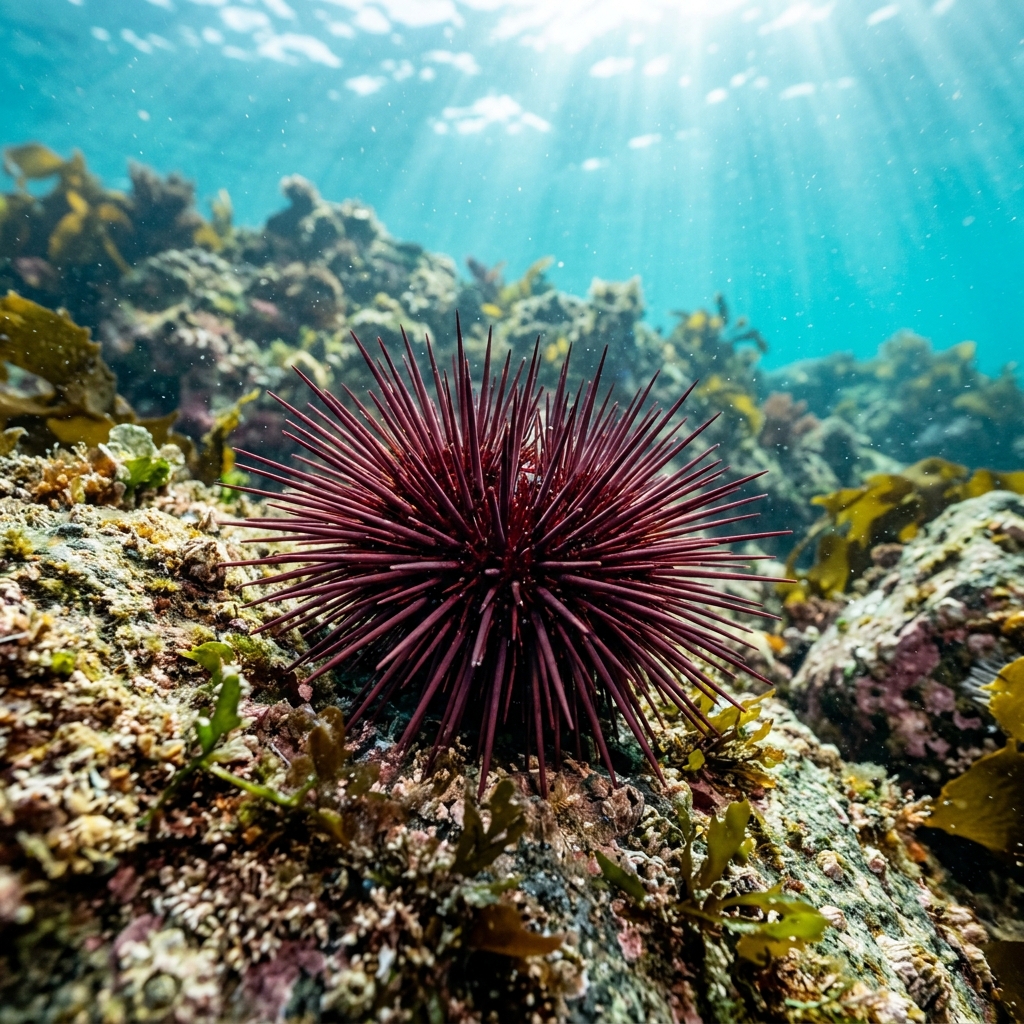
Members of this family are rounded, dome-shaped urchins covered in a dense array of relatively long spines that range from deep red to burgundy, with the test (the hard shell beneath the spines) often showing lighter reddish or pinkish tones. Underwater, the rich red colouration immediately sets them apart from the more common purple or black sea urchins you may encounter on the same rocky reef. Look for them nestled into crevices or grazing openly on rock surfaces encrusted with coralline algae, where their bold colour contrasts sharply against the pale substrate.
You will typically find red sea urchins sitting tight against rocky surfaces or tucked into crevices, using their spines to wedge themselves securely in surge-prone areas. They are slow-moving grazers, scraping encrusting algae and organic material from rock with their five-part mouthparts (called Aristotle's lantern) on the underside. They generally ignore divers entirely, making close observation straightforward as long as you watch your buoyancy around them.
Red sea urchins are among the longest-lived invertebrates on the planet, with some individuals documented at well over 100 years old, ageing very slowly with little apparent decline in reproductive output.
Available data does not point to a distinct season, so these urchins can be treated as a year-round target. Their observed water temperature niche of 12 to 16.5 degrees Celsius fits the temperate coastal reefs of the northeastern Atlantic and the US East Coast throughout the year.
Reef neighbours a diver could mistake it for. Use the identification notes above to tell them apart.
The range model places this family most strongly across the northeastern Atlantic, with the greatest concentration of sites in the United States, the United Kingdom, and Ireland. In Europe, Brittany and Normandy in France, the Southwest Coast of Ireland, and South Coast England stand out as the most prominent regions, alongside Zeeland in the Netherlands. North American divers can look for them across the Great Lakes and Northeast and Florida and the Southeast regions.
Mapping where Red Sea Urchin is logged…
Red sea urchins are most strongly associated with temperate rocky reefs in the northeastern Atlantic. Top regions include Brittany and Normandy in France, the Southwest Coast of Ireland, and South Coast England in the UK. North American divers find them across the Great Lakes and Northeast as well as Florida and the Southeast.
There is no clearly defined peak season in the available data, so they can be treated as a year-round sighting. Their preferred water temperature of roughly 12 to 16.5 degrees Celsius matches the conditions found on temperate Atlantic reefs in all seasons.
The deep red to burgundy spine colour is the key marker. Look for a rounded, dome-shaped urchin with densely packed, medium-length spines sitting on rocky, algae-covered reef. The red colouration distinguishes them from the far more common purple or black urchin species sharing the same habitat.
Red sea urchins are not considered dangerous to divers. Their spines can cause discomfort if you kneel or place a hand on them, but sensible buoyancy control removes any real risk. Simply avoid contact and they pose no threat.
Red sea urchins are remarkable for their extraordinary longevity. Some individuals have been documented living well over 100 years, making them among the longest-lived invertebrates known to science. They show few signs of biological ageing even at advanced ages.
Site and sighting data is aggregated from diver logs, iNaturalist and GBIF. For taxonomy and conservation status:
Fire Urchin
1,415 sites