Diadema spp.
Jet-black spines wedged into reef crevices from Florida to the Yucatán, here's where and when divers actually run into long-spined sea urchins.
Safety warning
Contact means brittle, barbed spines snapping off under the skin, causing a sharp stinging pain that can linger and sometimes gets infected if fragments aren't removed. Most injuries happen from bracing a hand against reef in low light or brushing against one tucked under a ledge, so watch your buoyancy and hand placement, especially on night dives.
If you're stung
Venomous spinesGeneral first-aid guidance, not a substitute for professional medical care. In an emergency, call your local emergency number.
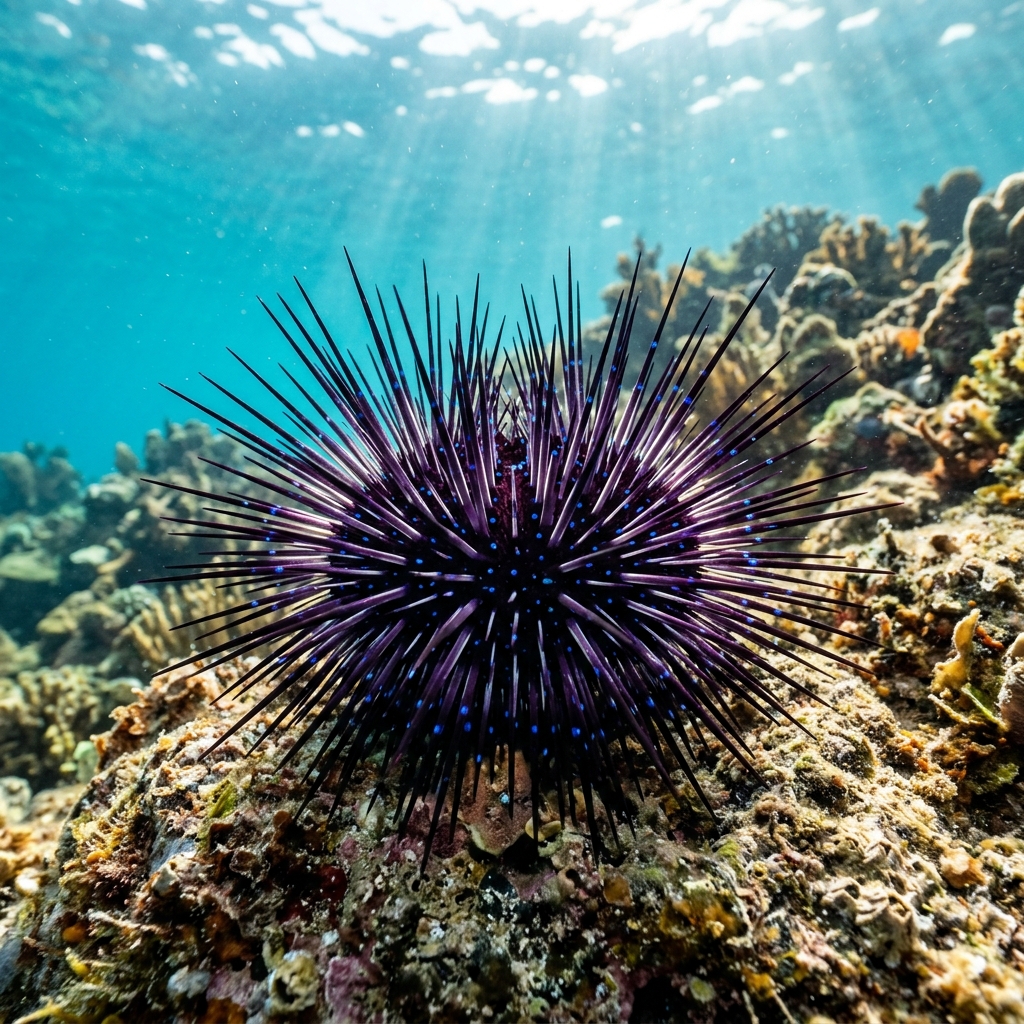
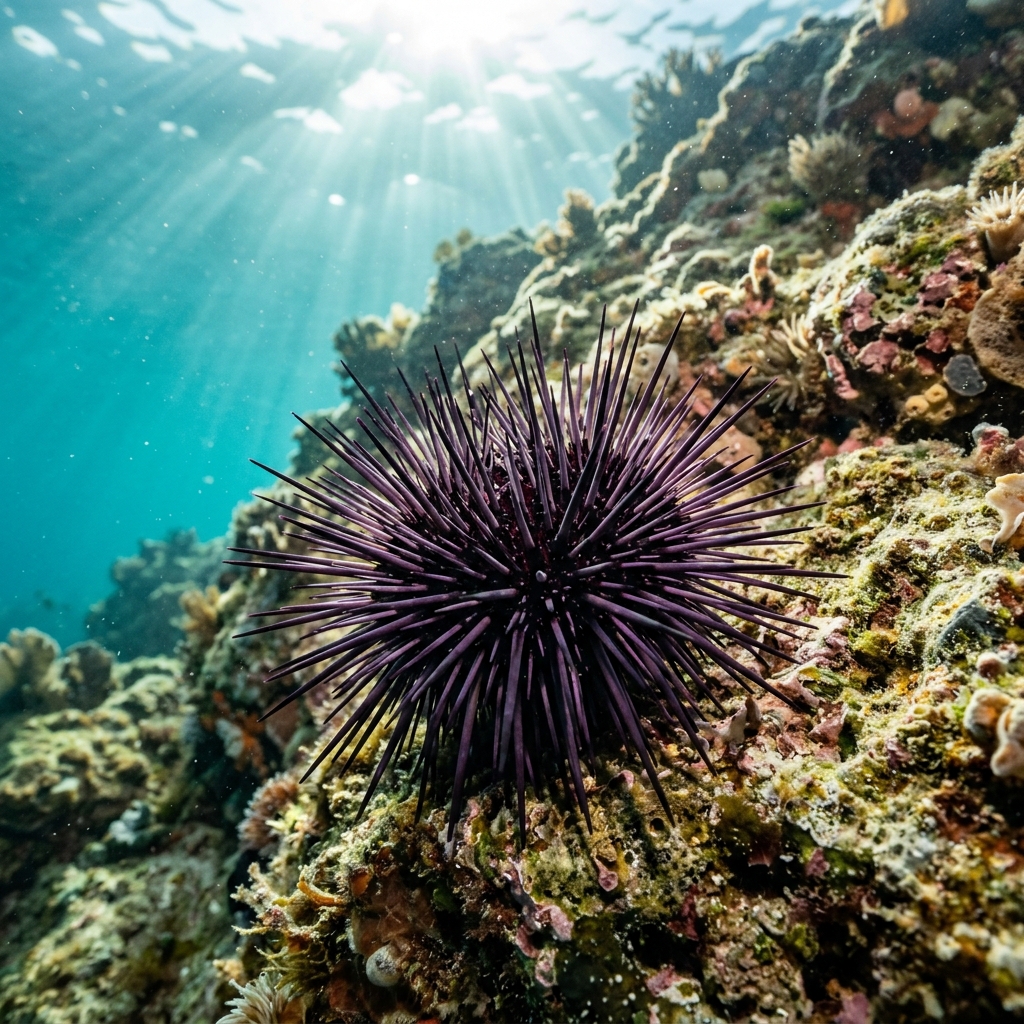
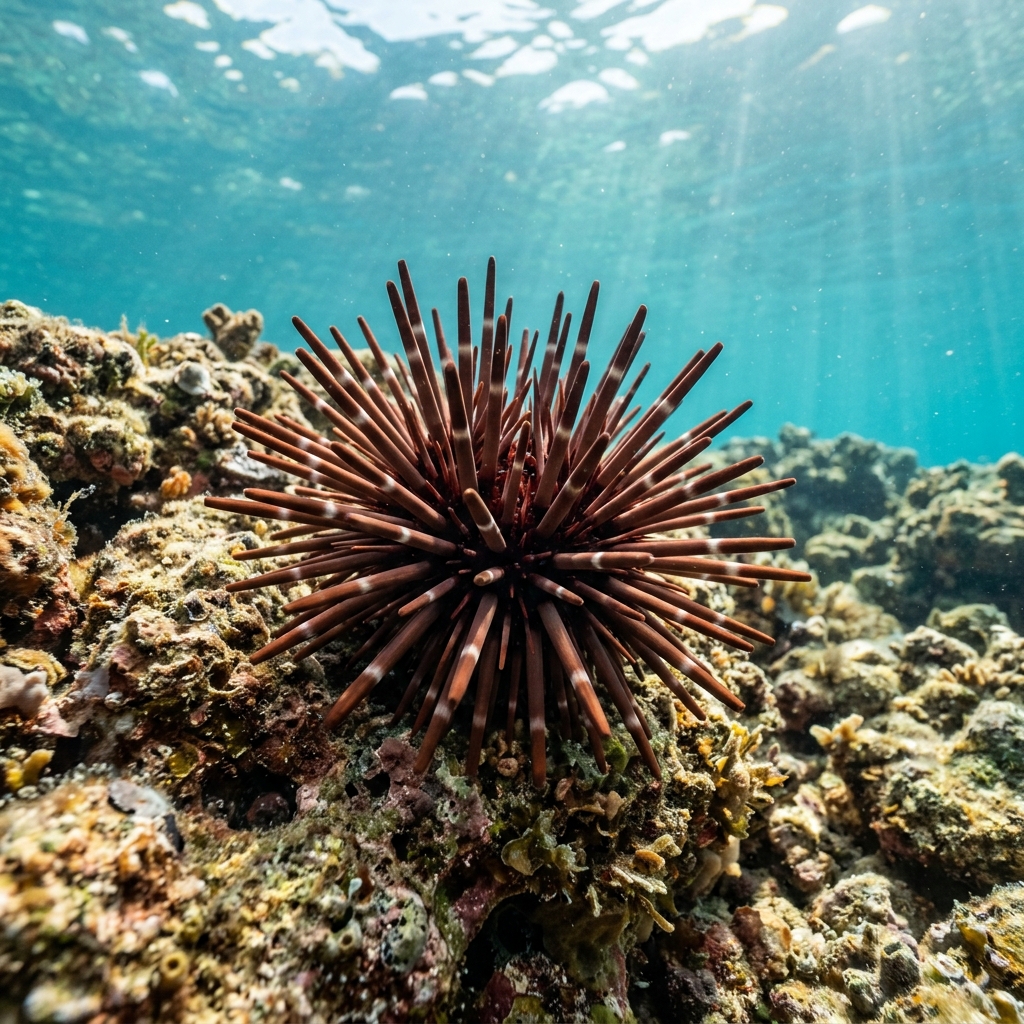
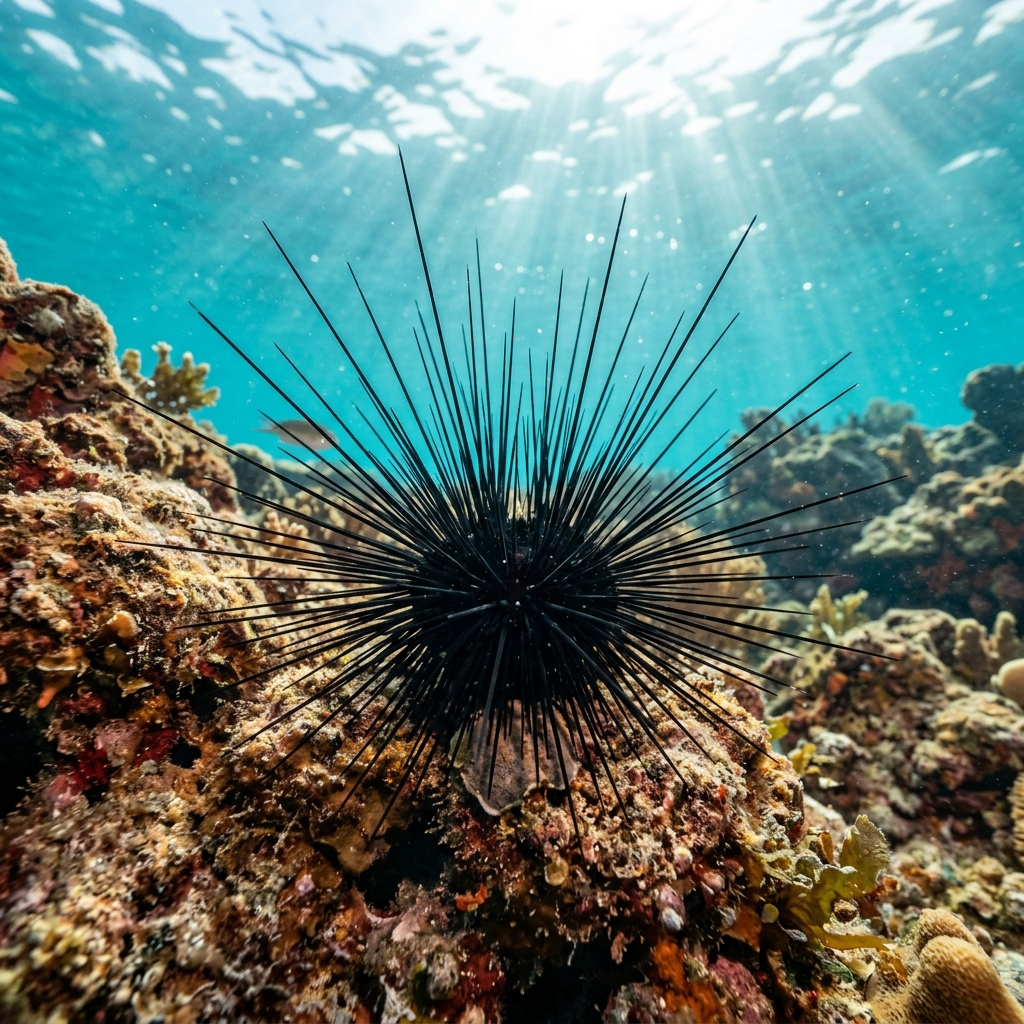
Look for a dark, ball-shaped test bristling with long, needle-thin spines that can extend well beyond the body, often waving slightly with the current. Adults are usually uniform black or deep brown and are found wedged into a crevice or ledge with only the spine tips visible in daylight. Juveniles are easier to overlook underwater because they show pale banding along the spines and a lighter-coloured test, quite different from the solid dark adult look.
By day you'll usually find it tucked into a crevice, under a ledge, or wedged between coral heads with its spines fanned outward, doing little more than sitting tight. Come back at night and it's a different animal: out grazing across open reef on algae and organic film. It largely ignores divers unless you crowd it, at which point it will slowly rotate its spines toward whatever's bothering it, which is your cue to back off.
The spine-fanning response is a purely mechanical defence, not an attack; it's just orientating its sharpest points toward a perceived threat, which is exactly why bumping into one on a night dive goes badly for the diver, not the urchin.
Comfortable across a broad 22.8 to 29.1C range, so it's on the reef year-round rather than tied to a single season. Where seasonal logs exist in the Northern Hemisphere, sightings tick up in April to May and again July to September, likely reflecting when divers are in the water rather than a change in the animal itself.
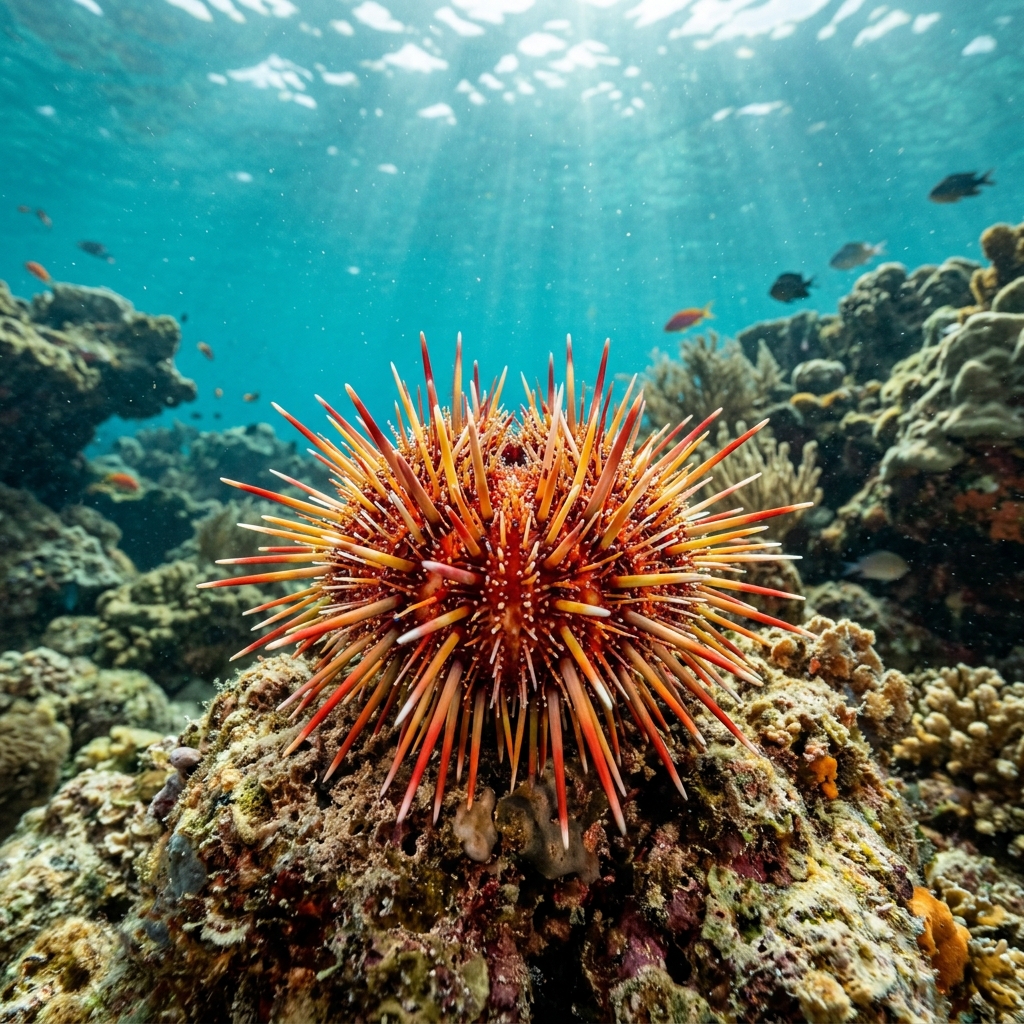
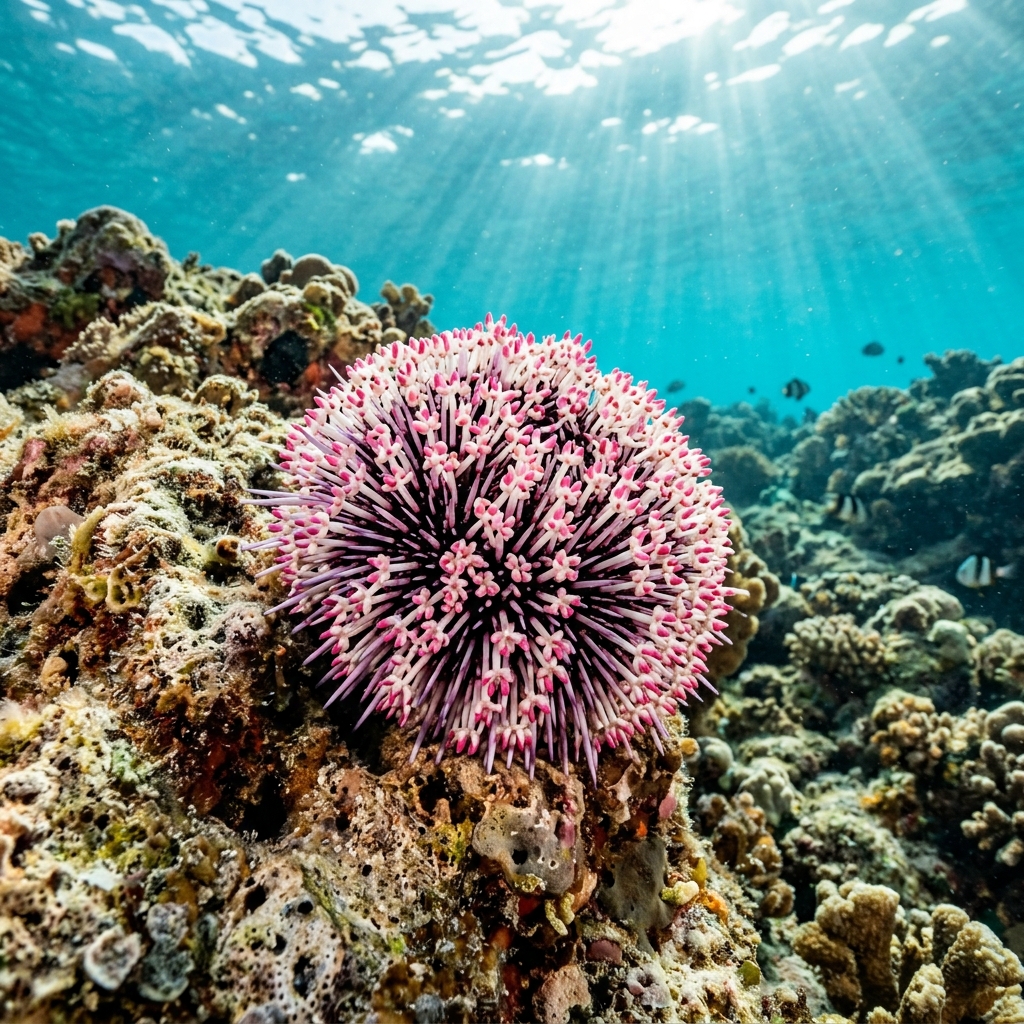
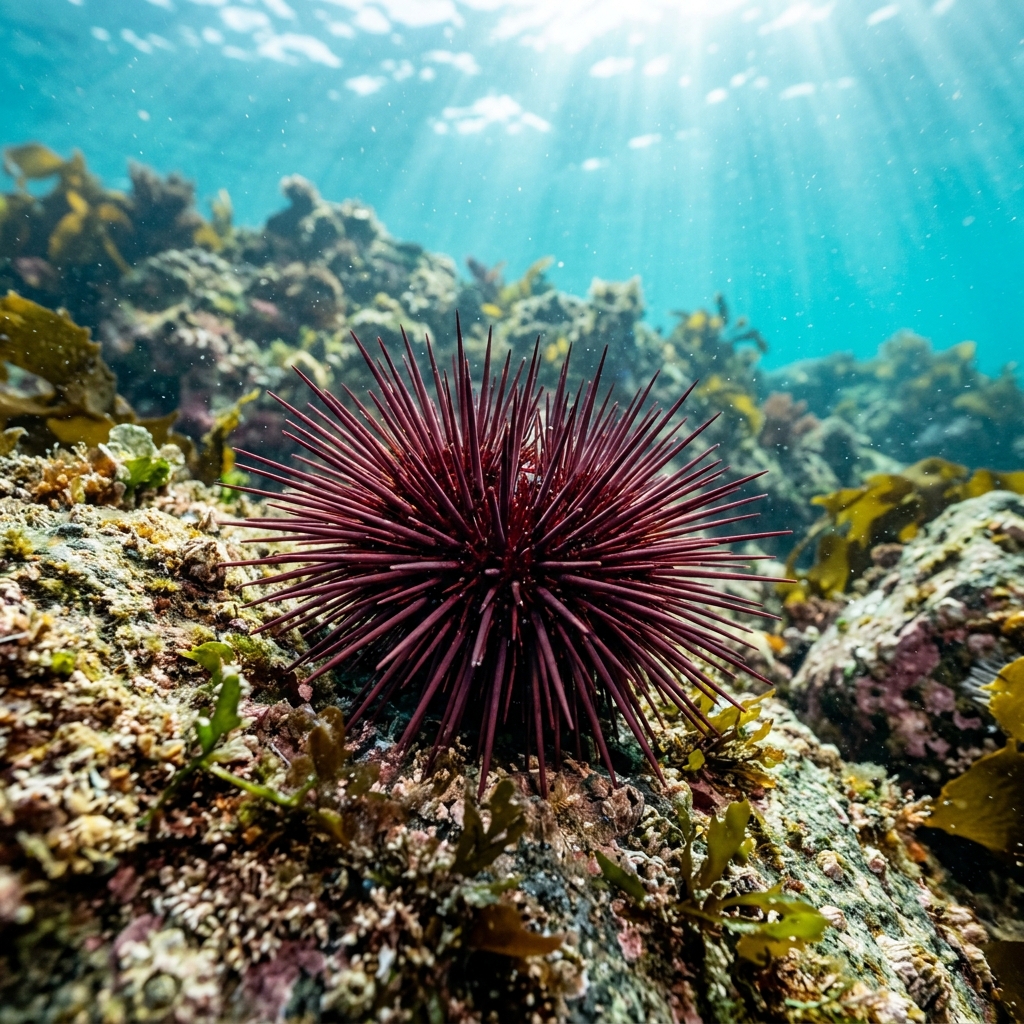
Reef neighbours a diver could mistake it for. Use the identification notes above to tell them apart.
This is a genus turning up on reefs worldwide, with the strongest logging out of the United States, the Philippines, Mexico, Indonesia, Thailand, Malaysia, Maldives and Australia. Regionally it's most reliably found in Florida, the Yucatán Peninsula, Malaysia's East Coast, the Visayas, and the Northern Atolls of the Maldives, plus a strong showing in Honduras's Bay Islands and Hawaii.
Mapping where Long-spined Sea Urchin is logged…
They're widely logged across Florida, the Yucatán Peninsula in Mexico, Malaysia's East Coast, the Philippine Visayas, and the Maldives' Northern Atolls, with further strong records in Honduras's Bay Islands and Hawaii.
They're present year-round on reefs within their 22.8 to 29.1C comfort range, so there's no strict season. Logged sightings do rise slightly in April to May and July to September in Northern Hemisphere spots.
Yes, though only through contact. Their brittle spines snap off easily in skin and cause a sharp, lingering sting, so the real risk is bracing a hand on reef or brushing a crevice in low visibility or at night.
Look for a dark test covered in long, thin spines that project well past the body, usually poking out from a crevice or ledge during the day. Juveniles show pale banding on the spines rather than the solid black of adults.
They shelter in crevices by day with spines fanned as a passive deterrent, then move out across open reef after dark to graze on algae and organic film. This day-hidden, night-active pattern is a big part of why night divers see far more activity from them than day divers.
Site and sighting data is aggregated from diver logs, iNaturalist and GBIF. For taxonomy and conservation status:
Red Sea Urchin
1,068 sites