Astropyga radiata
Spot the Blue-spotted Urchin in the Visayas, Phuket, or Zanzibar. Warm 27-29°C reefs, year-round presence, and those iridescent blue spots make it unmistakable.
Safety warning
The spines carry venom and snap off easily in the skin. Do not touch it, and never rest a hand or knee on the reef near one; the spines drive in on the lightest contact.
If you're stung
Venomous spinesGeneral first-aid guidance, not a substitute for professional medical care. In an emergency, call your local emergency number.
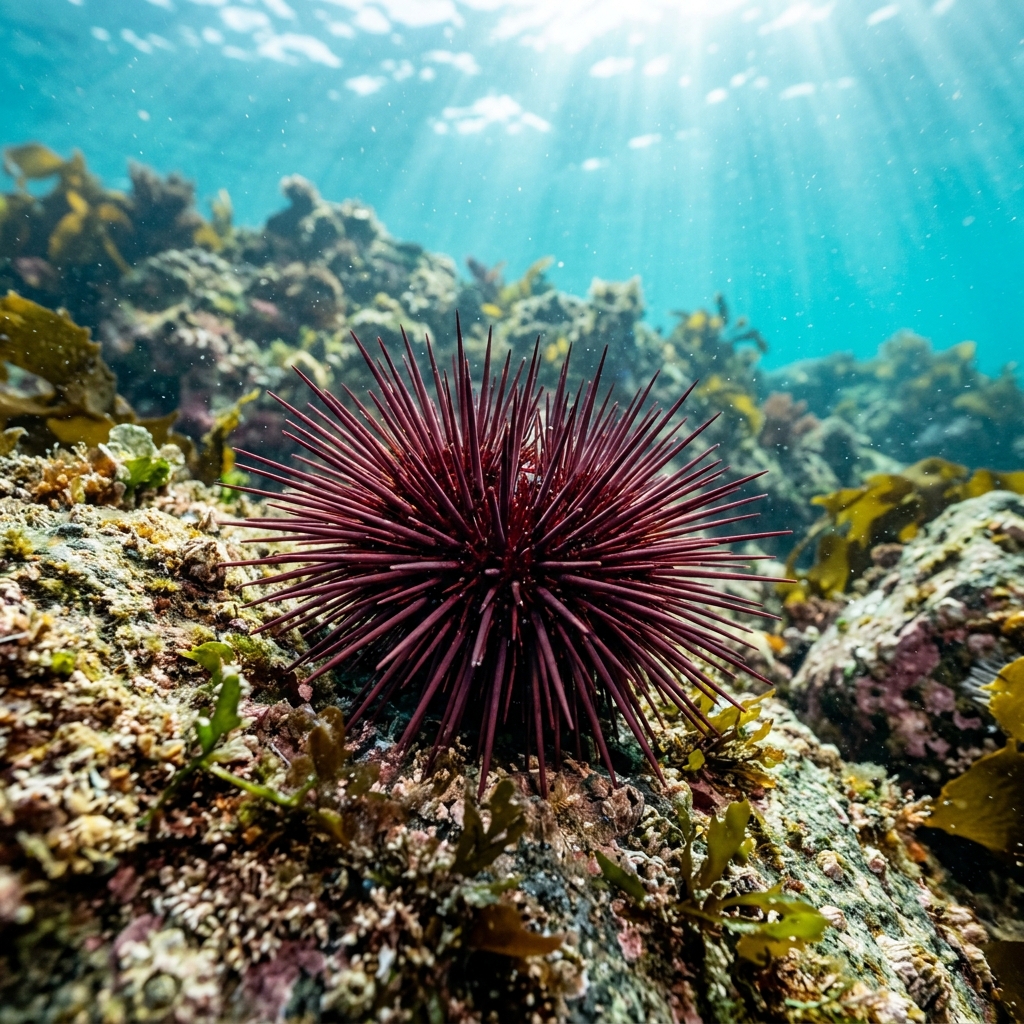
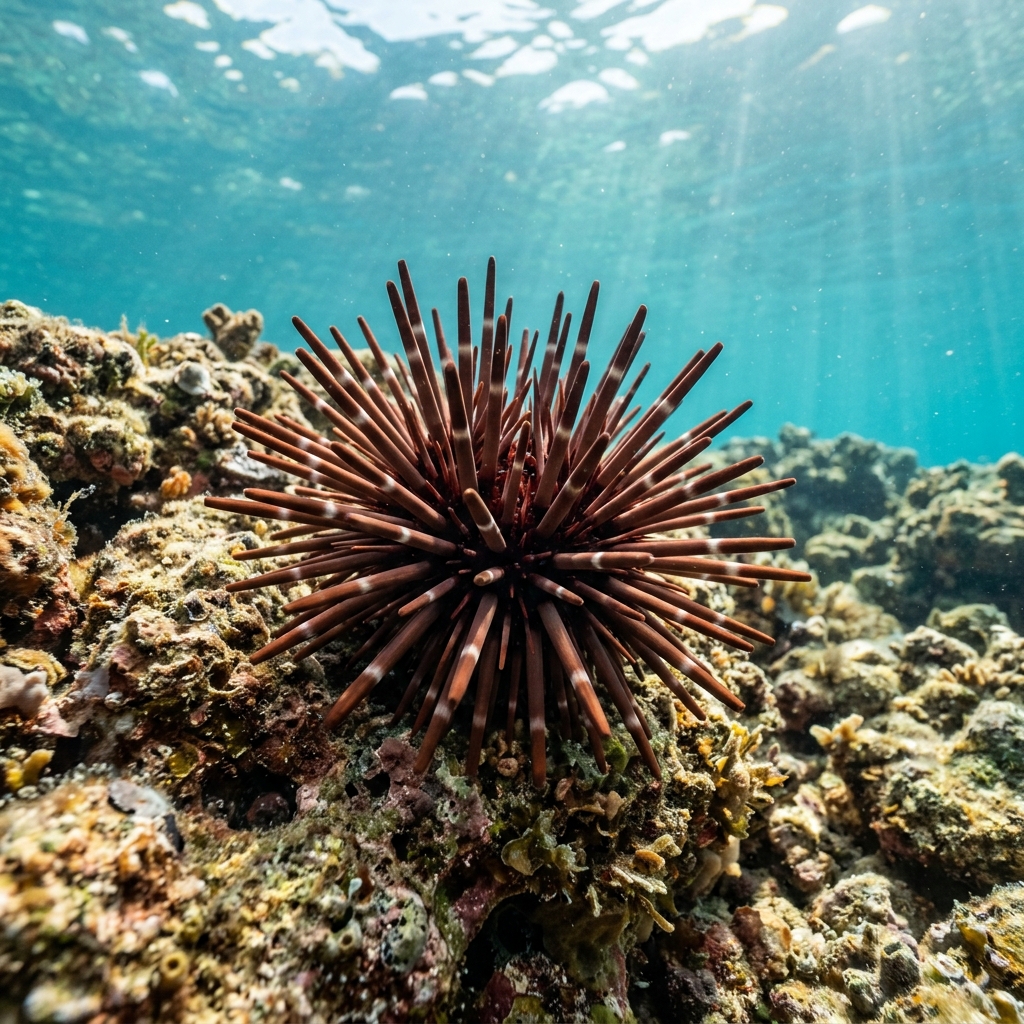
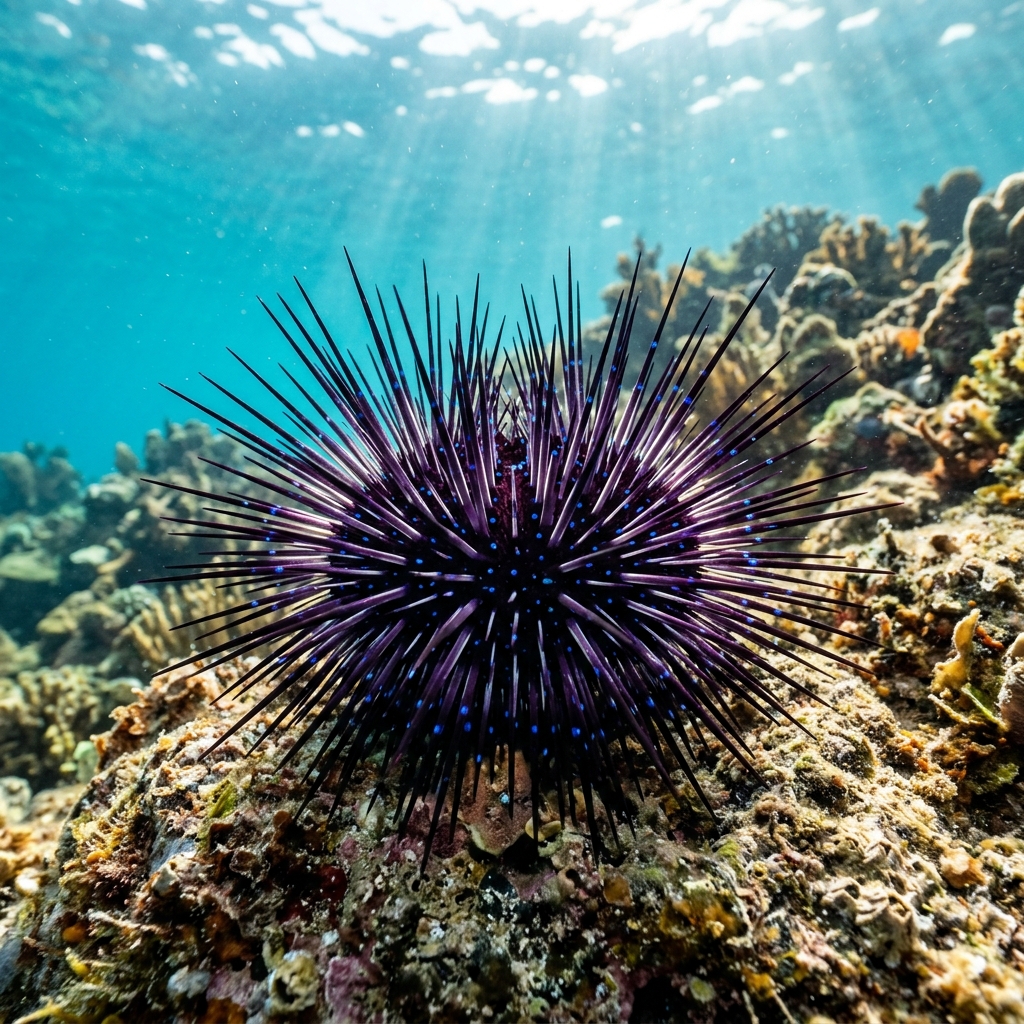
Those electric-blue spots arranged in rows across a reddish to dark-brown body are the feature that separates this urchin from almost everything else on the reef. The long, slender spines radiate outward in a dense canopy, banded in alternating light and dark rings. It sits openly on sandy or rubble patches rather than wedging into crevices, making it easier to spot than many other urchins. The overall disc can be quite large, sometimes reaching 20 cm or more across including spines.
You'll most often find one sitting in the open on sand, rubble, or low-relief reef during the day, spines fanned out as a passive deterrent to anything thinking of getting too close. It doesn't bolt from divers but may shift its tube feet slowly if you hover close. Night dives occasionally reveal more active movement as it grazes on algae and detritus across the seabed.
The vivid blue spots are thought to be a warning signal, advertising the urchin's venomous pedicellariae (tiny jaw-like structures hidden among the spines) to potential predators rather than just serving as camouflage.
Sighting data does not show a distinct season, so this is effectively a year-round species across its range. Its warm-water preference, observed between 27 and 29°C, means any visit to a healthy Indo-Pacific tropical reef is a reasonable opportunity.
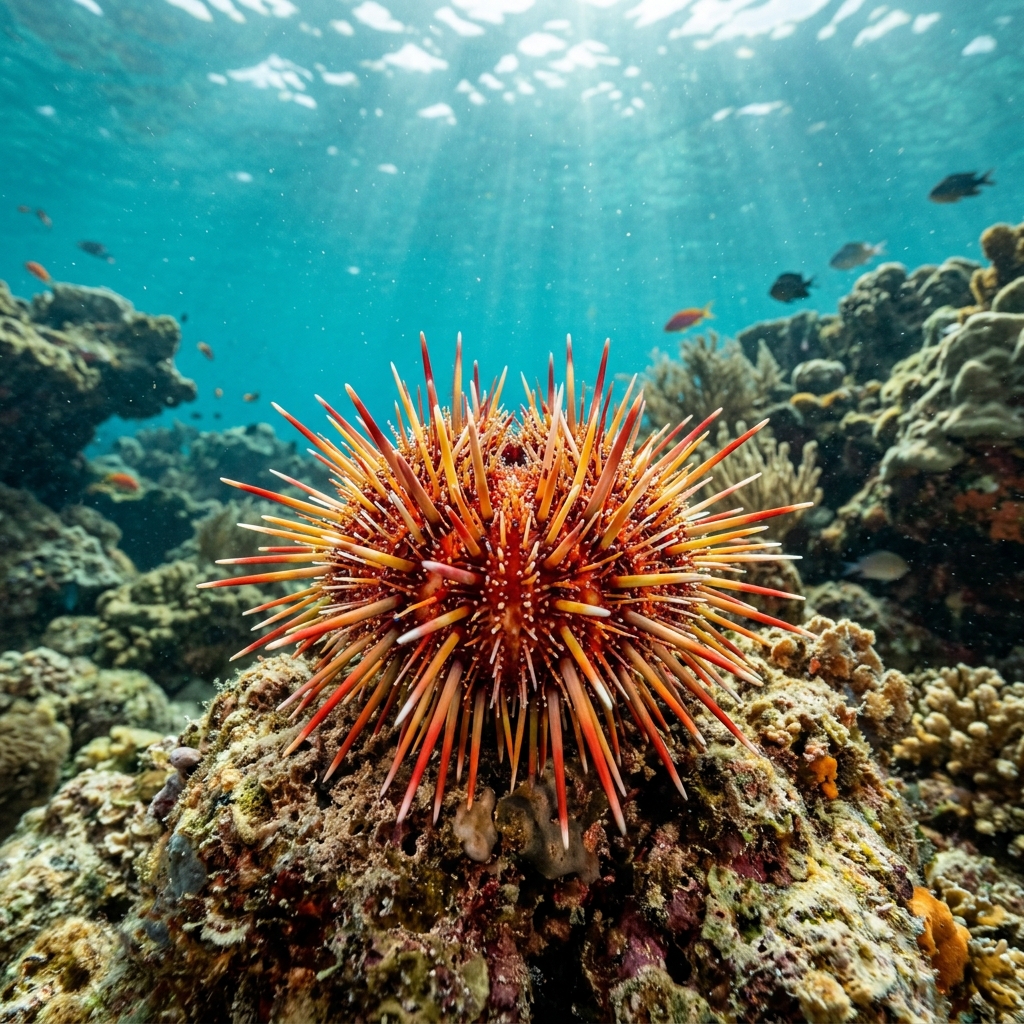
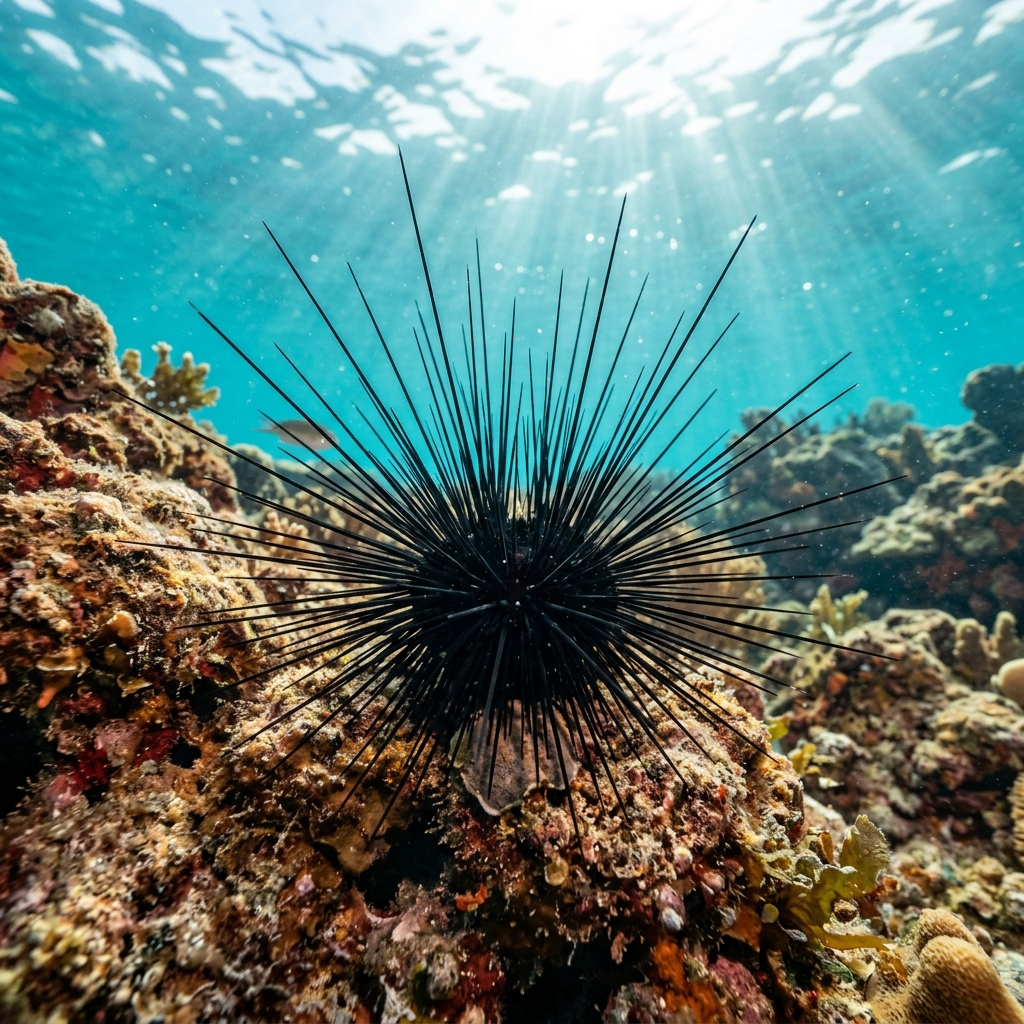
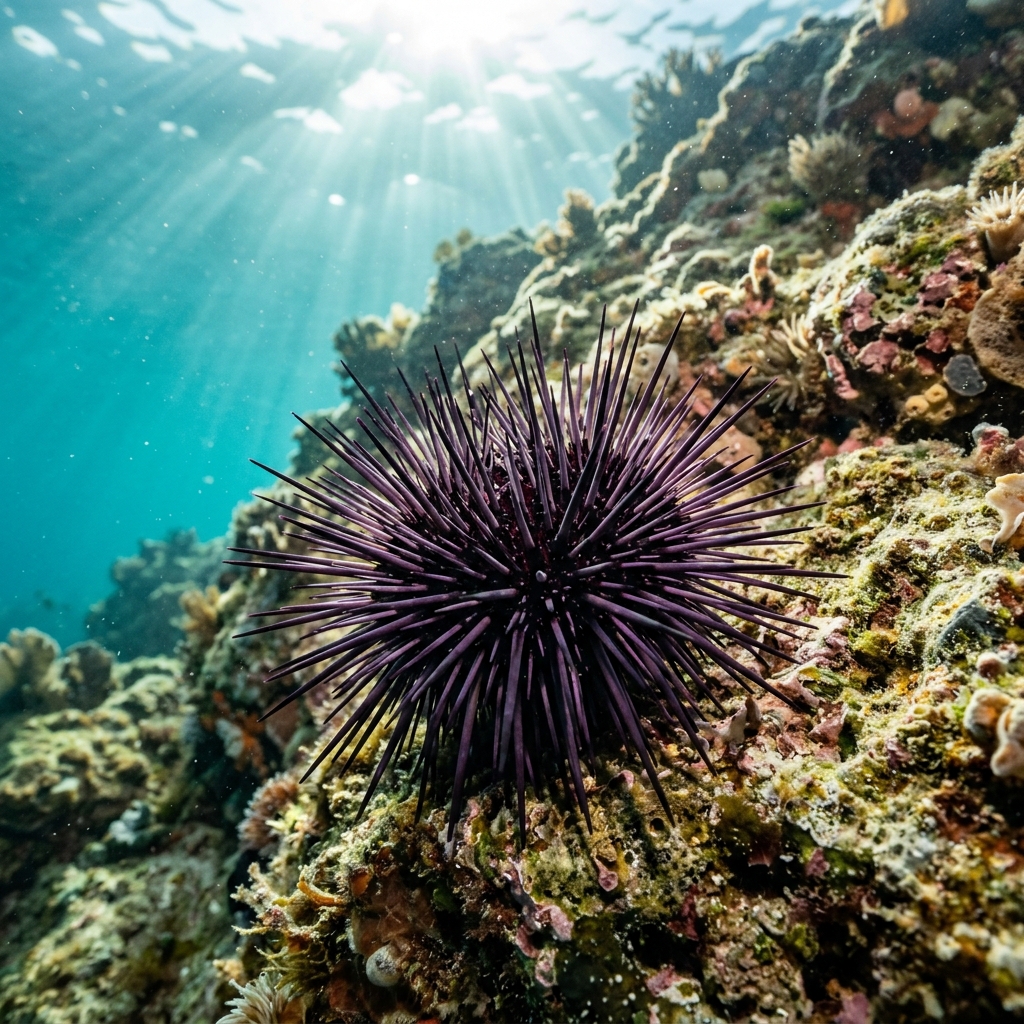
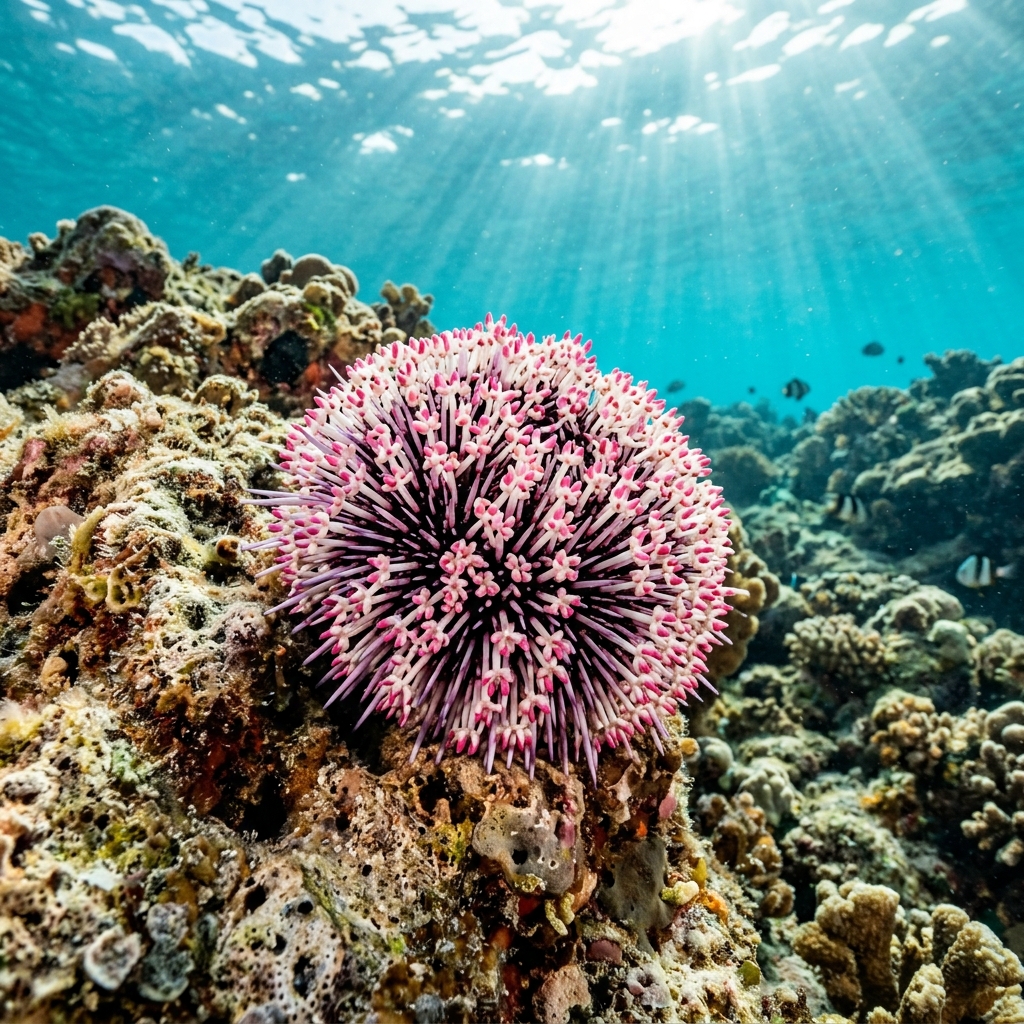
Reef neighbours a diver could mistake it for. Use the identification notes above to tell them apart.
Most sightings come from the Philippines, particularly the Visayas, Central Visayas and Western Visayas together account for the bulk of logged encounters, with Luzon a secondary hotspot. Indonesia (especially Sulawesi) and Thailand's Phuket and Phi Phi area are the next strongest regions, followed by solid records from Zanzibar and Kenya's Diani South Coast. Mauritius and India round out the range.
Mapping where Blue-spotted Urchin is logged…
The Philippines is by far the top destination, with Central Visayas and Western Visayas leading the count. Strong sightings are also logged in Sulawesi (Indonesia), Phuket and Phi Phi (Thailand), Zanzibar (Tanzania), and along Kenya's Diani South Coast. Mauritius and parts of India also have records.
No clear seasonal peak has emerged from dive logs, so this is treated as a year-round species. It favours water between 27 and 29°C, which is typical of tropical Indo-Pacific reefs throughout the year, meaning any season works.
Look for the bold iridescent blue spots arranged in rows on a reddish-brown body, combined with long banded spines radiating outward. It rests openly on sand or rubble rather than hiding in rock crevices, which helps enormously. No other common reef urchin carries that distinctive blue spot pattern.
Across all sites where it has been logged, it is most frequently rated as uncommon, with a smaller number of sites reporting it as rare and only a handful where it is common. Patience and a sharp eye on sandy or rubble patches near the reef edge give you the best chance of a sighting.
It is not considered dangerous to divers. Standard safe diving practice, not touching or kneeling on the reef, is sufficient. The spines can scratch if you brush against them, but the species poses no significant threat when observed from a respectful distance.
Site and sighting data is aggregated from diver logs, iNaturalist and GBIF. For taxonomy and conservation status:
Fire Urchin
1,415 sites