Serranus tabacarius
Uncommon but reliable in Honduras's Bay Islands and the US Virgin Islands, this small reef perch shows up year-round on warm Caribbean walls.
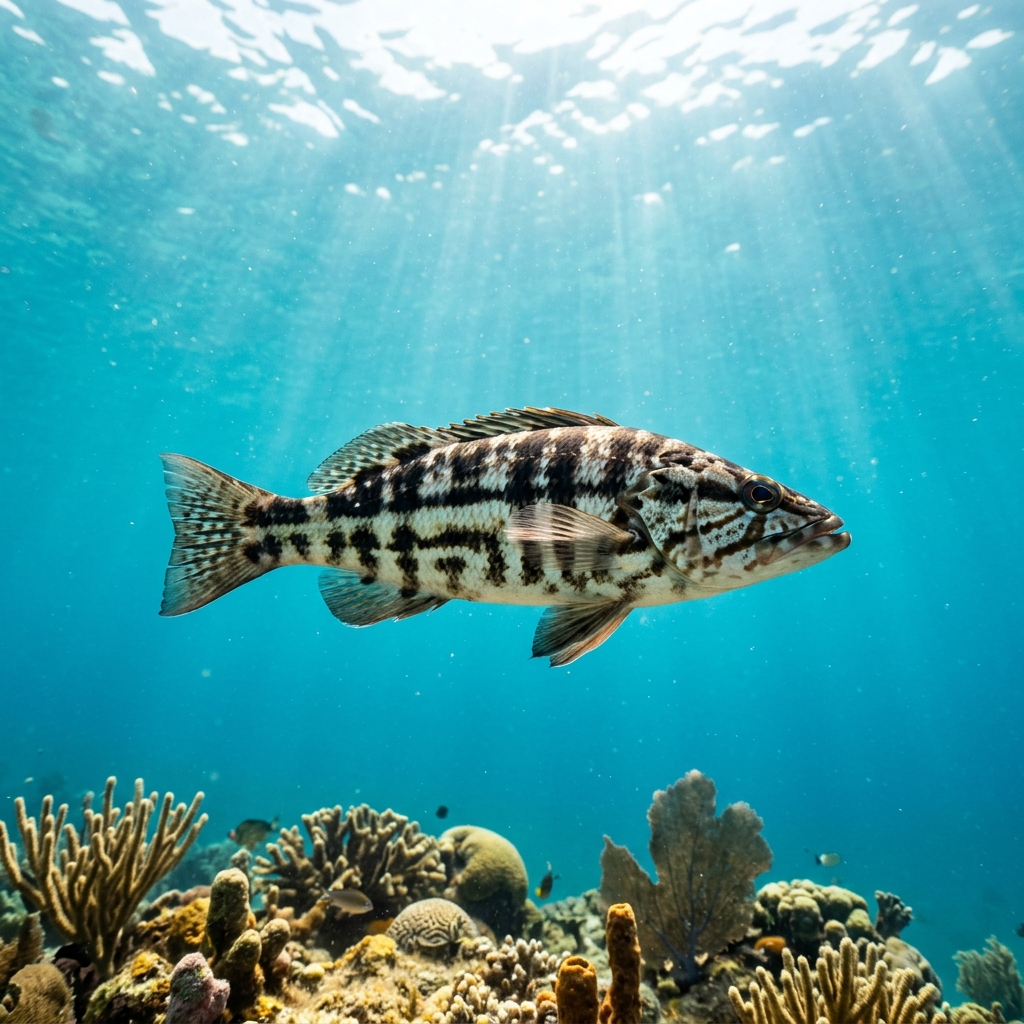
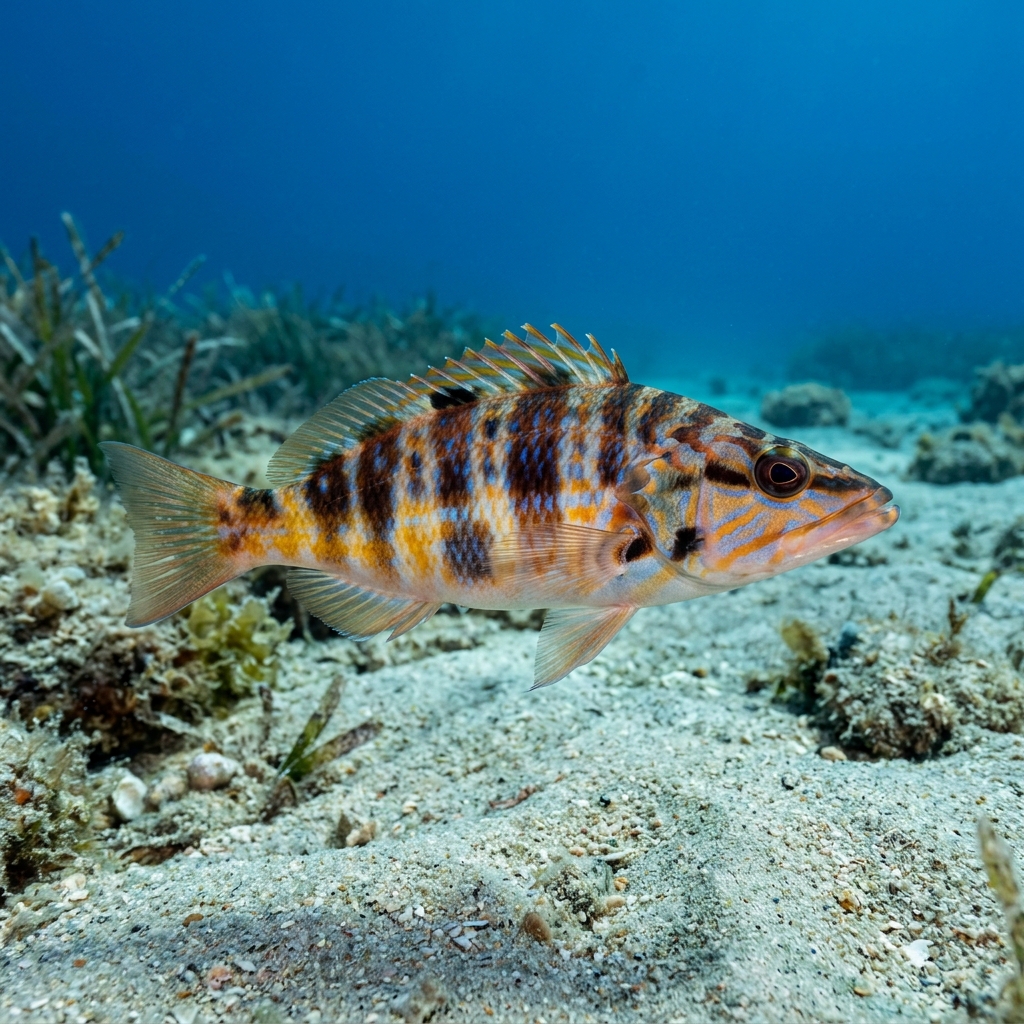
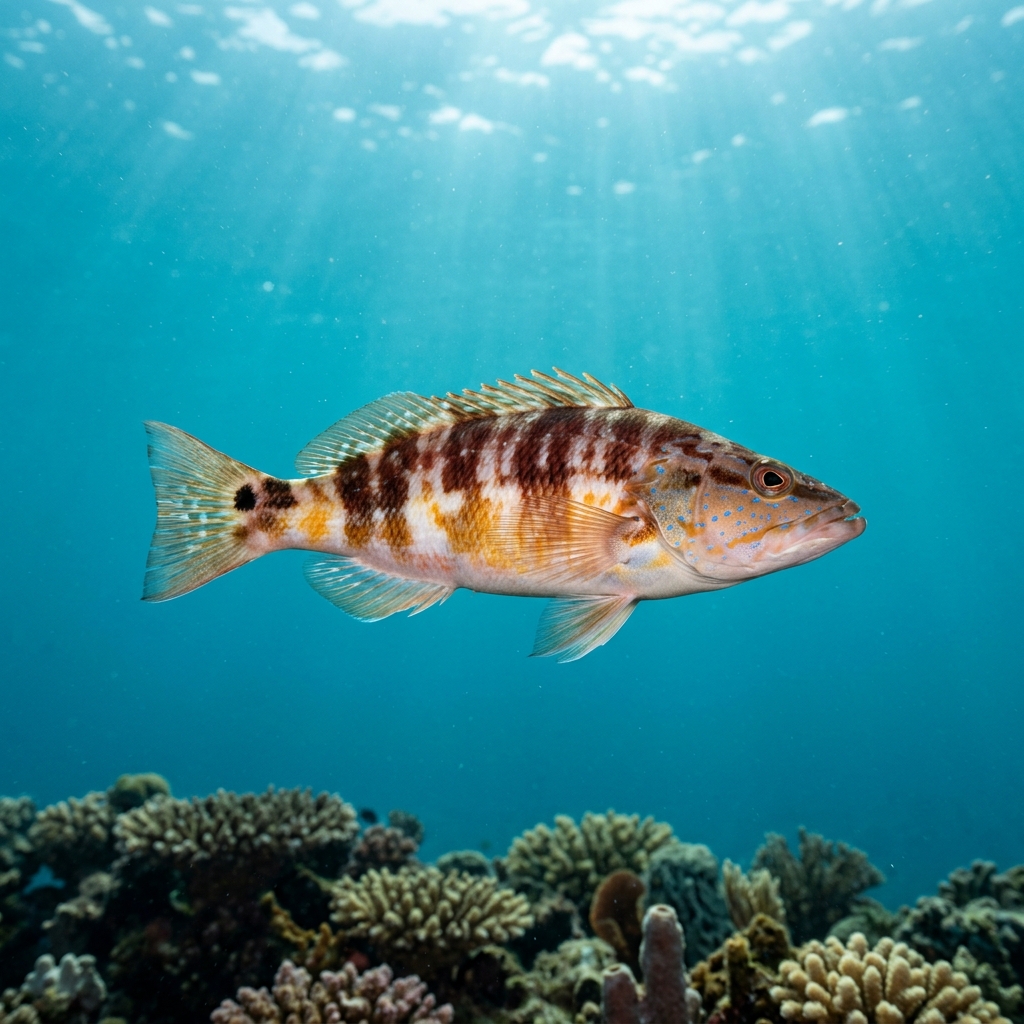
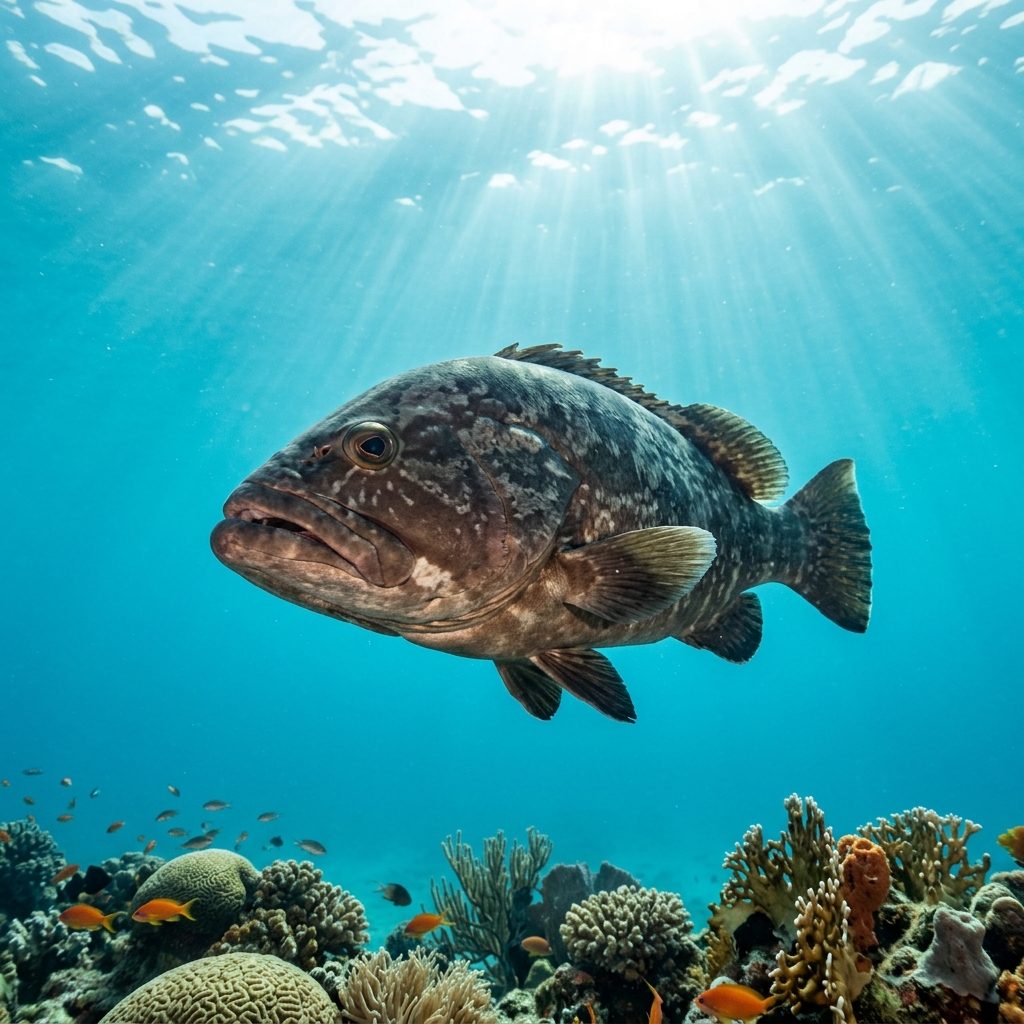
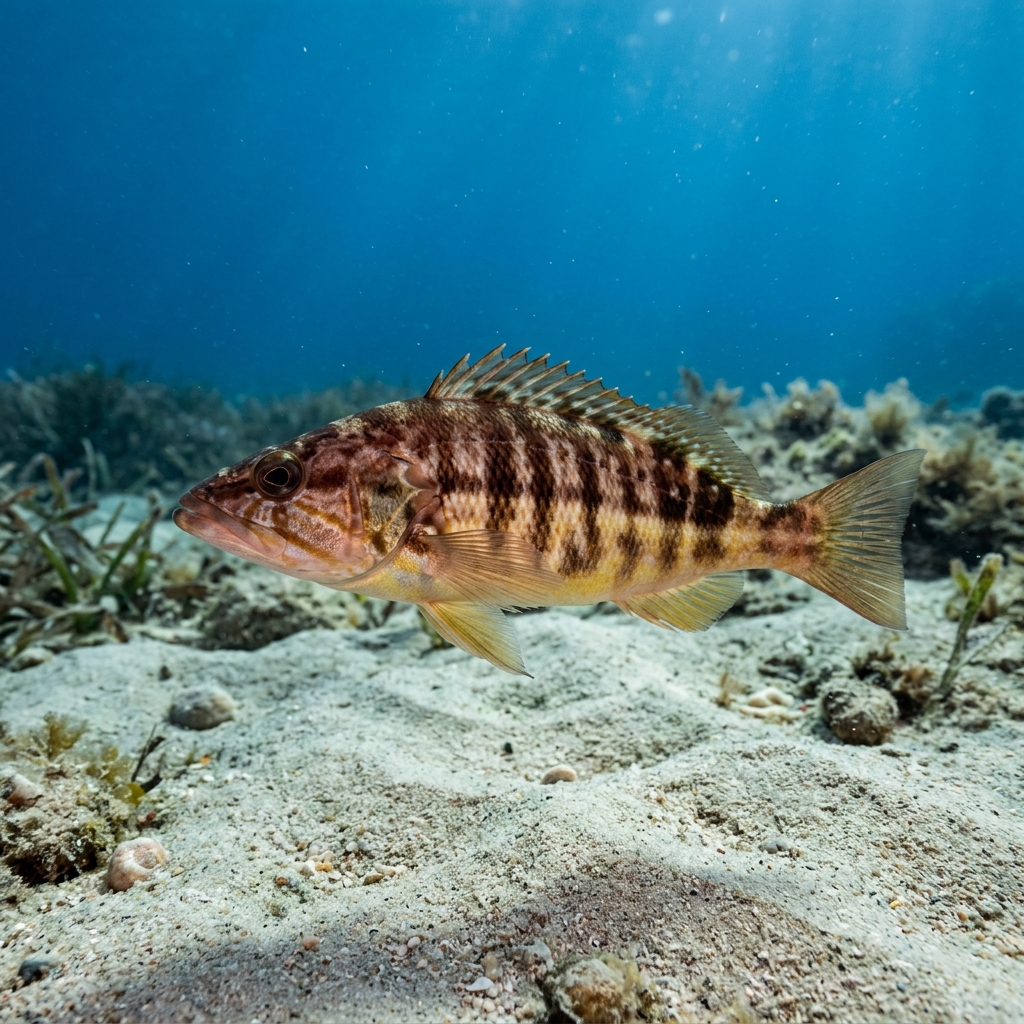
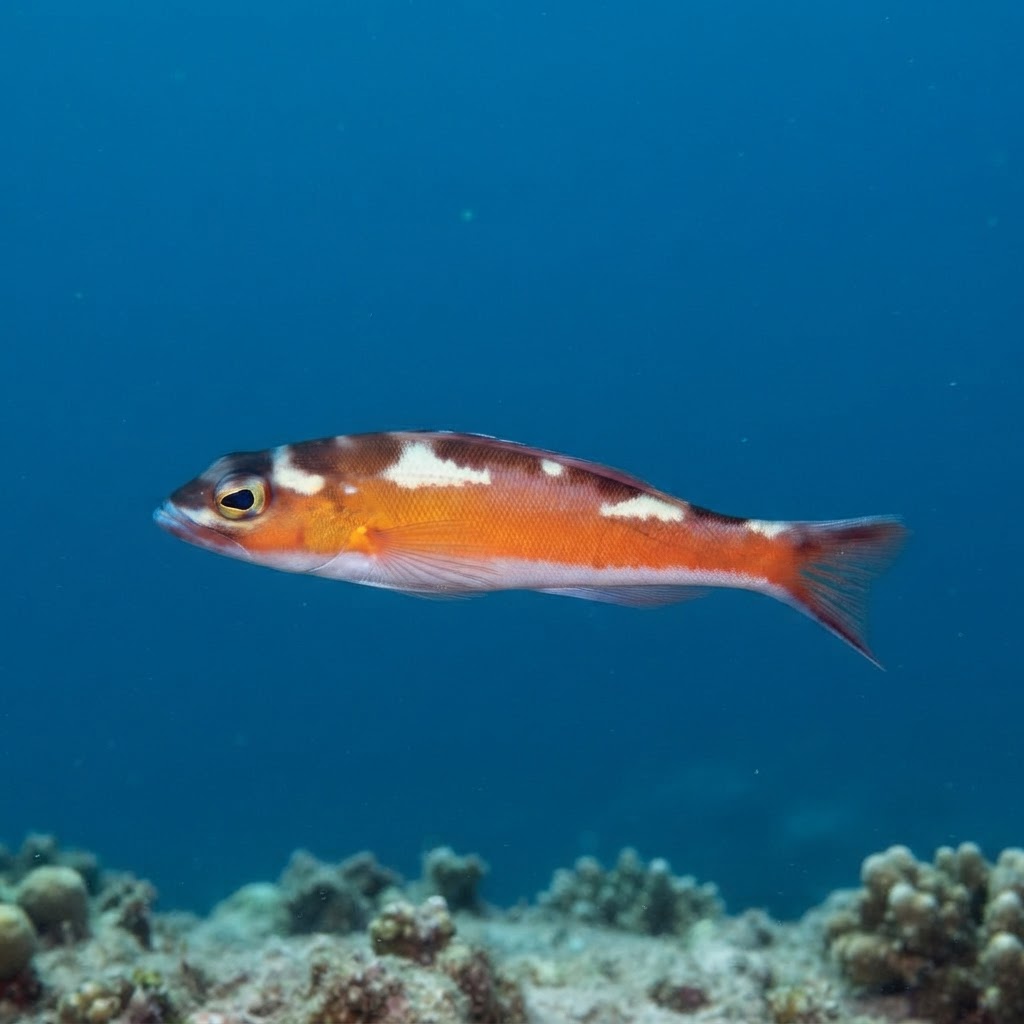
Small and slender at around 15 cm, with a mottled brown and tan body that breaks up its outline against rubble and coral rock. Look for a series of darker saddle-like blotches along the back and a pointed, slightly upturned snout typical of this genus of small perch-like groupers. It tends to hover close to the substrate rather than swim in open water, which helps separate it from the bulkier groupers divers often confuse with the family.
Divers usually find it perched motionless on coral rubble or ledges rather than cruising the reef, using its mottled colouring to blend into the background while it watches for small prey. It's not shy exactly, but it tends to hold its position rather than flee, so a slow approach usually gets you a good look. Most sightings come from typical daytime reef dives on walls and patch reefs rather than night dives.
As a member of the Serranidae, it's a carnivorous ambush feeder, relying on camouflage and stillness rather than speed to pick off small invertebrates and fish near the substrate.
Sightings show no detectable seasonal pattern, so treat this as a year-round fish on Caribbean reefs. It's logged in water between roughly 25 and 28 C, well within the typical range for these reefs at any time of year.
Most consistently logged in the Bay Islands of Honduras, which accounts for the bulk of sightings, followed by Saint Croix and Saint John in the US Virgin Islands. Sint Eustatius and Saba's Tent Reef also produce steady records, with smaller but real populations noted in the Cayman Islands, Negril in Jamaica, and Fajardo on Puerto Rico's east coast.
Mapping where Tobaccofish is logged…
The strongest populations are in Honduras's Bay Islands, with further reliable sightings around Saint Croix and Saint John in the US Virgin Islands, plus Sint Eustatius and Saba's Tent Reef.
There's no clear season in the sighting data, so it's a year-round find on Caribbean reefs where water stays between about 25 and 28 C.
Look for a small, slender fish around 15 cm long with a mottled brown and tan body and darker saddle markings along its back. It typically sits still on coral rubble rather than swimming in open water.
They're a small reef species, growing to roughly 15 cm, so they're easy to overlook against rubble and coral rock unless you're looking closely.
No, they pose no danger to divers. They're small, non-aggressive ambush predators that focus on tiny reef invertebrates and fish, not on anything divers need to worry about.
Site and sighting data is aggregated from diver logs, iNaturalist and GBIF. For taxonomy and conservation status:
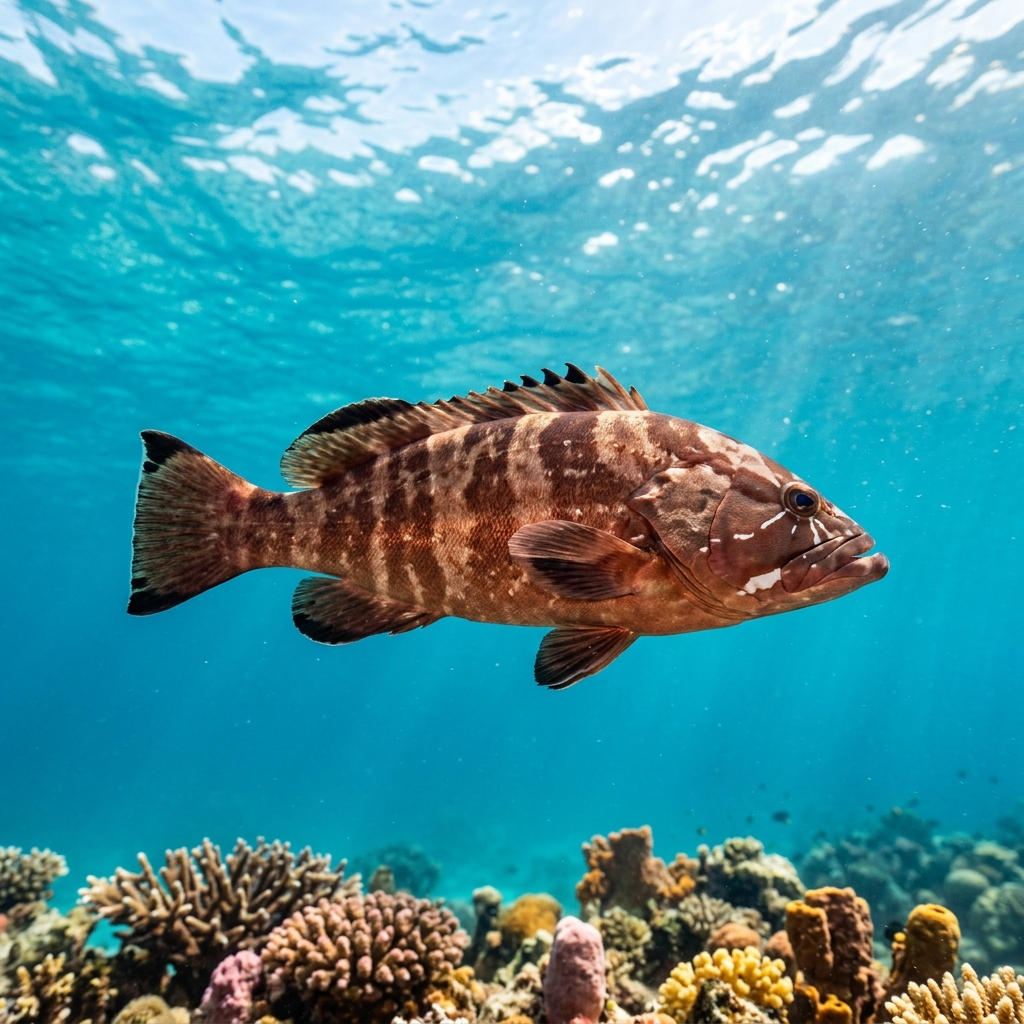
Blacktip Grouper
2,726 sites