Tinca tinca
Spot tench in the Carinthia Lakes and French Alps. A thick-bodied, olive-green freshwater fish found in cool European lakes from 5 to 23 °C.
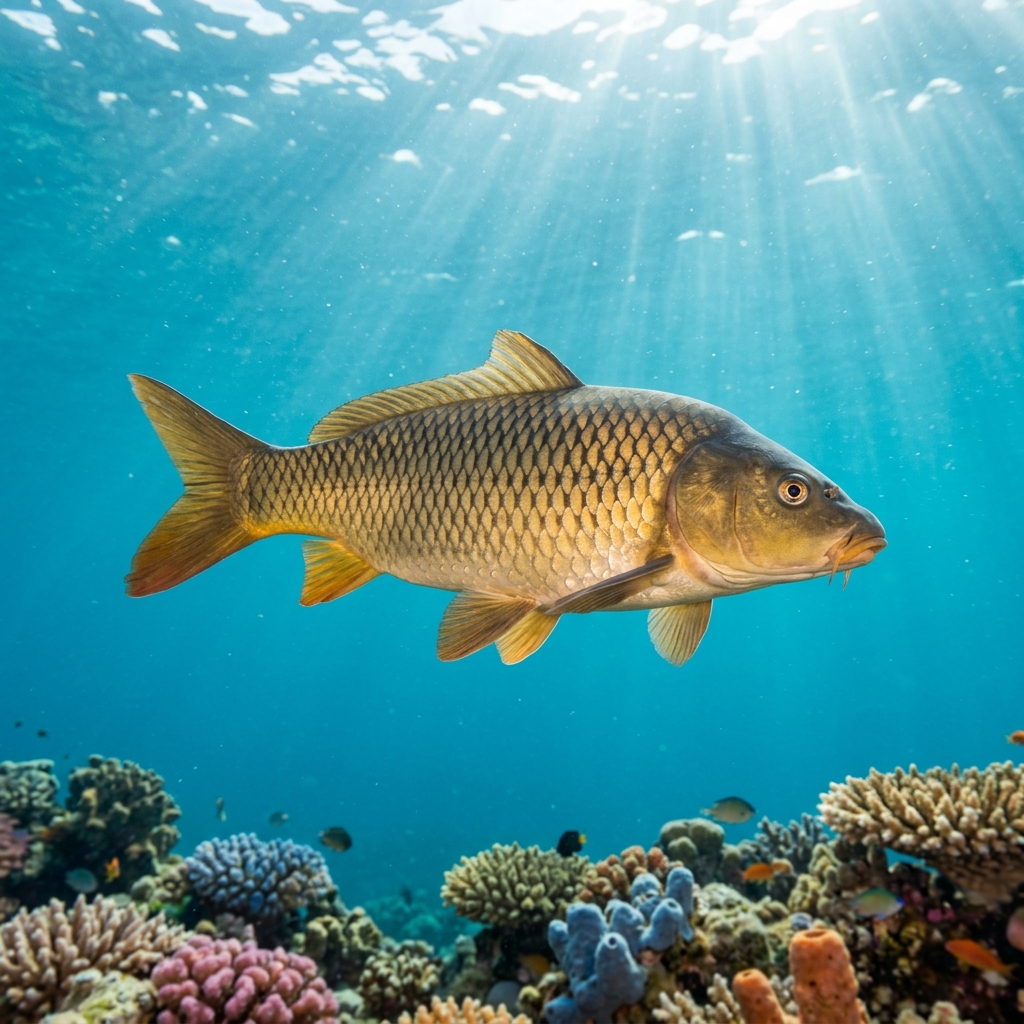
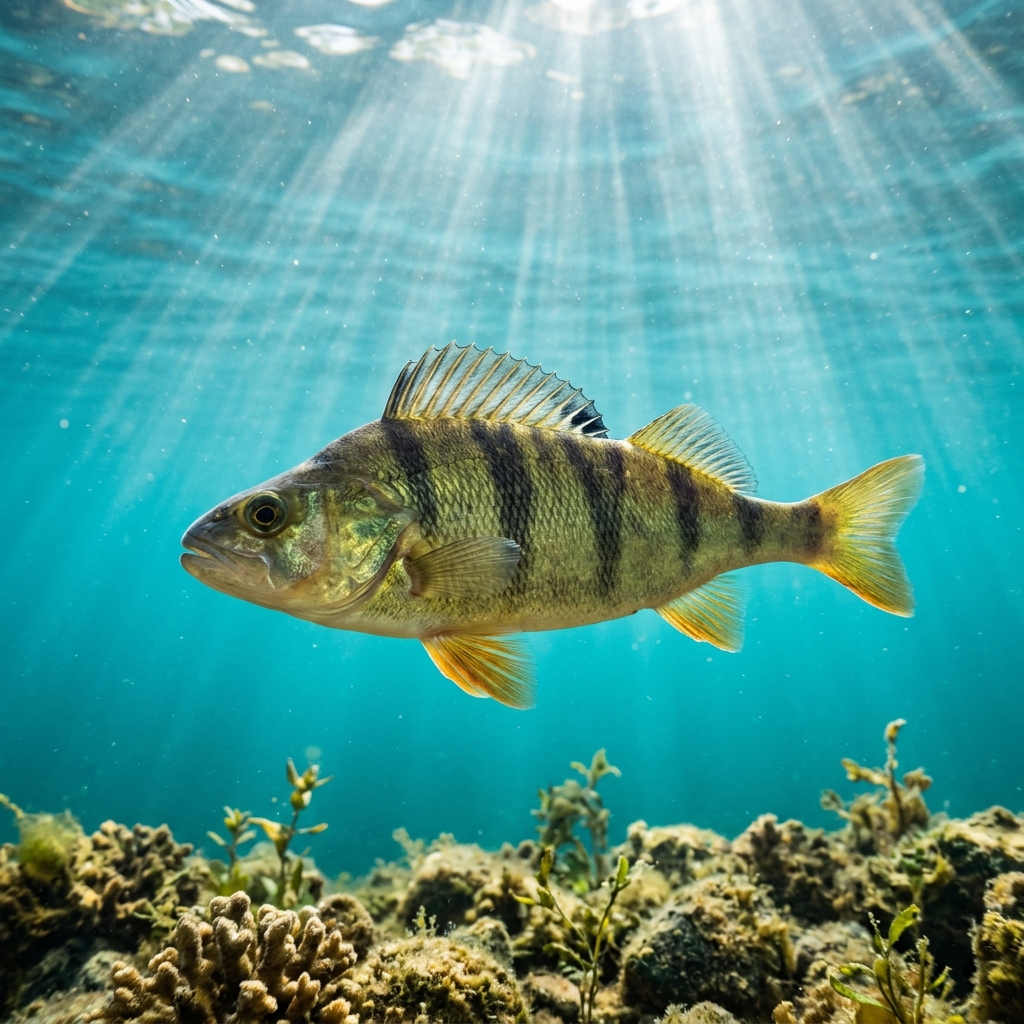
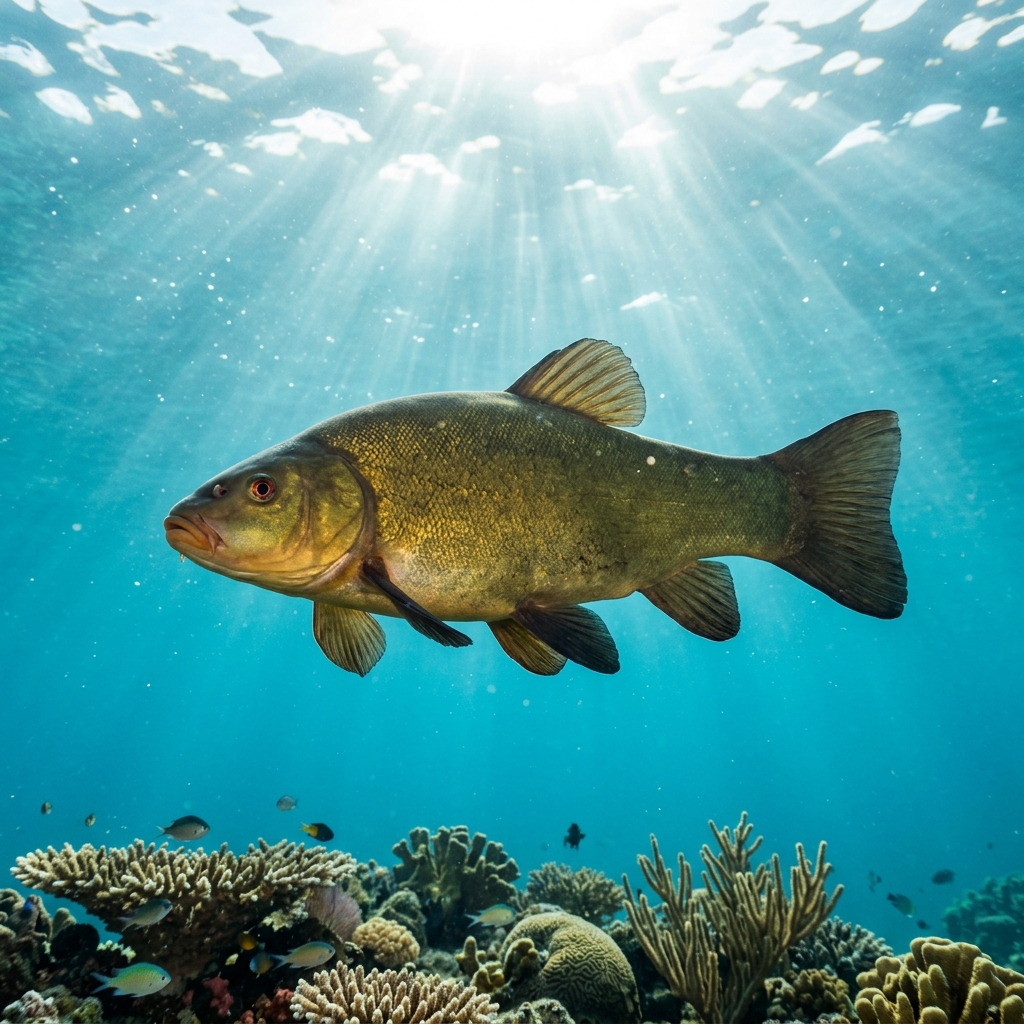
A deep-bodied, almost eel-smooth fish with very small, deeply embedded scales that give the skin a slick, velvety look. Colouration is typically dark olive-green on the back fading to a dull golden-yellow or bronze on the flanks, with a pale belly. A tiny barbel (fleshy whisker) sits at each corner of the small, thick-lipped mouth. The fins are rounded and dark, giving the whole fish a solid, unhurried silhouette near the bottom.
Tench are bottom-dwellers that root through silt and soft sediment in search of invertebrates, so you will typically find them hugging the lakebed or nosing around weed beds and muddy margins. They tend to move slowly and are not easily spooked, often allowing a calm diver to approach within a metre or two before drifting away. Encounters usually happen in low-light conditions near dense vegetation, where the fish feel most at ease.
Tench produce a thick mucus coat that was once believed in European folklore to have healing properties for other fish that rubbed against them, earning them the old nickname 'doctor fish'. The mucus is real and notably heavy compared with other cyprinids, and it is the main reason the skin looks so polished underwater.
Northern Hemisphere sighting data concentrates in September, suggesting late summer into early autumn is the most productive window when fish are still active in the upper water column before winter. Tench tolerate a wide temperature band from about 5 to 23 °C, so they remain in European lakes year-round, but autumn encounters appear most likely based on logged dives.
Tench are most consistently logged in the Carinthia Lakes of Austria, which account for the largest share of recorded sites by a clear margin. Strong populations are also documented across the French Alps and Central Germany, with further sightings spread through the Limburg Lakes in the Netherlands and Central Switzerland. Outside those core areas, divers have recorded tench in Belgium, Poland, and Luxembourg.
Mapping where Tench is logged…
Tench are a European freshwater species logged most reliably in the Carinthia Lakes of Austria and the French Alps, with further sightings across Central Germany, the Limburg Lakes in the Netherlands, and Central Switzerland. Belgium, Poland, and Luxembourg also have recorded sites.
Based on logged dives, September is the most productive month. Tench remain in European lakes through the year given their wide temperature tolerance, but late summer into early autumn appears to offer the best chance of an encounter.
Look for a thick-set, bottom-hugging fish with a strikingly smooth, olive-green to bronze skin, rounded dark fins, and a small mouth with a tiny barbel at each corner. The velvety, almost scale-free appearance is the quickest give-away.
Tench typically reach 30 to 50 cm in length, with large individuals in well-fed lake populations occasionally exceeding 60 cm. Underwater they appear stocky and broad rather than long.
Tench secrete an unusually thick slime coat, and European folklore held that sick fish would rub against them to be healed. The nickname 'doctor fish' stuck for centuries. The mucus is biologically real and gives the fish its distinctively smooth, polished look.
Site and sighting data is aggregated from diver logs, iNaturalist and GBIF. For taxonomy and conservation status:
Sun Perch
2,182 sites