Sebastes nigrocinctus
Bold orange-and-brown striped rockfish found on cold British Columbia reefs, 5.8 to 9.5C, an uncommon but rewarding find year-round.
Safety warning
Tiger rockfish carry venomous spines in their dorsal fin, and a puncture from mishandling or brushing against one can cause significant pain and swelling. Give it space, never attempt to touch or move it, and be mindful of fin and hand placement near the crevices and ledges it favours.
If you're stung
Venomous spinesGeneral first-aid guidance, not a substitute for professional medical care. In an emergency, call your local emergency number.
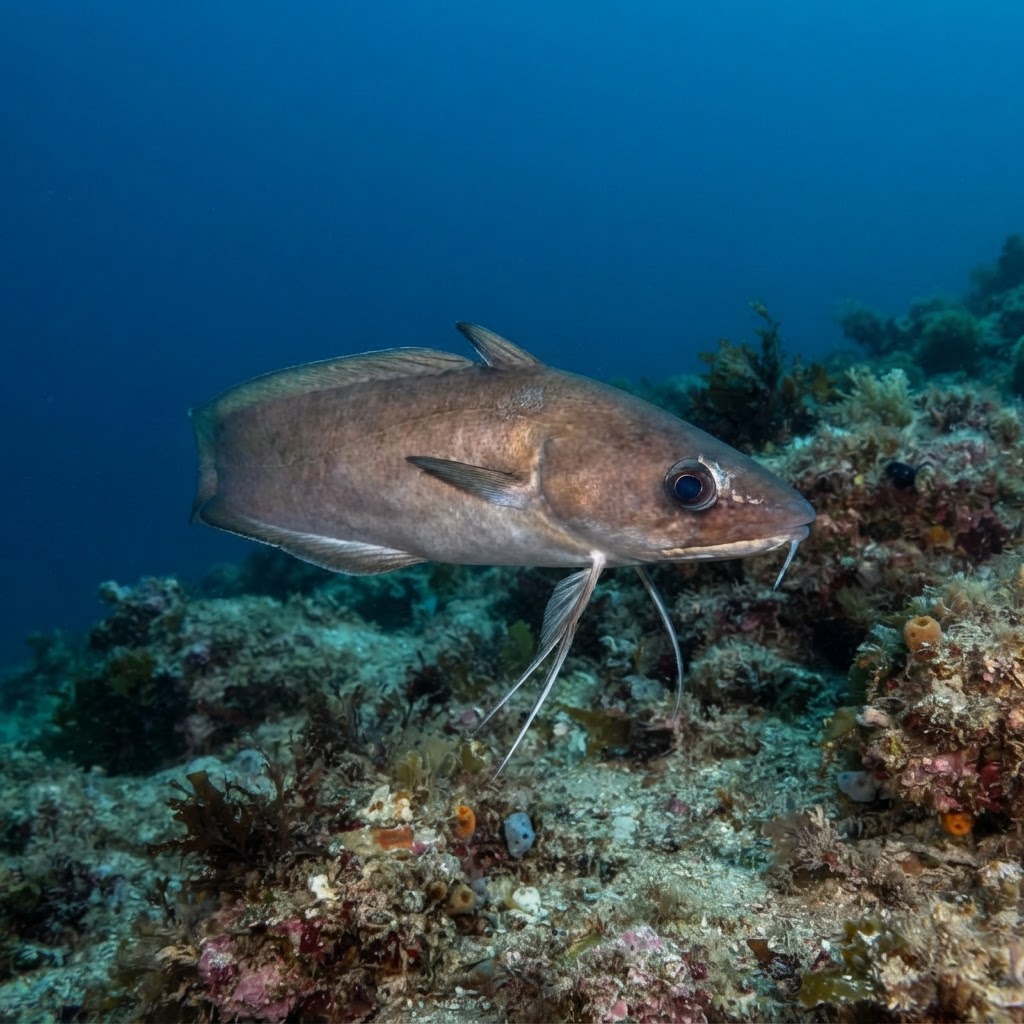
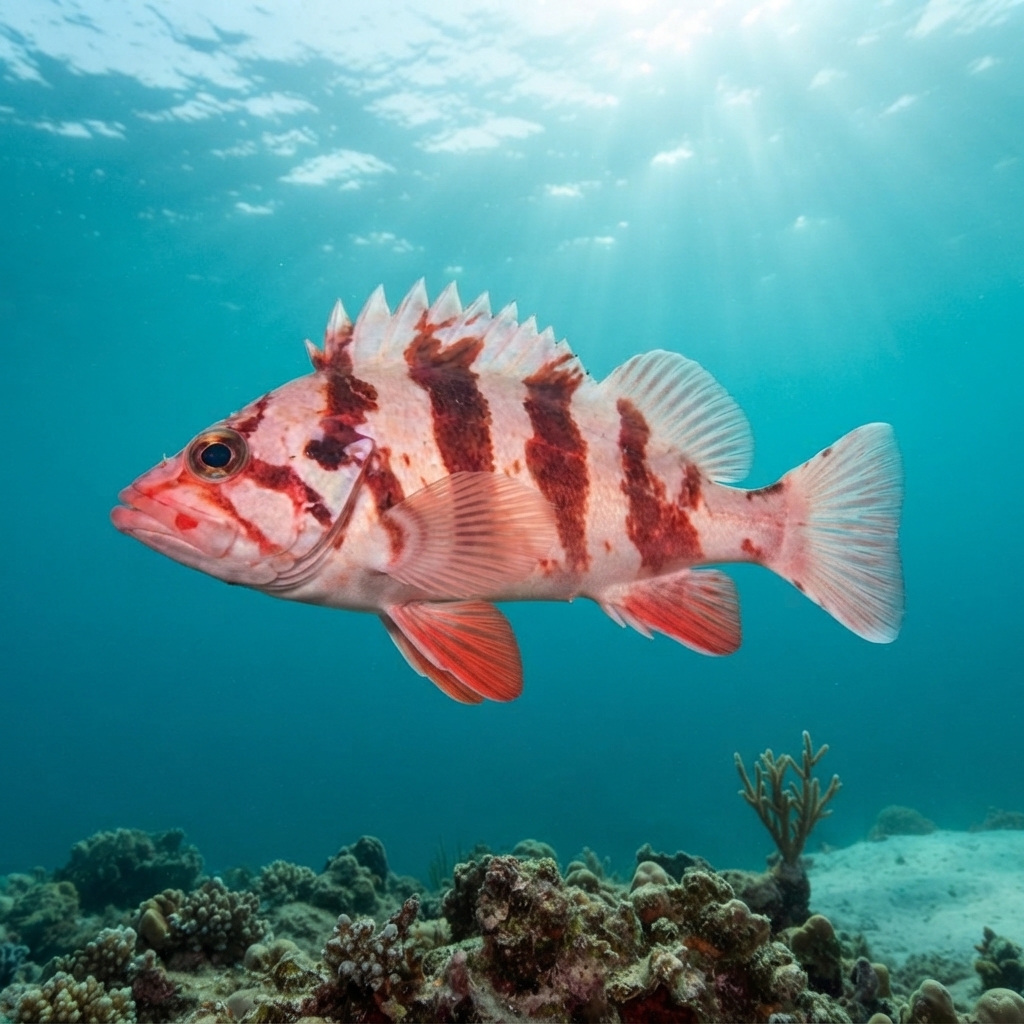
A stocky, spiny-headed rockfish around 43 cm, patterned with five or six broad dark bars running vertically across an orange-red to pink body, giving it the tiger look its name promises. It sits low and still against rock and sponge rather than swimming in open water, and the strong barred pattern combined with the heavy, ridged head is the main thing that separates it from plainer rockfish species at a glance. Look for it wedged into crevices or under ledges rather than out on open reef.
Expect to find it tucked motionless into a crevice, under a rock ledge, or pressed against a wall, relying on its bold pattern and stillness to disappear into shadow rather than swim off. It tends to hold its ground when divers approach, letting you get a close look and a photo without much fuss. Most reports come from typical BC rock and wall sites rather than open sand or silty bottoms.
Rockfish in this genus are slow-growing and can live for decades, so a large tiger rockfish holding the same crevice may have been resident there for years.
Sightings show no clear seasonal pattern, and with a water-temperature niche of just 5.8 to 9.5C it stays in cold water year-round rather than following a seasonal warm-up. Treat it as a possible sighting on any BC dive rather than one tied to a particular month.
Every logged sighting in the data comes from British Columbia, Canada, making it the place to look for this species. Within BC, divers most often report it on rocky reef and wall sites, where it turns up as an uncommon find rather than a guaranteed one.
Mapping where Tiger Rockfish is logged…
British Columbia, Canada is by far the most reliable place, with sightings logged across a range of rocky reef and wall sites there. It is considered uncommon at most of those sites, so it is a nice bonus find rather than a certainty.
There is no strong seasonal pattern in sightings, and it stays in cold water (roughly 5.8 to 9.5C) year-round, so any month diving BC's cold-water reefs gives you a chance.
Yes, they have venomous dorsal spines that can cause a painful sting if touched or handled. They are not aggressive towards divers and pose no risk if you simply observe from a normal distance.
Look for a stocky, roughly 43 cm fish with bold dark vertical bars over an orange-red body, sitting still in a crevice or under a ledge rather than swimming freely. The heavy spiny head and strong barred pattern are the key giveaways.
They typically reach around 43 cm in length, making them a solidly sized rockfish rather than a small crevice-dweller.
Like many rockfish, they are slow-growing and long-lived, meaning a big individual seen holding the same ledge dive after dive could be a real long-term resident rather than a passing fish.
Site and sighting data is aggregated from diver logs, iNaturalist and GBIF. For taxonomy and conservation status:
Pollack
282 sites