Thysanoteuthis rhombus
Diamond squid are open-ocean cephalopods found in warm waters between 19-29°C. Here's how to recognise this distinctive rhombus-finned squid if you encounter one.
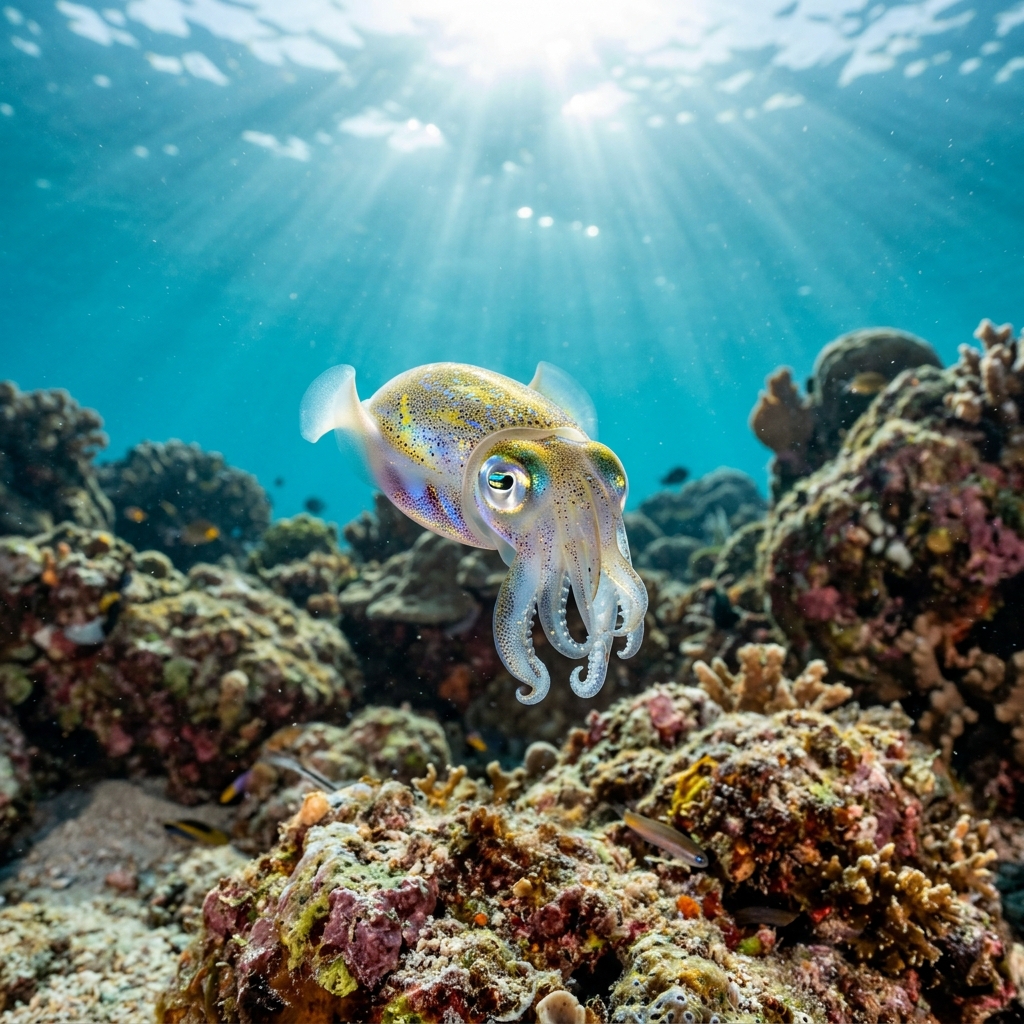
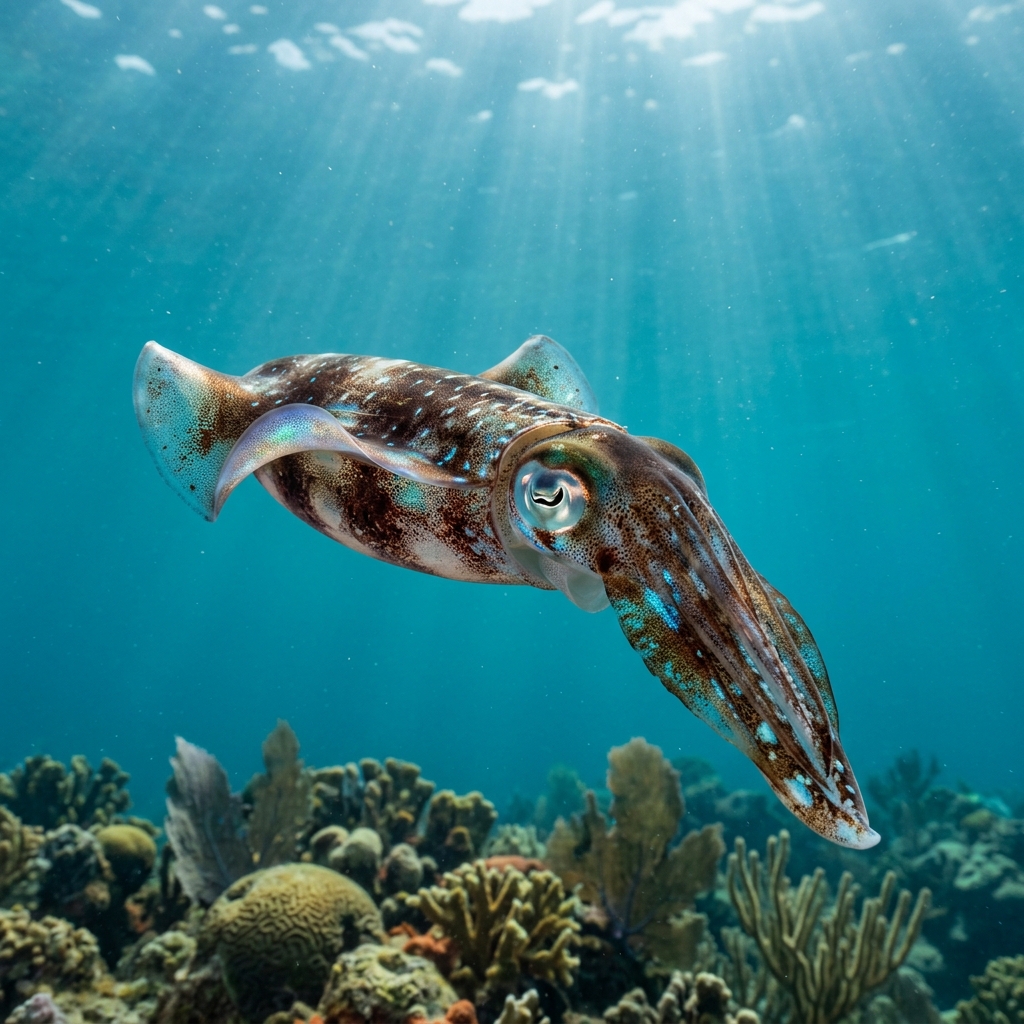
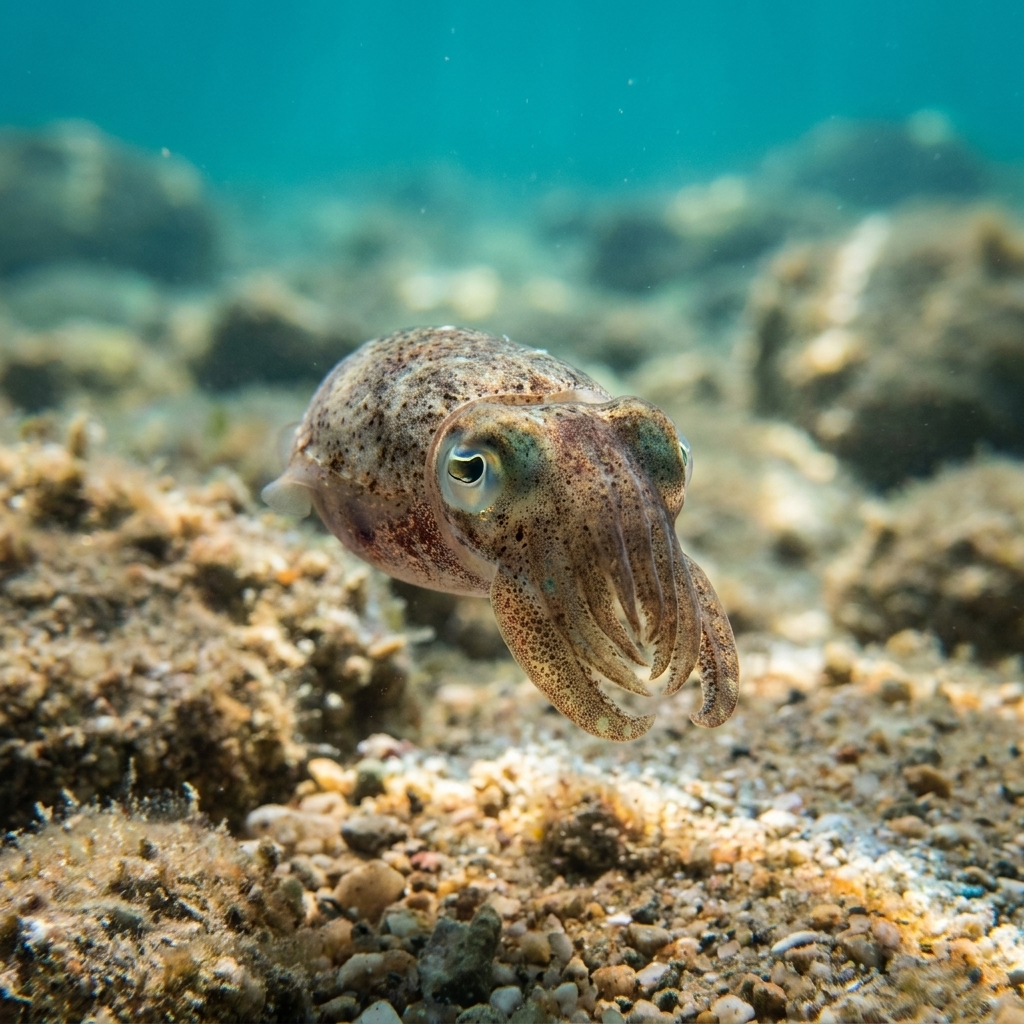
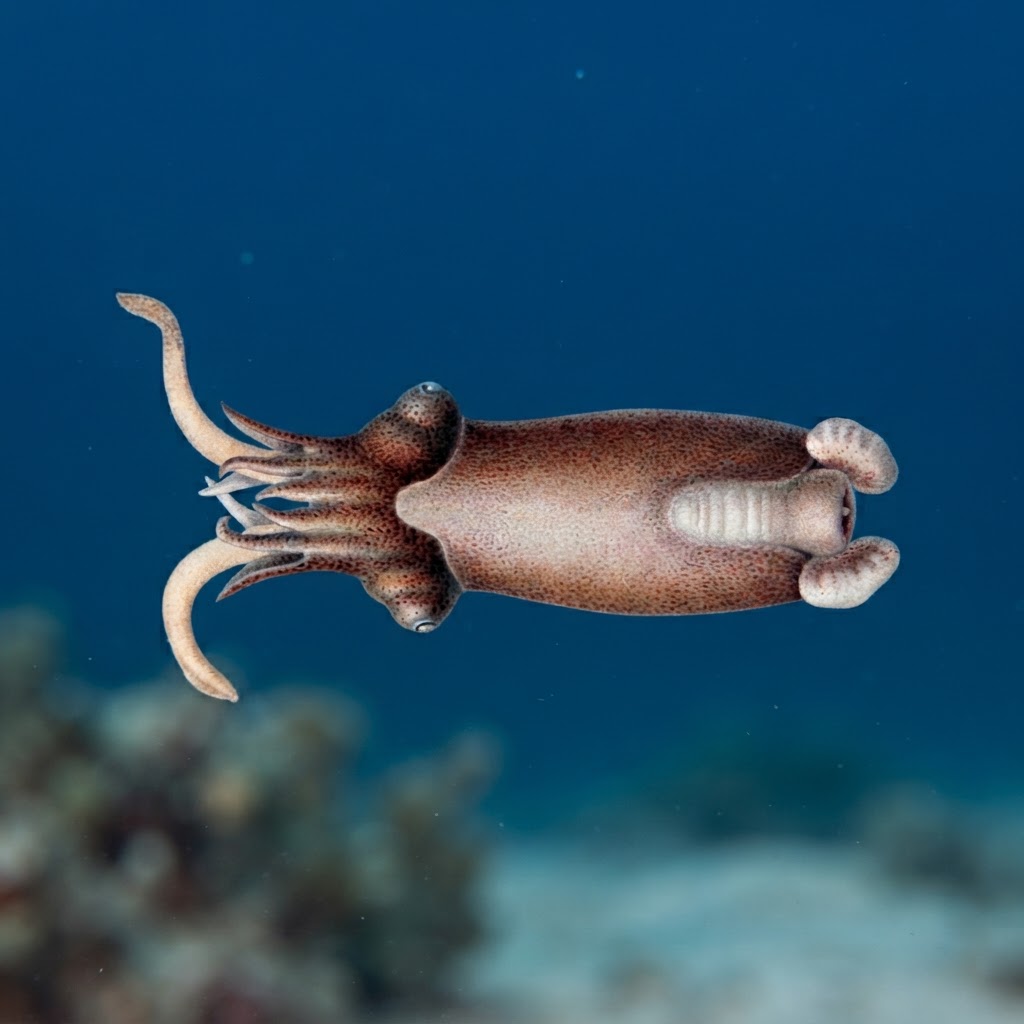
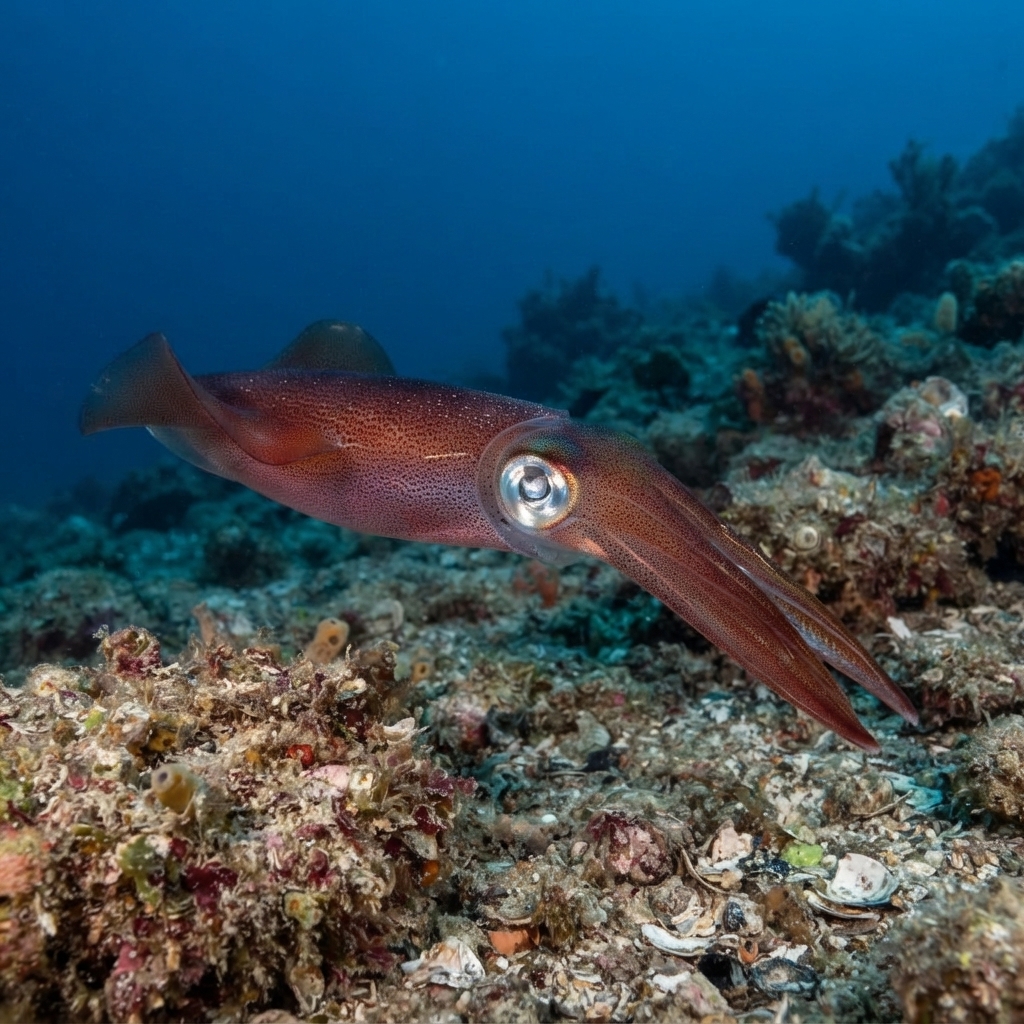
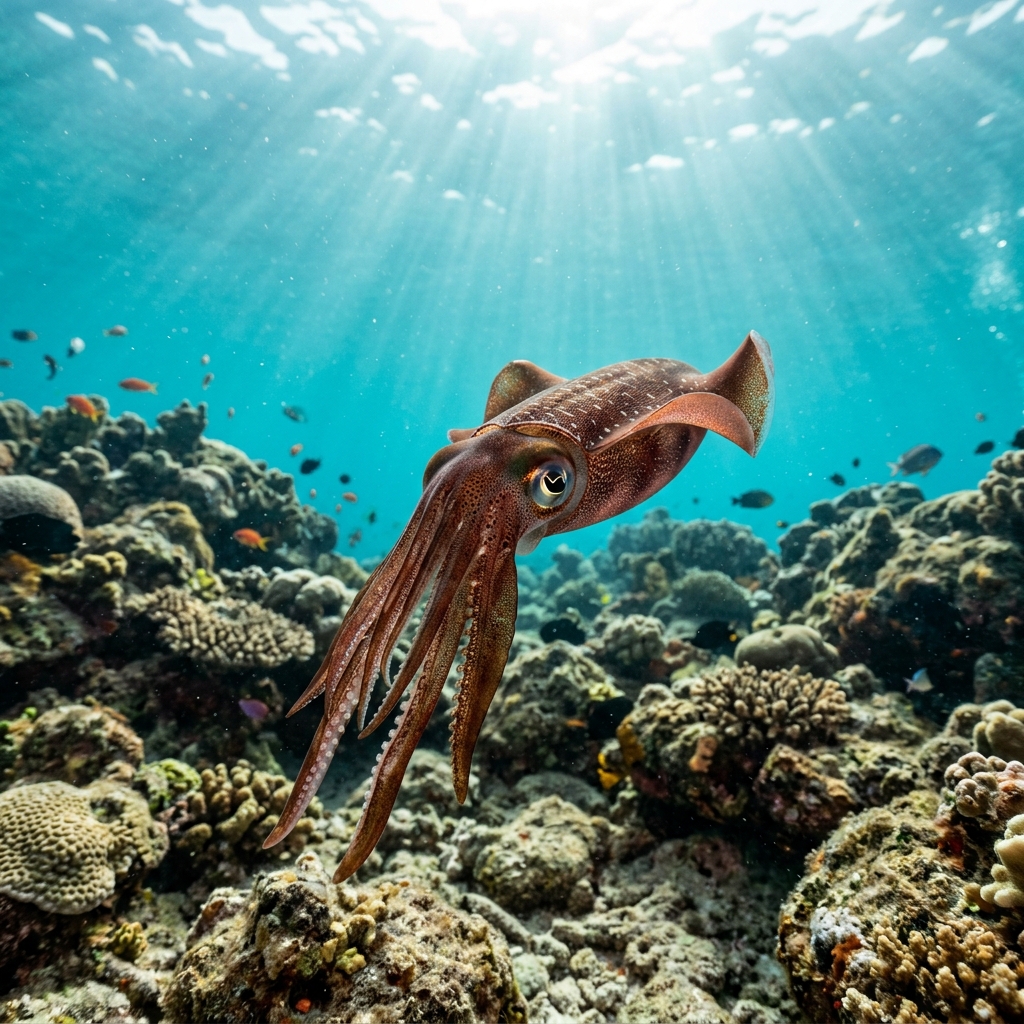
Few squid are as distinctive once you know what to look for: the diamond squid gets its name from a pair of enormous, rhombus-shaped fins that run almost the entire length of its mantle (body tube), giving it a kite-like silhouette unlike any other squid you are likely to encounter. The body is semi-translucent with iridescent, shifting colours produced by chromatophores (pigment cells). It is a large, robust squid, adults can reach over a metre in total length, so if you see a big, kite-finned squid in warm open water, this is almost certainly it.
Diamond squid are pelagic (open-water) animals, so sightings typically happen in the blue water column rather than over the reef. They are active swimmers and, like most large squid, can change colour rapidly when startled or communicating. Encounters are most likely during night dives or on blue-water drift dives when the squid rise closer to the surface to feed.
Diamond squid are one of the few squid species known to form long-term pairs during mating, with males and females swimming and hunting together for extended periods, unusual behaviour for any cephalopod.
No clear seasonal pattern has emerged from diver records yet, so encounters should be treated as possible year-round in suitable warm water. Its observed temperature range of 19 to 29°C suggests it is most at home on tropical and warm-temperate coastlines throughout the year.
Sighting records on Fin are not yet numerous enough to name specific top dive sites or regions with confidence. The diamond squid is a wide-ranging oceanic species associated with warm tropical and subtropical seas where water temperatures sit between 19 and 29°C, so encounters tend to be opportunistic open-water events rather than predictable reef dives. If you log a sighting anywhere in that temperature band, you will be helping build the first real diver-sourced map for this species.
Mapping where Diamond Squid is logged…
Diamond squid are wide-ranging oceanic animals found in warm tropical and subtropical seas worldwide. Encounters are opportunistic rather than site-specific, most often reported during blue-water or night dives in waters between 19 and 29°C. Logging your own sighting on Fin helps build the map for other divers.
No strong seasonal pattern has emerged from diver records so far. The species tolerates a broad temperature range of 19 to 29°C, which covers tropical and warm-temperate destinations year-round, so encounters are treated as possible at any time of year.
Look for the fins. Diamond squid have a pair of large, diamond or rhombus-shaped fins that span nearly the full length of their mantle, giving them an unmistakable kite-like profile. Combined with their large size, adults can exceed a metre, and semi-translucent, iridescent body, they are unlikely to be confused with anything else in open water.
Adults commonly exceed one metre in total length, including tentacles, and are among the larger squid species divers are likely to encounter. The mantle alone can reach around 65 cm, making them an impressive animal in the water.
Not exactly for life, but they do show unusually pair-bonded mating behaviour for a squid. Males and females are known to swim and hunt together as a pair over an extended period during reproduction, which is rare among cephalopods and makes a paired sighting especially notable.
Site and sighting data is aggregated from diver logs, iNaturalist and GBIF. For taxonomy and conservation status:
Inshore Squid
390 sites