Halichoeres trimaculatus
Common on shallow reefs from French Polynesia's Society Islands to Okinawa, thriving in 25-29C water year-round. Here's how to spot one.
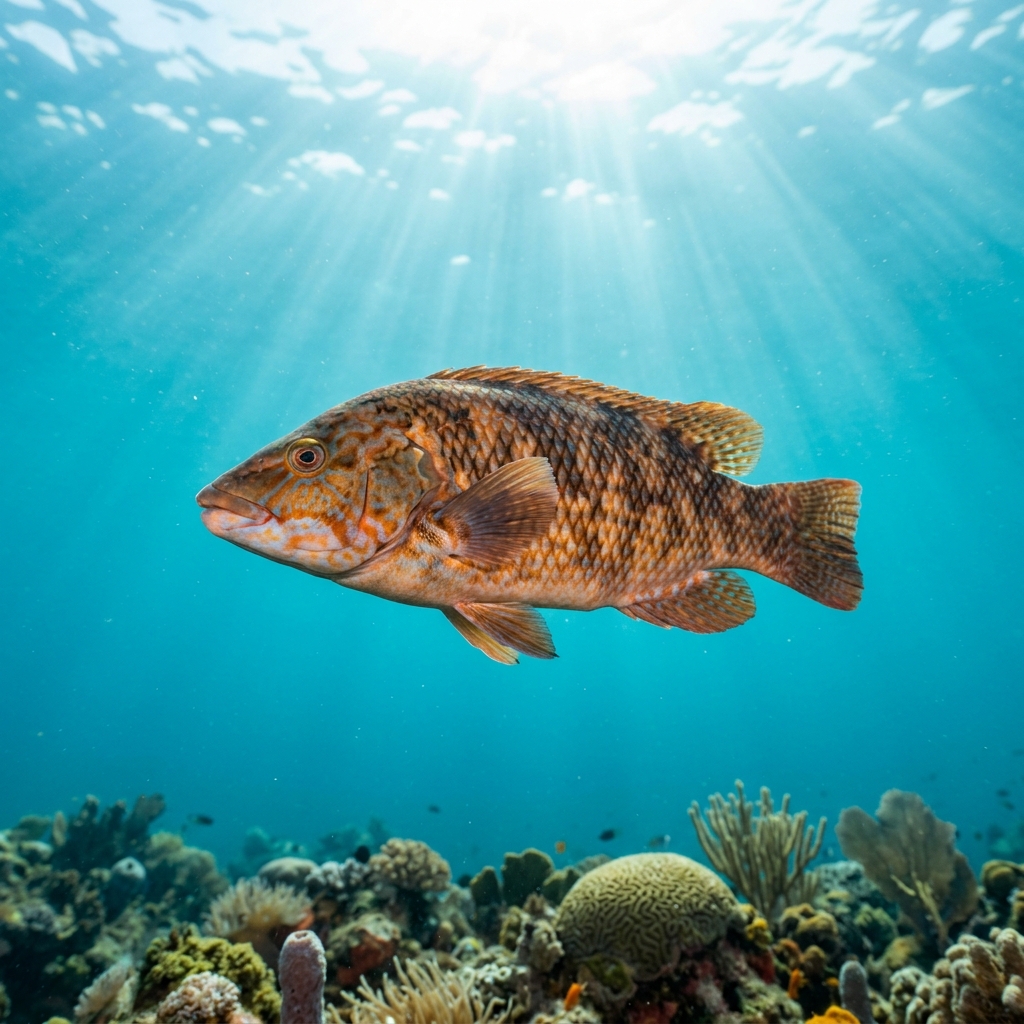
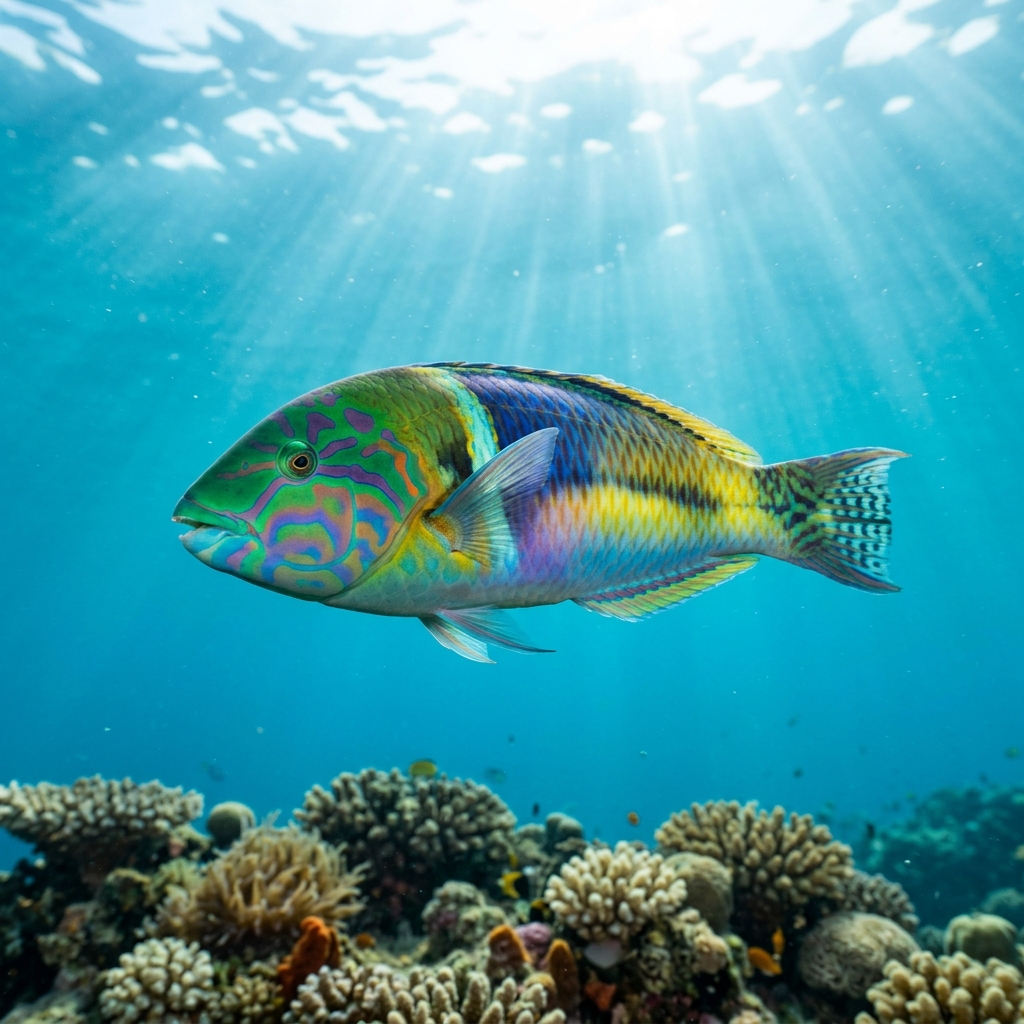
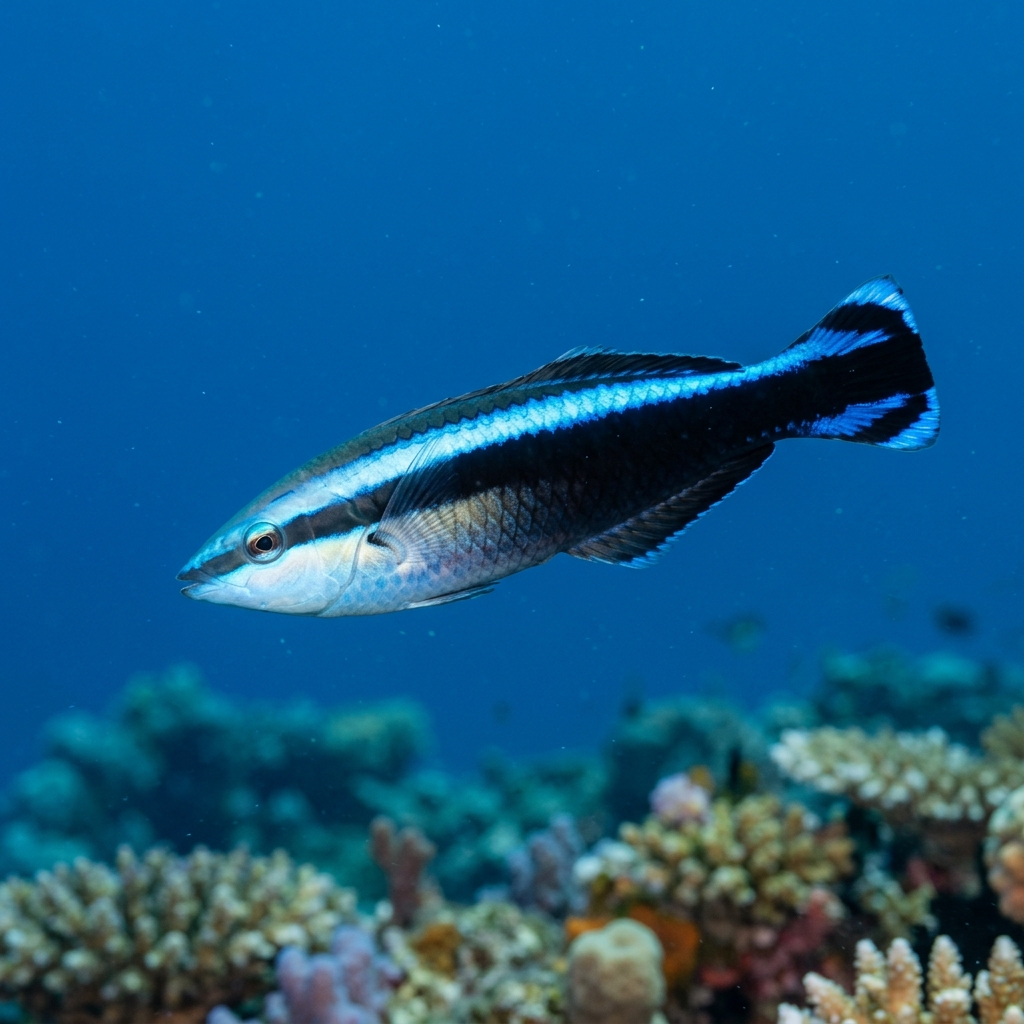
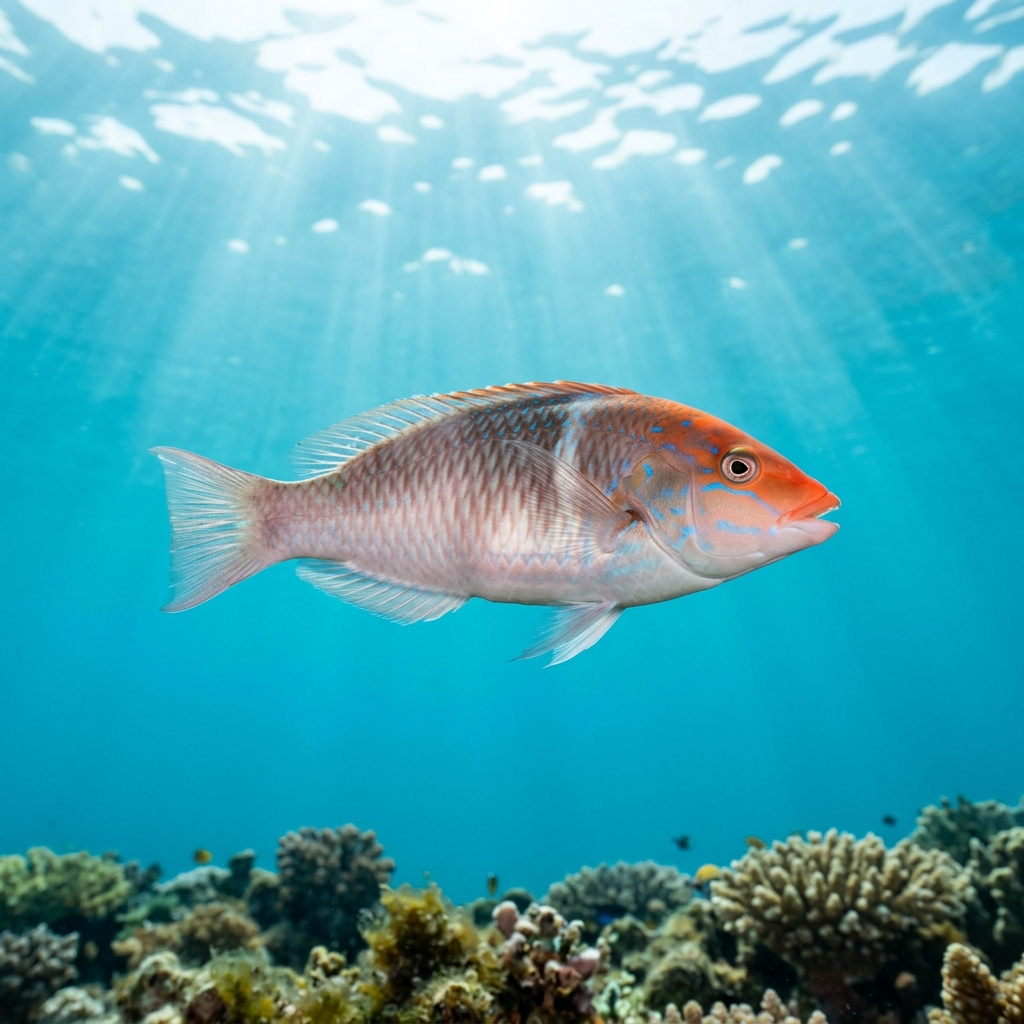
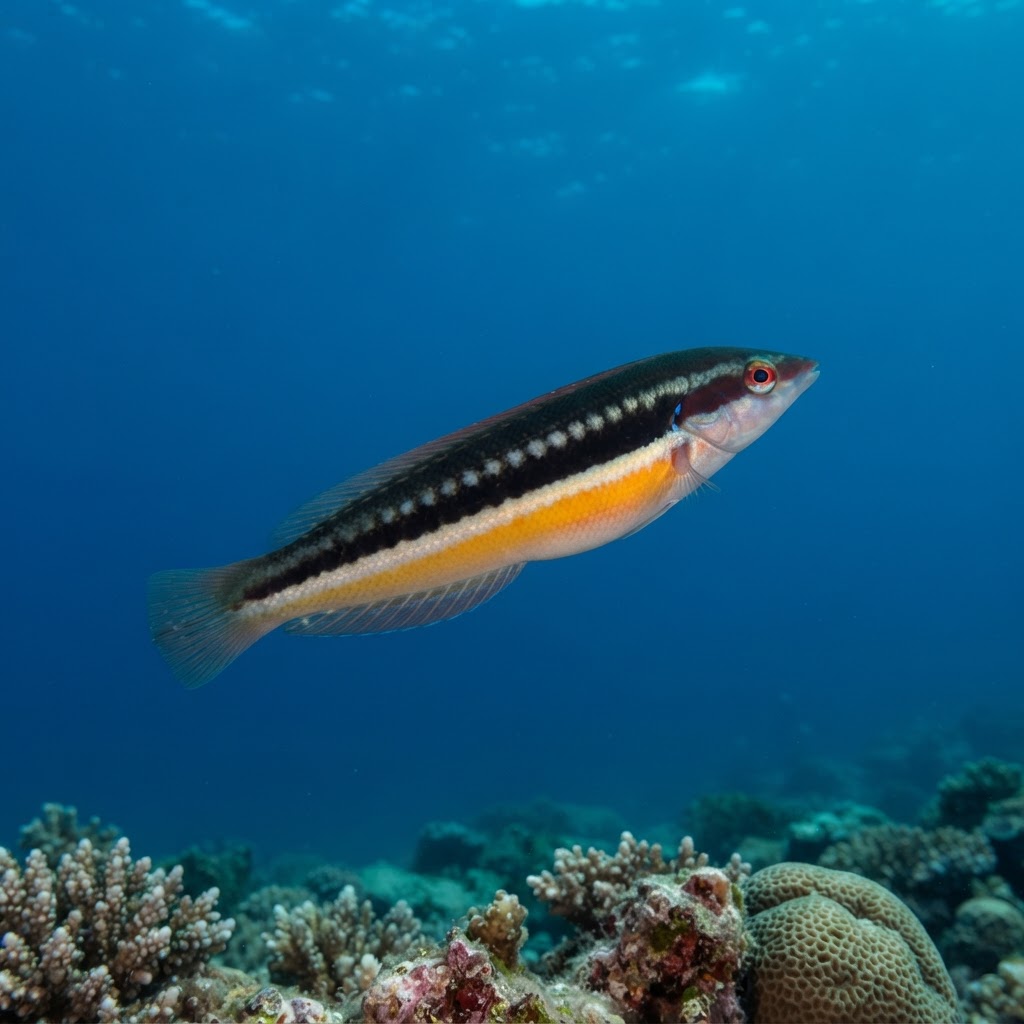
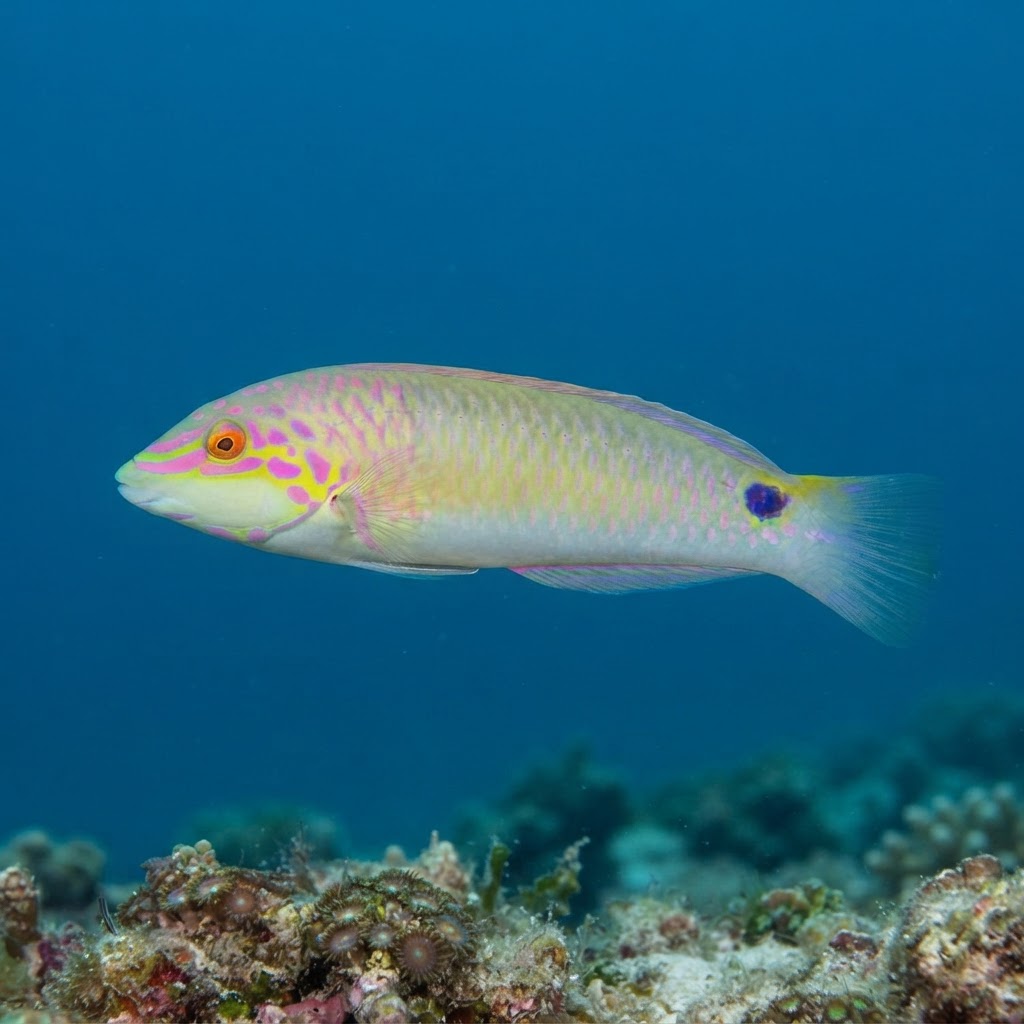
Look for a slim, torpedo-shaped fish around 18 cm cruising just above sand or rubble patches near reef edges. Adults show a greenish to blue-grey body with a pale saddle-like blotch and dark spots that give the species its name, most visible near the tail and dorsal fin. It swims with quick, darting bursts rather than a steady glide, which often catches your eye before the colour does.
Expect to see it working shallow sand patches and rubble zones close to reef structure, picking through the substrate for small invertebrates rather than holding still for photos. It is generally unbothered by divers at a normal distance, continuing its foraging rounds instead of bolting, though it rarely lingers long enough for a slow, careful approach to feel unnecessary.
Like many wrasses, this species is a protogynous hermaphrodite, meaning some individuals start life as females and later transition into males as they grow, which can shift both size and colour pattern over a fish's lifetime.
There is no clear seasonal pattern in the sightings, and with a comfort range of roughly 24.7 to 29.3C, this is a fish you can plan around any time of year on tropical Indo-Pacific reefs. Dive whenever conditions suit your trip rather than chasing a particular month.
This one turns up most reliably around the Society Islands in French Polynesia and across Okinawa and the Ryukyu Islands in Japan, both strongholds for it. It is also a steady presence on reefs in Queensland, Fiji's Viti Levu and Mamanuca Islands, Rarotonga in the Cook Islands, and around Kenting in Taiwan, with further sightings logged in Guam, New Caledonia, and Niue.
Mapping where Threespot Wrasse is logged…
It is most consistently logged around the Society Islands in French Polynesia and Okinawa in Japan, with strong showings in Queensland, Fiji, Rarotonga, and Taiwan's Kenting region.
There is no strong season in the sighting data, and it tolerates a wide 24.7 to 29.3C range, so it is a reliable year-round sighting on Indo-Pacific reefs.
Look for a slender, 18 cm fish with a greenish-blue body, a pale saddle patch, and dark spots near the tail, darting low over sand and rubble rather than hovering in open water.
They typically reach around 18 cm, a modest size that fits the broader pattern of small, reef-associated wrasses in this family.
Yes, it can change sex over its lifetime, starting as a female and later becoming a male, a trait shared with many other wrasse species.
No, they pose no threat to divers and simply go about foraging on the reef floor when people are nearby.
Site and sighting data is aggregated from diver logs, iNaturalist and GBIF. For taxonomy and conservation status:
Bird Wrasses
3,632 sites