Stethojulis trilineata
Small striped wrasse logged at 263 dive sites, most reliably in Sabah, Koh Lipe and Phuket year-round in warm reef water.
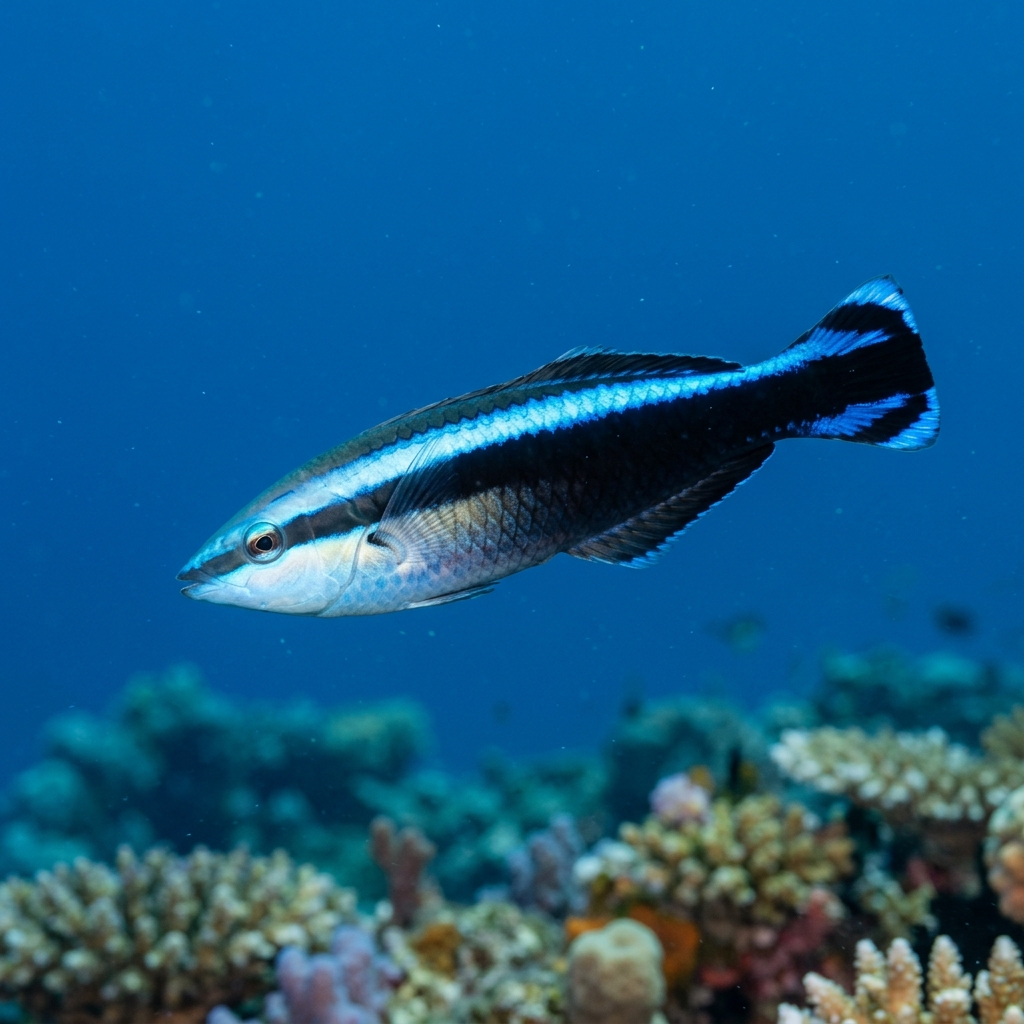
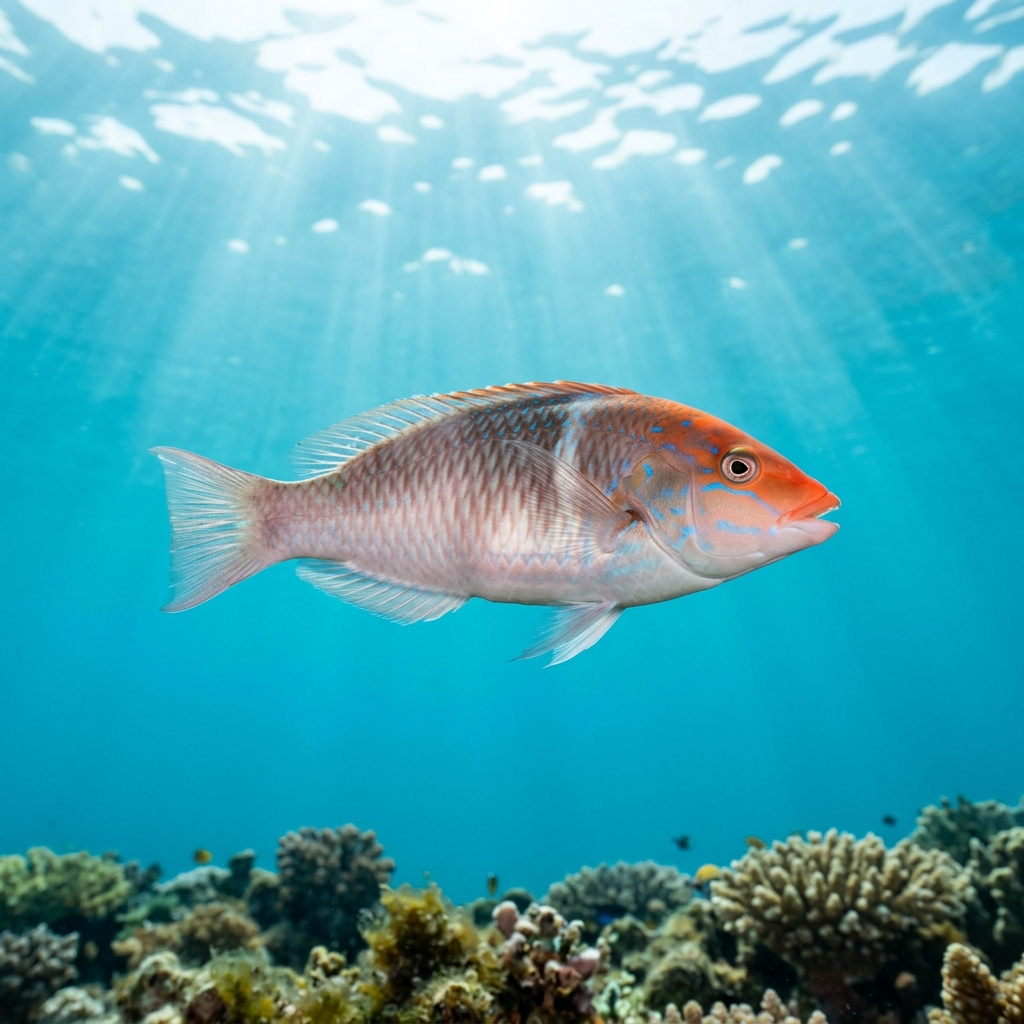
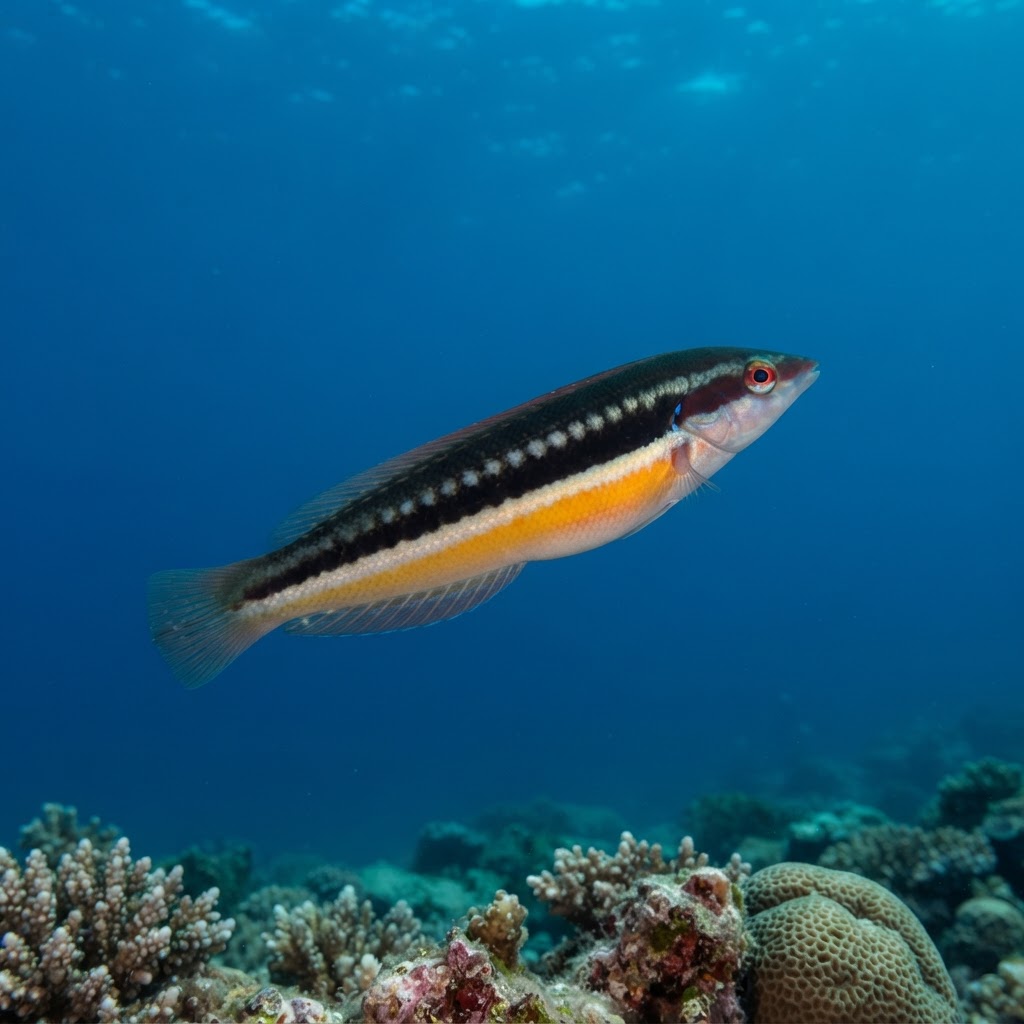
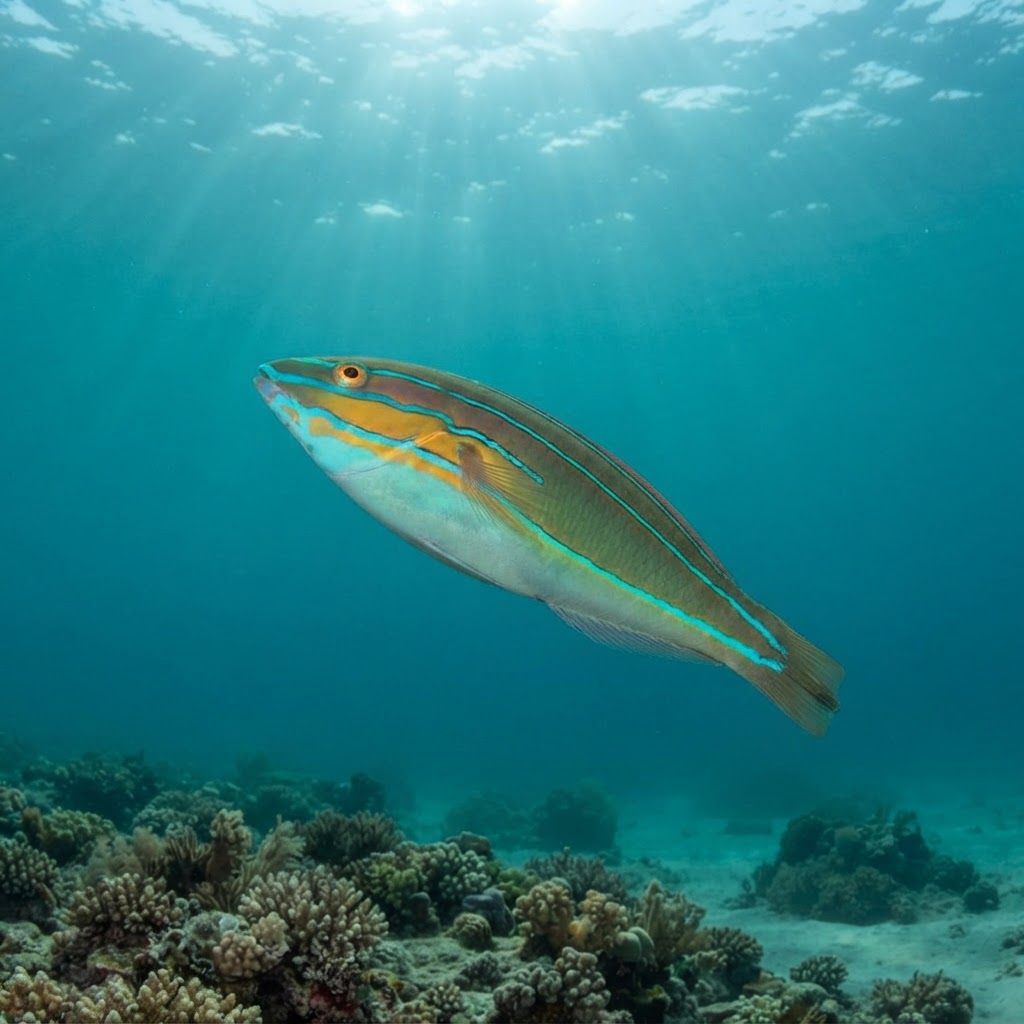
A slim, torpedo-shaped little wrasse that tops out around 11 cm, easy to overlook among busier reef fish. Look for three dark horizontal stripes running along a pale, silvery-green to blue body, with a flash of iridescent blue often visible near the head and fins in good light. It darts in short bursts over the reef rather than cruising, which combined with its small size and stripe pattern is the quickest giveaway.
Expect quick, low, jerky movement over shallow reef flats and rubble patches rather than open swimming, usually within the top 20 metres where light and small invertebrate prey are plentiful. It pays divers little attention and will not approach or flee dramatically, just keep foraging along the substrate. Best picked out by watching for that stripe pattern flickering between coral heads rather than expecting it to hold still for a photo.
Like many wrasses in the family, it is a daytime forager that picks small invertebrates off the reef surface and substrate, then shelters in sand or rubble at night, so dawn and midday dives over shallow flats tend to show it most active.
No clear seasonal pattern shows up in the sightings, and its comfort range of 26.7 to 29.3 C matches warm tropical reefs year-round, so any month works at its core sites.
Most reliably logged in Malaysia, especially Peninsular Malaysia's east coast and Sabah, and in Thailand around Koh Lipe and Phuket. Strong numbers also come from the Philippine Visayas, Sulawesi in Indonesia, and Hikkaduwa in Sri Lanka, with a scatter of sightings in Taiwan, Vanuatu and Timor-Leste. Across its range it tends to turn up as an uncommon but steady presence rather than the highlight of a dive.
Mapping where Three-lined Wrasse is logged…
It shows up most consistently in Malaysia, particularly Sabah and the Peninsular Malaysia east coast, and in Thailand around Koh Lipe and Phuket. It is also a steady sighting in the Philippine Visayas, Sulawesi in Indonesia, and Hikkaduwa in Sri Lanka.
There is no strong seasonal pattern in sightings, and its preferred water temperature of roughly 27 to 29 C holds year-round on the tropical reefs where it lives, so it can be seen in any month.
Look for a small, slim fish around 11 cm with three dark stripes running the length of a pale blue-green body and quick, darting movement low over the reef. Its size and stripe count are the fastest way to separate it from other small reef wrasses.
They grow to about 11 cm, making them one of the smaller wrasses you will spot on a reef dive.
No. They are small, harmless carnivores that feed on tiny invertebrates and show no interest in divers.
Divers most often log it as uncommon rather than common, meaning you might spot one or two per dive at a good site rather than a school. It is a reliable but low-key presence across hundreds of Indo-Pacific reef sites.
Site and sighting data is aggregated from diver logs, iNaturalist and GBIF. For taxonomy and conservation status:
Bird Wrasse
3,632 sites