Amphiprion tricinctus
Endemic to the Marshall Islands, this orange-and-white clownfish turns up in anemones across Kwajalein Atoll in 27.7-29.1C water year-round.
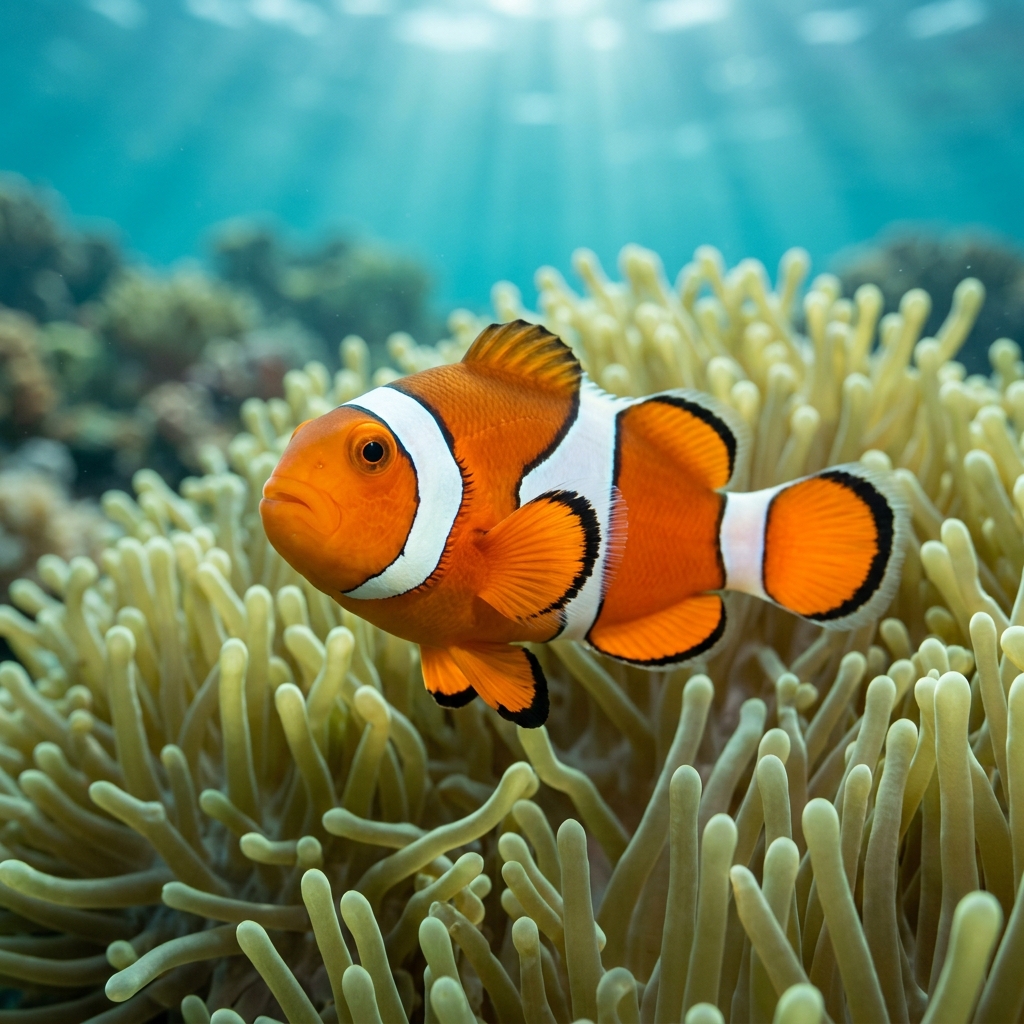
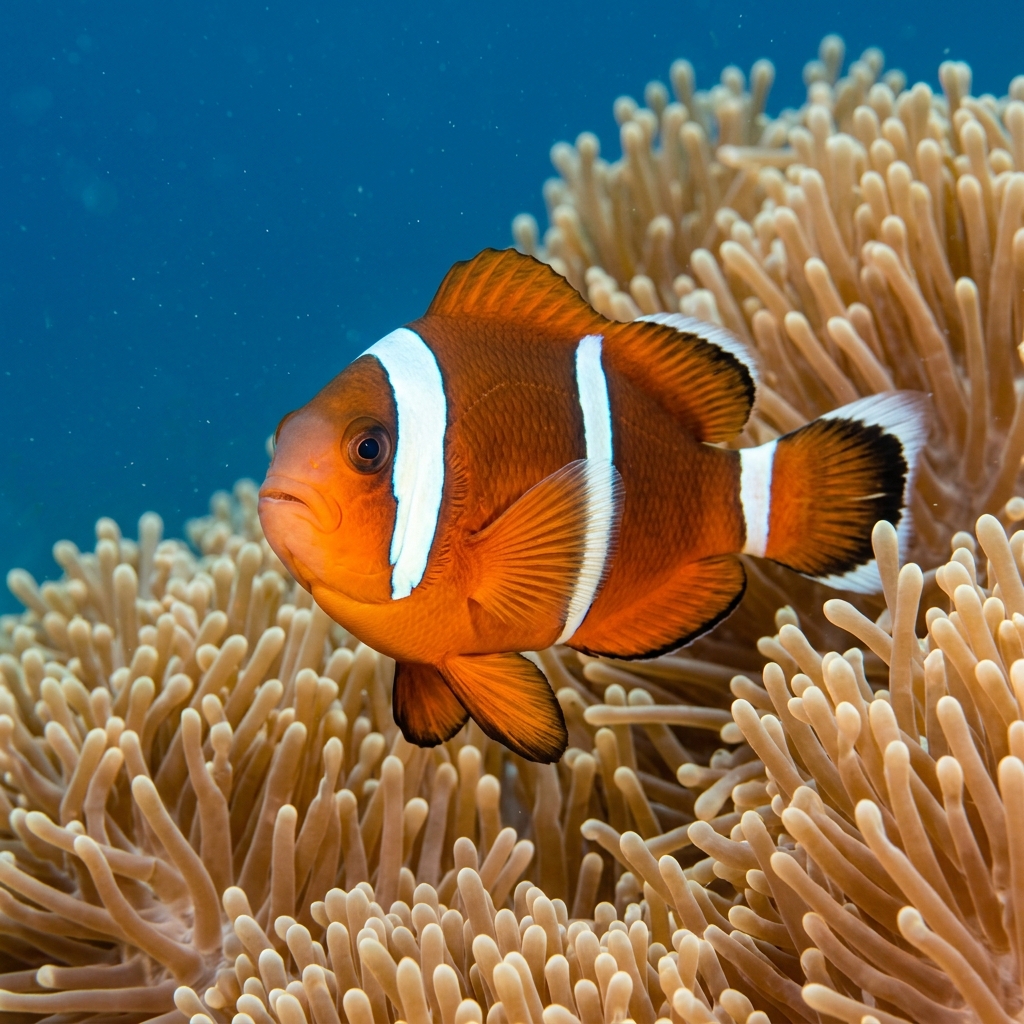
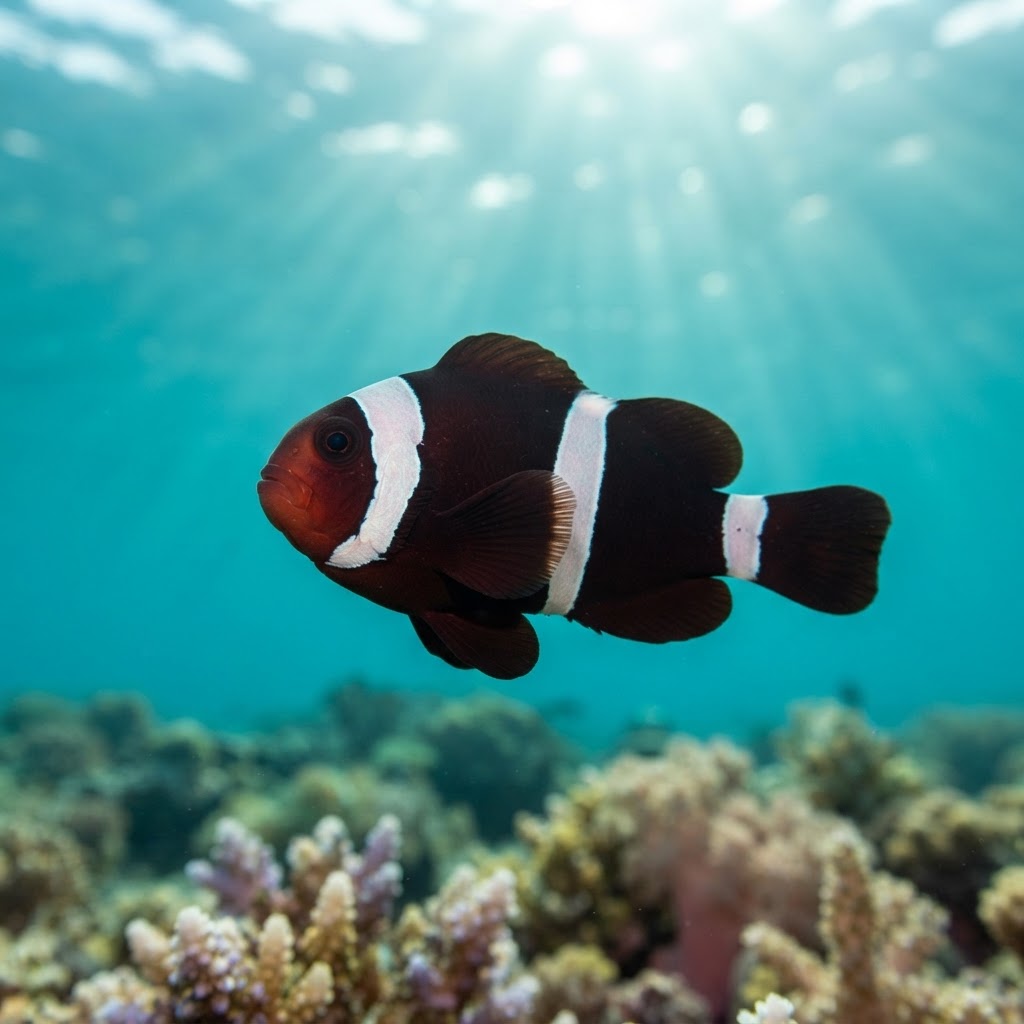
A stocky orange-red damselfish about 8cm long with three vertical white bars edged in black, one behind the eye, one at mid-body, one near the tail. The white bars have a slightly greyish tinge compared to the crisp white stripes of many other clownfish. It sits low in the tentacles of its host anemone rather than swimming freely over the reef.
Expect to find it hovering close to its host anemone, darting in and out of the tentacles rather than venturing far across open reef. It is territorial around its anemone and will dart at a mask or camera lens that gets too close, though it poses no real threat. Most divers log it as an uncommon to rare find, so a patient look through anemone clusters pays off more than a quick swim-by.
Like all anemonefish, it lives in a mutually protective relationship with its host anemone, coated in mucus that keeps it safe from the anemone's stinging tentacles while the anemone gains a feisty guard against intruders.
Sightings show no clear seasonal pattern, and the warm, stable 27.7 to 29.1C water around Kwajalein keeps it visible year-round. Plan around good visibility and calm conditions in the atoll rather than a particular month.
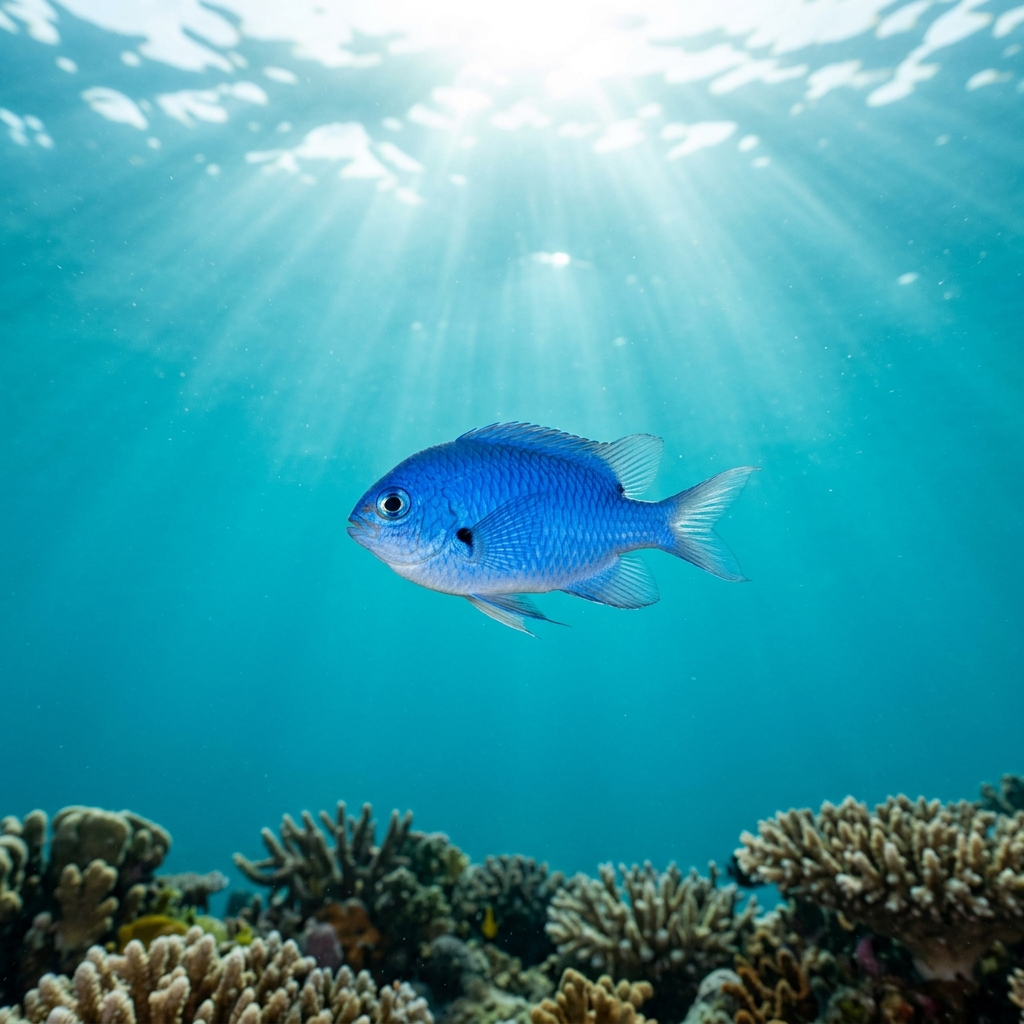
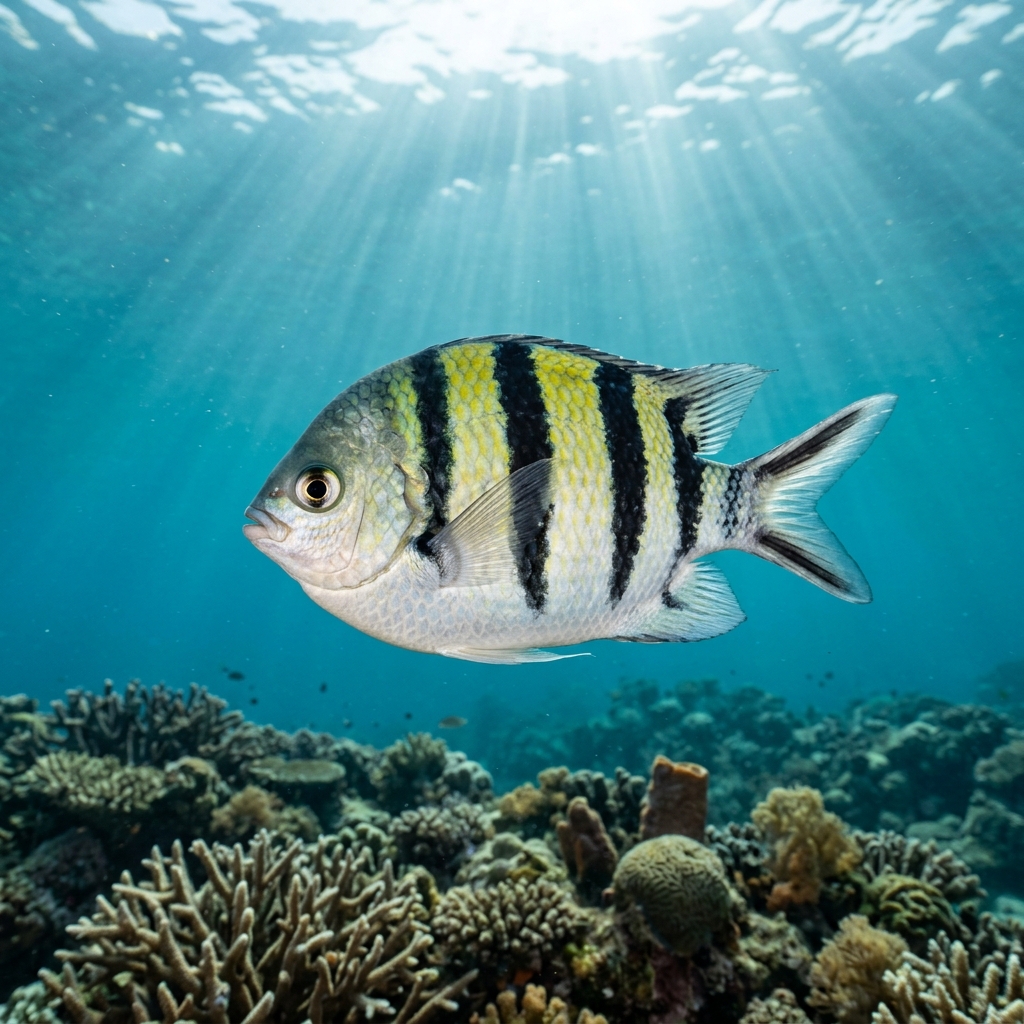
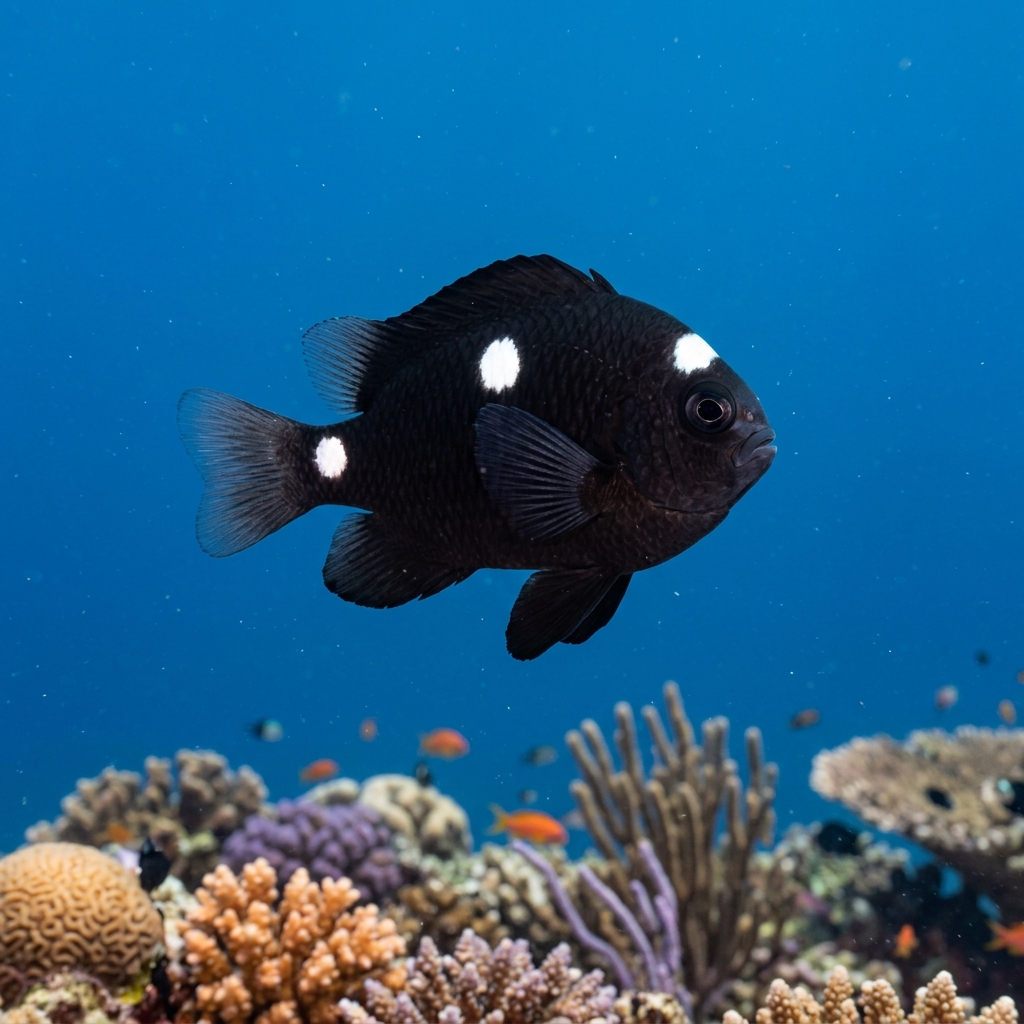
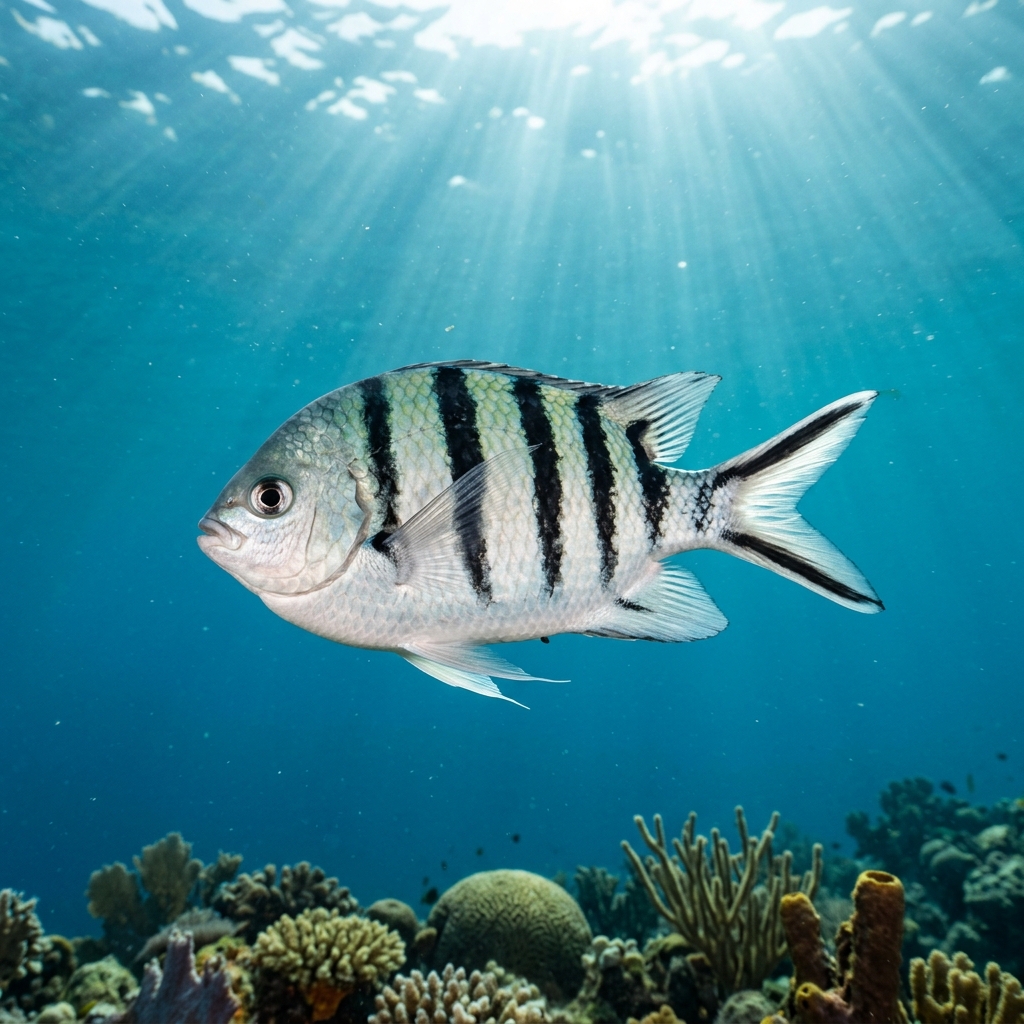
Reef neighbours a diver could mistake it for. Use the identification notes above to tell them apart.
This one is a Marshall Islands specialty, logged only in Kwajalein Atoll among the sites in the data. If you are diving Kwajalein, check anemone patches on the reef flats and slopes, as this is currently the only region where divers are reliably finding it.
Mapping where Three-band Anemonefish is logged…
Kwajalein Atoll in the Marshall Islands is the region where divers consistently log this species, usually in anemone patches on reef flats and slopes.
There is no strong season in the sighting data, and warm water around 27.7 to 29.1C persists year-round in Kwajalein, so it can turn up on any dive.
Look for an orange-red body with three white bars edged in black, sitting close to an anemone rather than roaming the open reef. It stays small, topping out around 8cm.
They reach about 8cm, a typical size for anemonefish, so look for a small, stocky fish hovering near anemone tentacles rather than a large free-swimming reef fish.
No. They may dart towards a mask or camera defending their anemone, but they pose no real risk to divers.
They rely on a mucus coating that protects them from their host anemone's sting, letting them live inside the tentacles for shelter while the anemone benefits from an aggressive resident guard.
Site and sighting data is aggregated from diver logs, iNaturalist and GBIF. For taxonomy and conservation status:
Dascyllus
3,697 sites