Lambrachaeus ramifer
An uncommon spiny crab logged in the Central Atolls, Maldives, in warm 23-30C reef water year-round.
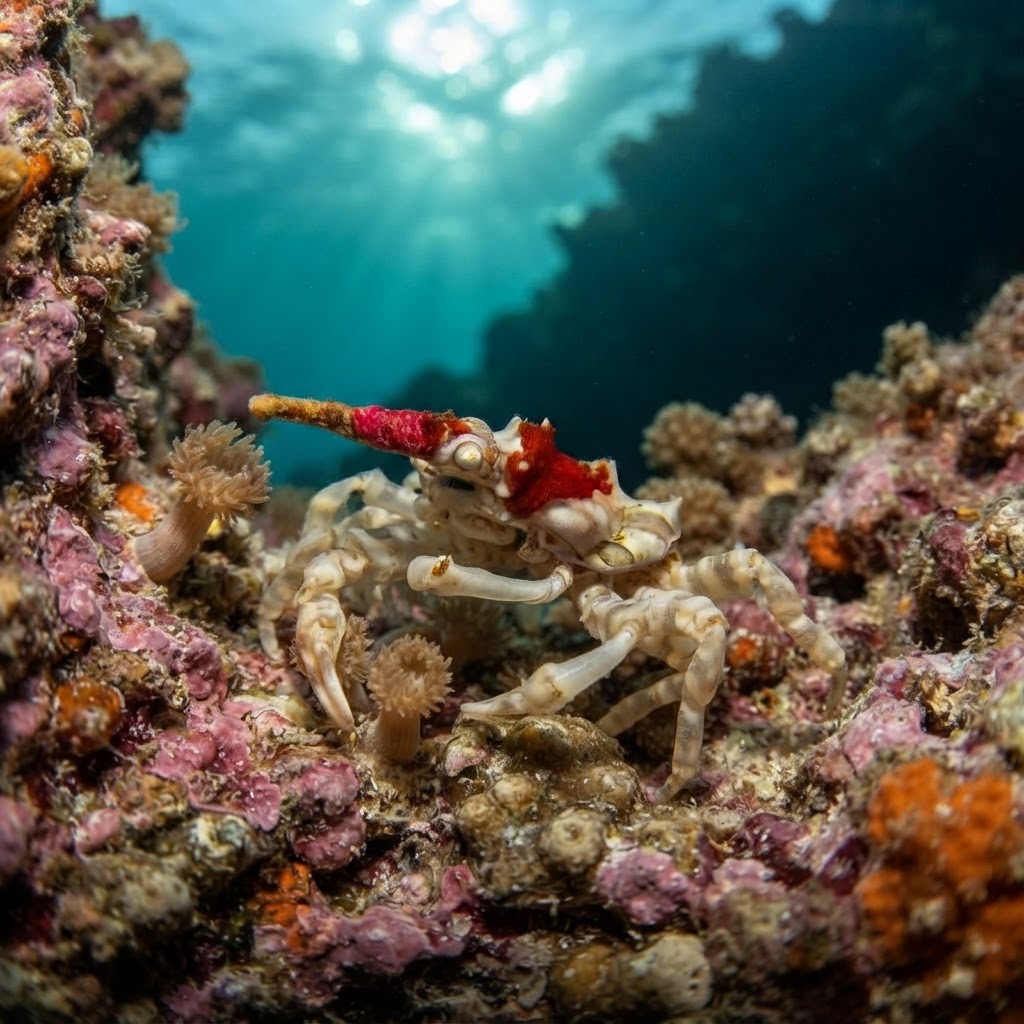
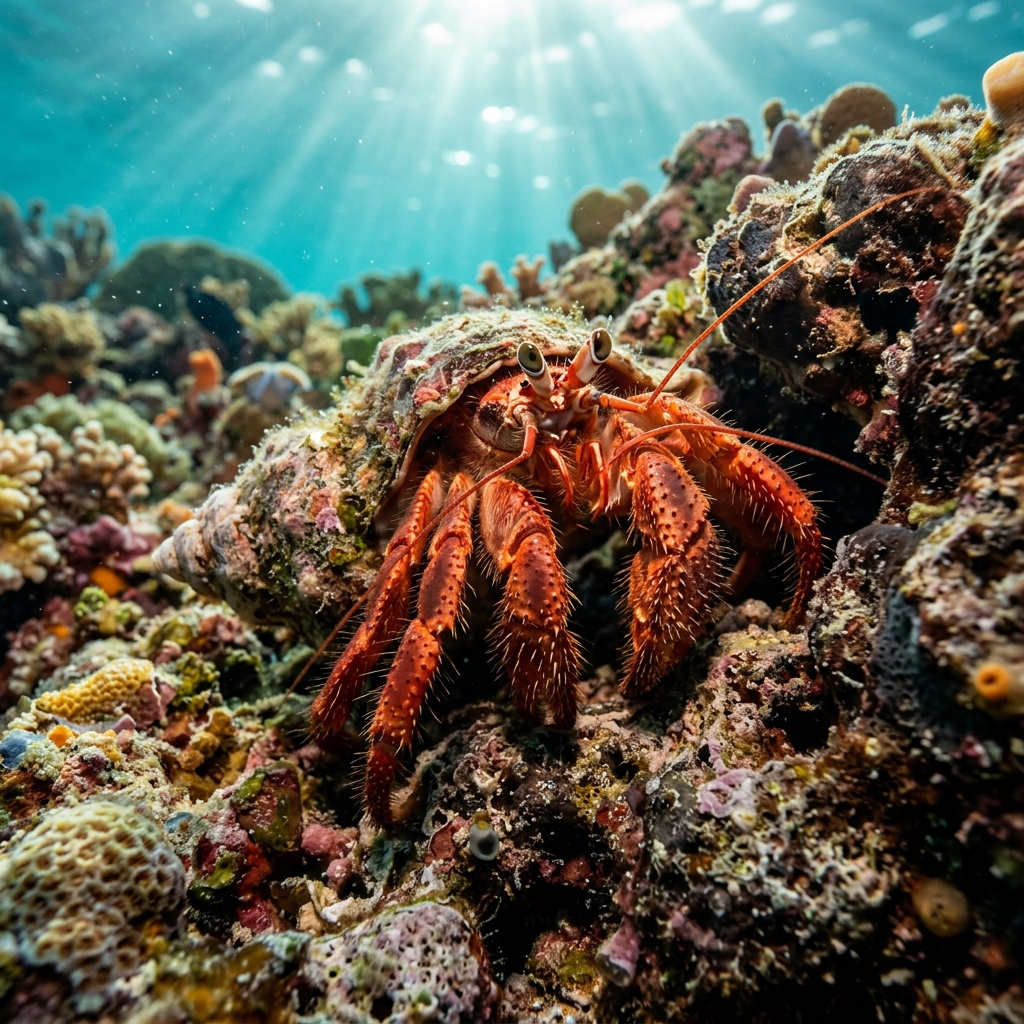
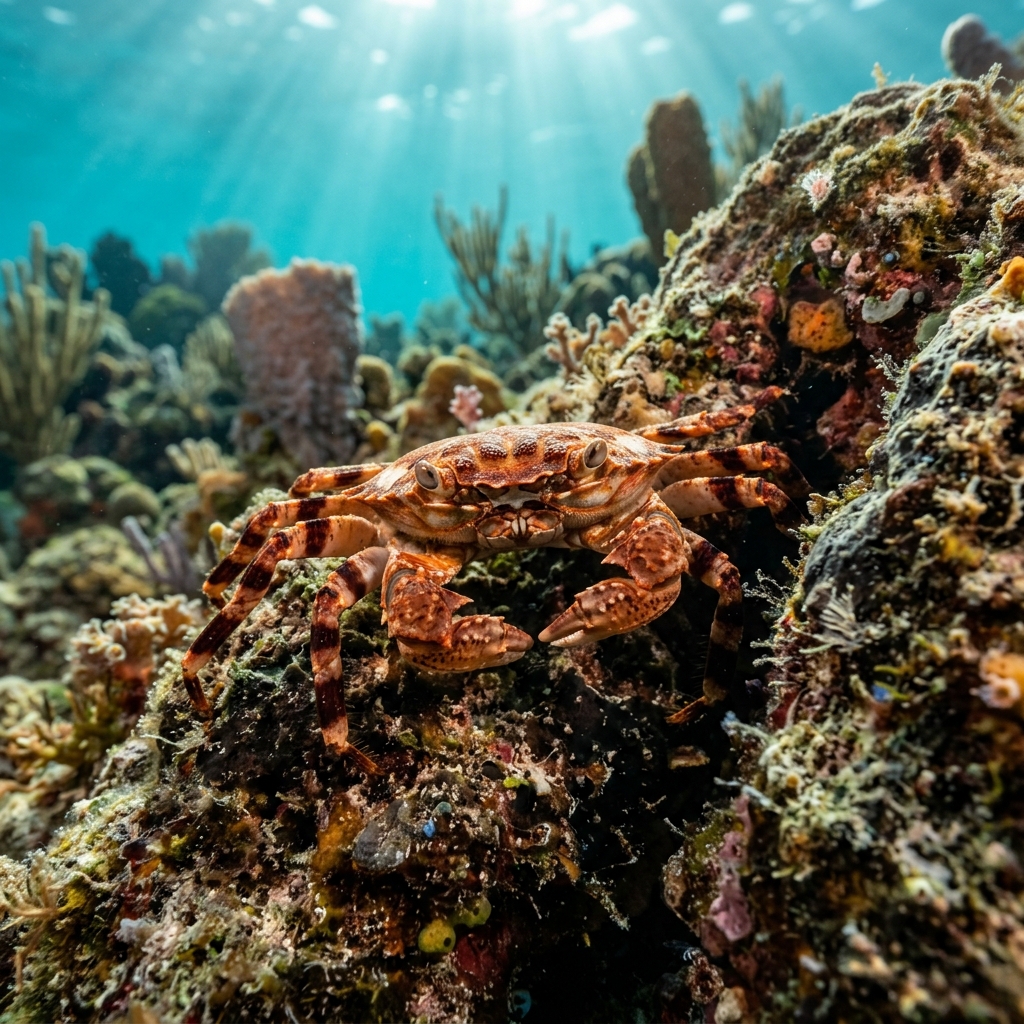
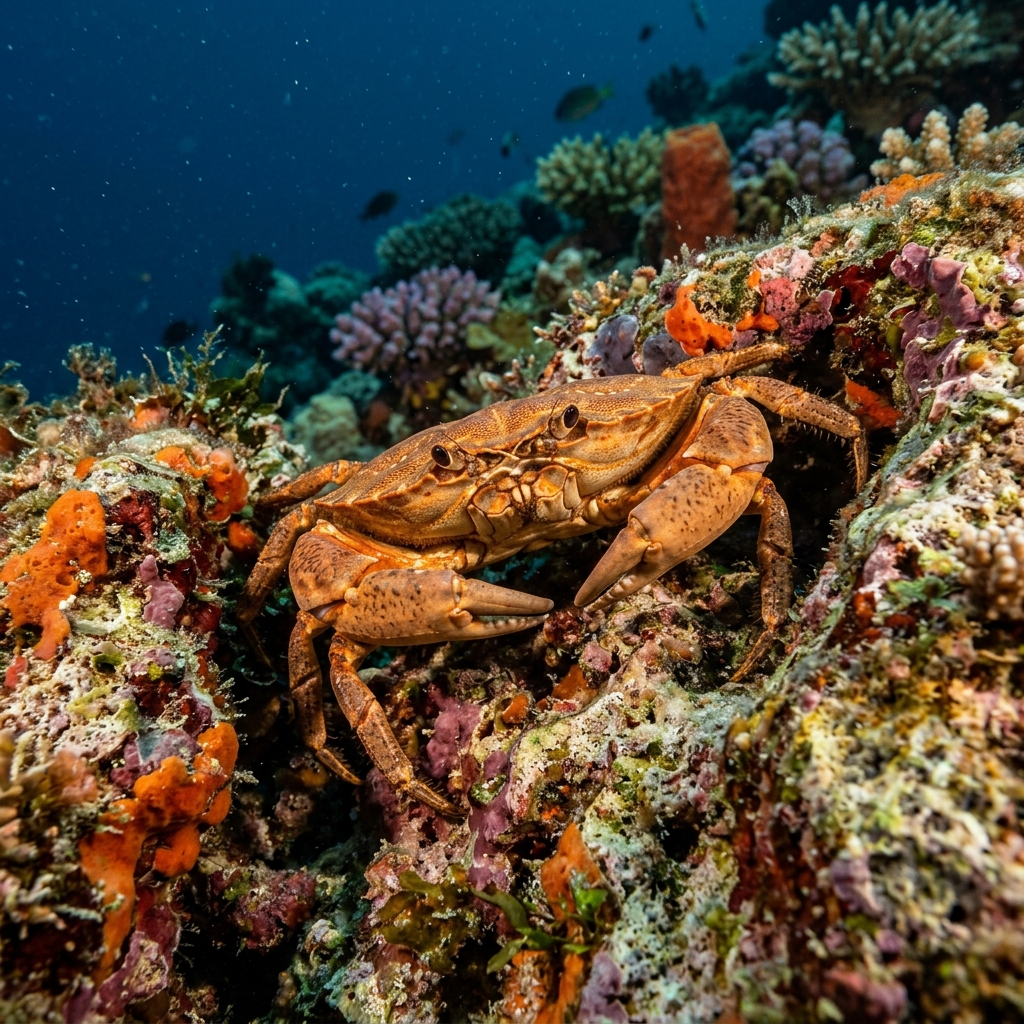
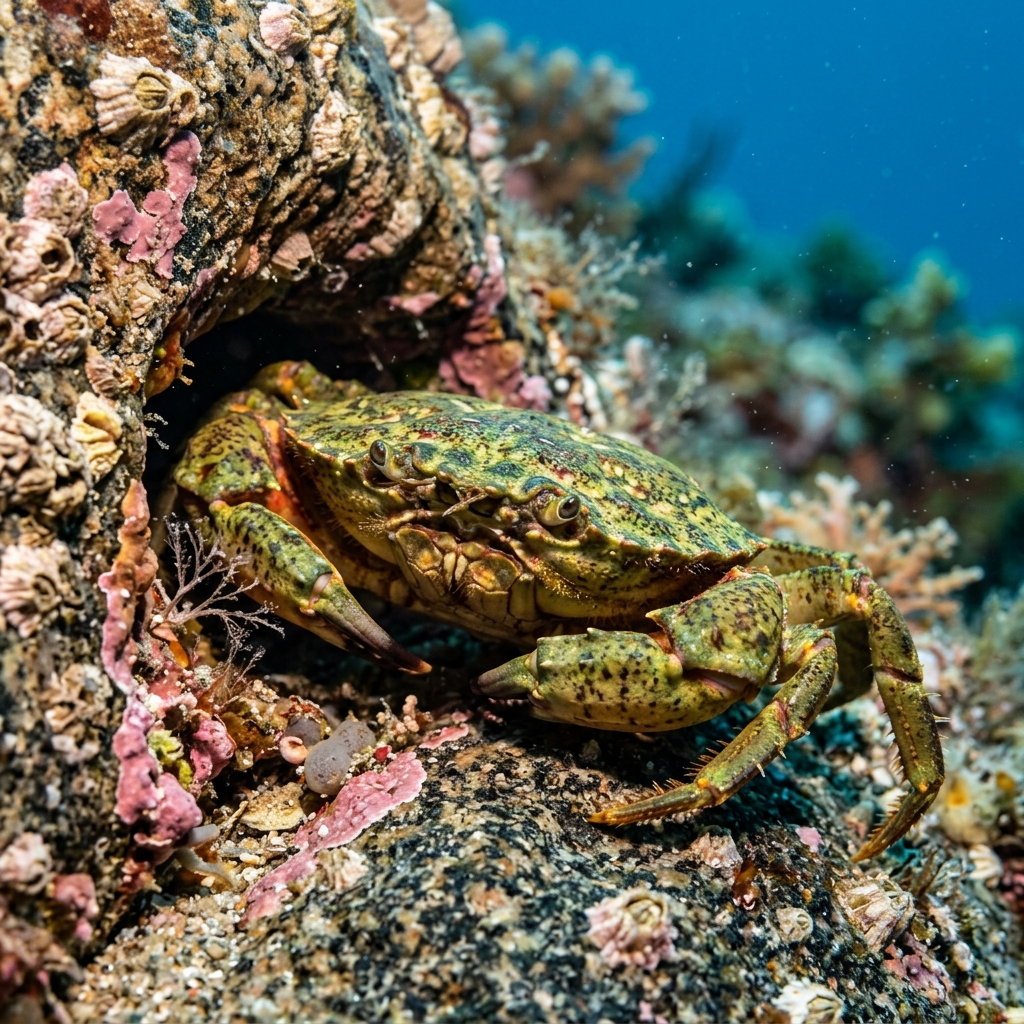
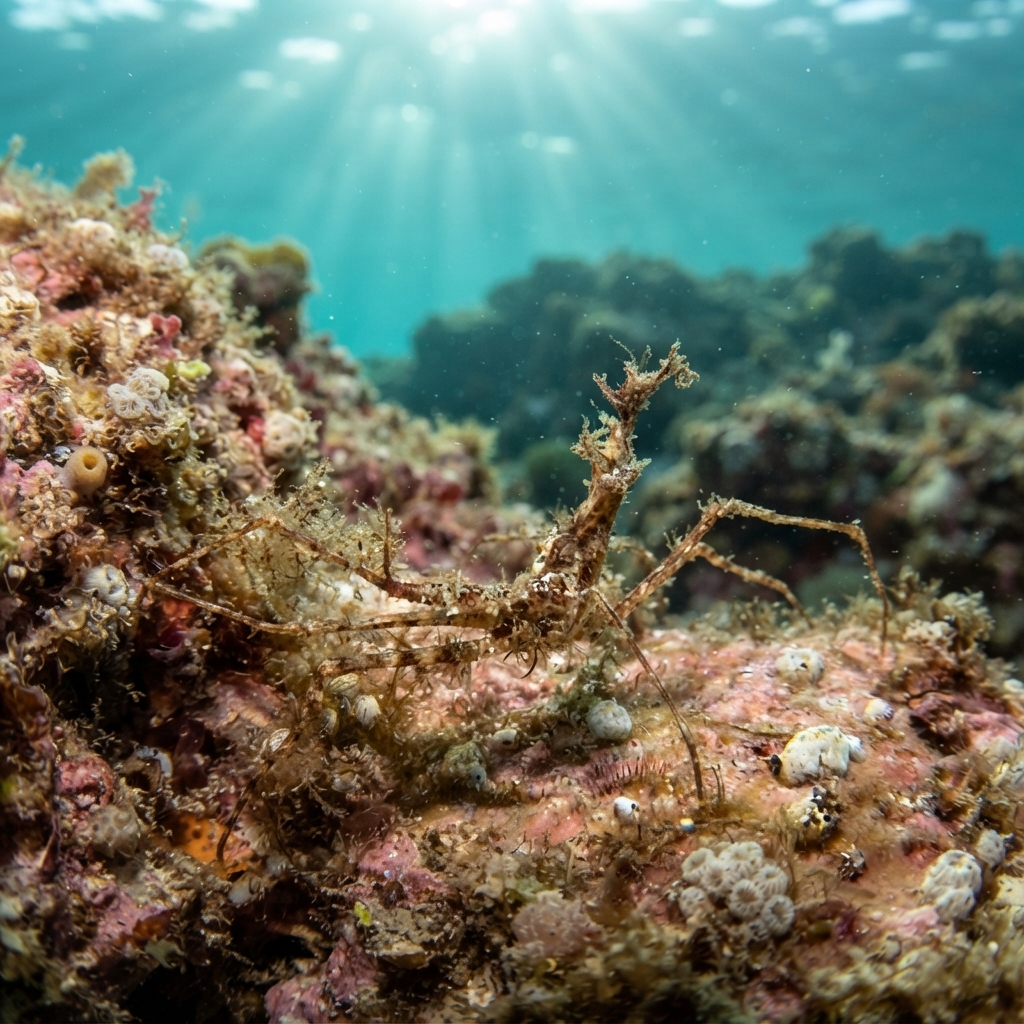
Small, angular crab with a spiny, thorn-studded shell that gives it a rough, twig-like outline rather than a smooth carapace. The elongated, jointed claws tuck in at odd angles, adding to the broken-branch camouflage. Colouring runs mottled and reef-toned, which combined with its slow, still posture makes it easy to swim straight past.
Divers find it sitting motionless on the reef, relying on its spiny, twig-like shape to disappear against rubble and coral debris rather than fleeing. It shows little reaction to divers, staying put unless directly disturbed, which makes a slow, close look at any odd-shaped lump on the reef worthwhile. Best spotted by scanning rather than swimming past at speed.
Its whole survival strategy is decoration and stillness: the spiny shell mimics reef debris so convincingly that most divers only spot it once they already know to look for the shape, not the colour.
No clear seasonal pattern shows up in the data, so treat it as a year-round possibility. Water in its recorded range sits between 23.1 and 29.5C, comfortable across the Maldivian dive season all year.
Reef neighbours a diver could mistake it for. Use the identification notes above to tell them apart.
Currently logged only in the Maldives, specifically in the Central Atolls region, where it turns up as an uncommon find on reef dives. No other countries have confirmed sightings yet, so this is very much a Maldives-specific target for now.
Mapping where Thorny Elbow Crab is logged…
The only confirmed sightings are in the Maldives, in the Central Atolls region, where it appears as an uncommon reef find. No other countries currently have logged records of this species.
There is no detected season for this crab, so it can turn up any time of year. It has been recorded in water from 23.1 to 29.5C, which covers typical Maldivian reef conditions year-round.
Look for a small, angular crab with a spiny, thorn-covered shell and elongated claws held at odd angles, sitting motionless on the reef. Its rough, broken outline is built to look like debris rather than an animal.
No, this species poses no danger to divers. It is a small, still, camouflaged crab that does not react aggressively even at close range.
It survives almost entirely through camouflage, using its spiny, twig-like shell to blend into reef rubble instead of swimming away from threats. Spotting one is more about pattern recognition than luck.
Site and sighting data is aggregated from diver logs, iNaturalist and GBIF. For taxonomy and conservation status:
European Green Crab
2,469 sites