Erronea caurica
A rare find on reef rubble at Kwajalein Atoll, warm water year-round, and a shell most divers never spot.
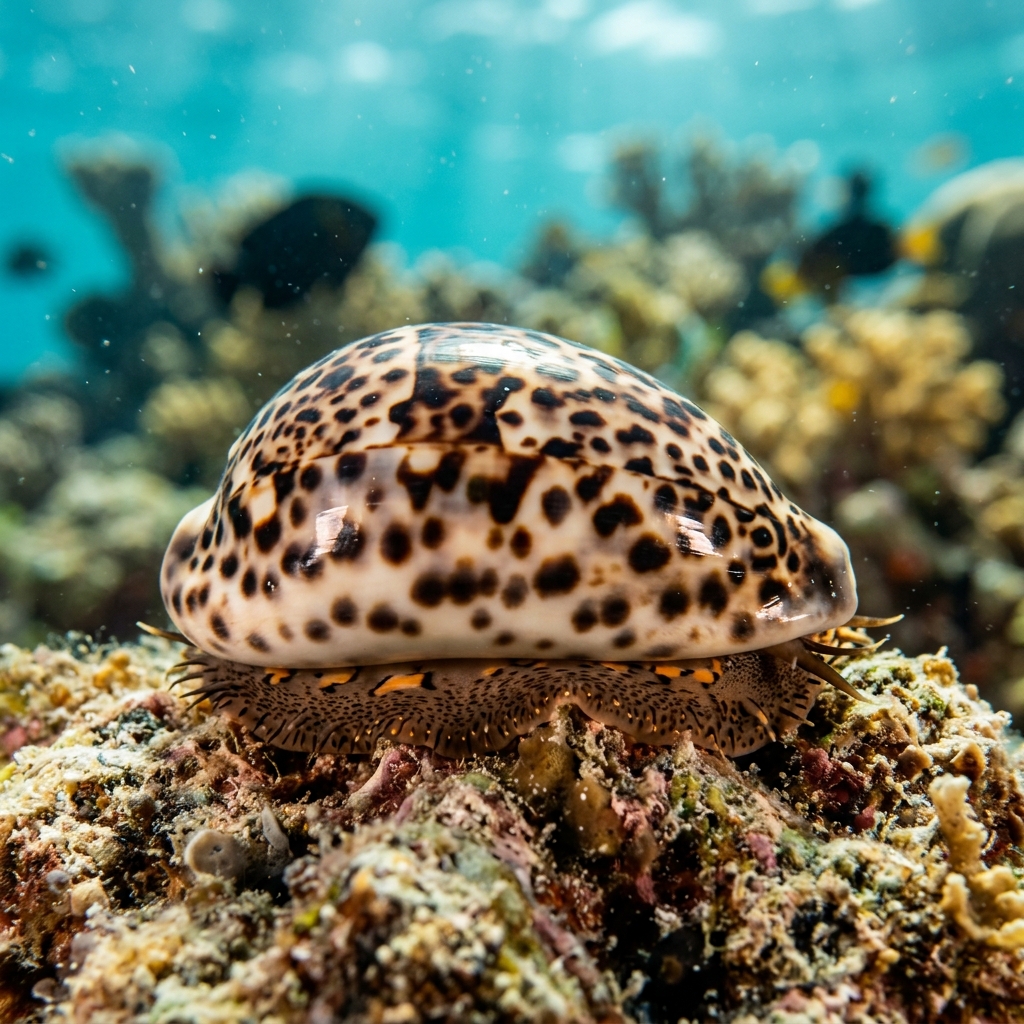
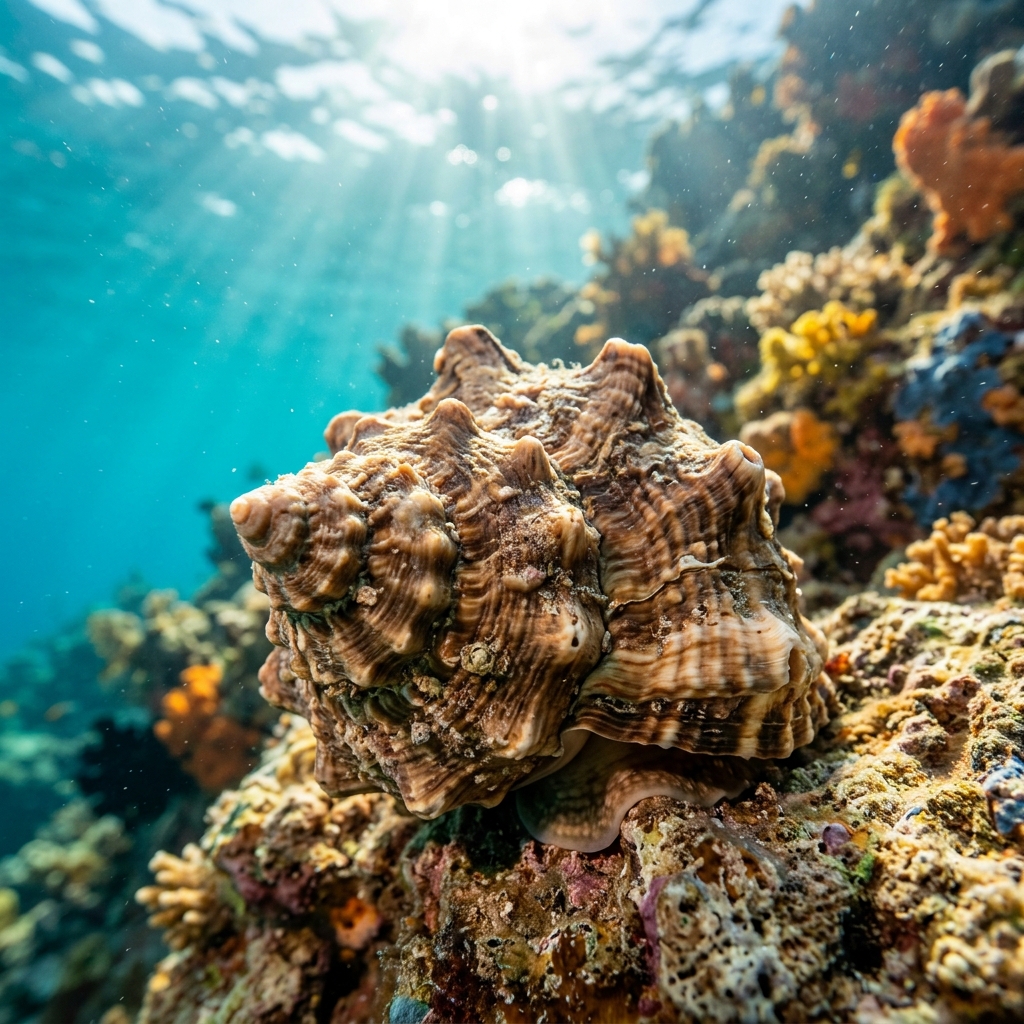
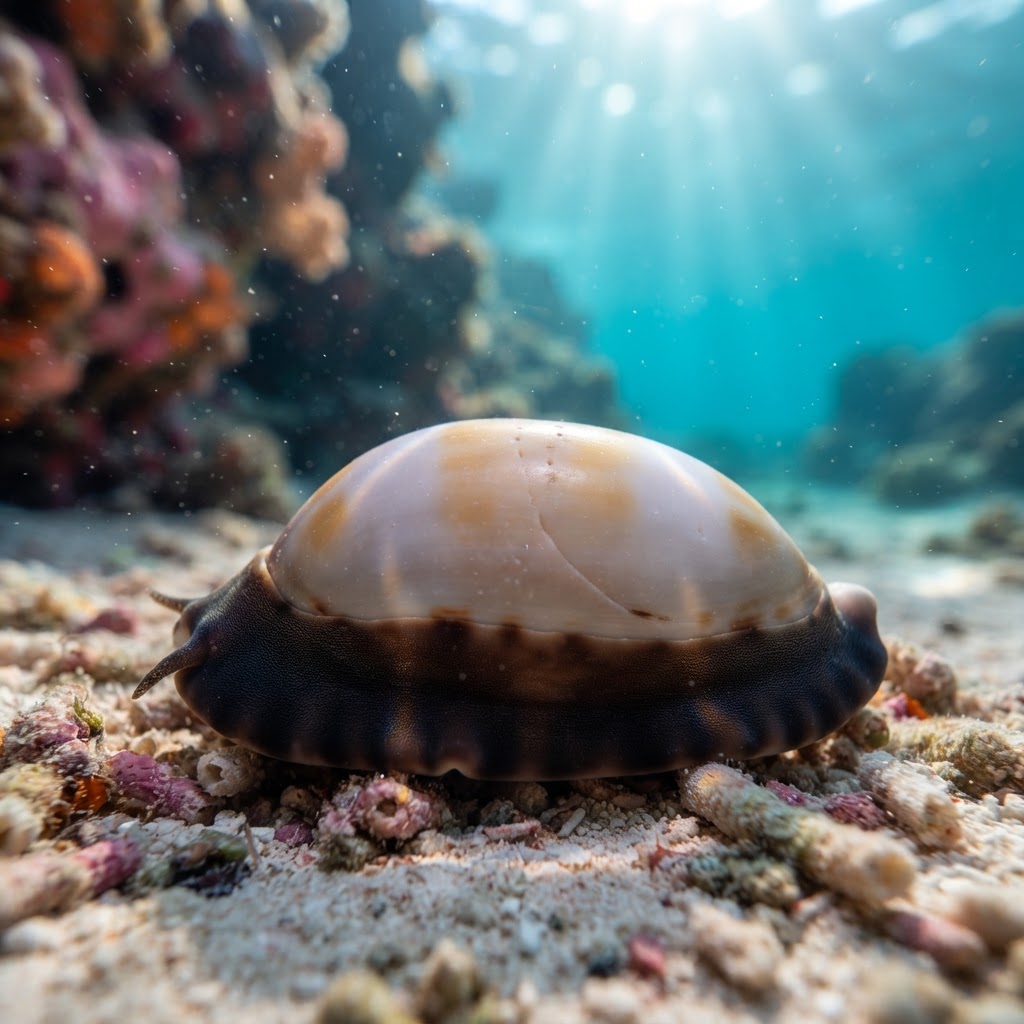
A small, glossy, oval shell with a smooth mottled brown-and-cream pattern and a noticeably thickened, rolled outer lip that gives the species its name. The shell body is domed and egg-shaped, tapering at both ends, with the fleshy mantle sometimes drawn over it when the animal is active. Look at the underside for the characteristic cowry slit lined with small teeth, and check the lip thickness against similar-sized cowries as the key giveaway.
This is a slow, secretive mover that spends most of daylight hours tucked under rubble, coral rock, or in reef crevices, which is a big part of why it is logged as rare even where it occurs. Divers who do see one usually spot it foraging over hard substrate at night or catch it half-hidden with its mantle partly covering the shell during the day. It shows no reaction to divers beyond withdrawing further into cover if disturbed.
Like other cowries, this species uses its fleshy mantle to extend over the shell while feeding, both to help build the glossy shell surface and to camouflage itself against predators while it grazes on algae and detritus on the reef.
No clear season shows up in the sightings, and the water temperatures where it is found, roughly 22.5 to 29.6 C, sit within a comfortable tropical range year-round, so there is no obvious month to target.
Kwajalein Atoll in the Marshall Islands is by far the most reliable place divers have logged this cowry, with scattered further sightings in Queensland and Western Australia and around Nouméa in New Caledonia. Outside Kwajalein it turns up only occasionally, so treat any sighting elsewhere as a bonus rather than a plan.
Mapping where Thick-edged Cowry is logged…
Kwajalein Atoll in the Marshall Islands is the most consistent location, with occasional sightings in Queensland and Western Australia, and around Nouméa in New Caledonia.
There is no detected season for this species. It lives in water from about 22.5 to 29.6 C, a range available year-round on the tropical reefs where it is found.
Look for a small, glossy oval shell in mottled brown and cream tones with a distinctly thickened, rolled outer lip. It is usually tucked into rubble or reef crevices rather than sitting exposed.
Exact size data is not available for this species, but like most cowries in the family it stays small, typically only a few centimetres long as an adult.
It can extend its fleshy mantle up over the shell while active, a trick used across cowries both to add to the shell's glossy finish and to disguise itself from predators while grazing.
No. It is a small, slow-moving reef snail with no venom or defence relevant to divers, and it poses no risk if left undisturbed in its crevice.
Site and sighting data is aggregated from diver logs, iNaturalist and GBIF. For taxonomy and conservation status:
Elysia Timida
573 sites