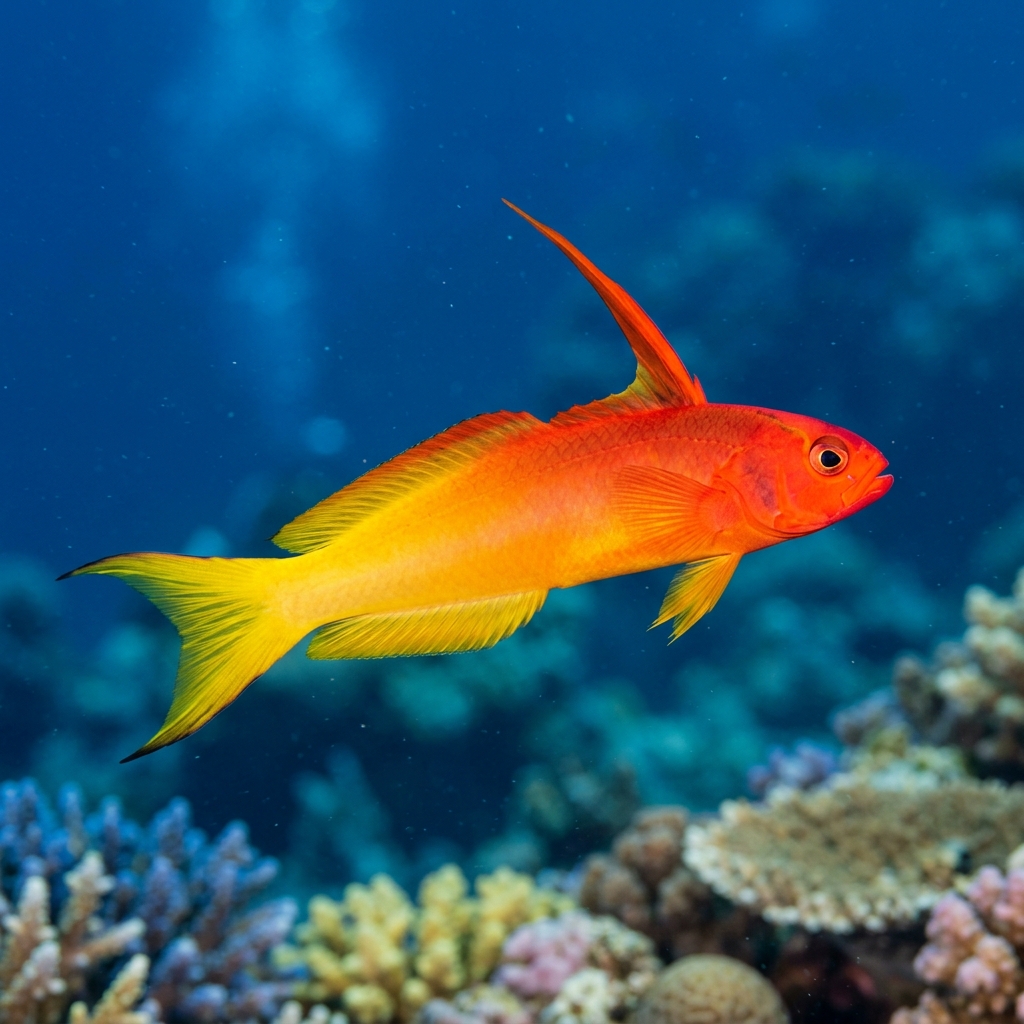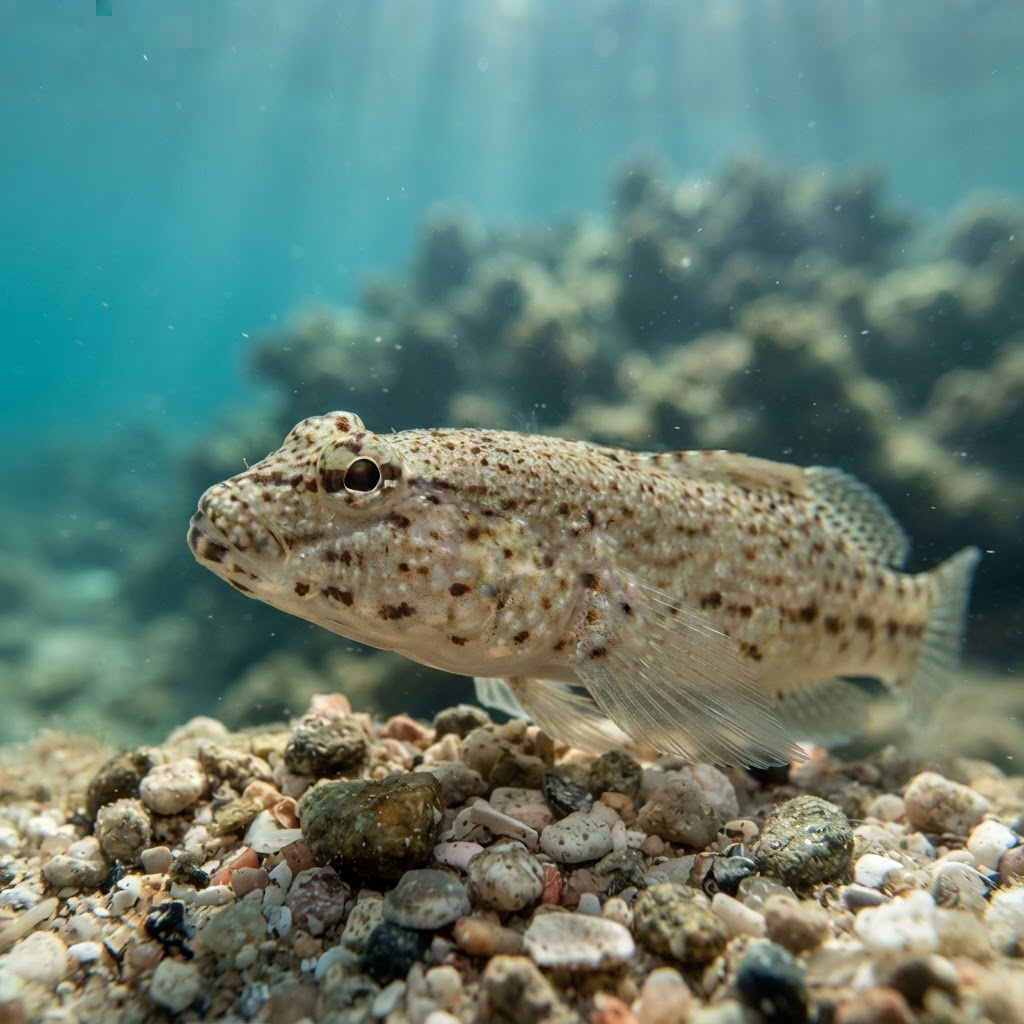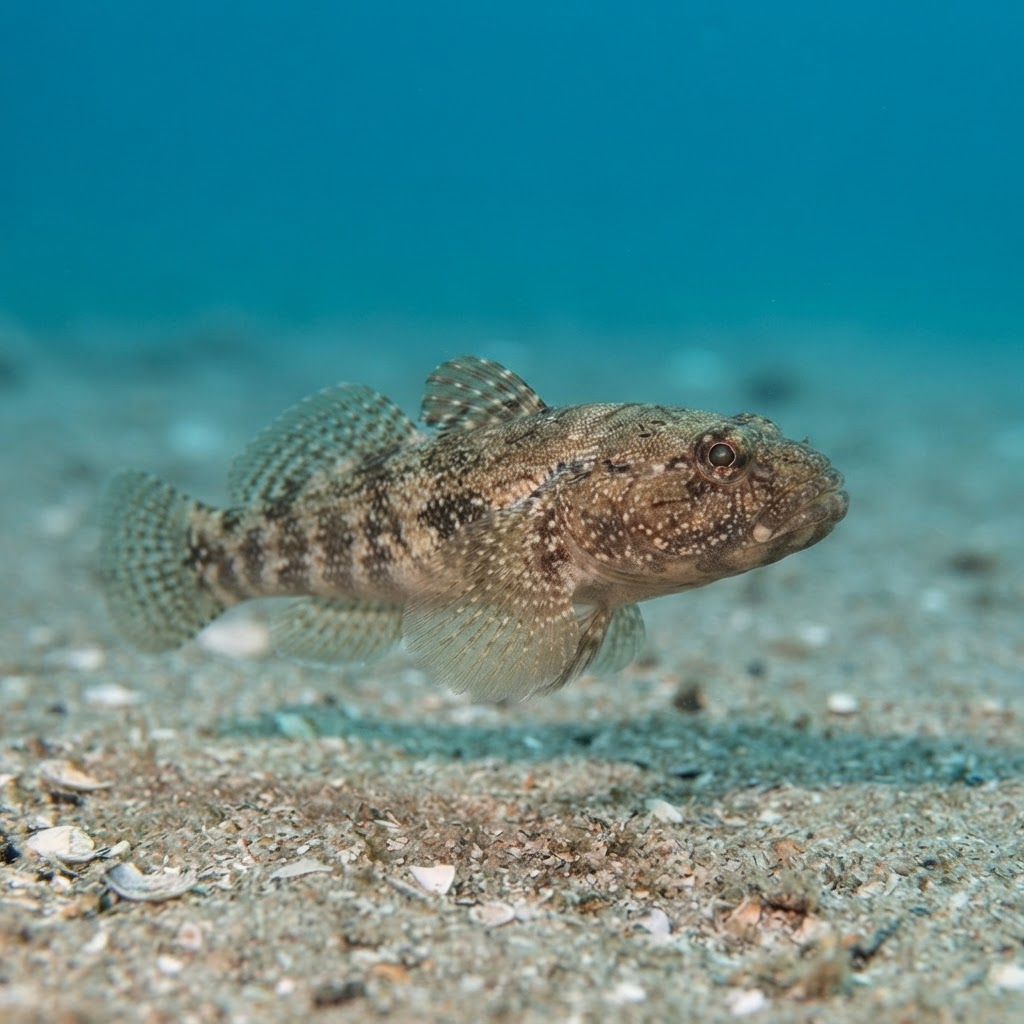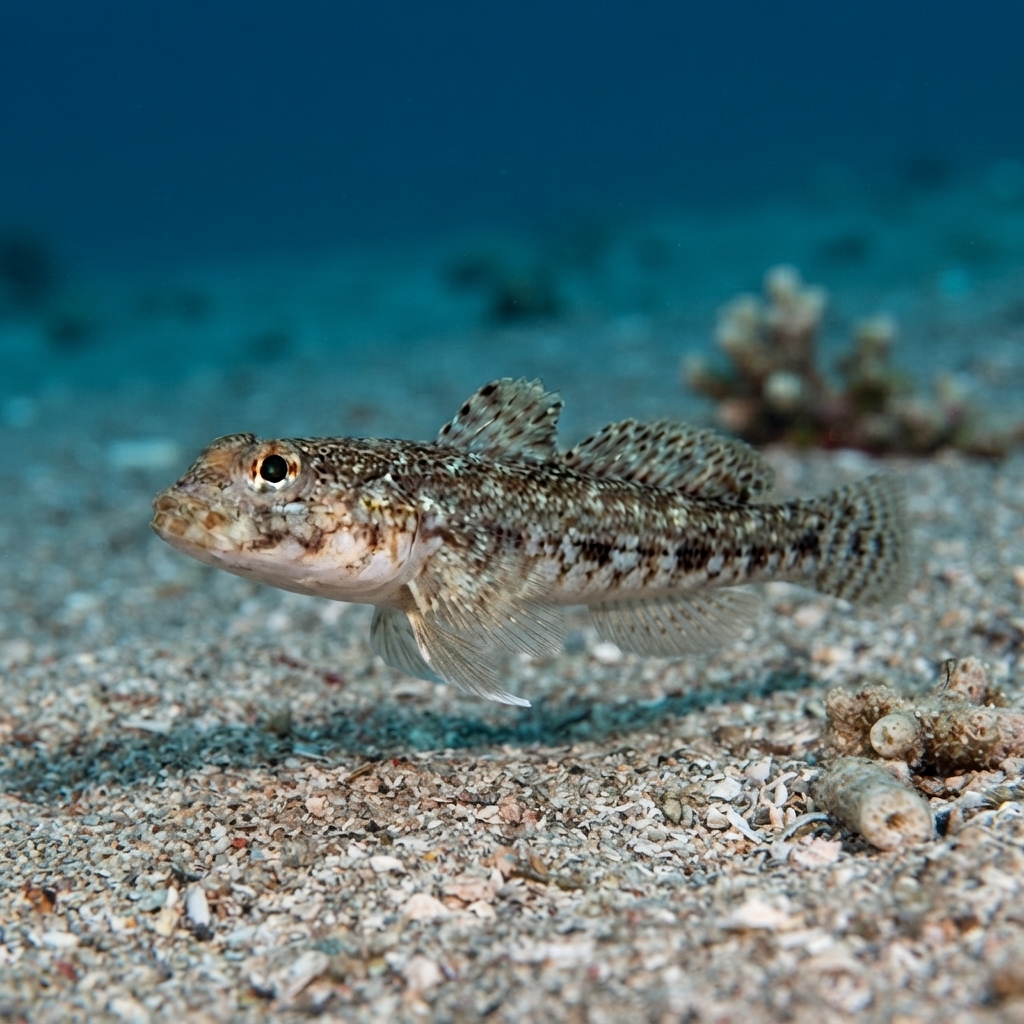
Eviota teresae
A 1cm goby found perched on rubble and coral in Saipan, Raja Ampat and Milne Bay. Here's how to actually spot one.
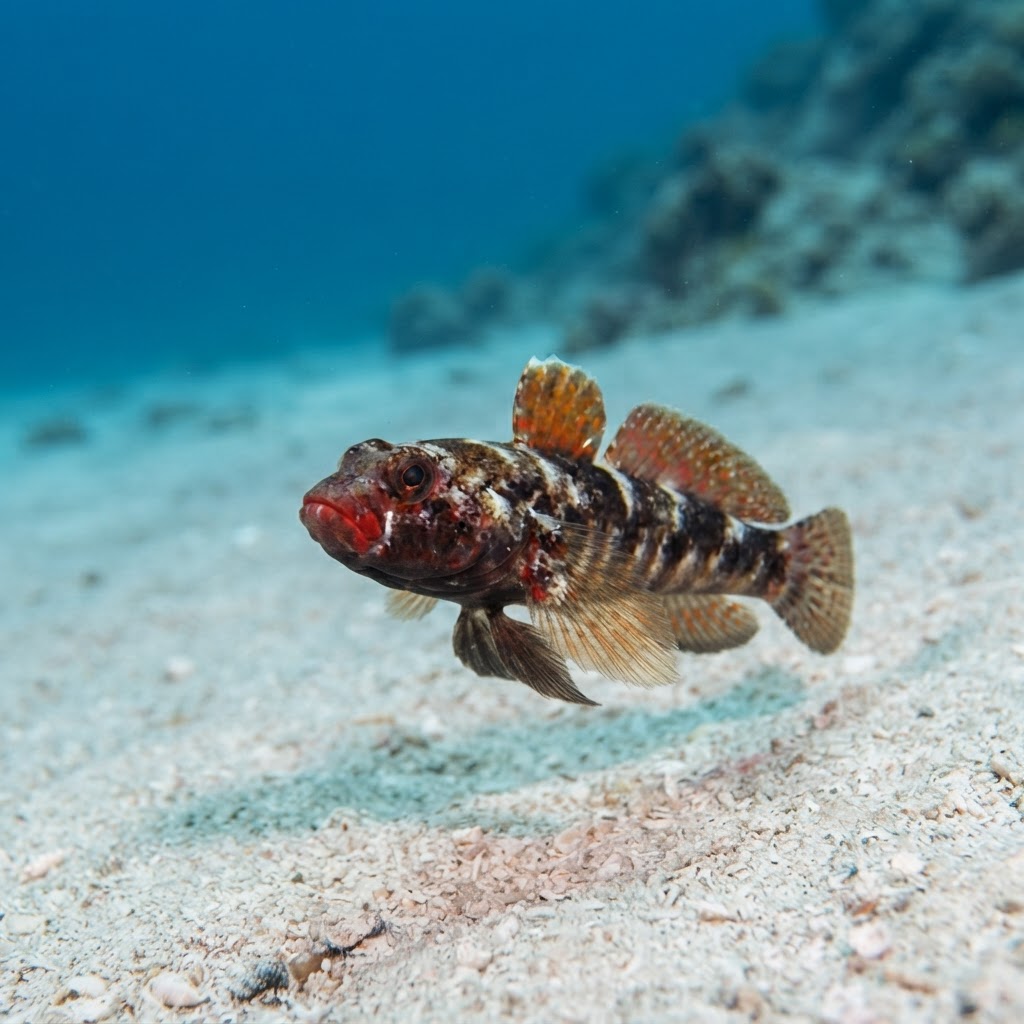
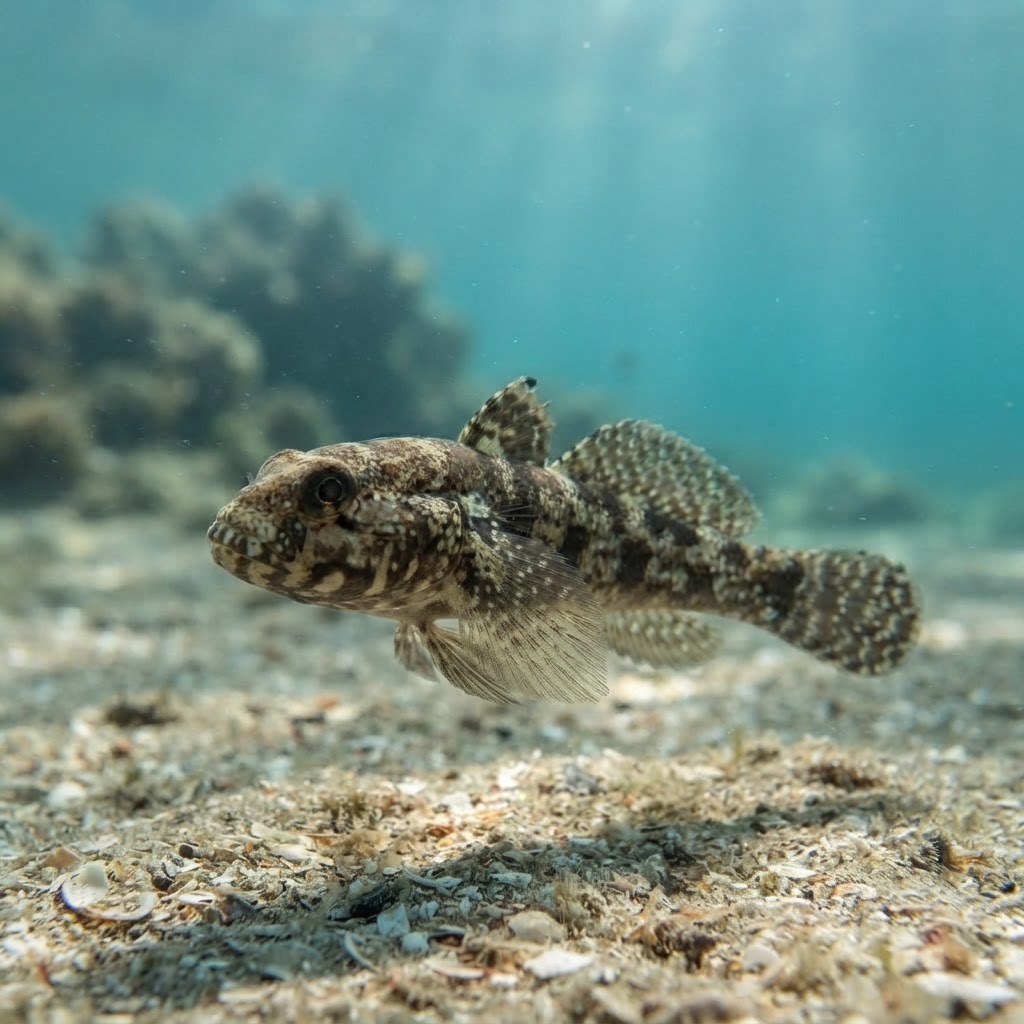
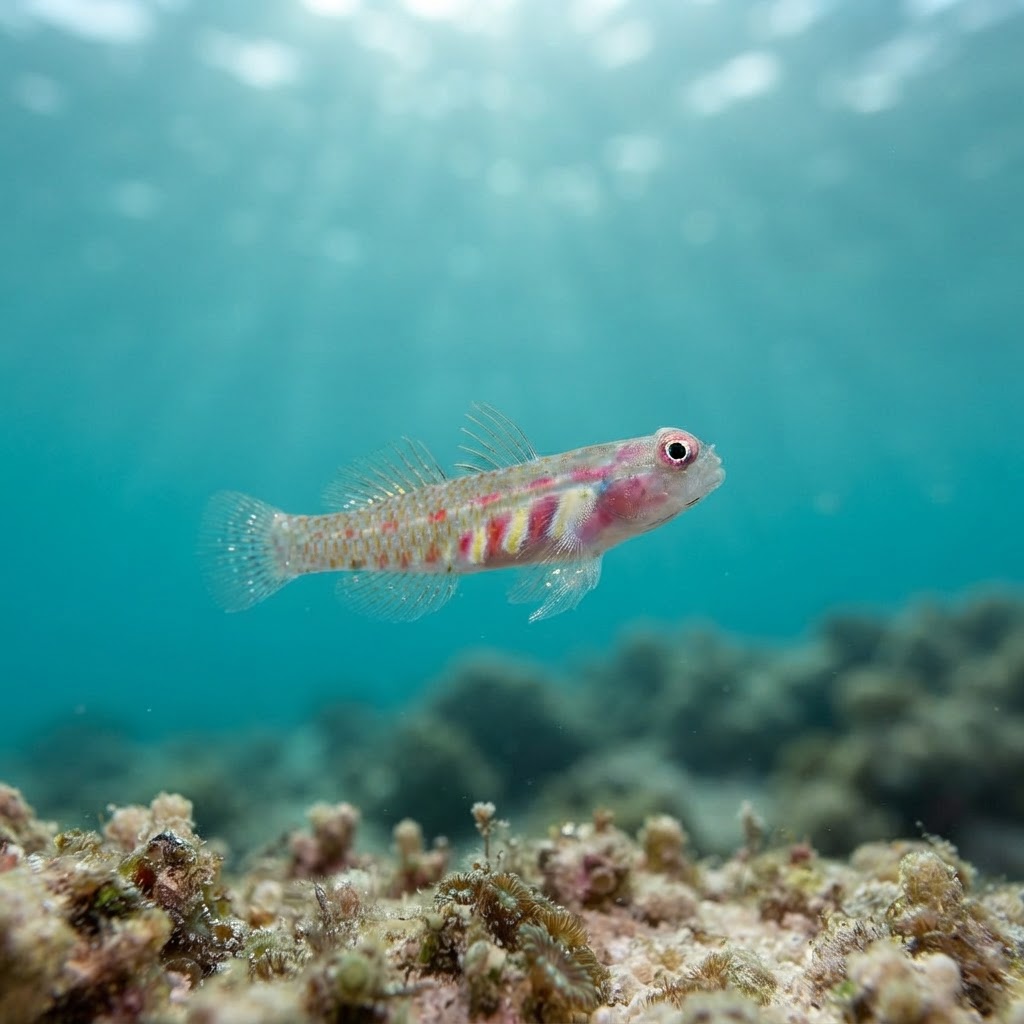
A goby so small it disappears against the substrate: adults max out around 1 centimetre, so you're looking for a sliver of a fish rather than a shape. Look for a slender, translucent to pale body perched motionless on rubble, dead coral, or the reef itself, usually near the bottom. At this size, colour patterns are hard to read without a macro lens, so divers typically confirm sightings by close, careful observation rather than distinctive markings alone.
Divers find it sitting still on rubble or low coral structure rather than swimming in open water, which is typical of dwarfgobies conserving energy between short darts. It shows no particular reaction to divers since it's simply too small and low-key to register a diver as a threat worth fleeing. Most sightings come from divers deliberately scanning the substrate at close range rather than spotting it in passing.
At around 1 centimetre, this is one of the smallest reef fish a diver is likely to log, and finding one usually means slowing right down and scanning rubble patches inch by inch rather than cruising the reef at a normal pace.
No clear seasonal pattern shows up in the sightings, and its comfort range of roughly 19.6 to 29.9°C spans everything from cooler subtropical dips to full tropical warmth, so it's a year-round find on the reefs where it occurs.
Most consistently logged in Indonesia, particularly around Nusa Tenggara, Sulawesi, and Raja Ampat, with a strong cluster of sightings in Saipan, Northern Mariana Islands. It also turns up in Milne Bay, Papua New Guinea, and has been recorded off Guam and in Fiji's Lomaiviti region.
Mapping where Terry's Dwarfgoby is logged…
It's most reliably found in Indonesia, especially Nusa Tenggara, Sulawesi and Raja Ampat, and around Saipan in the Northern Mariana Islands. Smaller numbers of sightings come from Milne Bay in Papua New Guinea, Guam, and Fiji's Lomaiviti region.
There's no strong seasonal pattern in the sightings, so it's considered a year-round find. Its recorded temperature range, roughly 19.6 to 29.9°C, covers most conditions on the tropical reefs where it lives.
Around 1 centimetre as an adult, making it one of the smallest fish you're likely to try to identify underwater. You'll need to get close and look carefully, since it's easy to miss entirely.
Look for a tiny, slender goby around 1 centimetre long sitting motionless on rubble or coral rather than swimming in open water. Its small size makes fine colour detail hard to see without a macro lens, so confirming an ID usually means close, patient observation.
It's logged as uncommon at almost all the sites where divers have recorded it, with just one site reporting it as common. So it's a find worth noting rather than something you'll see on every dive.
Site and sighting data is aggregated from diver logs, iNaturalist and GBIF. For taxonomy and conservation status:
Slender Goby
806 sites