Tayuva lilacina
An uncommon dorid nudibranch found off Guadeloupe's Grande-Terre and Mexico's Baja coast, in reefs between 20 and 29 C year-round.
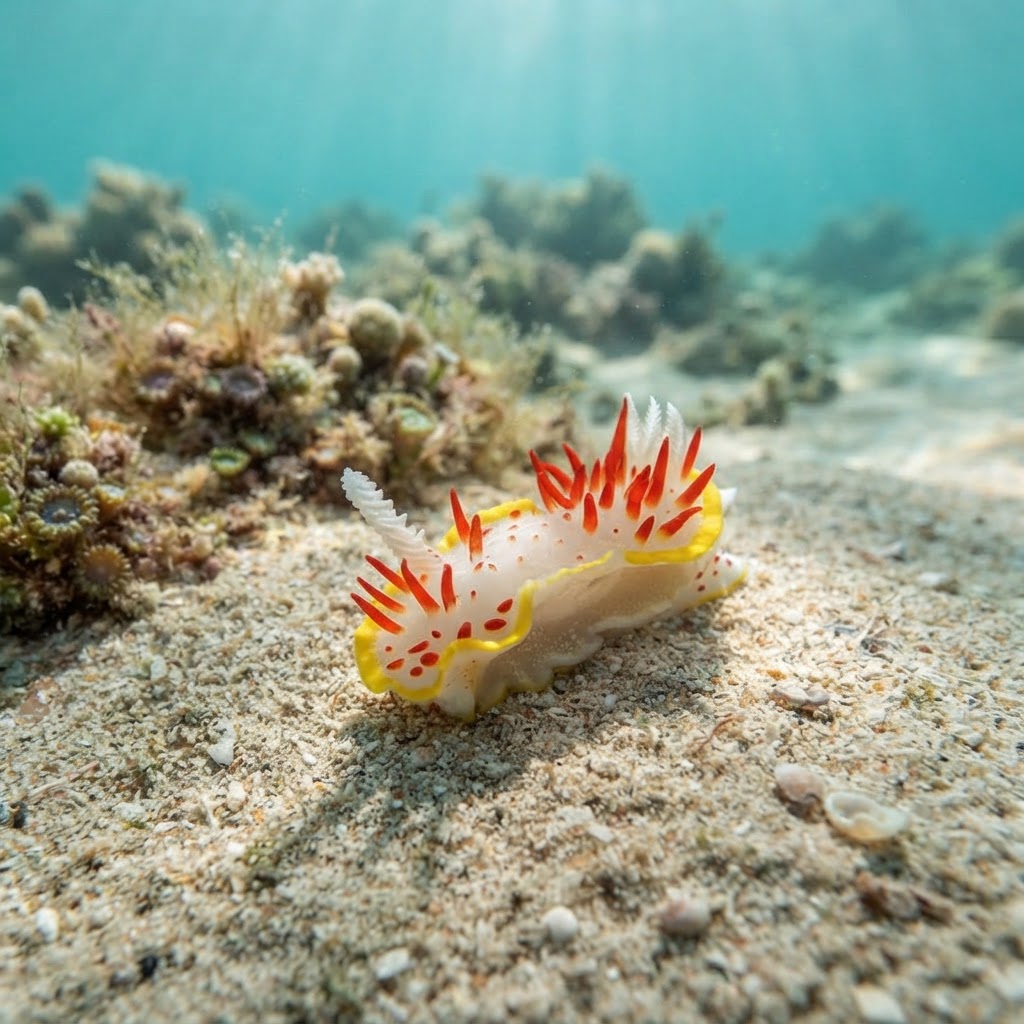
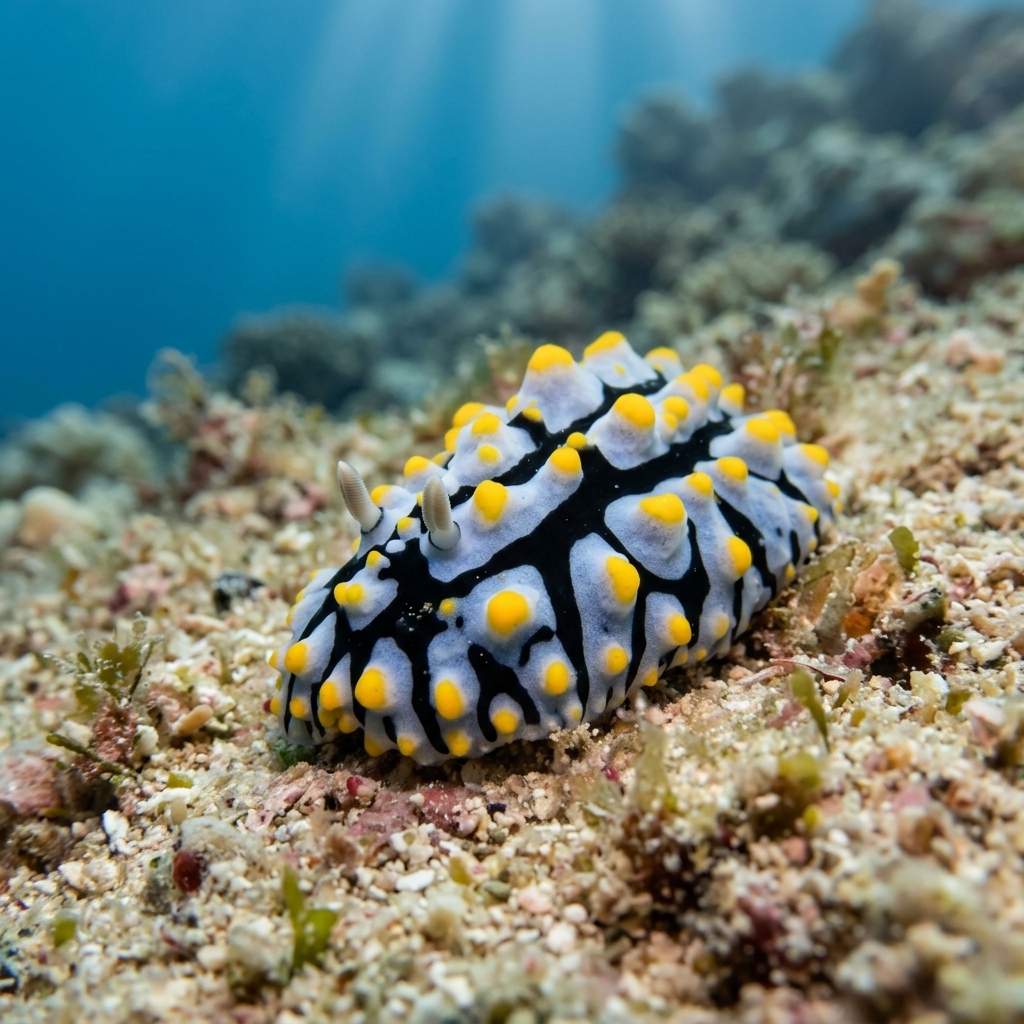
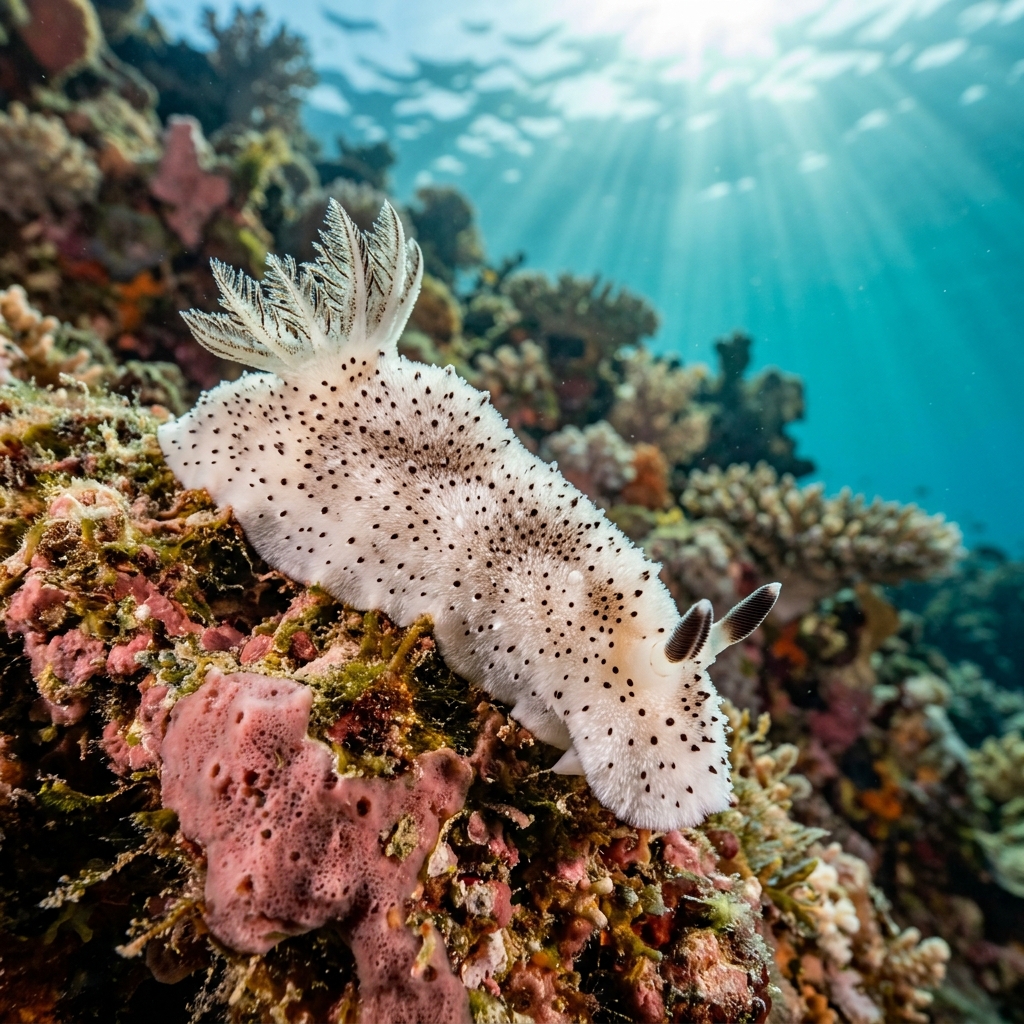
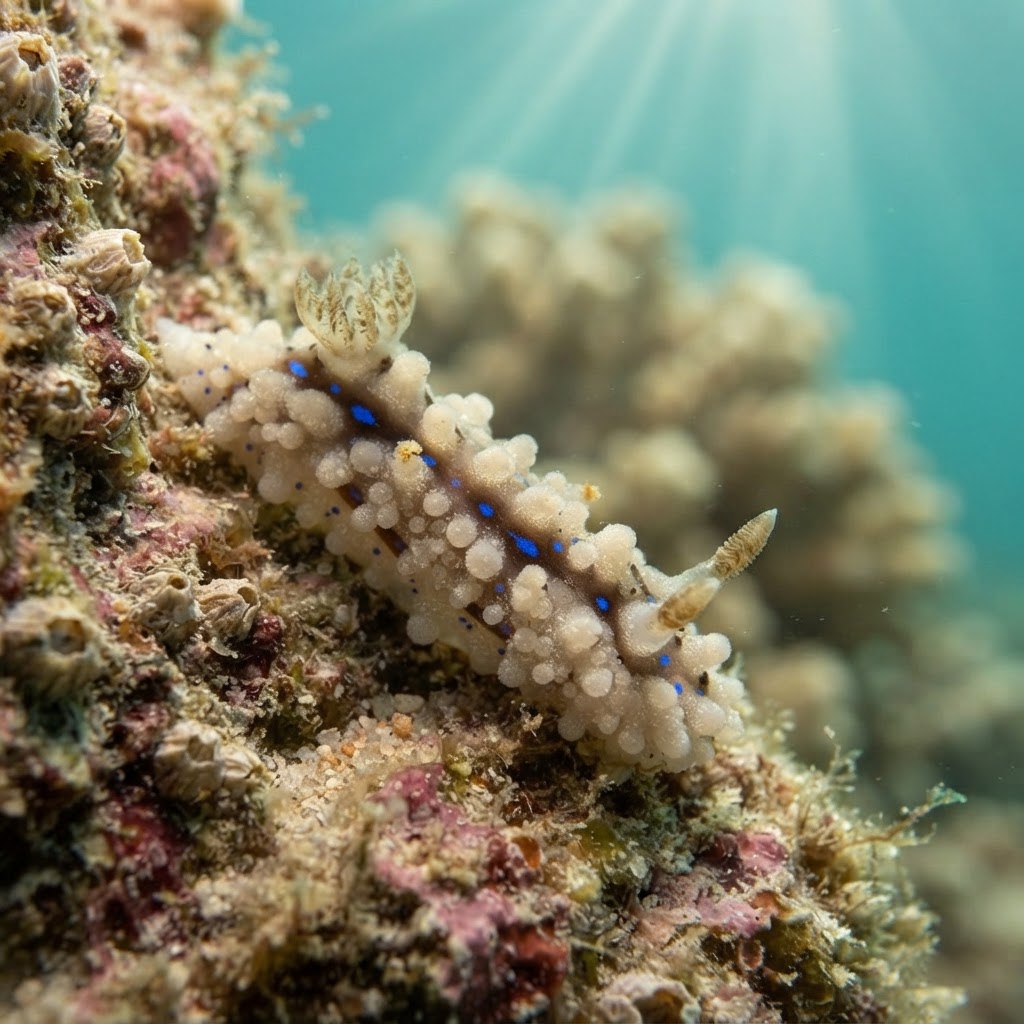
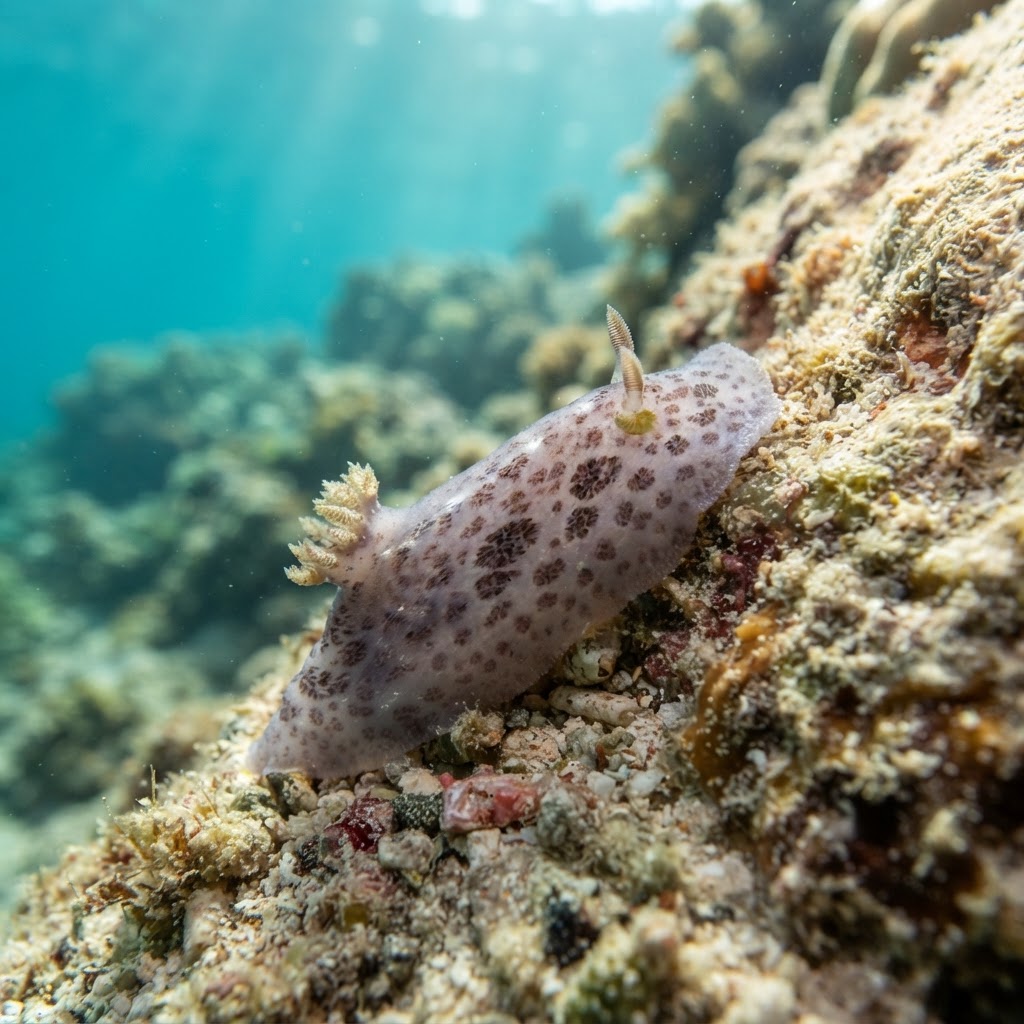
A soft-bodied sea slug (nudibranch) with a mottled, warty-textured back in shades of lilac, brown, and cream, giving it a rough, bark-like look rather than the smooth glossy skin of many reef dorids. Look for the frilly gill cluster (rhinophores and gill tuft) toward the rear of the body, usually the same muted tones as the mantle so it blends in rather than stands out. Most sightings are logged as single, slow-moving individuals on rock or reef substrate rather than open sand.
Divers typically find it moving slowly across rock or reef substrate, grazing rather than swimming, and it shows no reaction to a diver's presence beyond continuing its crawl. It is logged as uncommon to rare at most sites, so sightings tend to be a single animal spotted while scanning ledges and crevices closely rather than something you stumble across on every dive.
Like other discodorid nudibranchs, it likely feeds on sponges, using its mottled colouring as camouflage against similarly textured reef surfaces rather than relying on speed or defence to avoid predators.
No clear seasonal pattern shows up in the sighting data, and its comfort range of roughly 20 to 29 C spans most of the diving calendar in its core regions, so plan around good visibility and site conditions rather than a specific month.
Reef neighbours a diver could mistake it for. Use the identification notes above to tell them apart.
Most reliably logged around Grande-Terre and Basse-Terre in Guadeloupe, and along Mexico's Baja California and Pacific coast, with a further pocket of sightings on Colombia's Caribbean coast. Smaller numbers turn up in France's French Riviera and Provence region and off Victoria, Australia, making this mainly a Caribbean-and-eastern-Pacific find with occasional Mediterranean and Australian records.
Mapping where Tayuva Lilacina is logged…
It's most consistently logged around Grande-Terre and Basse-Terre in Guadeloupe, and along Baja California and the Pacific coast of Mexico. Colombia's Caribbean coast also has a solid cluster of sightings, with rarer records from France and Australia.
There's no strong seasonal pattern in the sightings, and it's found across a wide temperature range of 20 to 29 C, so it can turn up on dives year-round in its core regions.
Look for a mottled lilac-brown-cream body with a rough, warty texture and a frilly gill tuft near the rear, usually crawling slowly across rock or reef rather than swimming. Its muted colouring makes it easy to miss against similarly textured substrate.
No, it poses no danger to divers. It's a slow-moving, harmless sea slug that simply grazes on the reef and has no defensive reaction to divers nearby.
Site and sighting data is aggregated from diver logs, iNaturalist and GBIF. For taxonomy and conservation status:
Nudibranch
3,168 sites