Heteroconger taylori
Spot these shy garden eels swaying from sandy burrows near Dili, Timor-Leste, in warm 27.5 to 29.2C water year-round.
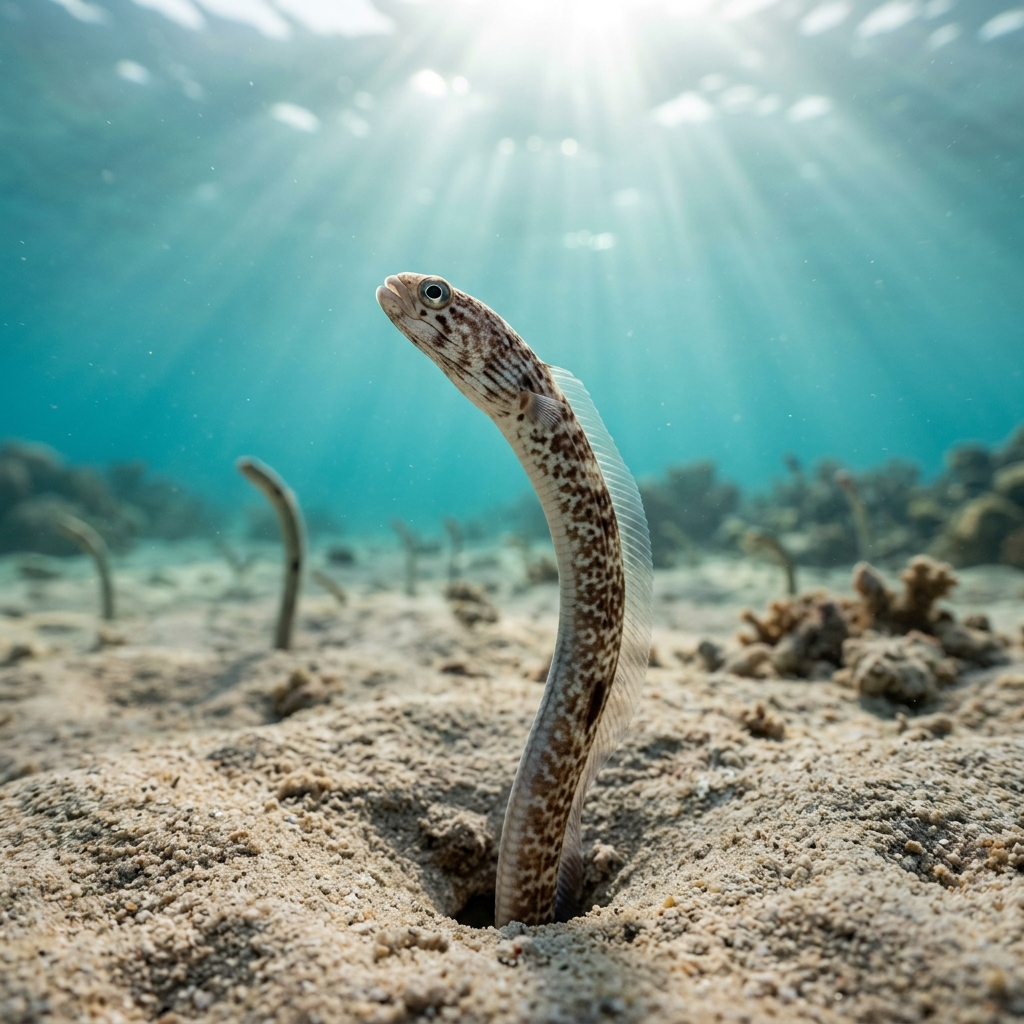
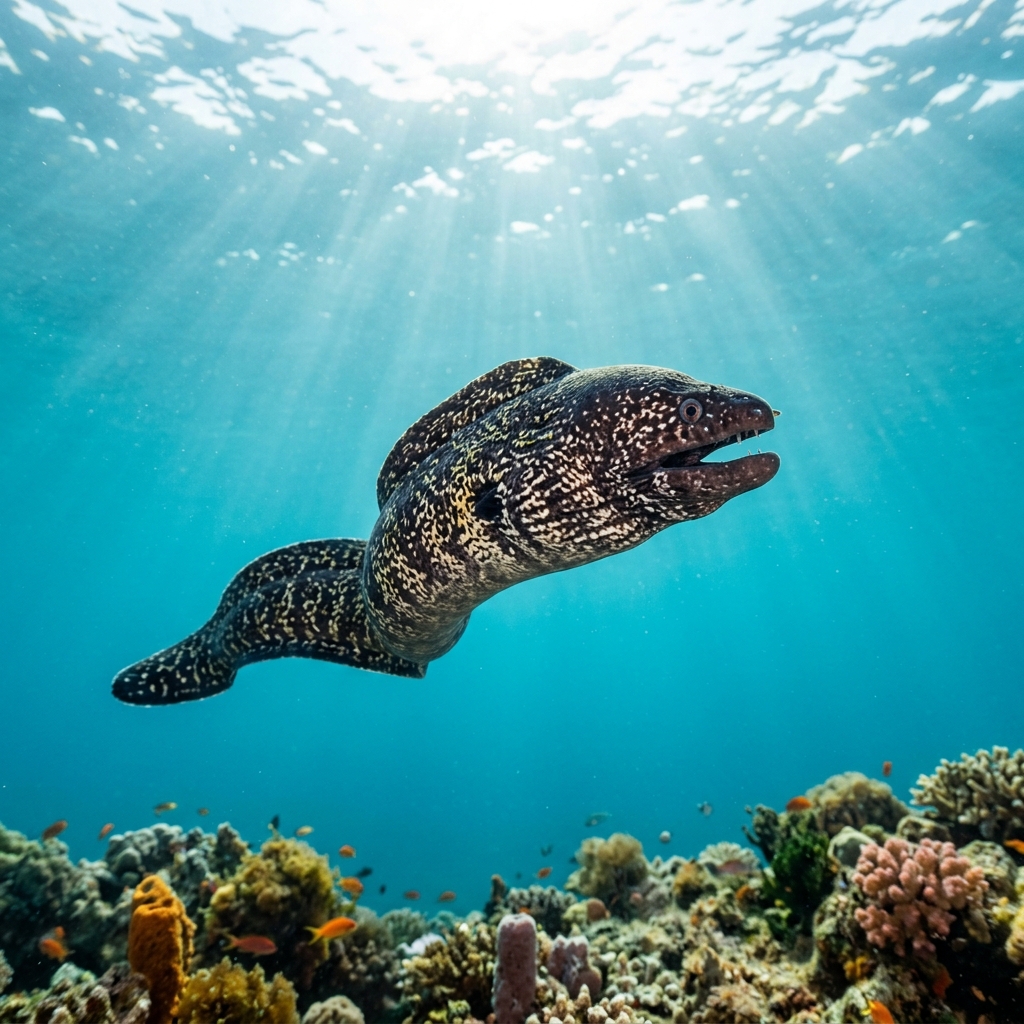
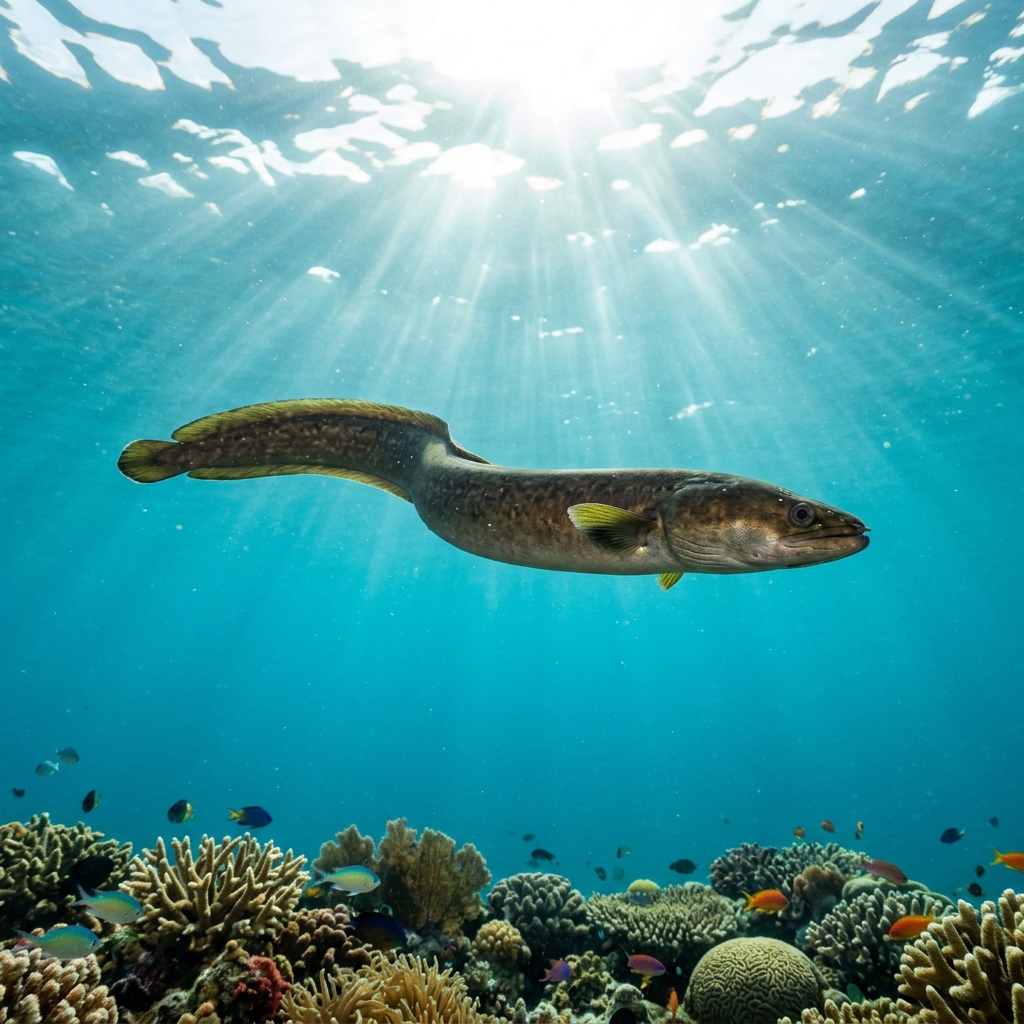
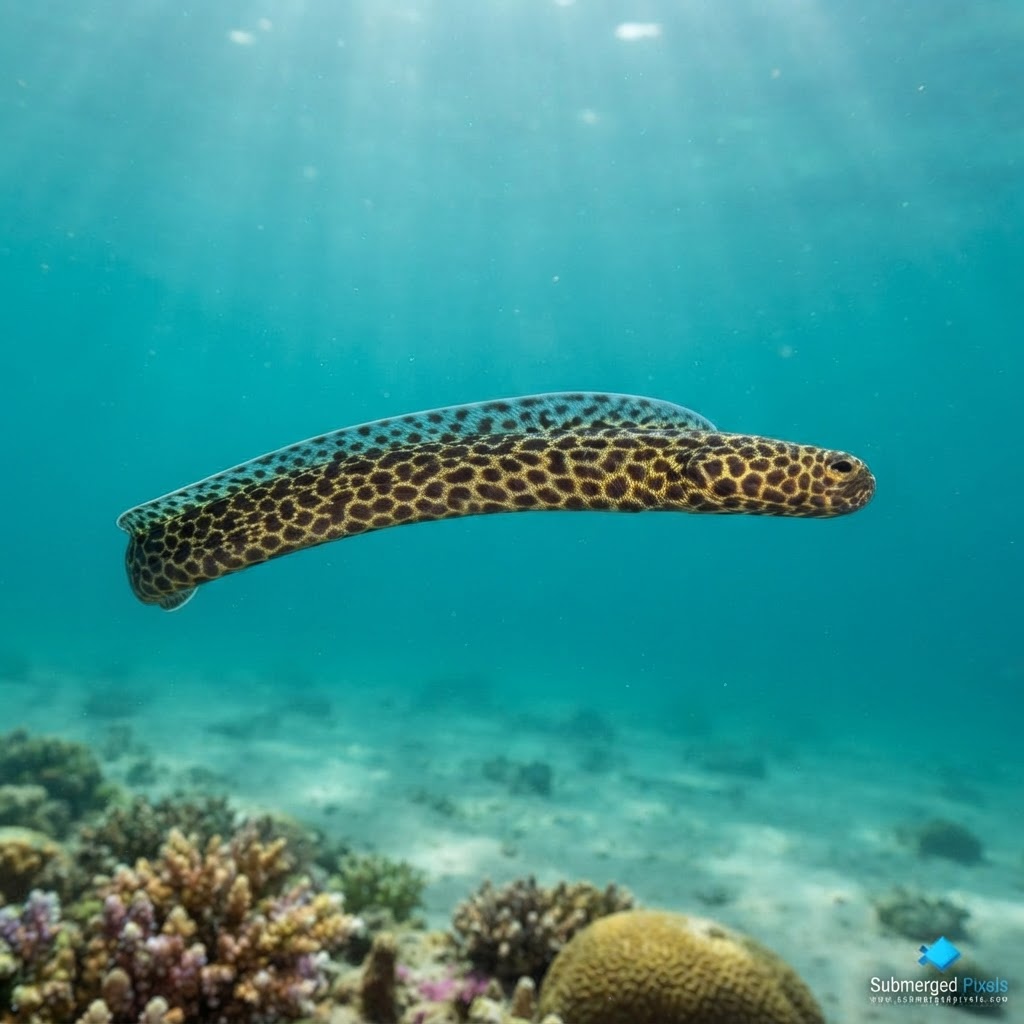
A slender, speckled grey-brown eel that rarely shows more than the front third of its body, swaying above a sandy burrow like a plant stalk in current. It grows to around 34 cm but you will only ever see a fraction of that length above the sand. Look for the fine mottled pattern along the body and the way it retreats tail-first into its hole the instant it senses movement.
Found in loose colonies on sandy or rubble-strewn slopes, each eel anchored in its own burrow with just the head and neck swaying above the sand to feed on passing plankton. They are extremely camera-shy: a diver's shadow or a fin kick sends them sliding straight back into the sand, so slow, low approaches from a distance work best. Most activity happens during daylight hours when currents carry plankton over the colony.
Garden eel colonies can number in the hundreds on a single slope, each eel never fully leaving its burrow for its entire life, mating with neighbours by intertwining bodies while keeping their tails anchored in the sand.
Water temperatures where it has been observed run a steady 27.5 to 29.2C, and there is no detected seasonal pattern, so it appears to be a year-round resident on Dili's sandy slopes rather than a seasonal visitor.
All logged sightings so far come from Timor-Leste, with Dili the standout region for finding this eel on sandy slopes and flats. It has been recorded as uncommon at each of the three known sites, so treat any sighting as a bonus rather than a guarantee on a Dili dive.
Mapping where Taylor's Garden Eel is logged…
The only confirmed sightings are from Dili, Timor-Leste, where small colonies live on sandy slopes. It is logged as uncommon even there, so it is a nice bonus find rather than a certainty.
There is no detected season for this species. Water where it lives stays a warm 27.5 to 29.2C year-round, so sightings in Dili are possible on any dive, subject to it simply being an uncommon find.
Look for a slim, mottled grey-brown eel poking just its head and neck out of a sandy burrow, swaying gently to feed on plankton. It vanishes into the sand at the slightest disturbance, so most sightings are brief.
They reach about 34 cm in total length, but since most of the body stays buried in the sand, divers usually only see the top 10 to 15 cm swaying above the burrow.
They spend their entire adult lives anchored in a single burrow, never fully emerging, and even mate by intertwining bodies with a neighbouring eel while keeping their tails buried in the sand.
No. They have no means of threatening divers and retreat into their burrows well before anyone gets close enough to touch them.
Site and sighting data is aggregated from diver logs, iNaturalist and GBIF. For taxonomy and conservation status:
Garden Eel
2,448 sites