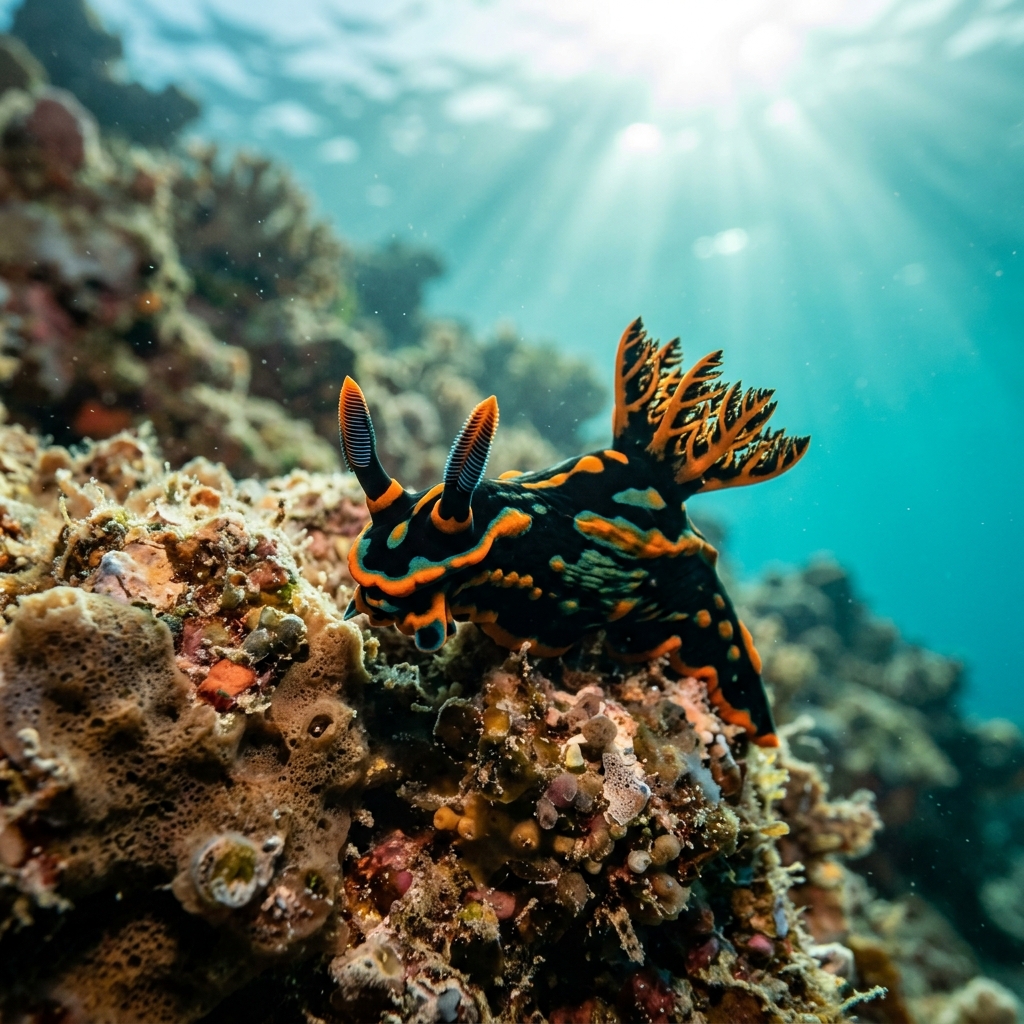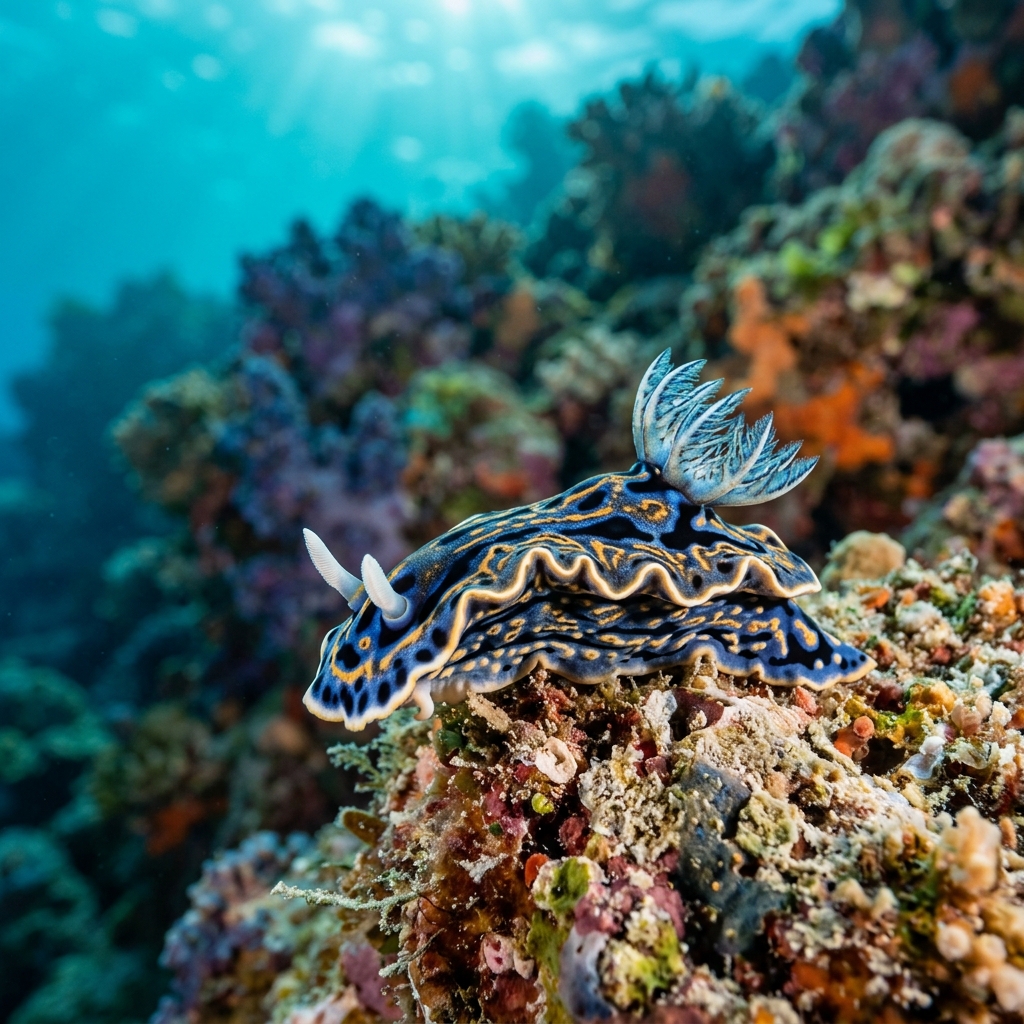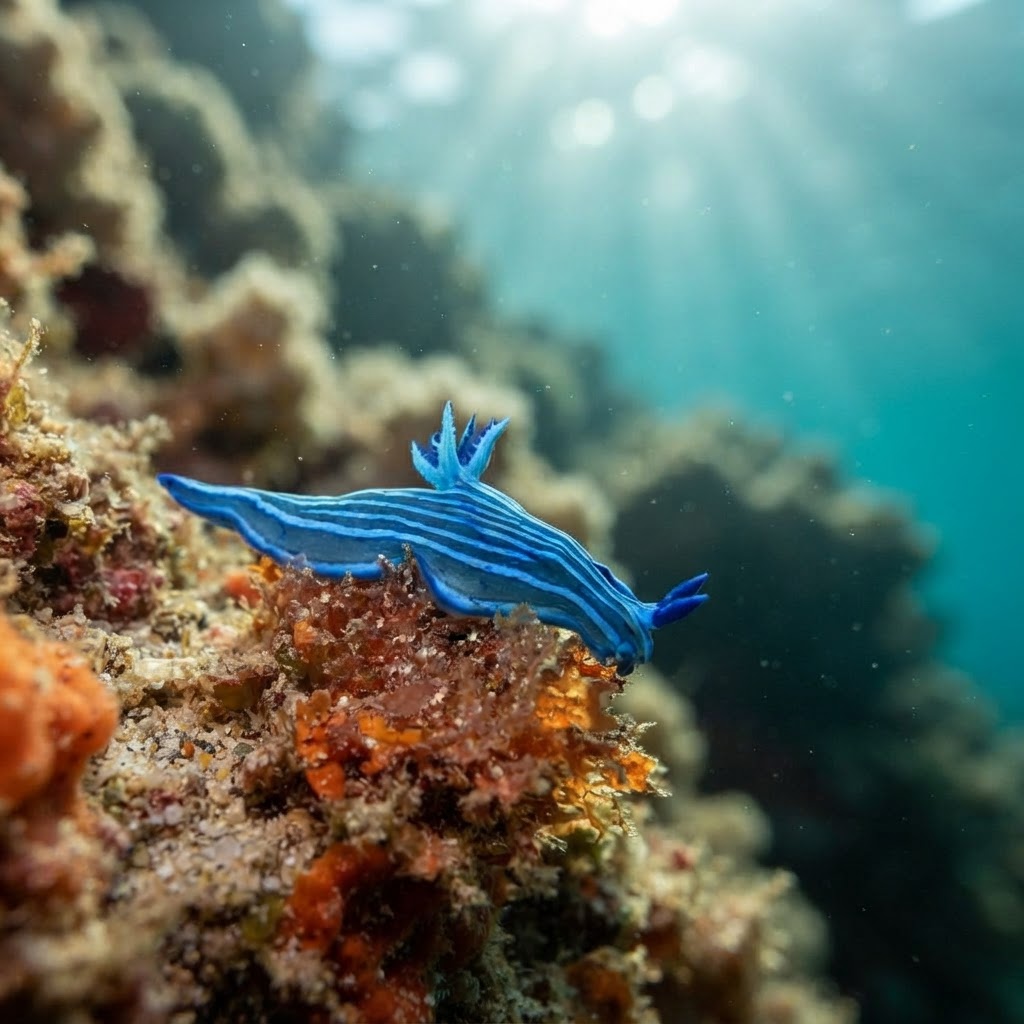
Tambja mullineri
A small green-and-black nudibranch found almost exclusively around the Galápagos Islands, in water from 20.7 to 26.7 C.
A slender nudibranch reaching about 3 cm, with a bright green to yellow-green body marked by black longitudinal stripes running the length of the back. The rhinophores (the small sensory horns on the head) and gill cluster near the tail are typically dark, standing out against the pale body colour. Look for it moving slowly across rock and rubble rather than swimming.
Divers find it grazing slowly over rock and rubble patches, usually solo, tucked into the same cooler, current-swept terrain that makes Galápagos diving distinctive. It shows no reaction to divers beyond its usual unhurried pace, since nudibranchs rely on chemical defences rather than fleeing. Most logs describe it as uncommon, so spotting one takes a slow, close look at the substrate rather than mid-water scanning.
Like other members of the Polyceridae family, it almost certainly feeds on bryozoans or similar encrusting invertebrates and stores their chemical compounds in its tissue as a defence against predators, which is part of why its bold colouring can afford to be so conspicuous.
Sightings show no clear seasonal pattern, so it is logged year-round across the Galápagos sites where divers find it. Water temperatures in the 20.7 to 26.7 C range cover most of the diving calendar there, from the cooler upwelling months to the warmer season.
Reef neighbours a diver could mistake it for. Use the identification notes above to tell them apart.
This one is a Galápagos specialty: essentially every logged sighting comes from dive sites around the Galápagos Islands, Ecuador. It has not turned up in meaningful numbers anywhere else, so if you want to find it, plan a Galápagos liveaboard or land-based trip rather than looking elsewhere.
Mapping where Tambja Mullineri is logged…
Almost all logged sightings are from the Galápagos Islands, Ecuador. It is not a species you can reliably plan around anywhere else, so Galápagos dive sites are the place to look.
There is no strong seasonal pattern in the sightings, so it is considered a year-round find on Galápagos dive sites within its 20.7 to 26.7 C temperature range.
Look for a small, roughly 3 cm nudibranch with a green to yellow-green body and black stripes running along its back, plus dark rhinophores and gill tufts. It moves slowly over rock and rubble rather than swimming.
It is a small nudibranch, typically around 3 cm long, so divers need to look closely at rock and rubble to spot one.
No, it poses no danger to divers. It has no means of harming a diver and relies on chemical defences against predators rather than any physical threat.
As with related Polyceridae nudibranchs, it most likely grazes on bryozoans or similar encrusting invertebrates, absorbing their defensive chemicals into its own tissue for protection.
Site and sighting data is aggregated from diver logs, iNaturalist and GBIF. For taxonomy and conservation status:
Blue Dragon
3,163 sites