Chrysiptera talboti
A pale blue 4cm damsel logged across Visayas, Raja Ampat and Taveuni reefs in 25-29C water, year-round and easy to miss.
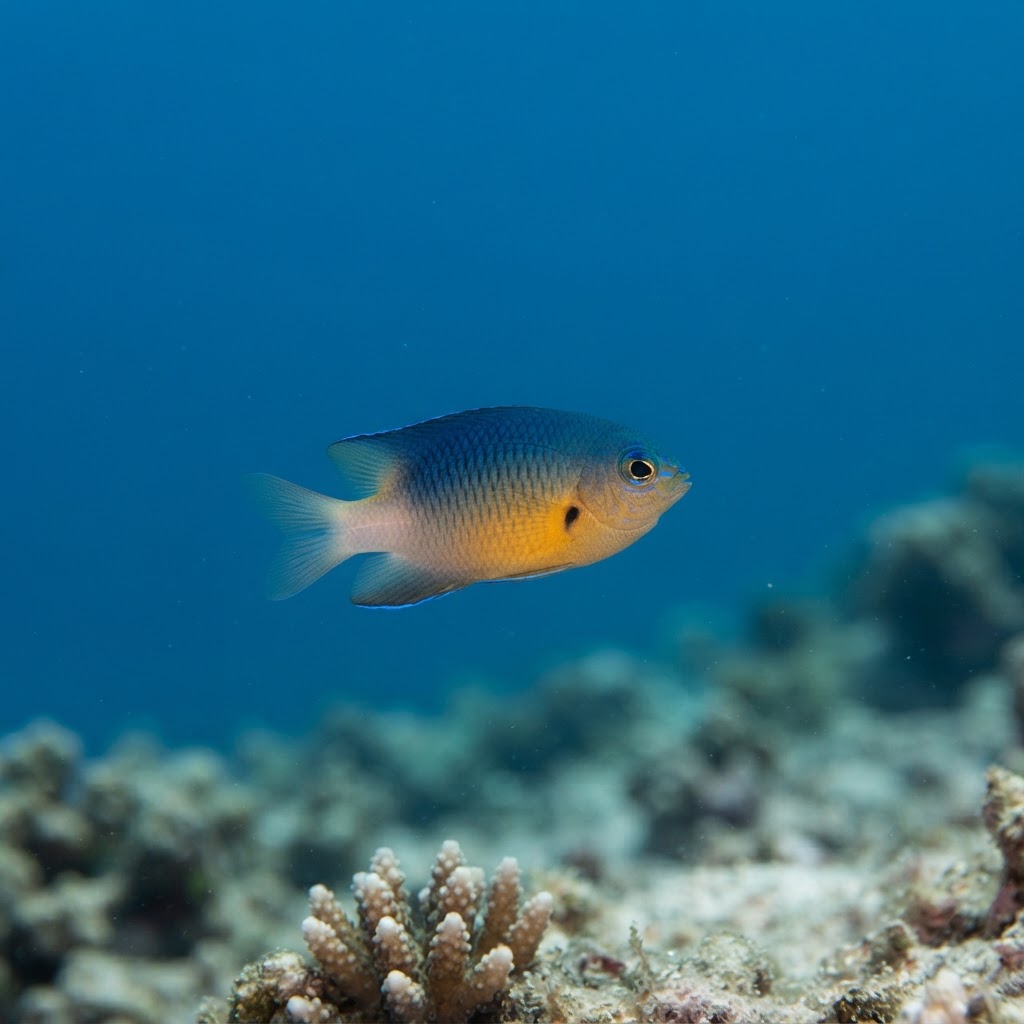
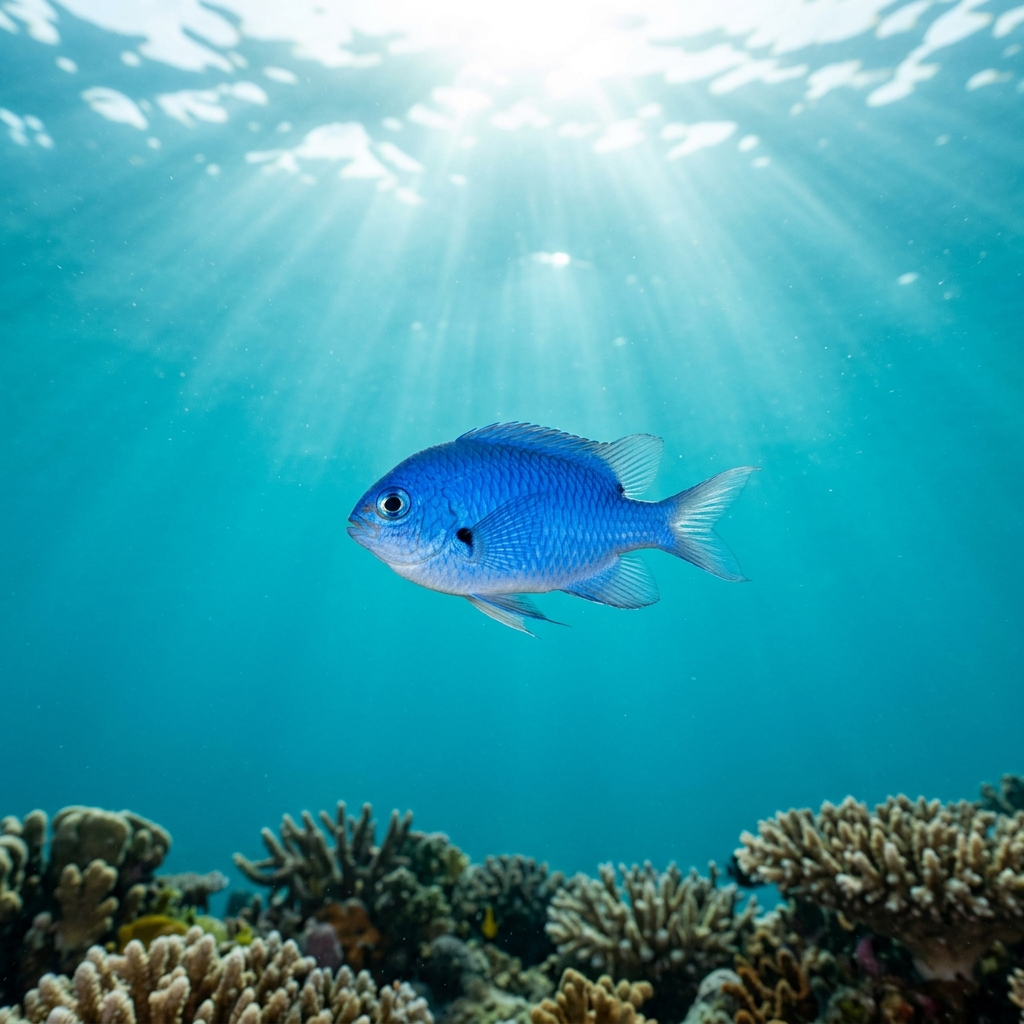
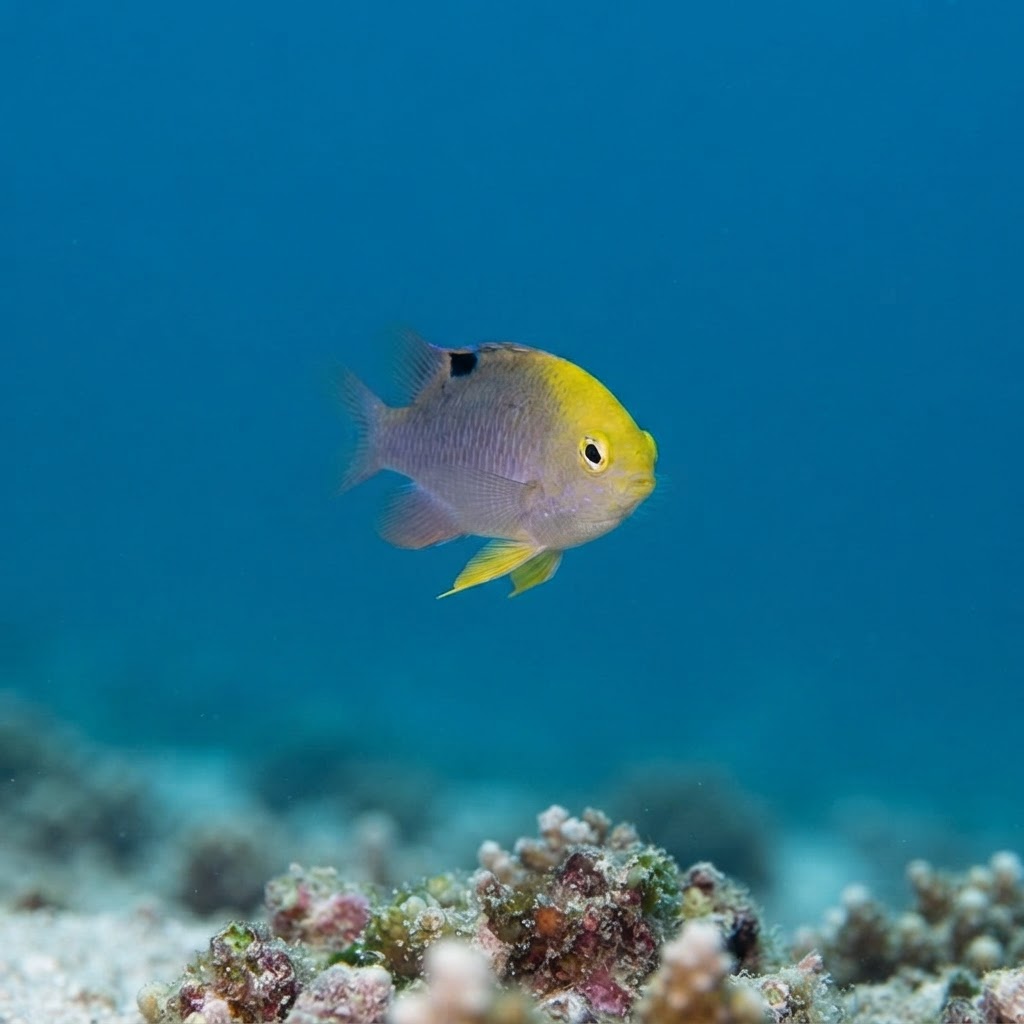
A slim, half-palm-sized damsel around 4 cm, pale blue to whitish along the body with a bright yellow patch running through the tail and rear dorsal fin. Look for a dark spot at the base of the pectoral fin, a useful marker when the fish is darting in and out of coral cover. It holds close to the reef structure rather than swimming in open water, so most sightings are brief glimpses as it ducks for shelter.
Spends most of its time hovering low over coral rubble or branching coral, retreating into cover the moment a diver gets close rather than holding ground like some of its bolder damselfish relatives. Sightings tend to happen on shallower to mid-depth reef sections, often while scanning coral heads for smaller reef fish rather than searching open water. It is not aggressive toward divers and shows no territorial displays worth noting.
Its scattered, uncommon-at-most-sites pattern across the western Pacific suggests a fish that is patchy in distribution rather than simply overlooked, making a confirmed sighting a small win for reef-fish spotters.
No clear seasonal pattern shows up in the sighting data, and its comfort range of roughly 25 to 29C matches tropical reef conditions year-round, so any month works for a dive trip aimed at seeing it.
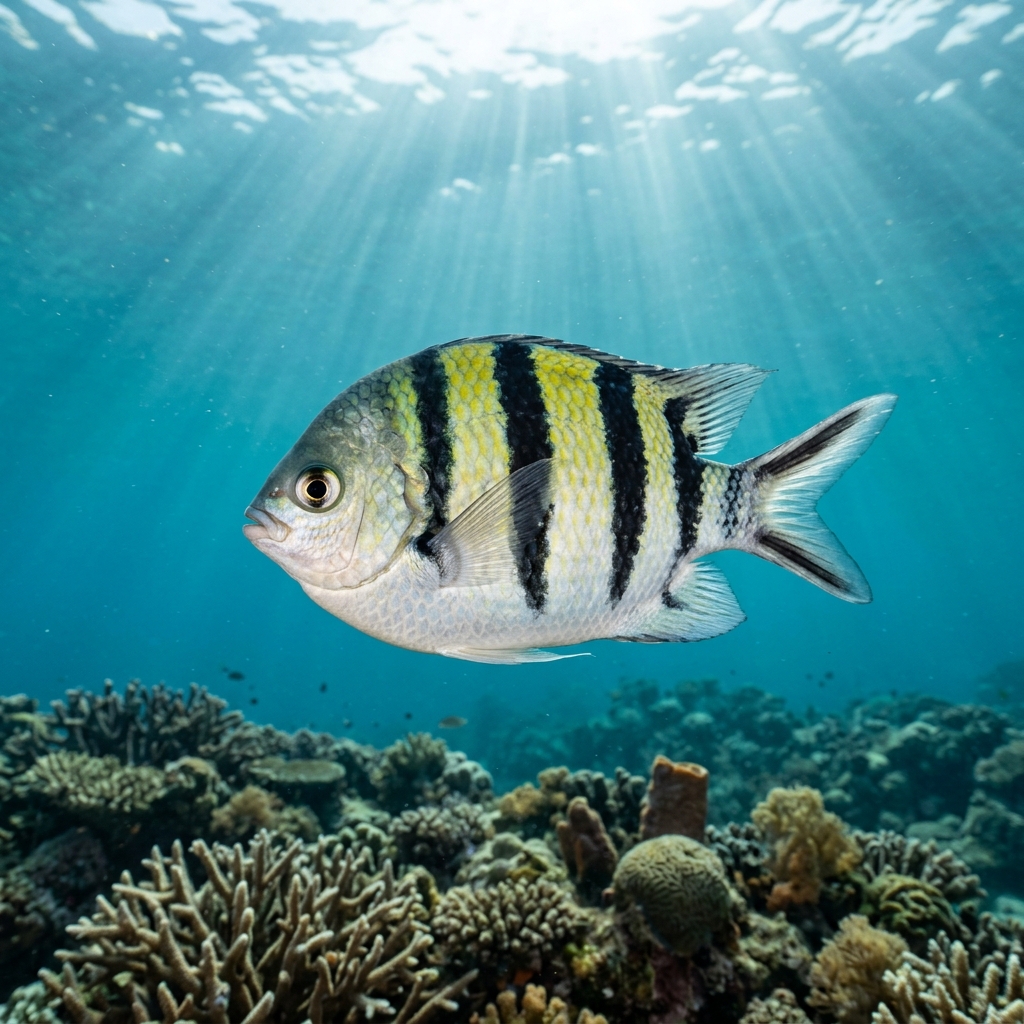
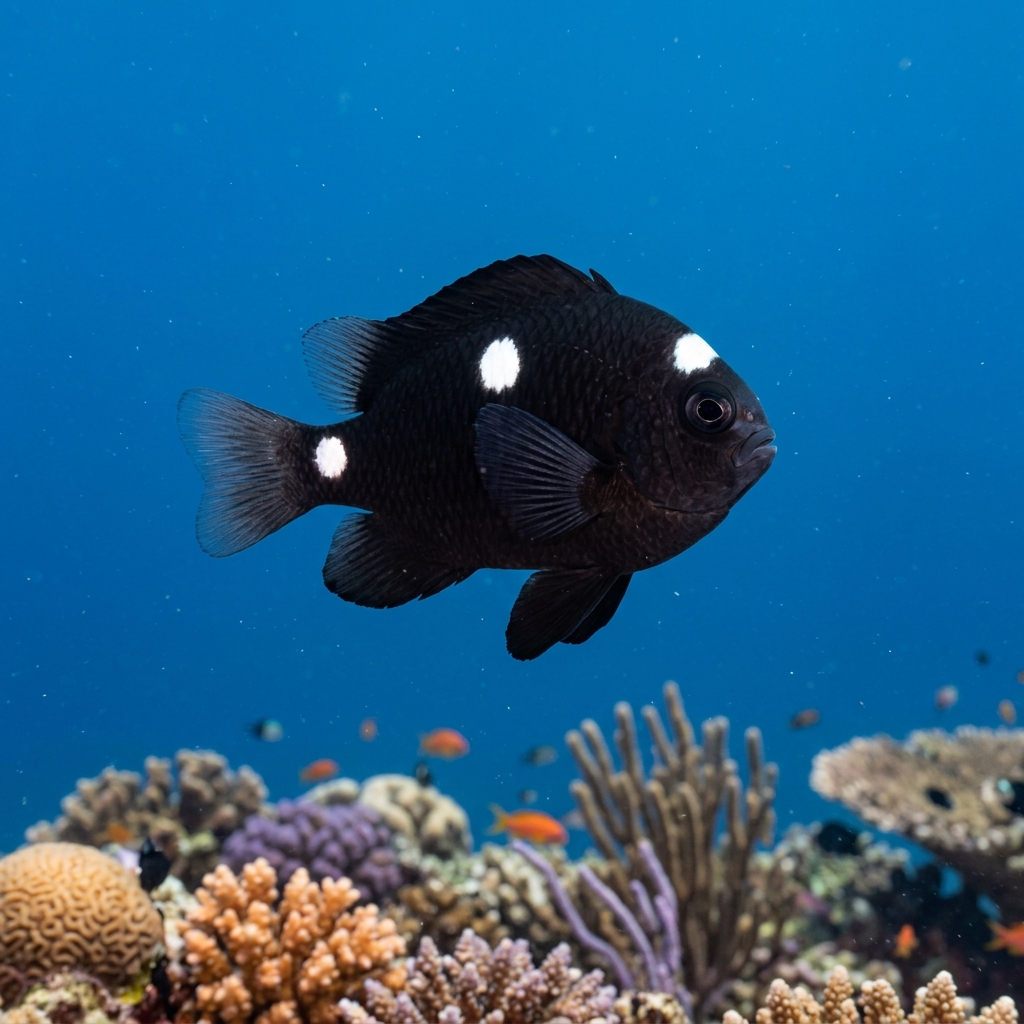
Reef neighbours a diver could mistake it for. Use the identification notes above to tell them apart.
Most reliably logged in the Philippines, especially around the Visayas, with strong numbers also coming out of Raja Ampat in Indonesia and Taveuni in Fiji. Divers also report it from Dili in Timor-Leste, reefs in Queensland, Australia, and Milne Bay in Papua New Guinea, usually as an uncommon find rather than a guaranteed sighting.
Mapping where Talbot's Damselfish is logged…
Best chances are in the Philippines, particularly the Visayas region, along with Raja Ampat in Indonesia and Taveuni in Fiji. It also turns up in smaller numbers in Timor-Leste, Queensland and Milne Bay in Papua New Guinea.
There is no strong season in the sighting data, and it favours water between about 25 and 29C, which most of its range holds all year, so it can be looked for on any month's trip.
It is a small pale blue damselfish, about 4 cm long, with a yellow wash through the tail and rear dorsal fin and a small dark mark at the pectoral fin base. It stays close to coral cover and darts for shelter quickly.
They stay small, topping out around 4 cm, so they are easy to overlook against reef rubble and coral branches.
No, they pose no risk to divers. They are shy, small reef fish that retreat into cover rather than approach or defend territory aggressively.
Site and sighting data is aggregated from diver logs, iNaturalist and GBIF. For taxonomy and conservation status:
Dascyllus
3,697 sites